

10 Inspiring Kitchen Colour Ideas for a Stylish Makeover
Spice Up Your Kitchen with the Latest Colour Trends
Looking to refresh your kitchen? This listicle reveals nine trending kitchen colour ideas for 2025, from classic white kitchens to bold matte black and warm terracotta. Find inspiration whether you're planning a complete renovation or a simple update. Discover the perfect colour palette for your dream kitchen, plus find the appliances and essentials you need at Folders NZ, stocking top brands like Fisher & Paykel, Beko, Sunbeam, and Breville. Ready to explore the best kitchen colour ideas?
1. White Kitchens
White continues to be a top choice for kitchen colour ideas, offering a timeless and versatile aesthetic that creates a clean, bright, and expansive feel. This classic palette acts as a blank canvas, adaptable to virtually any design style, from sleek, modern minimalist kitchens to warm and inviting farmhouse traditional spaces. This adaptability is one reason why white kitchens consistently remain a popular choice.
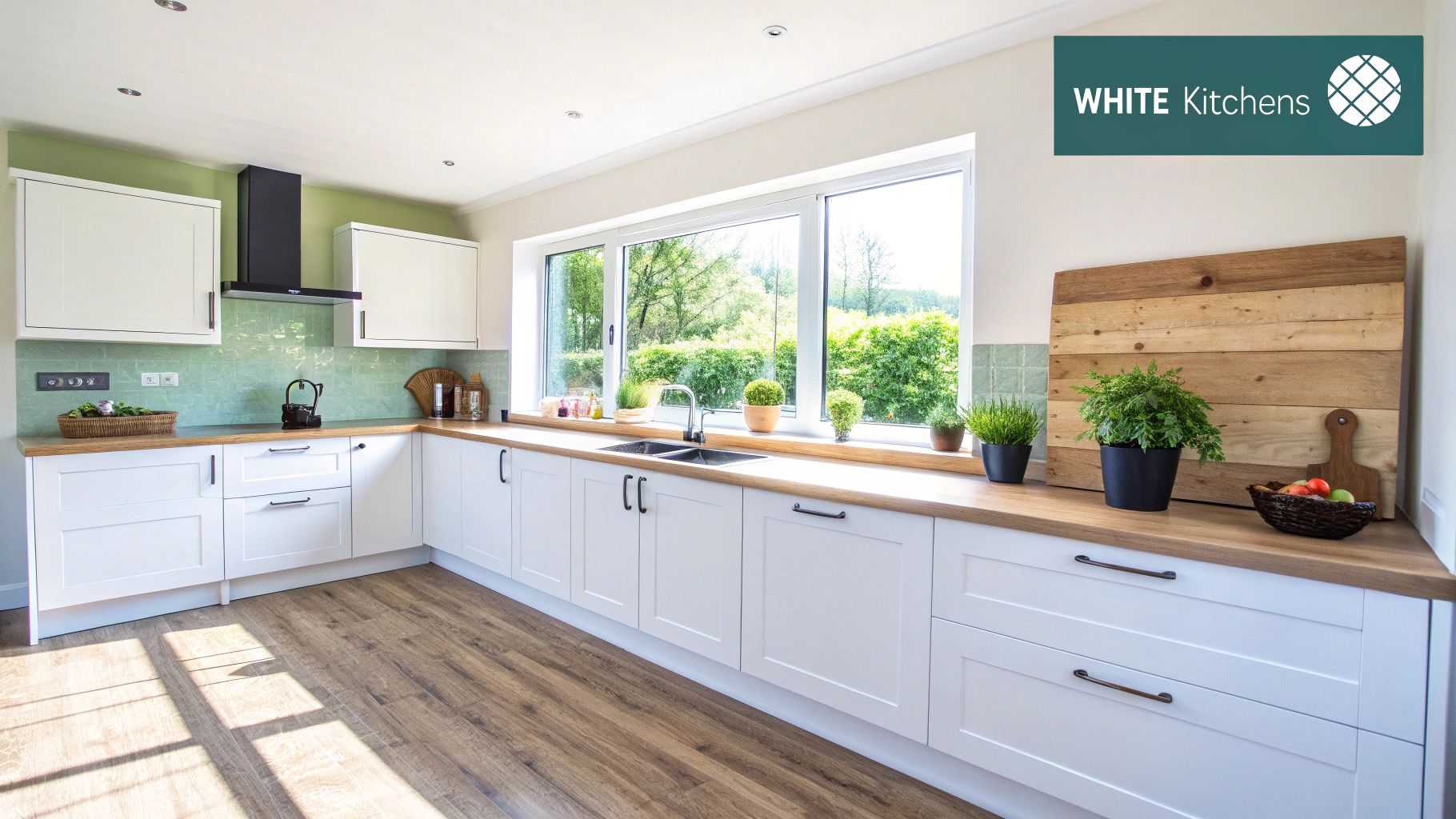
The light-reflecting properties of white make even small New Zealand kitchens appear larger, a significant advantage in apartment living or smaller homes. This brightness also contributes to a sense of cleanliness and airiness, making the space feel inviting and fresh. The versatility of white allows for seamless pairing with any accent colour, from vibrant blues and greens to warm earthy tones, providing limitless possibilities for kitchen colour ideas.
Features:
- Timeless appearance: White kitchens transcend trends, ensuring your kitchen remains stylish for years to come.
- Light-reflecting properties: Maximises natural light, creating a brighter and more welcoming space.
- Versatility with accents: Pairs effortlessly with any colour scheme or design style.
- Makes small spaces appear larger: Ideal for compact New Zealand kitchens.
Pros:
- Creates a sense of cleanliness and hygiene.
- Easily pairs with any accent colour, offering design flexibility.
- Makes small kitchens feel more spacious and airy.
- Never goes out of style, representing a sound investment.
Cons:
- Shows dirt and stains more readily, requiring diligent cleaning.
- Can feel cold or clinical without warming elements like wood or textiles.
- Potentially higher maintenance to keep the space looking pristine.
- May look too stark in certain lighting conditions.
Examples:
- West Elm's all-white contemporary kitchens showcase a sleek and minimalist approach.
- Martha Stewart's farmhouse white kitchen demonstrates the classic appeal of white in a traditional setting.
- Scandinavian-inspired white kitchens with wood accents exemplify the balance of light and warmth.
Tips for Implementing White Kitchen Colour Ideas:
- Add texture: Incorporate different finishes like matte cabinets, glossy tiles, and textured countertops to create visual interest.
- Incorporate wood elements: Warm up the space with wooden flooring, open shelving, or butcher block countertops.
- Use colourful accessories: Prevent sterility by introducing pops of colour through kitchenware, artwork, and textiles. White kitchens offer a timeless appeal, but if you're looking to incorporate some colour, consider exploring some of the trending wall colours for 2023 to add personality and style. These trending colours, curated by Chojnacka Staging in their Modne Kolory Scian 2023 article, offer a wealth of inspiration for creating a unique and stylish kitchen.
- Consider off-white or cream variations: Opt for softer shades like ivory or cream for a warmer, less stark aesthetic.
Popularised By:
- Nancy Meyers' film kitchens often feature bright, white spaces that evoke a sense of effortless elegance.
- IKEA design catalogs showcase the versatility of white kitchens in various styles and price points.
- Joanna Gaines' farmhouse designs frequently incorporate white kitchens, emphasising their timeless appeal.
2. Two-Tone Cabinets
Two-tone cabinetry is a dynamic kitchen colour idea that injects personality and depth into the heart of your home. This design technique involves using two different colours for your kitchen cabinets, creating a visually appealing contrast. This could be contrasting upper and lower cabinets, or differentiating the perimeter cabinets from the kitchen island. This trend adds visual interest and dimension, allowing homeowners to incorporate multiple colours without overwhelming the space, making it a popular choice for Kiwi homeowners seeking a modern kitchen update.
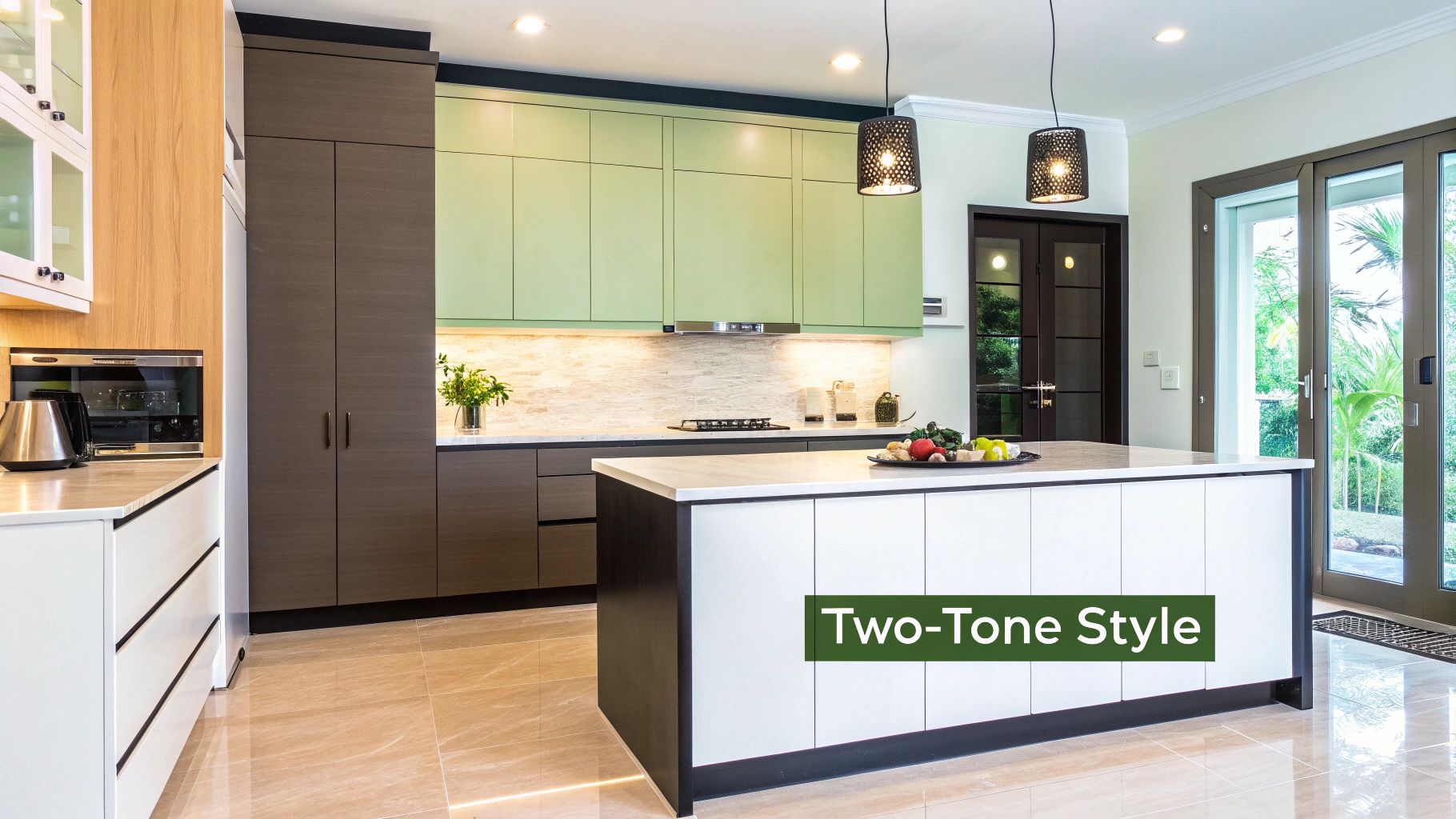
Two-tone cabinets offer a range of benefits. They create defined zones within the kitchen, adding architectural interest and visual weight to specific areas. This approach allows you to introduce colour in measured amounts, refreshing your kitchen's look without a complete overhaul. For example, you might choose a bold colour for the island, making it a focal point, while keeping the perimeter cabinets a neutral shade. The contrast between these colours adds depth and dimension, making the space feel larger and more dynamic. Popular combinations include navy lower cabinets with white uppers, white perimeter cabinets with a sage green island, or the timeless elegance of black and natural wood.
This technique deserves its place on this list because it offers a flexible and stylish way to update your kitchen. Its versatility allows you to tailor the colour scheme to your personal style and the existing elements in your kitchen. You can achieve various looks, from classic and elegant to modern and bold, simply by choosing the right colour combination.
While the advantages are numerous, it's important to be aware of the potential drawbacks. Careful colour coordination is crucial; a clashing palette can make the space feel disjointed. Two-tone schemes may also date more quickly than single-colour kitchens, and can feel busy in smaller spaces. Changing a two-tone design later can be more complex than repainting a single-colour kitchen.
To ensure your two-tone kitchen is a success, consider these tips: Keep one colour neutral for balance, usually white or a light wood tone. Use the darker tone on the lower cabinets to ground the space and create a sense of stability. Ensure your chosen colours complement your existing flooring and countertops. Finally, consider the natural light in your kitchen; darker colours can make a dimly lit space feel smaller.
Designers like Sarah Richardson, Studio McGee, and various HGTV renovation shows have popularised two-tone cabinets, showcasing their versatility and impact. If you're looking for kitchen colour ideas in NZ, two-tone cabinets offer a fantastic way to create a stylish and personalised space. Learn more about Two-Tone Cabinets.
3. Navy Blue Kitchens
Navy blue has emerged as a modern classic in kitchen colour ideas, offering a sophisticated neutral that imbues depth and elegance. This rich, versatile hue acts as a stunning backdrop, working exceptionally well on cabinetry, kitchen islands, or as a feature wall. It provides a touch of drama without overwhelming the space, making it a popular choice for Kiwi homeowners seeking a timeless yet contemporary look.
Navy blue's rich saturation creates a sense of luxury and sophistication, while its inherent neutrality allows for seamless integration with various design styles. Think classic shaker, modern minimalist, or even a touch of rustic farmhouse – navy blue can adapt. Its timeless maritime associations add a touch of history and character, making it a colour choice that resonates with many. This kitchen colour idea deserves its place on this list for its versatility, durability, and enduring style. Specifically, its ability to function as a neutral opens up numerous design possibilities, appealing to a wide range of tastes.
From a practical perspective, navy blue hides dirt and wear better than lighter colours, a significant benefit in a busy kitchen. This makes it an excellent choice for families and those who entertain frequently. Furthermore, navy blue pairs beautifully with a range of hardware finishes, especially brass, copper, and gold, adding another layer of elegance to the space. Its versatility extends to countertop materials, working well with marble, granite, quartz, and even timber.
Examples of Successful Implementations:
- Shaker-style navy cabinets with marble countertops: This classic combination offers a timeless and sophisticated look, perfect for traditional or transitional kitchens.
- Navy islands with white perimeter cabinets: This creates a focal point in the kitchen while maintaining a sense of brightness and airiness.
- Navy lower cabinets with open upper shelving: This approach maximises light and space, particularly beneficial in smaller New Zealand kitchens.
Tips for Incorporating Navy Blue:
- Balance with Light: Offset the richness of navy blue with light countertops and backsplashes to prevent the space from feeling too dark. White, cream, or light grey are excellent choices.
- Ample Lighting: Adequate lighting is essential in a navy blue kitchen. Incorporate a mix of ambient, task, and accent lighting to create a warm and inviting atmosphere.
- Metallic Accents: Warm metallics like brass, copper, and gold elevate the look of navy blue cabinetry and hardware, adding a touch of luxury.
- Varying Intensities: Explore different shades of navy, from deep midnight blue to a softer French navy, to find the perfect hue for your space.
Pros:
- Hides dirt and wear
- Creates a sophisticated, upscale look
- Pairs well with metallic hardware
- Versatile with many countertop materials
Cons:
- Can make small kitchens feel darker
- Requires adequate lighting
- May show water spots and fingerprints
- More challenging to change than neutral palettes
Popularised By: Design influences like Emily Henderson, DeVol Kitchens, and paint colours like Farrow & Ball's 'Hague Blue' and 'Stiffkey Blue' have helped solidify navy blue's place as a modern kitchen classic.
4. Sage Green Kitchens
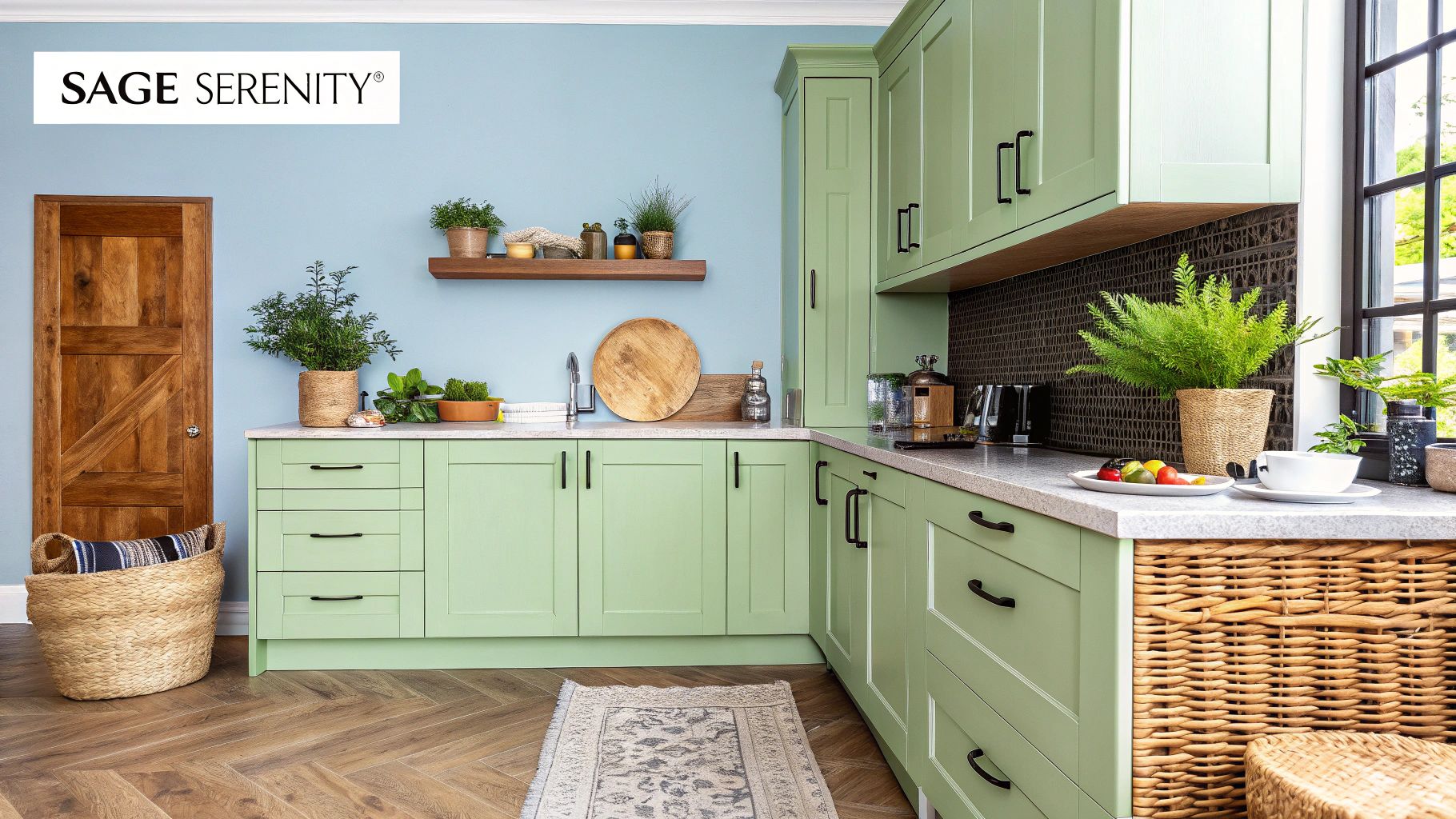
Sage green is having a moment, and for good reason. This increasingly popular kitchen colour idea offers a nature-inspired, calming presence that perfectly bridges the gap between neutral and colourful. This soft, muted green brings organic warmth to kitchens while maintaining a sophisticated, timeless quality that makes it a versatile choice for a variety of kitchen styles. Its subtle colouration avoids overwhelming the space, making it an excellent option for creating a serene and inviting atmosphere.
Sage green's versatility shines through its compatibility with various materials and styles. From classic shaker cabinets to modern slab fronts, sage green complements both traditional and contemporary aesthetics. Its biophilic design connection brings the outdoors in, creating a tranquil environment that resonates with nature. This makes sage green a particularly appealing kitchen colour idea for New Zealand homeowners, given our close connection to the natural landscape.
The benefits of a sage green kitchen are numerous. It creates a serene, calming atmosphere, connecting interior spaces to the natural world. It offers more visual interest than standard neutrals like white or grey while remaining timeless and avoiding fleeting trendiness. Furthermore, sage green works beautifully with natural materials like wood, stone, and rattan, enhancing their inherent warmth and texture. Learn more about Sage Green Kitchens for further inspiration.
However, like any colour choice, sage green has its considerations. In spaces with limited natural light, it can appear drab. Careful consideration of the specific shade is crucial, especially in north-facing rooms which might benefit from warmer sage tones. It’s also important to be mindful of wood pairings, as some wood tones may clash with sage. Finally, while generally timeless, the current popularity of sage green carries the risk of eventually dating the kitchen. Colour reproduction can also vary across different materials, so be sure to test samples in your chosen lighting conditions.
Looking for inspiration? Consider English-inspired sage cabinets with brass hardware for a classic look. A sage green island paired with cream perimeter cabinets can create a balanced and inviting focal point. Alternatively, sage lower cabinets combined with open shelving can achieve a modern, airy feel.
To successfully implement sage green in your kitchen, pair it with warm whites and natural wood tones. Balance the colour with creamy whites rather than stark whites to prevent a cold, sterile feel. Use deeper sage shades for islands or focal points to add depth and visual interest. And remember, lighting is key! Consider the natural light in your kitchen when selecting your sage shade, opting for warmer tones in spaces with less natural light. By carefully considering these tips, you can create a beautiful and timeless sage green kitchen that you'll love for years to come.
5. Warm Wood Tones
Looking for kitchen colour ideas that exude timeless elegance and natural warmth? Look no further than the resurgence of warm wood tones. This trend offers a welcome departure from the cooler greys of recent years, bringing a touch of organic sophistication to Kiwi kitchens. Warm wood tones, a key player in current kitchen colour ideas, embrace the inherent beauty of natural wood, showcasing its rich character and texture through various elements like cabinetry, open shelving, countertops, and accent features. This makes it a perfect choice for homeowners looking to create a space that feels both modern and inviting.
This trend's strength lies in its versatility. From the pale, airy hues of light oak to the deep, luxurious tones of rich walnut, the spectrum of warm wood tones allows for a high degree of customisation. The unique grain patterns inherent in each wood species add visual interest and depth, transforming your kitchen into a haven of natural beauty. This inherent variation ensures your kitchen feels uniquely yours, unlike mass-produced, uniform designs.
Features and Benefits:
- Natural Material with Unique Grain Patterns: No two pieces of wood are identical, providing a bespoke touch to your kitchen. This organic quality adds visual interest and a sense of connection to nature.
- Range of Shades: From light oak to rich walnut, the spectrum caters to diverse tastes and complements a wide range of kitchen colour ideas.
- Adds Warmth and Organic Texture: Wood inherently brings warmth and a tactile element that softens the often hard surfaces found in kitchens.
- Ages Beautifully Over Time: Unlike painted surfaces that can chip and fade, wood develops a rich patina with age, enhancing its character and charm.
Pros:
- Provides Visual Warmth and a Natural Element: Creates a welcoming and inviting atmosphere.
- Creates Timeless Appeal: Wood transcends fleeting trends, ensuring your kitchen remains stylish for years to come.
- Hides Wear and Tear Effectively: Minor scratches and dents blend into the wood's natural grain, maintaining its aesthetic appeal.
- Complements Many Colour Palettes: Warm wood tones work beautifully with a wide range of colours, from crisp whites and cool blues to earthy greens and vibrant reds.
Cons:
- Can Require More Maintenance Than Painted Surfaces: Wood requires regular oiling or sealing to protect it from moisture and stains.
- Quality Wood Cabinetry Is Expensive: Solid wood is a premium material, and this is reflected in its price.
- Difficult to Change Once Installed: Replacing wood cabinetry is a significant undertaking, so careful consideration is crucial.
- Requires Careful Consideration of Wood Species Compatibility: Certain woods are more suitable for specific applications (e.g., countertops vs. cabinetry) due to their varying hardness and moisture resistance.
Examples in NZ Kitchens:
- White oak cabinets with minimal black hardware create a sleek, Scandinavian-inspired aesthetic, perfect for modern Kiwi homes.
- A walnut island paired with white perimeter cabinets provides a striking focal point, adding a touch of luxury without overwhelming the space.
- Incorporating wood open shelving with painted cabinets offers a balanced approach, introducing warmth and texture while maintaining a bright and airy feel.
Tips for Implementing Warm Wood Tones:
- Consider Wood Tone in Relation to Flooring: Ensure the wood tones in your cabinetry and flooring complement each other without clashing.
- Mix Wood Species Thoughtfully: If using multiple wood species, ensure their tones and grain patterns harmonise.
- Use Wood Strategically as a Focal Point: A wood island, feature wall, or open shelving can create a stunning visual anchor.
- Balance with Non-Wood Elements for Contrast: Incorporate materials like stone, tile, or metal to create visual interest and prevent the space from feeling overly woody.
Inspired By:
The resurgence of warm wood tones in kitchen design is partly influenced by the enduring popularity of Japanese and Scandinavian design principles, which emphasise natural materials and minimalist aesthetics. The work of renowned kitchen designers like Christopher Peacock and the minimalist wood designs of architect John Pawson further exemplify the timeless appeal of this trend.
Warm wood tones deserve a spot on this list of kitchen colour ideas because they offer a timeless, versatile, and inherently beautiful way to elevate your kitchen design. By embracing the natural character of wood, you can create a space that is both visually stunning and deeply inviting, a true reflection of Kiwi style and appreciation for natural beauty.
6. Matte Black Kitchens
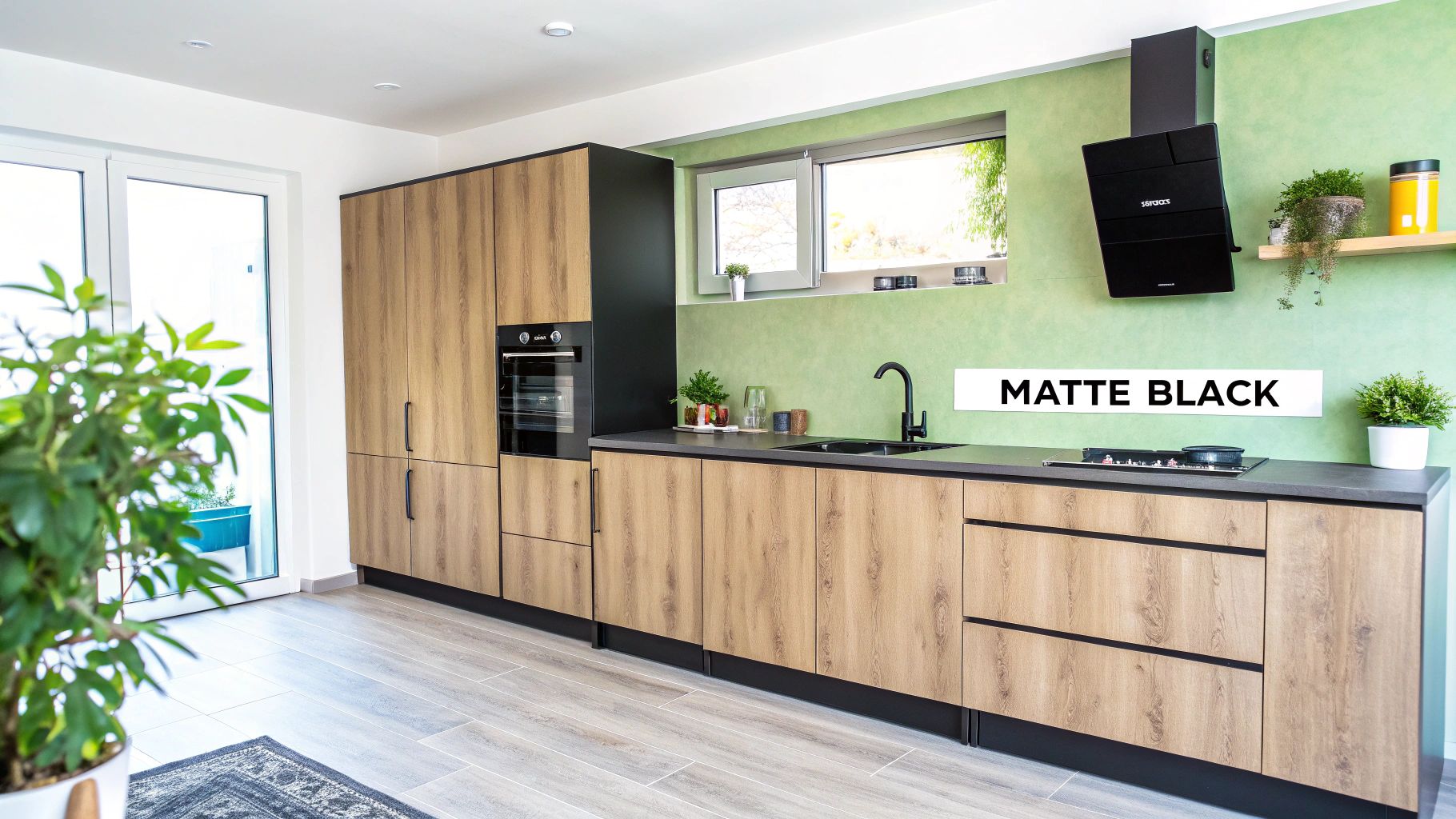
Looking for kitchen colour ideas that exude sophistication and modern style? Matte black kitchens have taken the design world by storm, offering a bold alternative to traditional colour palettes. This dramatic colour choice brings a contemporary, architectural edge to any kitchen, working beautifully as a statement or a subtle accent. This striking look is increasingly popular in NZ homes, reflecting global trends towards sleek, minimalist design.
Matte black's non-reflective finish absorbs light, creating a dramatic contrast against lighter elements like countertops and backsplashes. This unique characteristic allows it to act as both a statement colour and a surprisingly versatile neutral, complementing various design styles, from minimalist to industrial. Its versatility makes it a deserving addition to any list of kitchen colour ideas.
Features and Benefits:
- Non-reflective finish: Absorbs light, minimising glare.
- Bold aesthetic: Creates a dramatic and contemporary feel.
- Architectural appeal: Lends a high-end, structured look.
- Versatile: Pairs well with many design styles and materials.
- Hides fingerprints: A practical benefit for busy kitchens.
Pros:
- Effectively hides fingerprints and smudges compared to glossy finishes.
- Creates stunning contrast with lighter elements like marble or timber.
- Exudes sophistication and a sense of luxury.
- Functions as both a statement colour and a neutral backdrop.
Cons:
- Can make small kitchens feel cramped. Careful planning and integration with lighter colours are crucial.
- Shows dust and water spots more readily. Regular cleaning is necessary.
- May feel too stark or severe without warming elements like timber or natural textures.
- Can be overwhelming if overused. Consider using it strategically as an accent.
Examples of Successful Implementation:
- Matte black cabinetry paired with marble countertops for a luxurious, high-contrast look.
- Black steel-framed glass cabinet doors to add an industrial chic touch.
- A black kitchen island as a focal point, contrasted with lighter perimeter cabinetry.
Tips for Using Matte Black in Your Kitchen:
- Balance is key: Offset the darkness with light countertops, backsplashes, or wall colours.
- Incorporate natural elements: Introduce warmth with timber accents, indoor plants, or natural fibre rugs.
- Lighting is essential: Ample lighting, both natural and artificial, prevents the space from feeling dark and oppressive.
- Consider scale: In smaller kitchens, use matte black sparingly as an accent on hardware, fixtures, or appliances rather than the primary cabinet colour.
The rise of matte black in kitchen design can be attributed to influences such as Tom Dixon's iconic designs, the minimalist aesthetics popular in Australian and Scandinavian interiors, and the availability of matte black finishes from high-end appliance brands like Miele and Wolf. Learn more about Matte Black Kitchens Whether you're renovating your entire kitchen or simply looking to update your appliances, incorporating matte black can elevate your space with a touch of modern elegance. This makes it a particularly appealing kitchen colour idea for New Zealand homeowners looking to incorporate global design trends.
7. Warm Terracotta & Earthy Tones
Looking for kitchen colour ideas that evoke a sense of warmth and natural beauty? Warm terracotta and earthy tones are having a resurgence, bringing a touch of sun-baked Mediterranean charm to Kiwi kitchens. These rich, grounding hues, ranging from rusty oranges and burnt sienna to clay browns, infuse a space with organic character and lived-in comfort, making them a worthy contender on our list of top kitchen colour ideas.
This colour palette draws inspiration from clay-inspired natural pigments, offering a rich, sun-baked quality. Influenced by Mediterranean and Southwest design, terracotta can be used in both subtle and statement applications, making it a versatile choice for various kitchen styles. Think rustic Tuscan villas or the earthy tones of the New Zealand landscape – these colours connect us to the natural world.
Features and Benefits:
- Natural Pigments: The beauty of terracotta lies in its connection to the earth. Clay-inspired pigments create an authentic and organic feel.
- Sun-Baked Warmth: These colours instantly create a warm and inviting atmosphere, perfect for creating a cosy and welcoming heart of the home.
- Versatile Application: From a terracotta tile backsplash to a rust-coloured island, the range of shades allows for both subtle accents and bold statements.
Examples in Action:
- Flooring: Terracotta tile floors paired with a complementary wall colour create a cohesive and inviting space.
- Island Focus: A rust-coloured island can be a stunning focal point against a backdrop of neutral perimeter cabinets.
- Backsplash Beauty: Terracotta backsplash tiles paired with white cabinets offer a classic yet contemporary look.
Pros and Cons:
Pros:
- Instant Warmth: Terracotta creates a warm and cosy atmosphere.
- Natural Connection: The earthy hues connect to natural elements, bringing the outdoors in.
- Practicality: These colours are surprisingly effective at hiding dirt and everyday wear and tear.
- Design Pairing: Terracotta pairs beautifully with natural materials like wood, stone, and rattan.
Cons:
- Intensity: In large applications, terracotta can feel overwhelming.
- Colour Matching: Achieving consistent colour across different materials (tiles, paint, etc.) can be tricky.
- Architectural Clashes: Terracotta may clash with certain architectural styles, particularly ultra-modern or minimalist designs.
- Trend Sensitivity: While experiencing a revival, terracotta may be more trend-sensitive than classic neutrals.
Tips for Success:
- Accentuate, Don't Dominate: Use terracotta as an accent colour rather than the dominant shade to avoid overwhelming the space.
- Balance and Texture: Balance the richness of terracotta with creamy whites, natural textures, and plenty of natural light.
- Location, Location, Location: Terracotta particularly suits sun-drenched spaces, enhancing the natural light.
- Natural Complements: Pair with green plants to enhance the natural, earthy vibe.
Inspiration and Influence:
The resurgence of terracotta in interior design is partly thanks to the enduring popularity of Mediterranean and Spanish revival architecture. Designers like Sarah Sherman Samuel and studios like Shapeless Studio (known for their Brooklyn renovations) have also championed the use of these earthy tones in contemporary settings.
This colour palette is a perfect choice for New Zealand homeowners wanting to bring a touch of warmth and natural beauty into their kitchens. Whether you’re renovating or simply looking for fresh kitchen colour ideas, consider the rich and inviting charm of terracotta and earthy tones. They offer a unique blend of style, practicality, and connection to the natural world.
8. Soft Blues & Greyed Blues
Soft blues and greyed blues offer a sophisticated and tranquil approach to kitchen colour ideas, providing a welcome alternative to stark neutrals while still maintaining a sense of timeless elegance. These muted, atmospheric hues bring a touch of serenity to the heart of your home, creating a space that feels both inviting and stylish. This colour palette has become increasingly popular in NZ kitchens, offering a subtle way to introduce colour without overwhelming the space.
This colour family encompasses a spectrum of shades, from the palest whisper of a sky blue to deeper, denim-inspired tones, all underscored by subtle grey undertones. This inherent greyness is what sets these blues apart, lending them a calming quality and an unexpected versatility. The muted nature of these colours allows them to seamlessly integrate into various design styles, whether your aesthetic leans towards modern farmhouse, classic, or contemporary.
Features and Benefits:
- Muted blue hues with grey undertones: This offers a softer, more sophisticated take on traditional blue, creating a calming and inviting atmosphere.
- Atmospheric, calming quality: Perfect for creating a serene and relaxing kitchen environment.
- Versatile with many design styles: Works well with both traditional and contemporary aesthetics.
- Ranges from barely-there to medium intensity: Allows for flexibility in creating the desired level of colour impact.
Pros:
- Creates a soothing, tranquil atmosphere: Ideal for a space where you spend a lot of time.
- More interesting than pure neutrals: Adds a subtle layer of visual interest without being overpowering.
- Pairs well with various woods and metals: Complements a range of materials, from warm oak to sleek stainless steel or brass.
- Retains timeless appeal while offering colour: A colour choice that won’t quickly feel dated.
Cons:
- Can appear cold without warming elements: Important to balance with warm textures and accents.
- May feel drab in north-facing rooms (in NZ): Consider lighter shades or supplemental lighting in these spaces.
- Colour shifts significantly in different lighting: Test paint samples extensively in your kitchen's specific lighting conditions.
- Requires thoughtful material coordination: Careful planning is key to achieve a cohesive and balanced look.
Examples of Successful Implementation:
- Pale blue-grey cabinetry paired with crisp white marble countertops for a light and airy feel.
- A denim blue kitchen island as a statement piece, contrasted against white perimeter cabinets for a balanced look.
- Soft blue walls complemented by brass hardware and warm wood accents to create a sense of warmth and sophistication. Think of Farrow & Ball’s ‘Light Blue’ and 'Parma Gray' for inspiration, or look to the work of Plain English Kitchen designs and designer Jean Stoffer's kitchen projects.
Actionable Tips:
- Balance cool tones with warmth: Incorporate warm woods, like oak or beech, or metallic accents in brass or gold to offset the coolness of the blue.
- Consider room exposure: Opt for lighter shades in north-facing rooms to maximise natural light and prevent a drab feel. Conversely, south-facing rooms can handle deeper, richer tones.
- Test paint samples in your kitchen: Lighting plays a crucial role in how colours appear. Test your chosen shades in your actual kitchen lighting throughout the day to ensure you're happy with the final result.
- Pair with warm whites: Opt for warm white or cream-coloured accents, rather than stark cool whites, to maintain a balanced and inviting atmosphere.
This colour scheme deserves a place on this list because it offers a fresh and versatile approach to kitchen design. It allows homeowners to embrace colour in a sophisticated and understated way, creating a space that is both stylish and serene. By carefully considering the pros and cons and following the tips provided, you can successfully incorporate soft blues and greyed blues into your kitchen for a truly timeless and inviting space.
9. Jewel Tones
Looking for kitchen colour ideas that pack a punch? Jewel tones offer a rich and luxurious way to infuse your kitchen with personality and depth. Inspired by precious gemstones like emeralds, sapphires, amethysts, and rubies, these highly saturated colourways create a dramatic visual impact, transforming your kitchen into a truly memorable space. This trend deserves a spot on our list because it offers a bold alternative to the ubiquitous neutral kitchen, allowing homeowners to express their individual style with confidence. Learn more about Jewel Tones
This opulent approach utilises rich, gemstone-inspired hues to achieve a bold and luxurious aesthetic. Imagine deep emerald green cabinetry accented with gleaming brass hardware, or a ruby red kitchen island serving as a captivating focal point. Perhaps a sapphire blue feature wall provides a dramatic backdrop to neutral-toned cabinetry. These are just a few examples of how jewel tones can elevate your kitchen design.
Features and Benefits:
- Highly saturated, rich colourways: Jewel tones offer depth and complexity that neutral palettes often lack.
- Gemstone-inspired palette: Draw inspiration from the natural beauty of precious stones.
- Bold visual impact: Make a definitive design statement with colours that demand attention.
- Luxurious, opulent quality: Elevate your kitchen's aesthetic with a touch of glamour.
- Hides wear and marks effectively: Deeper colours are more forgiving than lighter shades, making them a practical choice for busy kitchens.
Pros:
- Creates a distinctive, memorable space.
- Expresses personality and confidence.
- Hides wear and marks effectively.
- Offers richness and depth.
Cons:
- Can overwhelm smaller spaces. Careful planning is crucial, particularly in NZ homes where kitchen sizes can be compact.
- May date more quickly than neutrals. While timeless in their own right, specific jewel tones might fall out of fashion faster than classic neutrals.
- Requires colour confidence. Embracing jewel tones requires a willingness to step outside the comfort zone of neutral palettes.
- More difficult to change than neutral schemes. Repainting or replacing jewel-toned elements can be a more involved process.
Tips for Implementing Jewel Tones in Your Kitchen:
- Use jewel tones strategically as focal points: Instead of saturating the entire space, consider using a jewel tone for a feature wall, kitchen island, or cabinetry. This allows you to introduce the vibrancy of jewel tones without overwhelming the room.
- Balance with neutrals: Pair jewel tones with neutral colours like white, grey, or beige to create a harmonious and balanced look. This prevents the space from feeling too overpowering.
- Consider jewel-toned appliances: For a smaller pop of colour, explore colourful appliances. This adds a touch of personality without committing to a full-scale renovation.
- Ensure adequate lighting: Proper lighting is essential to showcase the true depth and richness of jewel tones. Consider a mix of natural and artificial lighting to highlight the colours effectively.
Inspiration and Origins:
The popularity of jewel tones in interior design can be attributed to influential figures like British maximalist designer Abigail Ahern and companies like DeVol Kitchens, known for their custom coloured cabinets. This trend is becoming increasingly popular in NZ, adding a vibrant touch to kitchen colour ideas across the country.
Kitchen Colour Ideas Comparison Table
| Kitchen Colour | 🔄 Implementation Complexity | ⚡ Resource Requirements | ⭐ Expected Outcomes | 💡 Ideal Use Cases | 📊 Key Advantages |
|---|---|---|---|---|---|
| White Kitchens | Low - straightforward painting/finishing | Moderate - needs upkeep to stay clean | ⭐⭐⭐⭐ Bright, clean, and spacious feel | Small to medium kitchens needing brightness | Timeless, versatile, enhances space |
| Two-Tone Cabinets | Medium - requires careful colour coordination | Medium to high - multiple finishes/colours | ⭐⭐⭐⭐ Adds dimension and visual interest | Kitchens wanting subtle colour contrast | Architectural interest, refreshes look |
| Navy Blue Kitchens | Medium - needs proper lighting planning | Moderate - premium paint/finishes | ⭐⭐⭐⭐ Sophisticated, elegant depth | Medium to large kitchens with good lighting | Hides dirt, pairs with warm metals |
| Sage Green Kitchens | Medium - colour selection and lighting considerations | Moderate - quality paint finishes | ⭐⭐⭐⭐ Calming, nature-inspired warmth | Biophilic or natural style kitchens | Serene, connects indoors to nature |
| Warm Wood Tones | High - custom cabinetry or quality wood required | High - costly wood materials | ⭐⭐⭐⭐ Warm, organic, and timeless | Classic, rustic, or Scandinavian kitchens | Natural textures, ages beautifully |
| Matte Black Kitchens | Medium to High - requires precision and lighting | Moderate to high - specialty finishes | ⭐⭐⭐⭐ Dramatic, bold, and modern | Contemporary kitchens with strong contrasts | Hides smudges, luxury feel |
| Warm Terracotta & Earthy Tones | Medium - less common materials/finishes | Moderate - natural pigment sourcing | ⭐⭐⭐ Cozy, sun-baked warmth | Mediterranean or rustic-style kitchens | Warmth, hides dirt, natural complement |
| Soft Blues & Greyed Blues | Low to Medium - subtle colour matching | Moderate - paint and finishes | ⭐⭐⭐⭐ Soothing, subdued colour interest | Tranquil, serene kitchen environments | Timeless with colour, pairs with warm tones |
| Jewel Tones | High - bold colour requires confidence and precision | High - premium paints and materials | ⭐⭐⭐⭐ Luxurious, memorable, and personality-filled | Statement kitchens and feature elements | Rich depth, hides wear, dramatic impact |
Ready to Transform Your Kitchen?
From the classic elegance of white kitchens to the dramatic statement of matte black and the natural warmth of wood tones, this article has explored a diverse spectrum of kitchen colour ideas to inspire your next renovation or refresh. We've covered trending hues like sage green and two-tone cabinets, as well as the resurgence of warm terracotta and the calming influence of soft blues and greys. The key takeaway is that the right kitchen colour palette can dramatically impact the mood and feel of your space, enhancing not just its aesthetic appeal but also its functionality and your enjoyment while using it. By carefully considering your personal style, the size of your kitchen, and the existing elements, you can select kitchen colour ideas that perfectly complement your vision. Whether you’re drawn to the vibrancy of jewel tones or the understated sophistication of navy blue, the possibilities are endless. Mastering these colour concepts allows you to create a kitchen that truly reflects your personality and enhances your everyday life.
Ready to bring your dream kitchen to life? Explore the extensive range of quality kitchen appliances and home essentials at Folders. Folders offers a curated selection of products and expert advice to help you perfectly match your appliances and décor with your chosen kitchen colour ideas, making your renovation journey in New Zealand seamless and inspiring.