

Convection Oven vs Air Fryer What's Best for Your Kitchen
Trying to choose between these two popular appliances? Let me break it down for you.
Essentially, an air fryer is what you want for getting that super crispy, deep-fried texture on smaller batches of food, and fast. Think chips, chicken wings, or spring rolls. On the other hand, a convection oven is a true kitchen workhorse. It’s built for bigger jobs like baking, roasting, and cooking family-sized meals with incredibly even heat.
Understanding The Core Differences
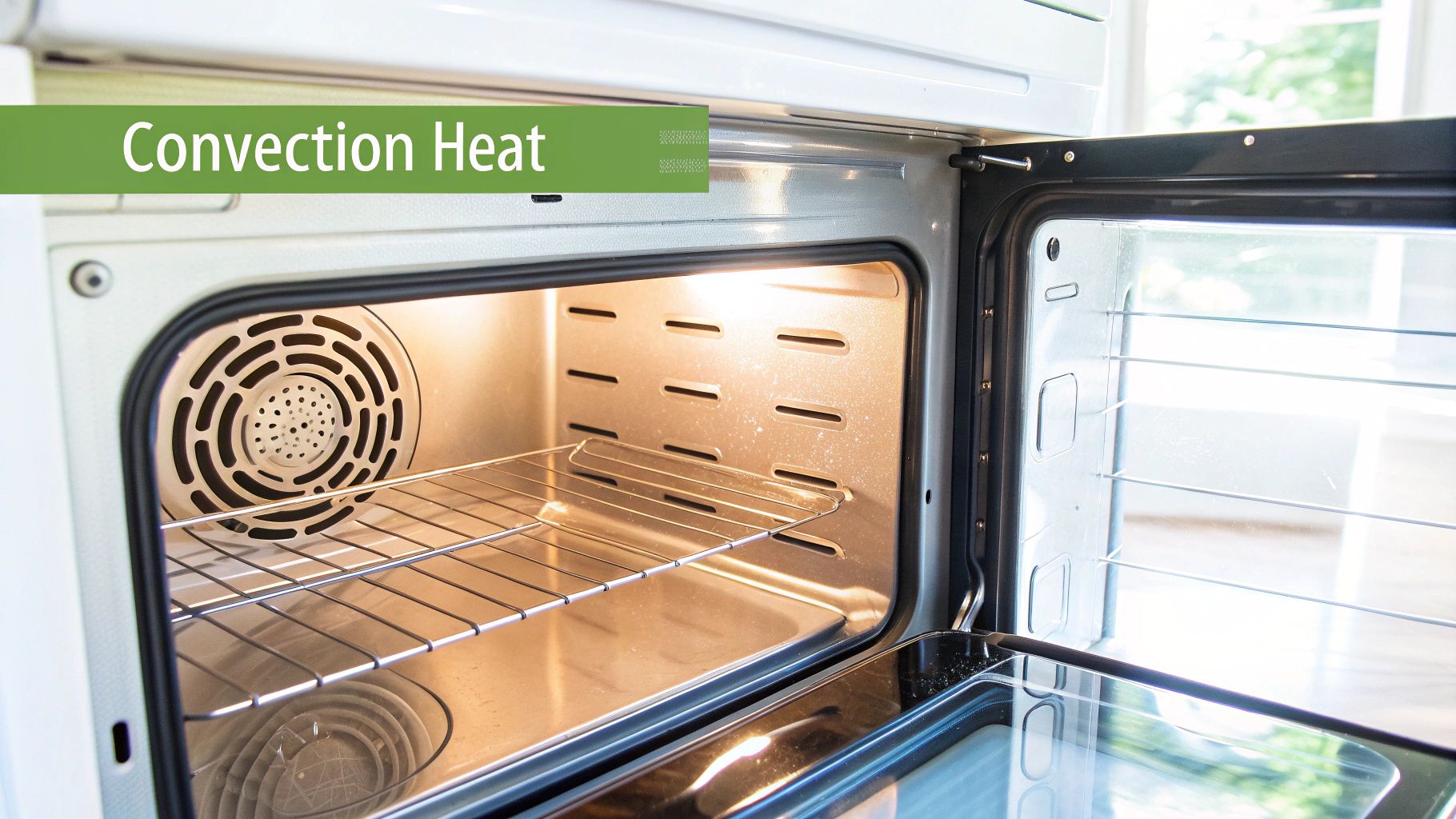
The whole convection oven vs. air fryer debate really boils down to a simple trade-off: do you want specialised, rapid crisping for smaller meals, or do you need all-around versatility and space for larger dishes? While they both work by circulating hot air, their designs are fine-tuned for very different kitchen tasks.
It's no wonder these gadgets are so popular. As more Kiwis look for healthier ways to cook, the demand has skyrocketed. The air fryer market in New Zealand is a great example of this, hitting around US$4.82 million in 2025 and expected to grow by over 9.5% each year. You can see just how much Kiwis love their air fryers by checking out the latest market data.
To make sense of the practical differences, let's put them side-by-side and see how they really stack up.
Key Differences at a Glance
For a quick overview, this table cuts straight to the chase, highlighting the main distinctions between a typical air fryer and a convection oven.
| Feature | Air Fryer | Convection Oven |
|---|---|---|
| Primary Use | Rapidly crisping small to medium batches of food | Evenly baking, roasting, and browning larger meals |
| Size & Capacity | Compact; ideal for 1-4 servings (e.g., chips, wings) | Larger; accommodates full-size trays and multiple dishes |
| Cooking Speed | Very fast; minimal preheating required | Slower; requires more preheating time |
| Best For | Recreating a "fried" texture with little to no oil | Roasting whole chickens, baking cakes, cooking casseroles |
| Kitchen Footprint | Small, sits on the countertop | Larger; can be a countertop model or a built-in wall unit |
So, what's the bottom line?
The Essential Takeaway: An air fryer is a specialist tool designed for speed and crunch. A convection oven is a generalist appliance built for capacity and even cooking.
This guide will dive deeper into how each one performs, how much power they use, and the best scenarios for each, so you can feel confident you’re choosing the right appliance for your kitchen.
How The Cooking Technology Really Works
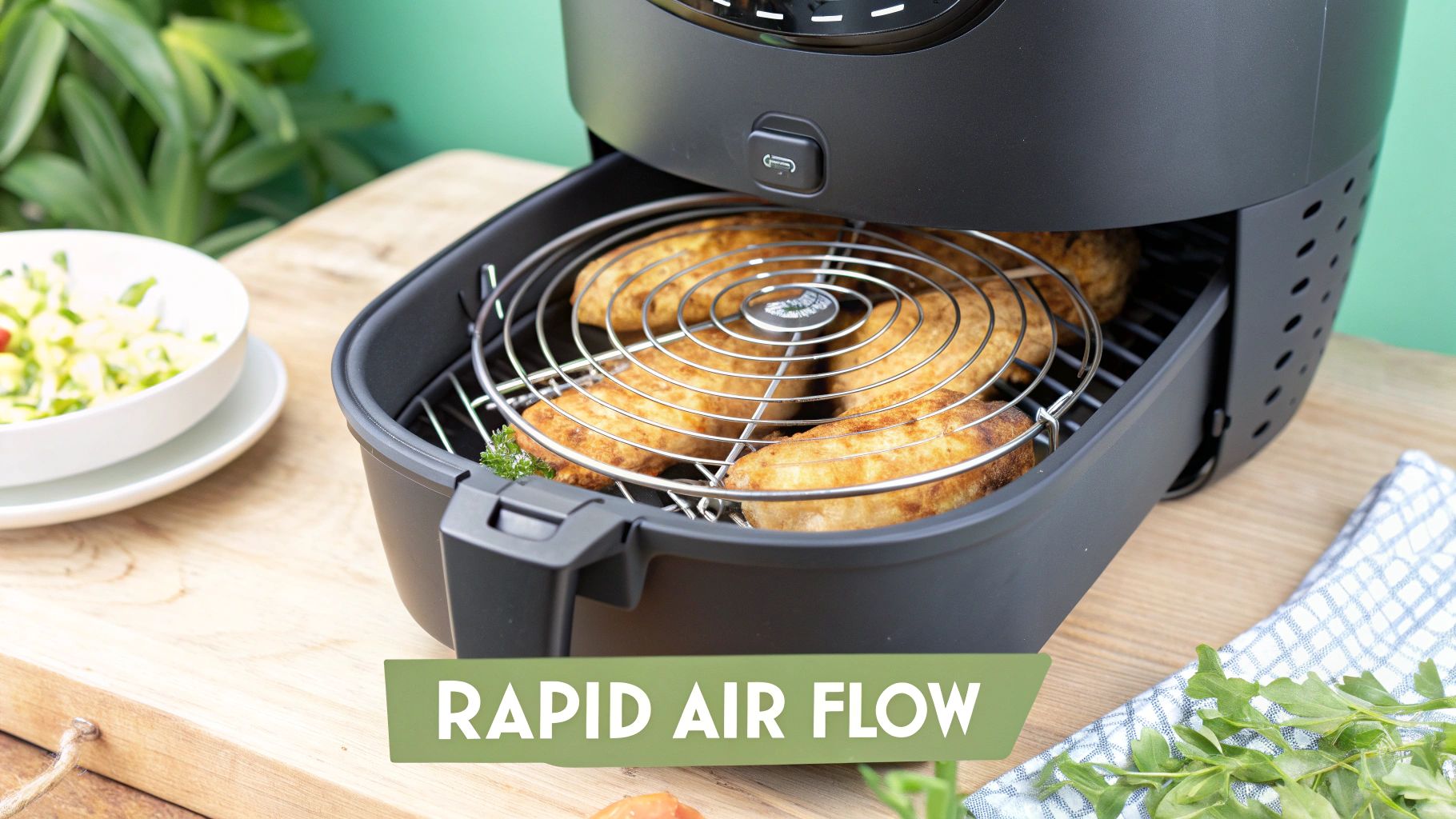
On the surface, both appliances seem to work the same way: a fan blows hot air around. But when you get into the nuts and bolts of it, the way a convection oven cooks compared to an air fryer is worlds apart. Getting your head around this difference is the secret to knowing which one will give you the results you’re after.
A convection oven is all about consistency and even cooking. Inside its roomy interior, a fan gently nudges hot air from the heating elements into every corner. This slow and steady circulation gets rid of hot spots, which is why a whole chicken roasts to a perfect golden-brown all over, or multiple trays of biscuits bake at the exact same speed. Think of it as a warm, persistent breeze that makes sure everything cooks through evenly.
The Core Mechanical Difference: A convection oven uses its fan to create a gentle, even heat distribution in a large space. An air fryer, on the other hand, uses a powerful, rapid fan to create an intense, high-velocity vortex of air in a much smaller chamber.
This commitment to even heating is precisely why they are the go-to for baking and roasting bigger meals. If you're just dipping your toes into this cooking style, checking out a guide on getting started with convection ovens in your kitchen can make all the difference. The aim isn't to blast your food with heat, but to cook it thoroughly and reliably from every angle.
The Air Fryer's Intense Air Vortex
An air fryer, in stark contrast, is built for speed and intensity. Its whole design is focused on creating a powerful cooking environment. You’ve got a compact cooking chamber, a heating element positioned right up close to the food, and a fan that spins at high speed. This combination creates a concentrated, cyclonic blast of incredibly hot air.
It’s this high-velocity air, working in tandem with a perforated basket that lets the heat hit the food from all sides, that kicks the Maillard reaction into overdrive. This process rapidly dries out the surface of the food, giving you that tell-tale crunchy, “fried” texture using just a fraction of the oil.
Here's a simple way to picture it:
- Convection Oven: Like a calm, sunny day that gently and evenly warms everything it touches.
- Air Fryer: More like a targeted, miniature heat cyclone engineered for maximum surface impact.
This is why an air fryer is brilliant at making chips impossibly crispy and giving chicken wings that satisfying crunch, but would be far too harsh for a delicate sponge cake. The technology is purpose-built for one primary job: delivering a fast, intense crisp that’s very similar to deep frying. It’s all about speed and texture, rather than the gentle, even cooking you get from its larger cousin.
A Head-to-Head Cooking Performance Showdown
When you're trying to choose between a convection oven and an air fryer, all the technical talk goes out the window. What really matters is how they actually cook your favourite food. So, let's put them to the test in a real-world cooking showdown. The results might just surprise you, revealing subtle but important differences that will make your decision a whole lot easier.
This infographic breaks down what happens when you cook a Kiwi classic—chips—highlighting the trade-offs between speed, oil, and that all-important crunch.
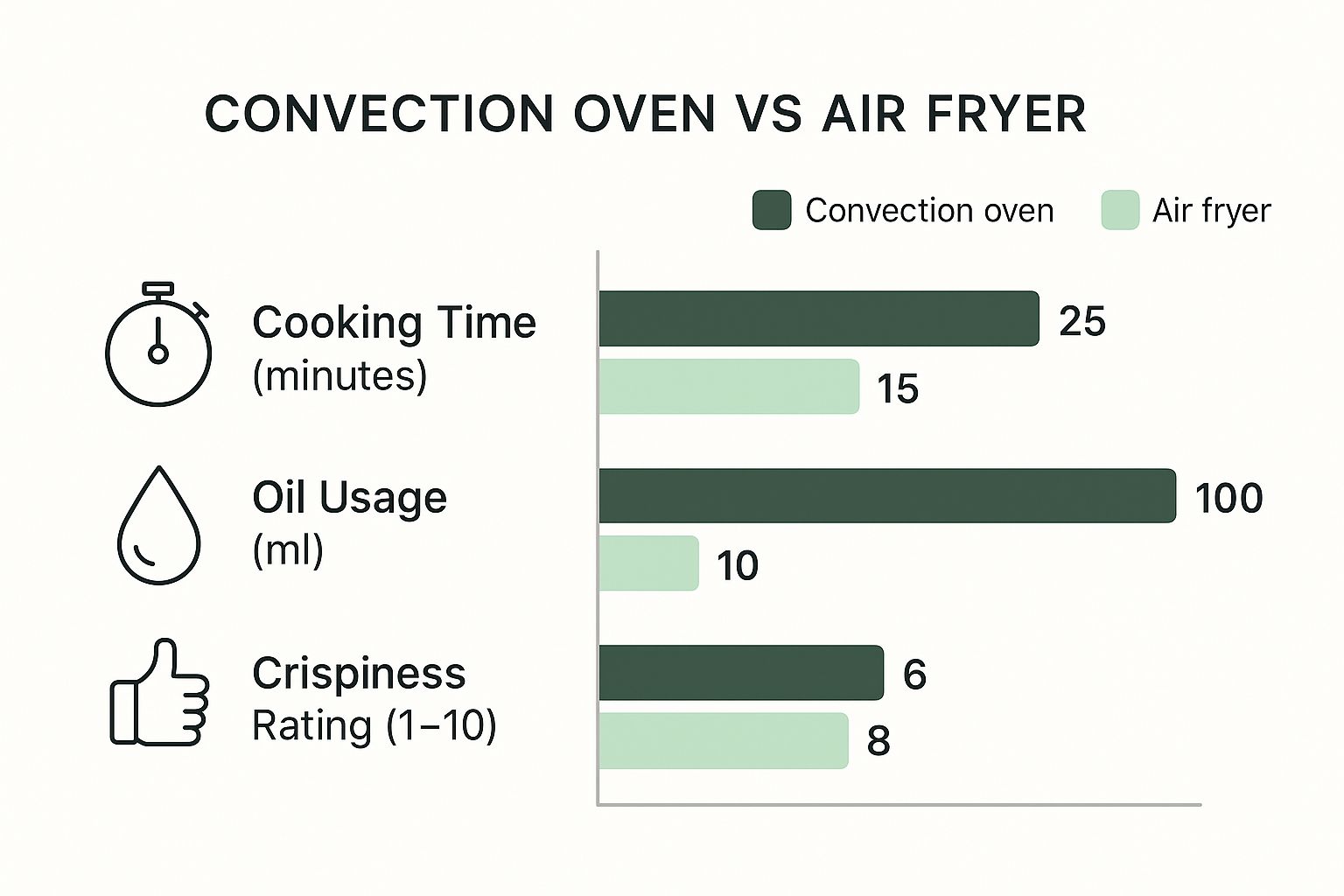
As you can see, the air fryer pulls ahead on speed and crispiness while using way less oil. For this specific job, it's the clear champion. But that's just one meal.
Chips and All Things Crispy
If it's a serious crunch you're after, the air fryer is in a class of its own. It’s absolutely brilliant for turning frozen chips, spring rolls, or chicken nuggets into something that tastes almost deep-fried. The intense, rapidly circulating hot air is the secret; it quickly dries out the surface of the food, creating that signature crispy shell.
A convection oven will cook them, no doubt. But the result is more baked than "fried," and you'll get a noticeably softer texture. It's a great option if you're roasting a big tray of potato wedges for the whole family, but it just can't match that specific air-fried finish.
Chicken Skin vs Internal Moisture
When it comes to cooking chicken, the best appliance really depends on the cut you're working with.
- For wings and drumsticks: The air fryer wins, hands down. Its powerful airflow renders the fat from the skin beautifully, making it unbelievably crispy and flavourful in under 20 minutes.
- For a whole roast chicken: The convection oven is the better tool for the job. Its gentler, more even heat cooks the entire bird uniformly. This means you get moist, tender meat all the way through, with perfectly golden-brown skin. An air fryer is usually too small for a whole chicken, and its aggressive heat can burn the outside before the inside is cooked.
The air fryer nails that unmatched crispy crust on wings, but the convection oven delivers a more reliably juicy and evenly golden whole roast chicken. This one comparison gets to the heart of their differences: specialised crisping versus versatile, even roasting.
Roasted Vegetables and Baked Goods
Roasting vegetables highlights another key difference. An air fryer is fantastic for getting a quick, tasty char on small batches of things like broccoli or brussels sprouts. But if you want to properly caramelise a large tray of root vegetables without them turning soggy and steaming, a convection oven provides the space and even heat you need.
For baking, the convection oven is the undisputed winner. The consistent temperature is vital for cakes, biscuits, and bread, giving you an even rise and a perfect golden finish. The intense, top-down heat from an air fryer is simply too harsh for most delicate baked goods, often resulting in burnt tops and undercooked centres. Understanding the strengths of common kitchen appliances and their uses is the key to getting the best result, every time.
Food Performance Head-to-Head
To make it even clearer, let's look at how these two appliances handle some common household meals, side-by-side.
| Food Type | Air Fryer Result | Convection Oven Result | Winner For This Dish |
|---|---|---|---|
| Frozen Chips | Extremely crispy, fast, and even. "Fried" texture. | Baked texture, less crispy, takes longer. | Air Fryer |
| Whole Roast Chicken | Often too small to fit. Can burn skin before meat is cooked. | Evenly golden-brown skin, moist meat throughout. | Convection Oven |
| Chicken Wings | Incredibly crispy skin, renders fat beautifully. Quick. | Skin is roasted and golden, but not as crispy. | Air Fryer |
| Roasted Vegetables | Great for small batches, gets a nice char. | Better for large trays, achieves deep caramelisation. | Convection Oven (for family-sized portions) |
| Cakes/Biscuits | Prone to burning on top with a raw centre. | Evenly baked with a consistent rise and colour. | Convection Oven |
| Reheating Pizza | Excellent. Revives the crust to its original crispiness. | Can make the crust either soggy or too hard. | Air Fryer |
Ultimately, the better performer really comes down to what you cook most often. If your priority is quick, crispy snacks and smaller meals, the air fryer will be your new best friend. If you need a reliable all-rounder for baking, roasting, and family-sized dishes, the convection oven is the workhorse you can count on.
Evaluating Size Capacity and Kitchen Footprint
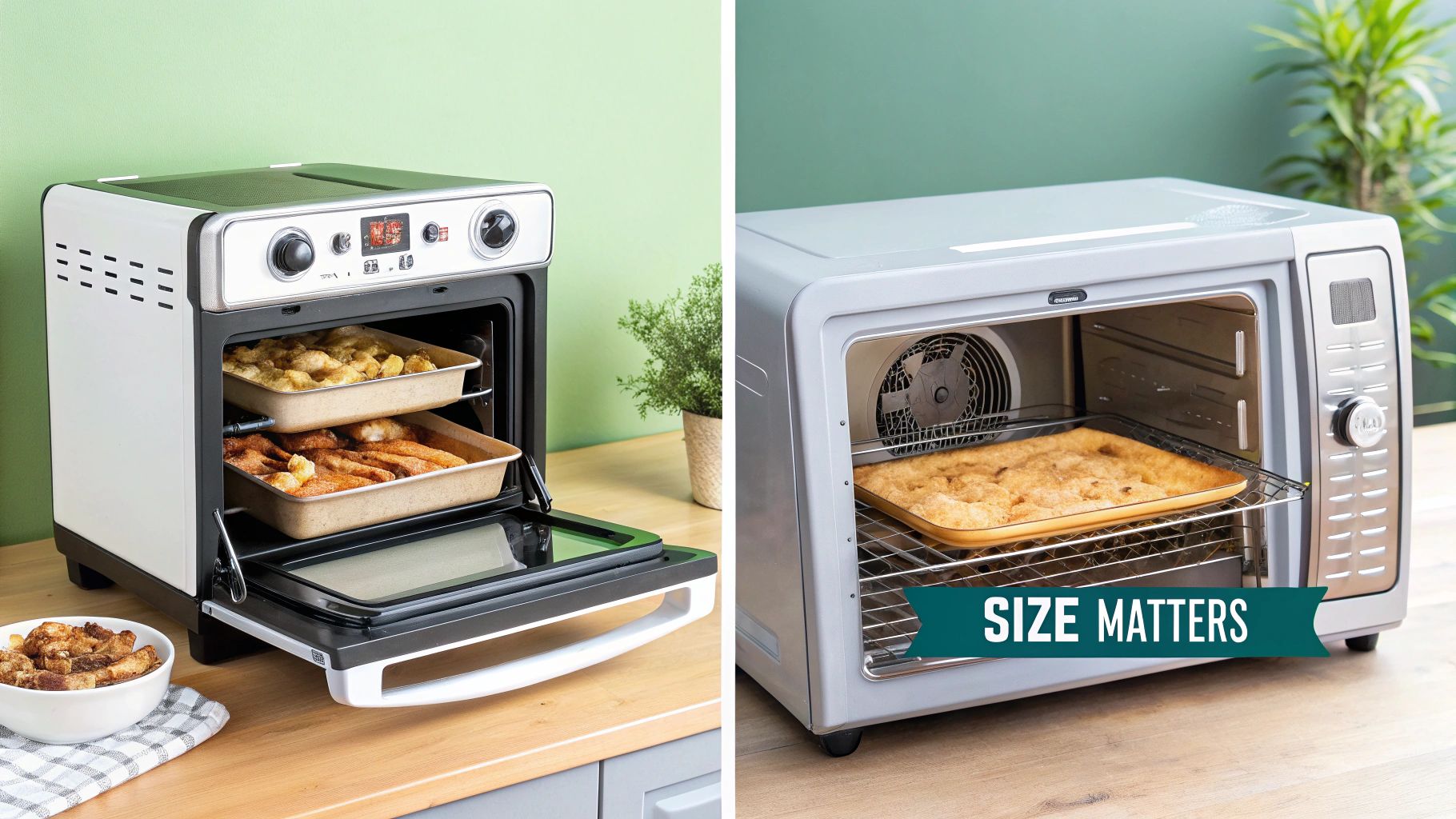
It's easy to get caught up in cooking performance, but let's be realistic: the physical size and internal capacity of an appliance are often the make-or-break factors. The whole convection oven versus air fryer debate really boils down to how much food you cook at once and how much bench space you’re willing to give up. These practicalities will have a bigger impact on your daily kitchen routine than you might realise.
Most basket-style air fryers are built for spatial efficiency. Their capacity usually sits somewhere between 3 and 7 litres, which is just right for singles, couples, or small families of up to four. This size is perfect for whipping up a quick side of chips, a couple of chicken breasts, or roasting a small batch of vegetables.
Of course, that compact design is a double-edged sword. If you're trying to feed a larger family or have guests over, you'll likely find yourself cooking in multiple batches. This can quickly cancel out the time-saving benefits an air fryer is famous for.
The Trade-Off Between Footprint and Volume
On the other side of the coin, convection ovens—whether they're countertop models or full-sized built-in units—offer a whole lot more room to cook. A typical countertop convection oven can easily handle a 30cm pizza or a whole roast chicken. A full-sized wall oven? You can cook multiple large trays at once, making it the clear winner for big family dinners or serious baking sessions.
The catch, naturally, is the amount of "countertop real estate" they command. A standalone air fryer can often be tucked away in a corner or stashed in a pantry when not in use. A countertop convection oven, however, needs a much larger, more permanent spot on your bench. Getting a handle on standard kitchen design measurements can be a huge help in making sure your new appliance fits properly.
The core decision is a direct trade-off: an air fryer gives you speed and saves space but limits your volume. A convection oven gives you ample cooking capacity but demands a much larger physical footprint in your kitchen.
Matching Appliance to Household Needs
The right choice becomes much clearer when you think about your household. If you live in a small apartment or are part of a couple, the compact and efficient nature of an air fryer will probably align perfectly with your lifestyle. The air fryer market in New Zealand has exploded with options, from tiny basket models to larger oven-style units, showing a clear trend toward meeting these diverse needs.
But for a family of five or anyone who loves to entertain, an air fryer’s limits will become obvious pretty quickly. A convection oven's ability to cook an entire meal, like a roast and all the veggies, in one go is a massive practical advantage. At the end of the day, honestly assessing your cooking habits and kitchen space is just as crucial as comparing the technology. Thinking through all these elements is key when finding the right kitchen appliances for your home.
Comparing Energy Consumption and Running Costs
Let's talk about the bottom line: how much will one of these appliances actually cost to run? With power bills always on our minds, figuring out which one is kinder to your wallet is a major part of the decision. The answer isn't as simple as you might think and really comes down to what and how you cook.
On the surface, an air fryer looks like the clear winner. Its small size and powerful fan mean it heats up in a flash and cooks food much quicker than a big oven. If you're just making a single serving of chips or warming up last night's pizza, an air fryer will absolutely use less electricity.
The Efficiency Crossover Point
But the tables turn when you're cooking for more than one or two people. A typical air fryer pulls about 1,500 watts, whereas a standard built-in convection oven can range anywhere from 2,000 to 5,000 watts.
The air fryer's lower wattage is great, but its small basket means you might have to cook in two or even three separate batches to get enough food on the table for the whole family. This is where a convection oven starts to make more sense. Cooking a roast chicken, potatoes, and some veggies all at once in a preheated oven can actually use less total power than firing up the air fryer multiple times for the same meal.
The key takeaway is this: for small, quick meals, the air fryer is almost always more economical. For larger, multi-component meals, the convection oven's capacity can make it the more efficient option, despite its higher power draw.
Calculating the Long-Term Cost
Let’s put it into practice. Cooking some frozen chips for 15 minutes in a 1.5kWh air fryer would use around 0.375 kWh. To do the same in a 2.4kWh convection oven, you'd need about 10 minutes to preheat and then 20 minutes to cook, using roughly 1.2 kWh. For that one job, the air fryer is the undisputed champion of efficiency.
Ultimately, your running costs are tied directly to your cooking habits. Think about your average meal size and how often you cook before you decide. When you're ready to buy, take the time to check the energy ratings on different models. Exploring the advantages of buying appliances online is a great way to compare these specs and prices side-by-side to find the most cost-effective solution for your kitchen.
Making the Right Choice for Your Home
So, which one belongs in your kitchen? The truth is, there's no single winner in the convection oven vs. air fryer debate. The best choice really boils down to your cooking style, how many people you're feeding, and what you whip up most often.
If you're a busy professional, a student, or a small family looking for quick, healthy weeknight meals and ridiculously crispy snacks, the air fryer is a clear standout. Nothing beats its speed and efficiency for smaller portions. It’s a master at turning simple foods into delicious, crunchy meals with minimal oil and even less fuss.
The Hybrid Option: What About Air Fryer Ovens?
Just to make things interesting, a new player has entered the game: the hybrid oven. These are essentially convection ovens equipped with a dedicated air fry setting, promising the best of both worlds. You get the spacious interior and baking power of a convection oven plus the intense crisping of an air fryer.
They are a fantastic space-saving solution if you're after one appliance to rule them all. But it's worth knowing that their larger size means they might not get food quite as intensely crispy as a smaller, dedicated basket-style air fryer. For many home cooks, though, this slight trade-off is a small price to pay for such incredible versatility.
Your decision should really be guided by what you cook the most. If speed and ultimate crispiness are your top priorities, go for the specialist (the air fryer). If you need capacity and baking flexibility, choose the versatile workhorse (the convection oven or a hybrid).
On the other hand, if you're an avid baker, love to entertain, or have a large family to feed, the convection oven is indispensable. Its ability to roast a whole chicken, bake multiple trays of biscuits evenly, or handle big casseroles makes it a true cornerstone of the kitchen. Thinking through these real-world scenarios is key, and our guide on tips you need to know when buying appliances can help you weigh up all the factors.
The popularity of these handy appliances has soared in New Zealand, especially since the pandemic sparked a renewed love for home cooking. This trend has pushed manufacturers to innovate, with features like smart controls becoming more common to make life even easier. It's a growing market, which means there’s a perfect model out there just waiting to fit right into your daily routine.
Frequently Asked Questions
When you're trying to choose between a convection oven and an air fryer, a few key questions always seem to pop up. Let's tackle them head-on with some straight-to-the-point answers to help you feel confident in your decision.
Can a Convection Oven Do Everything an Air Fryer Can?
Not quite. While a convection oven is a fantastic all-rounder for roasting, baking, and browning, it can't perfectly mimic what an air fryer does best. The fan in a convection oven circulates hot air evenly but gently, which is brilliant for cooking a whole chicken or baking a batch of biscuits.
An air fryer, on the other hand, is a specialist. It blasts food with concentrated, high-speed hot air, creating that signature super-crispy, "deep-fried" texture. A convection oven can get food crispy, sure, but it just can't match that intense, crunchy finish you get from a dedicated air fryer.
Is an Air Fryer Easier to Clean?
In a word, yes. This is one of the biggest practical wins for the air fryer. Most come with a removable, non-stick basket and tray that you can simply pop in the dishwasher. For daily use, the cleanup is incredibly fast and hassle-free.
Cleaning a convection oven is a different story. Because they're bigger and have fixed racks, they can be a bit of a mission to clean properly. Any splatters or grease from a Sunday roast can get baked onto the walls and floor, often needing a fair bit of time and elbow grease to scrub away.
The sheer simplicity of cleaning an air fryer basket is a massive lifestyle benefit, especially if you plan on using it almost every day. In contrast, cleaning a full-sized convection oven after a greasy roast is a much more involved chore.
What’s the Deal With Combo Convection Oven Air Fryers?
These hybrid appliances are designed to be the best of both worlds, and for many people, they are. They give you the space and baking functions of a convection oven but add a specific, high-powered "air fry" setting.
If you’re tight on bench space and want a single appliance that can do it all, they’re an excellent solution. The one small trade-off is that their air frying might not be quite as intensely crispy as a standalone unit. This is simply because the cooking chamber is much larger than a compact air fryer basket. For most home cooks, though, this minor difference is a small price to pay for such great versatility.