

Creative Wall Art Display Ideas to Transform Your Space
Want to transform your blank walls from boring to beautiful? This listicle delivers seven inspiring wall art display ideas to personalise your space. Discover how to curate a gallery wall, make a statement with a mural, utilise floating shelves and picture ledges, create a grid-based arrangement, incorporate track lighting, and even design a mixed media wall. These wall art display ideas will help you inject personality and style into your home, regardless of your budget or design experience.
1. Gallery Wall Display
A gallery wall display is a dynamic and engaging way to showcase a curated collection of artworks, photographs, and decorative objects. Unlike a single statement piece, a gallery wall transforms an entire wall into a visual masterpiece, offering a personalised and expressive touch to your living space. This approach allows for a captivating mix of different sizes, styles, and mediums, fostering artistic harmony through strategic placement and considered spacing. It’s a fantastic way to infuse personality into your home, reflecting your unique tastes and interests. This method is particularly effective for displaying diverse collections, adding a touch of eclectic charm to any room, making it a deserving addition to our list of top wall art display ideas.
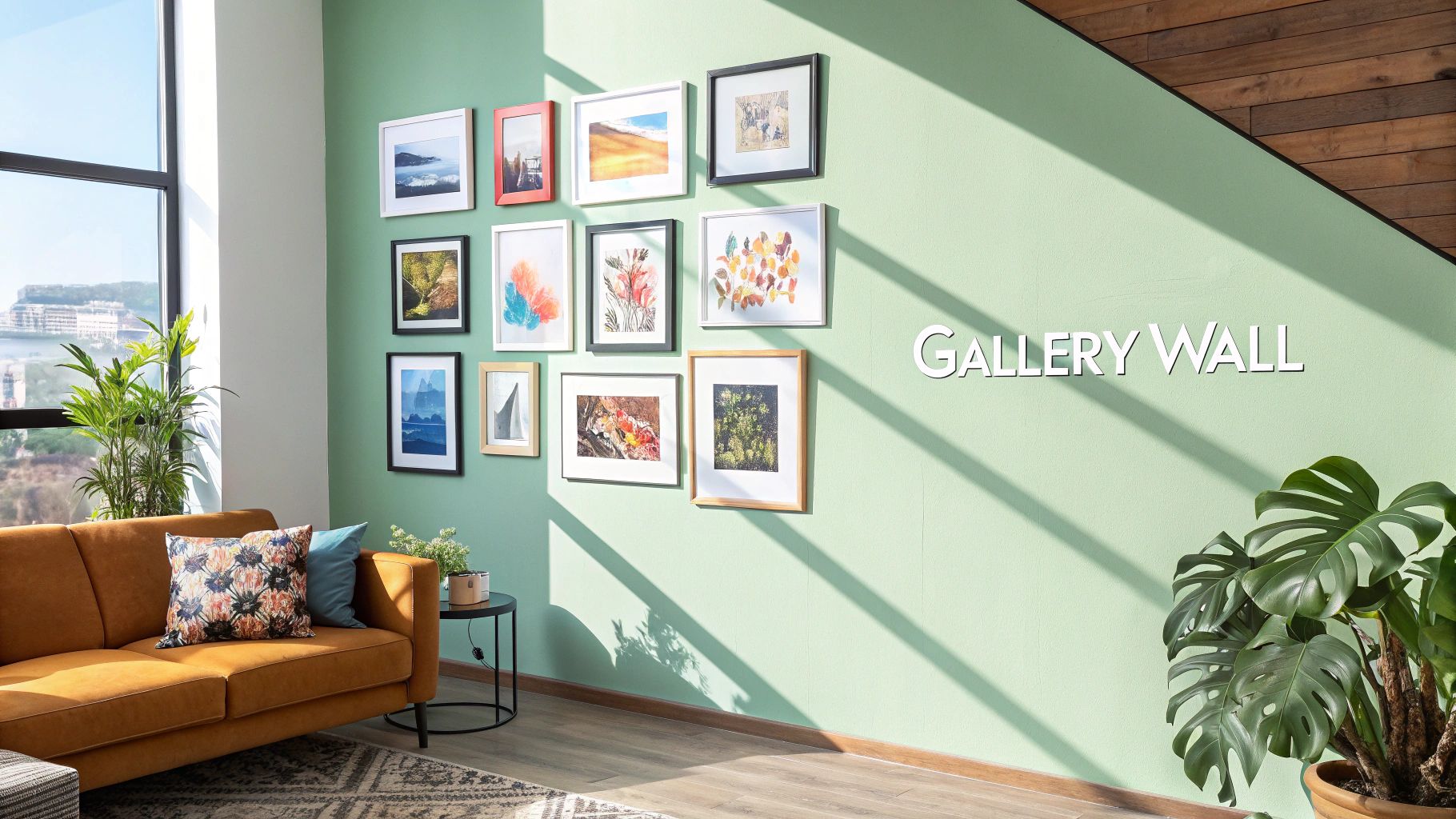
The beauty of a gallery wall lies in its flexibility. You can combine framed prints, original artwork, photographs, clocks, mirrors, even decorative plates or textile art, all within a single display. This eclectic approach allows for a truly personalised and unique wall art display idea, transforming a blank wall into a visual narrative of your interests and experiences. Whether you're drawn to a minimalist aesthetic with black and white photography or prefer a vibrant display of colourful abstract art, the possibilities for creating a gallery wall that resonates with your style are endless. This adaptable feature makes gallery walls suitable for various spaces, from modern apartments and family homes in NZ to boutique hotels and creative studios.
A well-executed gallery wall is more than just a random assortment of items. It requires careful planning and consideration to achieve a cohesive and visually appealing result. Key features include a strategic mix of frame sizes and styles, a thoughtful combination of art mediums, consistent spacing between pieces, and a unified colour palette or theme. This balance ensures the display feels harmonious and intentional, preventing a cluttered or overwhelming look.
Here are some actionable tips to create a stunning gallery wall display:
-
Start with an anchor piece: Choose the largest piece in your collection to serve as the focal point and build the arrangement around it.
-
Maintain consistent spacing: Aim for 2-3 inches between frames to create a sense of unity and avoid a cluttered appearance. This spacing allows each piece to breathe and stand out within the overall composition.
-
Plan on the floor: Before hammering any nails, lay out your arrangement on the floor. This allows you to experiment with different compositions and ensure you’re happy with the layout before committing to the wall. Using kraft paper or newspaper cutouts to represent each frame can be incredibly helpful in visualising the final arrangement.
-
Keep frames at eye level: The centre of the gallery wall should ideally be at eye level, around 57-60 inches from the floor. This ensures the display is comfortably viewed and becomes a natural focal point in the room.
-
Use paper templates: Trace each frame onto paper and tape the templates to the wall. This allows you to easily adjust the placement without making unnecessary holes. This is especially helpful for larger or heavier pieces.
Pros of a Gallery Wall:
-
Allows display of multiple pieces simultaneously
-
Creates a dramatic focal point
-
Flexible and easily updated
-
Cost-effective way to fill large wall spaces
-
Showcases personal style and collections
Cons of a Gallery Wall:
-
Can appear cluttered if not well-planned
-
Requires careful measurement and planning
-
May overwhelm small spaces
-
Time-intensive to arrange properly
Gallery walls have been popularised by influential figures in the interior design world, such as Nate Berkus, and featured in stylish home décor catalogues like West Elm. They’ve also become a trending topic on platforms like Pinterest and IKEA room displays, showcasing their versatility and enduring appeal. This method offers a versatile and impactful way to elevate your wall art display, bringing personality and visual interest to any space. From creating an Instagram-worthy feature wall in your apartment to showcasing cherished family photos in the hallway, a gallery wall display is a stylish and personalised way to transform your walls into a reflection of your unique style.
2. Statement Wall Murals
Want to instantly elevate your space and create a talking point? Statement wall murals are your answer. These large-scale artistic installations transform an entire wall into a captivating piece of art, injecting personality and drama into any room. Unlike scattering multiple smaller wall art display ideas, a mural creates a singular, cohesive visual element that defines the room's aesthetic. From lush botanical prints to abstract geometric designs, a statement wall mural offers a unique opportunity to express your style and create a truly unforgettable space. This approach to wall art display ideas deserves its place on this list due to its transformative power, personalisation options, and sheer visual impact.

Statement wall murals come in a variety of forms, offering flexibility for every taste and budget. You can opt for hand-painted murals for a truly bespoke design, or choose from a wide range of pre-designed wallpaper murals and oversized photographs. Custom-designed graphics printed on vinyl offer another popular choice, allowing you to create a personalised piece that reflects your unique style. Whether you envision a calming nature scene in your bedroom or a vibrant cityscape in your living room, there's a mural style to suit your vision. This flexibility makes statement wall murals a fantastic wall art display idea for NZ homeowners looking to make a bold statement.
The impact of a statement wall mural goes beyond mere decoration. It can drastically alter the perceived dimensions of a room. In smaller spaces, a well-chosen mural can create an illusion of depth and expanse, making the room feel significantly larger. In larger rooms, a mural can anchor the space and create a focal point, bringing a sense of cohesion and purpose to the design. This transformative ability is a key reason why statement wall murals are a popular choice for both residential and commercial spaces across New Zealand. Think of the vibrant botanical murals popping up in Auckland restaurants, or the striking skyline designs gracing the walls of Wellington offices. These examples demonstrate the power of murals to create immersive and memorable environments.
While the benefits of statement wall murals are undeniable, it's important to consider the practicalities. Installation and removal can be expensive, especially for custom designs or complex installations. Choosing the right material is also crucial. Removable wallpaper or vinyl options are ideal for renters or those who like to refresh their decor frequently. For more permanent solutions, painted murals or high-quality wallpaper offer longevity and durability. For complex designs, professional installation is highly recommended to ensure a flawless finish. A poorly installed mural can detract from the overall aesthetic, so it's worth investing in expert help.
Tips for Choosing and Installing a Statement Wall Mural:
-
Consider Room Size and Ceiling Height: Large-scale murals can overwhelm small spaces with low ceilings. Opt for smaller designs or murals that create a sense of depth in these situations. For high-ceilinged rooms, embrace the opportunity to go big and bold!
-
Colour Harmony: Choose mural colours that complement your existing décor. Consider the room's overall colour palette and choose a mural that enhances, rather than clashes with, the existing scheme.
-
Removable Options: If you're renting or enjoy changing your décor frequently, choose removable wallpaper or vinyl murals for easy installation and removal.
-
Test Before You Commit: If you're opting for a custom design, consider testing a small section first to ensure the colours and scale work well in your space.
-
Professional Installation: For complex designs or large-scale murals, hiring professional installers is highly recommended to achieve a seamless and polished finish.
The trend of statement wall murals has been fuelled by several influences, including the rise of street art (think Banksy's iconic works), the popularity of bold wallpaper collections from retailers like Anthropologie, and the farmhouse chic aesthetic championed by designers like Joanna Gaines. Anewall, a popular source for modern murals, has also contributed significantly to the trend, offering a vast selection of stunning designs. With so many options available, it's easier than ever to incorporate this dramatic wall art display idea into your NZ home.
3. Floating Shelves Art Display
Floating shelves offer a dynamic and versatile approach to displaying wall art, transforming blank walls into captivating focal points. This method moves beyond simply hanging pictures and embraces a more curated, three-dimensional aesthetic. By utilising shelves mounted with concealed hardware, you create the illusion that the shelves are "floating," offering a clean, modern look. This system isn't just for artwork; it's a platform for showcasing a mix of items, from books and plants to decorative objects and sculptures, allowing for personalised vignettes that reflect your style and add depth to your walls. This flexibility makes floating shelves a particularly attractive option for those who enjoy regularly updating their decor or showcasing collections.

The beauty of floating shelves lies in their adaptability. Unlike traditional picture frames that require precise placement and nail holes, floating shelves allow you to easily rearrange and layer pieces, creating a constantly evolving display. You can group smaller artworks together, prop larger pieces against the back of the shelf, or even layer framed prints in front of stacked books for a dynamic composition. This layered approach adds visual interest and a sense of depth, making your walls appear less flat and more engaging. The absence of visible brackets enhances this effect, drawing attention to the displayed items rather than the mounting hardware.
This wall art display idea works particularly well in modern living rooms, adding a touch of contemporary flair. Imagine a sleek set of white floating shelves against a dark feature wall, showcasing a mix of framed prints, potted succulents, and ceramic sculptures. In a bedroom, floating shelves can provide a stylish platform for displaying cherished books, framed photos, and small plants, creating a personalised and calming atmosphere. They also excel in office spaces, offering a practical way to display rotating artwork, inspirational quotes, and awards, injecting personality and creativity into the workspace. Even children's rooms benefit from this adaptable system, enabling easy changes as their interests evolve – from displaying favourite toys and books to showcasing artwork and school projects. Think themed displays based on their current passions, easily swapped out as they grow.
To maximise the impact of your floating shelf display, consider these tips: install shelves at varying heights to create visual interest and break up the monotony of a single line. Group items in odd numbers, a design principle that often creates a more balanced and visually appealing arrangement. Mix heights and textures within your displayed items to add depth and dimension. Don't overcrowd the shelves; leave breathing room between objects to prevent a cluttered look. Finally, and perhaps most importantly, ensure you use wall anchors appropriate for your wall type to safely support the weight of the shelves and displayed items. This is especially important in NZ homes, where various wall materials are common.
Floating shelves offer several advantages, making them a worthy addition to any list of wall art display ideas. Their flexibility allows you to accommodate various object sizes and easily change the display as desired. They create depth and dimension, making walls more visually appealing. The shelves themselves provide functional storage while simultaneously serving as a display surface. And thankfully, they eliminate the need for nail holes in your precious artwork. However, it's important to be aware of the limitations. Floating shelves have weight restrictions, requiring careful consideration of the items you plan to display. Proper wall anchoring is crucial for safety and stability. They can become cluttered easily if not styled thoughtfully. Dust accumulation on the shelves requires regular cleaning. And finally, they might not be suitable for displaying all art types, particularly heavy or oversised pieces.
The popularity of floating shelves has been fuelled by prominent retailers like CB2, known for their modern shelving systems, and IKEA, whose affordable LACK shelves have become a staple in many homes. Styling techniques showcased by retailers like West Elm and trends circulating on platforms like Pinterest further solidify the enduring appeal of this versatile wall art display idea.
4. Picture Ledge Systems
Picture ledge systems offer a fresh and versatile approach to displaying wall art, providing a unique alternative to traditional picture frames and gallery walls. These systems consist of narrow shelves or ledges, specifically designed to hold framed artwork, prints, and photographs. Instead of hanging each piece individually, artwork simply leans against the wall, supported by the ledge. This seemingly simple design opens up a world of possibilities for dynamic and easily interchangeable wall art displays. Picture ledges allow you to curate a casual, layered look, effortlessly showcasing your favourite pieces while adding a touch of modern flair to any room. This adaptability and ease of use makes them a worthy addition to any list of wall art display ideas.
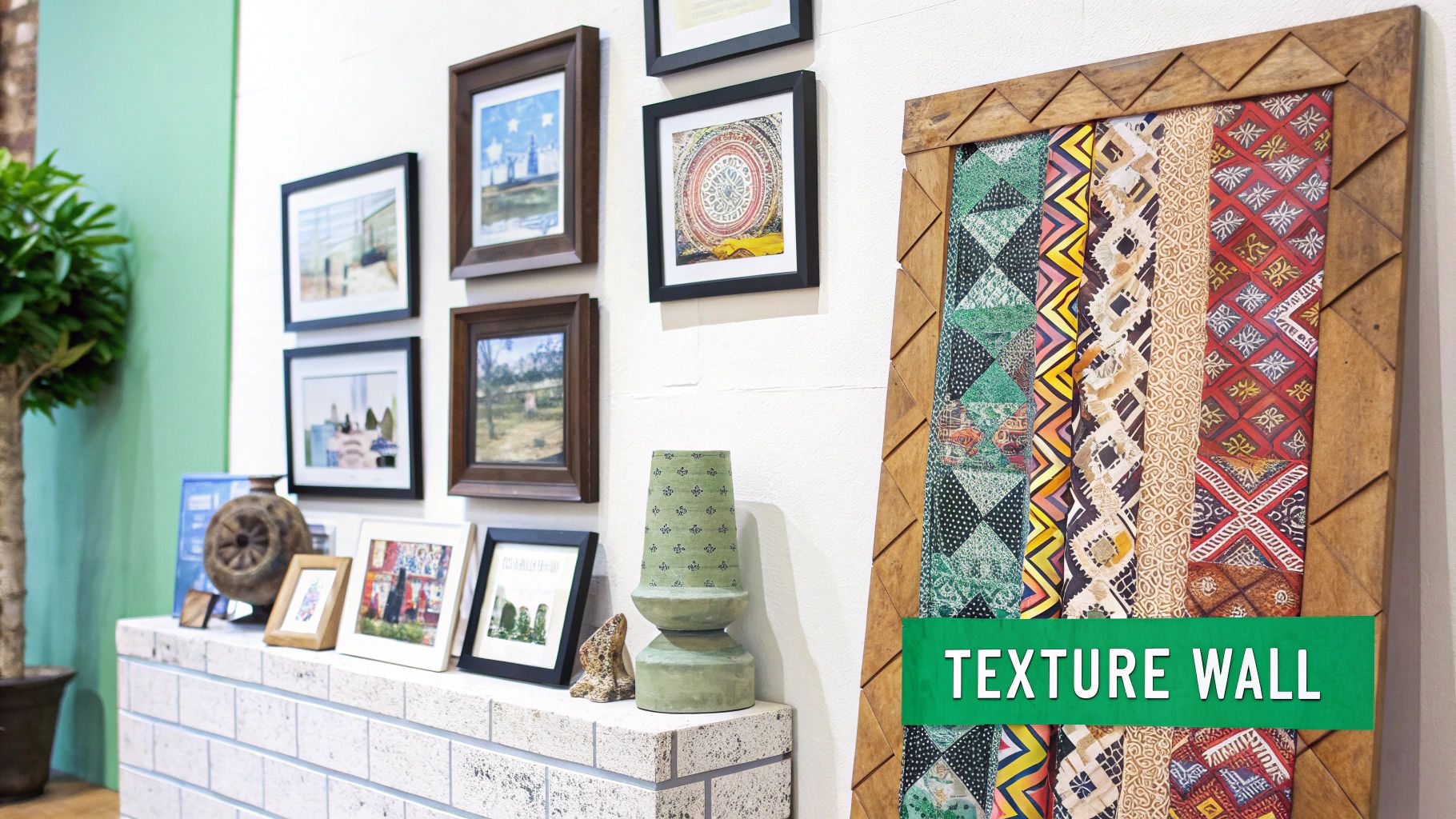
One of the primary benefits of picture ledge systems is the flexibility they offer. Swapping out artwork is incredibly quick and easy. Simply lift a piece off the ledge and replace it with another – no need for hammers, nails, or picture hooks. This makes it simple to refresh your decor seasonally, rotate children's artwork, or showcase new acquisitions without putting extra holes in your walls. This is particularly beneficial in rental properties where limiting wall damage is often a priority.
The shallow depth of the ledges provides a clean, linear appearance, suitable for various interior styles, from minimalist to modern farmhouse. The absence of individual hanging hardware contributes to a less cluttered aesthetic. This streamlined design can make a small space feel larger and more open. Picture ledge systems are remarkably versatile. They're equally at home in a hallway showcasing family photos, a living room displaying a curated collection of prints, or a child's bedroom holding a mix of books and artwork. The ability to layer pieces adds depth and visual interest, creating a more dynamic and engaging display than a single row of framed pictures.
While picture ledges are generally easy to work with, there are some practical considerations. They are best suited for lightweight pieces. Heavier frames or canvases may be unstable and could potentially slide off. Small, discreet stops can be added to the ledges to prevent this, offering extra security. Valuable or irreplaceable artwork should probably be hung traditionally for maximum safety. It’s also crucial to ensure a level installation to prevent leaning and potential slippage. Finally, the shallow depth limits the display of three-dimensional objects.
Picture ledge systems have gained popularity thanks to retailers like IKEA, with their ubiquitous RIBBA ledges, and through the influence of design blogs and social media, particularly within the modern farmhouse and Montessori-inspired design communities. They have become a staple in children's rooms for displaying books and artwork and are frequently used in hallways and living rooms to create evolving, personalised displays.
Here are a few tips for getting the most out of your picture ledge system:
-
Vary Heights: Install multiple ledges at different heights for a more dynamic and engaging display. This breaks up the monotony of a single line and creates visual interest.
-
Prevent Sliding: Use small, clear rubber bumpers or purpose-made ledge stops to prevent artwork from sliding, especially in high-traffic areas or homes with children.
-
Mix and Match: Combine different frame sizes and styles for a more eclectic and visually appealing look.
-
Consider Lighting: Installing lighting above the ledges can highlight your artwork and create a more dramatic effect.
-
Group Thematically: Arrange artwork by colour, theme, or subject matter for a cohesive and curated display. This can create a mini-gallery feel and tell a visual story.
For NZ homeowners and renters, picture ledges provide an affordable and stylish solution for displaying wall art. The ease of installation and the ability to quickly update displays make them a practical choice for busy families, design enthusiasts, and anyone looking to add a touch of personality to their walls without the commitment of traditional picture hanging. From showcasing cherished family photos in the hallway to rotating seasonal artwork in the living room, picture ledge systems offer a versatile and engaging way to bring your walls to life.
5. Track Lighting Art Focus
Elevate your wall art display from simple decoration to a captivating focal point with track lighting. This professional gallery-inspired approach uses adjustable track lighting systems to illuminate and highlight your artwork, transforming its presentation and adding a touch of sophistication to any space. This method deserves a spot on our list of wall art display ideas because it offers unparalleled control over lighting, allowing you to create dramatic effects and draw attention to specific pieces in a way that traditional lighting simply can't achieve. It's a fantastic way to showcase your cherished pieces, whether they're original paintings, limited edition prints, family photos, or even unique textile art.
Track lighting systems consist of a series of individual light heads mounted on a single track. This track can be straight or curved, allowing for flexible placement and customisation to suit your specific wall art display ideas. The real magic lies in the adjustability of the light heads. You can swivel and tilt them to direct the light precisely where you want it, minimising glare and shadows while emphasising the textures, colours, and details of your artwork. This level of control is particularly beneficial in NZ homes where natural light can be inconsistent, ensuring your art looks its best regardless of the time of day or weather.
Features and Benefits of Track Lighting for Wall Art:
-
Adjustable Light Direction: Pinpoint accuracy in highlighting specific areas of your artwork.
-
Professional Gallery Appearance: Achieve a museum-quality display that elevates the perceived value of your art collection.
-
Reduces Glare and Shadows: Minimise unwanted reflections and dark spots, allowing viewers to appreciate the artwork fully.
-
Flexible Positioning: Accommodates various wall layouts and art arrangements.
-
Enhances Artwork Visibility: Brings your art to life by showcasing its true colours and textures.
-
Creates Dramatic Ambiance: Sets the mood and adds a touch of drama to your space.
-
Increases Perceived Value of Art: Presents your artwork in a professional and sophisticated manner.
Pros and Cons:
While track lighting offers numerous advantages, it's important to consider the potential drawbacks:
Pros:
-
Professional, museum-quality display
-
Enhances artwork visibility
-
Adjustable for different pieces and layouts
-
Creates a dramatic ambiance
-
Increases the perceived value of art
Cons:
-
Higher installation cost compared to traditional lighting
-
Requires electrical work, which may necessitate hiring a qualified electrician in NZ
-
Can create harsh shadows if poorly positioned – careful planning and adjustment are crucial
-
Uses more electricity than single light fixtures
-
May require professional installation for complex setups
Examples of Successful Implementation:
Track lighting is commonly used in various settings to highlight artwork effectively:
-
Home art galleries: Create a dedicated space to showcase your collection in a professional manner.
-
High-end residential displays: Add a touch of elegance and sophistication to living rooms, dining areas, and hallways.
-
Boutique retail spaces: Draw attention to specific products and create an inviting atmosphere.
-
Photography studios: Provide controlled lighting for showcasing and photographing artwork.
Actionable Tips for Using Track Lighting:
-
Position lights at a 30-degree angle to the artwork: This minimises glare and provides even illumination.
-
Use LED bulbs to prevent heat damage: LEDs are energy-efficient and produce less heat, protecting your valuable artwork.
-
Install dimmer switches for ambiance control: Adjust the lighting intensity to suit the mood and occasion.
-
Consider the colour temperature of the bulbs: Choose warm white for a cosy atmosphere or cool white for a more contemporary feel. For accurate colour rendering of your artwork, consider bulbs with a high CRI (Colour Rendering Index).
-
Plan electrical needs during installation: Ensure adequate wiring and power outlets are available, especially for longer track systems. Consult a qualified electrician in NZ if necessary.
When and Why to Use Track Lighting:
Track lighting is an excellent choice for wall art display ideas when you want to:
-
Create a focal point: Draw attention to specific pieces and elevate their importance.
-
Enhance the viewing experience: Minimise glare and shadows, allowing viewers to appreciate the artwork fully.
-
Achieve a professional look: Give your home the feel of a high-end gallery or museum.
-
Add flexibility to your display: Easily adjust the lighting as your art collection grows or changes.
By carefully considering these tips and understanding the pros and cons, you can effectively utilise track lighting to transform your wall art display into a stunning and captivating focal point within your NZ home. While the initial investment might be higher than traditional lighting options, the long-term benefits in terms of aesthetics, functionality, and the enhanced presentation of your artwork make track lighting a worthwhile investment for serious art enthusiasts and anyone looking to elevate their interior design.
6. Grid-Based Symmetrical Arrangements
If you're drawn to order and precision, a grid-based symmetrical arrangement might be the perfect wall art display idea for your New Zealand home. This structured approach utilises geometric grid patterns, offering a balanced and organised display that exudes a professional, polished feel. Whether you're showcasing a series of prints, family photos, or a collection of botanical illustrations, a grid layout brings a sense of calm and visual harmony to any space. This method deserves its place on this list because it offers a classic, timeless aesthetic that's easy to achieve with a little planning. It’s particularly relevant in NZ where minimalist and Scandinavian design influences are popular.
This wall art display idea relies on mathematical spacing and alignment to create its impact. Imagine a grid overlayed on your wall, serving as a guide for placing your artwork. Each piece is positioned within a specific section of the grid, resulting in uniform distances between frames and consistent alignment both horizontally and vertically. This creates a sense of visual equilibrium and avoids the cluttered or haphazard look that can sometimes occur with less structured arrangements.
The features of a grid-based symmetrical arrangement include:
-
Precise mathematical spacing: Accurate measurements are key to achieving the desired balanced effect.
-
Uniform alignment: Every piece is carefully positioned to align with the grid, creating a clean, organised look.
-
Geometric organisation: The grid itself provides the underlying structure for the display, resulting in a visually pleasing pattern.
-
Balanced visual weight: The symmetrical distribution of artwork ensures that no one area feels heavier or more dominant than another.
-
Professional appearance: The precision and orderliness of this method lend a sophisticated, gallery-like feel to the display.
This approach works exceptionally well in formal spaces such as dining rooms, studies, or hallways. Imagine a grid of botanical prints in a dining room, creating a calming and sophisticated atmosphere. Similarly, a series of framed family photos displayed in a symmetrical grid along a hallway adds a touch of personal warmth while maintaining a sense of order. Grid arrangements are also well-suited for showcasing a collection of art with a matching theme or aesthetic, like a series of prints from a favourite New Zealand artist or a collection of vintage travel posters. In minimalist or modern interiors, this method reinforces the clean lines and uncluttered aesthetic. Think sleek black frames containing black and white photography against a crisp white wall – a classic example of this style.
While the structured nature of grid arrangements offers many advantages, it’s important to consider the potential drawbacks. It can sometimes appear rigid or sterile, especially if not executed with care. This method offers less flexibility for displaying diverse collections, as it requires a degree of uniformity in size and framing. For eclectic decor styles, a more organic and asymmetrical approach might be preferable. Finally, the precise nature of this method demands accurate measurement and patience to ensure perfect alignment.
To successfully implement a grid-based symmetrical arrangement, follow these tips:
-
Use a laser level: A laser level ensures perfectly straight horizontal and vertical lines, making alignment much easier.
-
Measure centre-to-centre distances: Don't just measure the edges of the frames. Measuring from the center point of each piece ensures consistent spacing.
-
Start with the centre piece and work outward: This helps maintain balance and symmetry as you build your display.
-
Maintain consistent spacing throughout: Precision is key for this method. Double-check your measurements as you go.
-
Use identical or coordinating frames: This enhances the sense of order and cohesion. Choosing quality frames available in NZ stores will elevate the overall look.
The popularity of grid-based symmetrical arrangements can be attributed to several influences, including Scandinavian design principles, corporate interior design, minimalist art movements, and modern gallery standards. These influences emphasise clean lines, functionality, and a sense of order – all of which are embodied in this classic wall art display idea.
This method isn’t just for art galleries or corporate offices; it’s easily adaptable for any NZ home. By carefully considering the scale of your artwork, the wall space available, and the overall aesthetic of your room, you can create a stunning grid-based display that adds a touch of sophistication and visual harmony to your space.
7. Mixed Media and Texture Walls
Looking for wall art display ideas that go beyond a simple framed print? Mixed media and texture walls offer a dynamic and engaging way to showcase your personality and create a truly unique focal point in any room. This eclectic approach combines various art forms, textures, and materials on a single wall display, creating a rich, layered visual experience. Think paintings juxtaposed with sculptures, textiles draped alongside mirrors, and three-dimensional objects adding depth and intrigue. This isn’t just about hanging pictures; it’s about curating a collection that tells a story and sparks conversation.
One of the key features of a mixed media wall is the variety of materials and textures it incorporates. From the smooth surface of a ceramic plate to the rough weave of a macrame hanging, the tactile interest adds another dimension to the display. This layered visual depth, achieved through the interplay of different heights, shapes, and materials, draws the eye in and creates a sense of movement and energy. The eclectic style mixing allows you to express your individual taste by combining different genres, eras, and artistic styles. Perhaps you have a collection of vintage travel posters, family photos, and hand-painted ceramics. A mixed media wall provides the perfect canvas to bring these disparate elements together in a cohesive and visually appealing way.
This type of wall art display is perfect for those who want to create a highly personalised and unique space. It's a fantastic way to showcase your collections and express your creativity. Imagine a gallery wall showcasing pressed flowers from your garden alongside framed botanical prints and a small, intricately carved wooden bird. Want to add a personal touch to your mixed media wall? You can also create your own colouring pages and frame them, adding a splash of custom-made art to the mix. It allows for a degree of personalisation that’s difficult to achieve with other wall art display ideas.
Consider incorporating mixed media and texture walls if you’re aiming for a space that exudes personality and visual interest. This approach is especially well-suited to bohemian-style living spaces, artist studio walls, eclectic boutique displays, and maximalist interior designs. In a New Zealand home, this could translate beautifully into a living room featuring local artwork alongside woven flax baskets and framed vintage maps, creating a space that reflects both personal style and Kiwi heritage.
While the benefits are numerous, it's crucial to be aware of the potential challenges. One of the biggest cons is the risk of the display becoming overwhelming. With so many different elements vying for attention, it can be difficult to achieve a sense of balance. This type of wall art display might clash with minimalist decor, which prioritises clean lines and simplicity. Organising the various items cohesively can also be a challenge, and the diverse surfaces can become dust collectors.
To create a successful mixed media and texture wall, start by establishing a common colour thread that ties the different elements together. This could be a dominant colour, a recurring pattern, or a shared material. Vary the sizes and shapes of the items to create visual balance and prevent the display from feeling too cluttered. Don’t forget to include negative space – the empty areas around the objects – to give the eye a place to rest and allow the individual pieces to breathe. Mixing textures thoughtfully is key. Consider the interplay between rough and smooth, hard and soft, matte and shiny. Finally, start small and build gradually. Begin with a few key pieces and add more items over time, allowing the display to evolve organically.
By following these tips and being mindful of the potential pitfalls, you can create a stunning mixed media and texture wall that is both visually captivating and a true reflection of your personality. This dynamic wall art display idea is a fantastic way to inject life, personality, and a touch of artistic flair into your home, making it stand out from the crowd and providing a constant source of inspiration and visual delight. From adding framed pressed ferns, a nod to NZ’s natural beauty, to incorporating locally crafted ceramics, the possibilities are endless.
7 Wall Art Display Ideas Compared
|
Art Display Style |
🔄 Implementation Complexity |
💡 Resource Requirements |
📊 Expected Outcomes |
⭐ Key Advantages |
Ideal Use Cases |
|---|---|---|---|---|---|
|
Gallery Wall Display |
Moderate – requires planning and measuring |
Moderate – frames, art pieces, tools |
High – dramatic focal wall, personalised |
Flexible, cost-effective, showcases collections |
Living rooms, hallways, creative studios |
|
Statement Wall Murals |
High – professional installation often needed |
High – custom materials and labor |
Very High – transforms entire space |
Instant wow factor, room-defining presence |
Restaurants, offices, feature walls |
|
Floating Shelves Art Display |
Moderate – mounting shelves properly |
Moderate – shelves, anchors, decor |
High – depth, flexible layered displays |
Multi-functional, adjustable, adds dimension |
Living rooms, bedrooms, offices |
|
Picture Ledge Systems |
Low – easy to install and swap artwork |
Low – ledges and lightweight art |
Medium – casual layered visuals |
Quick change, minimal wall damage |
Kids’ rooms, hallways, seasonal rotations |
|
Track Lighting Art Focus |
High – electrical work and precise setup |
High – lighting fixtures, wiring |
High – enhanced artwork visibility |
Professional gallery look, adjustable focus |
Galleries, high-end homes, studios |
|
Grid-Based Symmetrical Arrangements |
Moderate – precise measurement required |
Low to Moderate – matching frames |
High – balanced, professional appearance |
Timeless, easy to plan, organised |
Offices, formal rooms, minimalist interiors |
|
Mixed Media and Texture Walls |
High – complex layering and coordination |
Moderate – varied materials |
High – unique, tactile, rich visual depth |
Highly personalised, creative expression |
Bohemian, eclectic, maximalist interiors |
Ready to Reimagine Your Walls?
From gallery walls that tell a story to statement murals that command attention, this article has explored seven inspiring wall art display ideas to transform your living spaces. Whether you’re drawn to the clean lines of a grid-based arrangement, the dynamic impact of track lighting, or the adaptable nature of picture ledge systems, the key takeaway is that your walls are a powerful tool for self-expression. Mastering these wall art display ideas allows you to curate a home that reflects your personality and enhances your overall well-being. By carefully considering arrangement, lighting, and the interplay of textures and media, you can create an environment that is both visually stunning and emotionally resonant. This applies to any space, from the cozy corners of a small apartment in Wellington to a sprawling family home in Auckland.
Remember, the best wall art display ideas are those that resonate with you. Embrace the process, experiment with different approaches, and let your creativity guide you. Your walls are your canvas, waiting to be brought to life with your unique vision.
Need help organising your wall art inspiration and plans? Check out the wide selection of folders and organisational tools at Folders to keep your ideas, sketches, and material samples neatly arranged as you bring your wall art display ideas to life.