

Your Guide to the Best Dining Table New Zealand
For many Kiwis, the dining table isn't just a piece of furniture; it's the heart of the home. It’s where we catch up over a cuppa, where the kids spread out their homework, and where family and friends gather for a good meal. Finding the right one is a big deal.
Finding the Heart of Your Kiwi Home
Choosing a dining table is about more than just finding a surface to eat on. It’s about picking a piece that truly fits your lifestyle and reflects your personal taste, something that feels like it has always belonged in your home.
This guide is designed to walk you through that decision. We'll cover everything from picking materials tough enough for lively family dinners to measuring your space for that perfect fit. Think of it as your friendly, practical guide to finding a dining table in New Zealand that you’ll love for years to come.
Investing in Your Home's Centrepiece
It's clear Kiwis are putting more thought and money into making their homes comfortable and inviting. The local furniture market, dining tables included, bounced back impressively, growing by 61% to a value of $348 million. This isn't just a number; it shows a real shift towards investing in quality pieces that last.
Making a smart purchase for your dining room requires the same careful thought you'd give to a major appliance. If you're in the middle of a home upgrade, our guide on things to consider when buying a fridge offers a great perspective on making those big-ticket decisions.
A great dining table sets the stage, but the right finishing touches bring the whole space to life. Considering the full range of luxury homewares and furniture options can help you create a truly cohesive and beautiful home.
How to Measure Your Space for the Perfect Fit
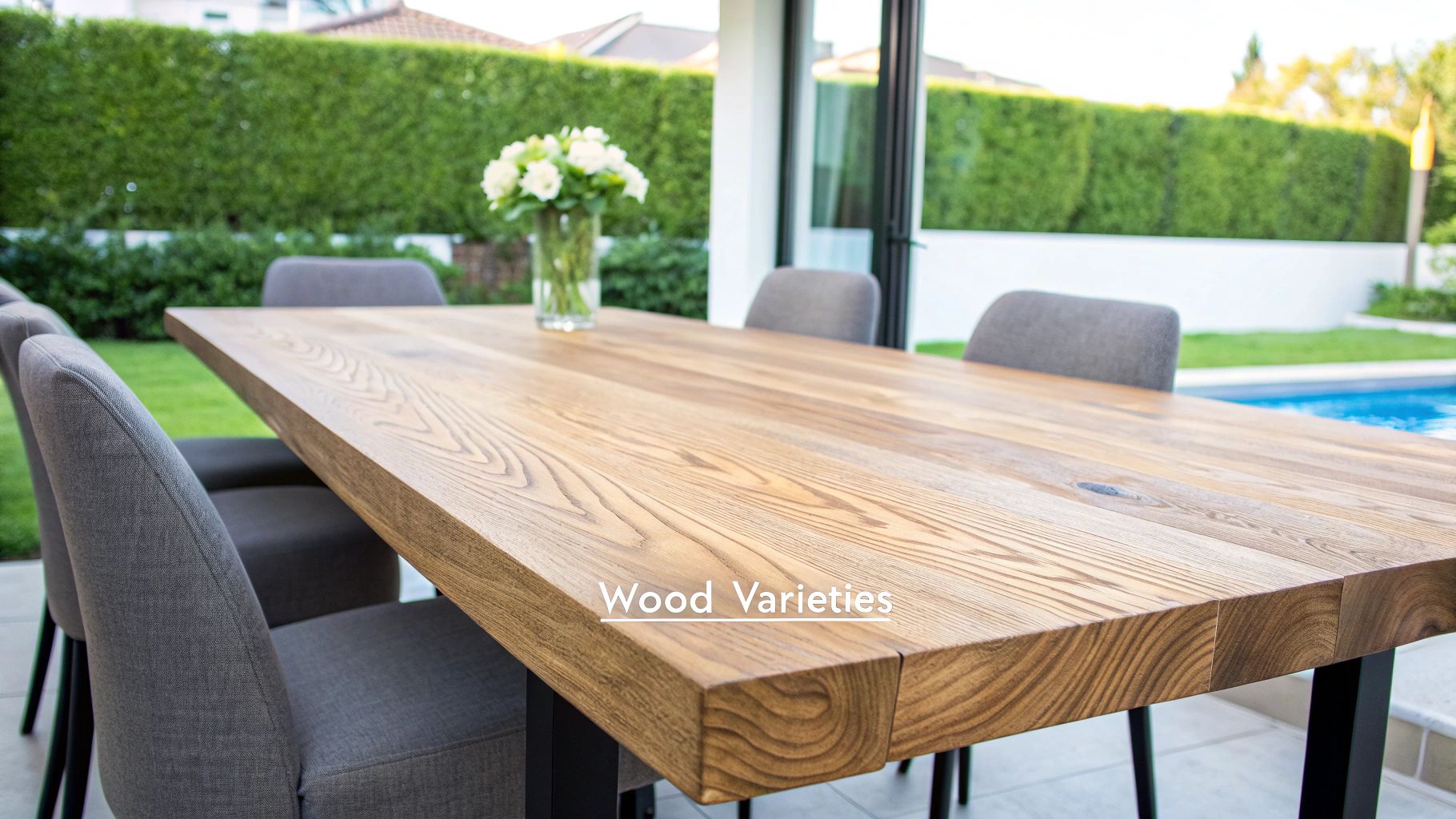 Before you even start browsing, grab a tape measure. It's so easy to fall for a beautiful table online or in a showroom, only to get it home and realise it completely swamps the room. Getting the measurements right from the start saves a lot of heartache later on.
Think of it less as a chore and more like creating a 'comfort bubble' around your dining area. This is the single biggest factor in making a space feel inviting and functional, rather than awkward and cramped. A table that fits just right makes the whole room work.
The All-Important Clearance Zone
Here’s a secret from the world of interior design: the most important measurement isn’t the table itself, but the empty space around it. We call this the clearance zone. It’s what allows people to pull out their chairs, sit down comfortably, and let others walk past without having to do the awkward sideways shuffle.
The golden rule here is to leave a minimum of 90cm of clearance on all sides of your table. Measure from the edge of the tabletop to the nearest wall or large piece of furniture, like a sideboard.
This 90cm buffer is your 'comfort bubble'. It ensures people can move around freely, even when everyone is seated. If your table is in a high-traffic spot—say, on the main path from the kitchen to the lounge—you'll want to extend that to 110cm to keep things flowing smoothly.
Following this simple guideline is the best way to avoid a dining room squeeze.
A Simple Formula for Success
Ready to work out your ideal table size? It’s probably much simpler than you think. Start by measuring the length and width of the area where you plan to put your table.
Got your room dimensions? Now, just plug them into this easy formula:
- Ideal Table Length = Room Length - 180cm (which is 90cm of clearance at each end)
- Ideal Table Width = Room Width - 180cm (which is 90cm of clearance on each side)
Let's put this into practice with a common Kiwi dining space. Imagine your room is 4 metres long by 3 metres wide.
- Ideal Table Length: 400cm - 180cm = 220cm
- Ideal Table Width: 300cm - 180cm = 120cm
So, for that room, the biggest table you could comfortably fit would be 220cm by 120cm. You can always go smaller, of course, but this calculation gives you your maximum size. It's the best way to prevent your new table from making the room feel tight.
Visualising the Space
Sometimes, numbers on a page don’t quite tell the full story. To get a real sense of how a table will feel in your room, try this old designer’s trick.
Use some painter's tape or even lay out old newspapers on the floor to mark the outline of the table you're considering. Then, live with it for a day or two. Walk around it. Pull up a dining chair and see how it feels to sit there. This simple test often highlights potential problems that measurements alone can't.
It’s a surprisingly effective way to understand the true scale of the piece. Keeping notes on these details can be a massive help, and you can find more tips on note taking in home decor for dining tables.
Taking this extra step ensures the dining table you choose for your New Zealand home isn't just a purchase, but a perfect fit for your life.
Choosing the Right Shape for Your Room
The shape of your dining table is about so much more than just how it looks. It influences the whole vibe of a room—how you entertain, how conversations flow, and even how you move around the space. It’s one of those foundational decisions that sets the scene for every meal and gathering to come.
Think of it this way: a long, rectangular table feels formal and grand, perfect for big family feasts. A round table, on the other hand, feels cosy and intimate, pulling everyone together. Getting to know the personality of each shape is the key to finding a dining table in New Zealand that feels like it was made for your home.
The Classic Rectangle
There’s a good reason rectangular tables are the go-to choice for so many Kiwi homes. Most dining rooms are rectangular, so this shape just fits, creating a natural sense of balance and order. It feels familiar and right.
If you often find yourself hosting a crowd or have a larger family, a rectangular table is your most practical bet. It simply offers the most seating capacity and surface area, making sure there’s room for everyone and every dish. They’re brilliant for buffet-style spreads during the holidays or a weekend get-together.
The Sociable Circle
For a friendlier, more relaxed feel, nothing beats a round table. With no head of the table, everyone is on equal footing, which naturally encourages conversation and a sense of togetherness. It’s hard not to feel connected when you can see everyone easily.
Round tables are also fantastic space-savers. Those missing corners make a real difference in tighter spots, improving the flow of traffic in a smaller dining room or an open-plan living area. Their curved silhouette also provides a lovely visual break from all the straight lines and boxy furniture in a room.
The Flexible Oval
Stuck between the formality of a rectangle and the intimacy of a circle? An oval table might just be the perfect compromise. It gives you the generous length of a rectangular table but with softened, rounded corners that make it feel less imposing and easier to move around.
An oval table is the great diplomat of the dining world. It feels elegant and sophisticated but still relaxed, bridging the gap between formal dinners and casual brunches.
This shape is a smart choice for narrower rooms where the sharp corners of a rectangle might create a bottleneck. You get plenty of surface for serving without sacrificing precious walkway space.
The Intimate Square
Square tables are purpose-built for creating a cosy, intimate dining experience. They work wonderfully in smaller, square-shaped rooms, pulling everyone in close, much like a table at your favourite local café.
Ideal for couples or families of up to four, a square table makes sure no one feels left out of the conversation. Many also have a hidden practical side—you can often push two square tables together to create a makeshift rectangle for when you have extra guests. They're also perfect for tucking into a corner to create a breakfast nook. Getting the seating right is crucial here; our guide on how to choose the right bar stools has some great tips for pairing seating with smaller tables.
Dining Table Shape and Seating Capacity Guide
To make the choice even clearer, here's a quick reference guide that breaks down each shape's strengths and typical seating capacity.
| Table Shape | Best For | Typical Seating Capacity | Space Consideration |
|---|---|---|---|
| Rectangle | Large families, formal dining, hosting | 6-12+ | Best for long, narrow rooms. Needs significant length. |
| Round | Small spaces, encouraging conversation, homes with kids | 4-8 | Excellent for square rooms or nooks. Improves traffic flow. |
| Oval | Versatility, narrow rooms, seating many without visual bulk | 6-10 | A good compromise for rooms that are not overly wide. |
| Square | Small, intimate groups, square rooms, creating a nook | 2-4 (up to 8 if large) | Ideal for compact spaces. Can feel crowded with more than 4. |
Ultimately, the best shape is the one that fits your room, your family, and the way you love to share meals together.
What's Your Table Made Of? A Guide to Dining Table Materials in NZ
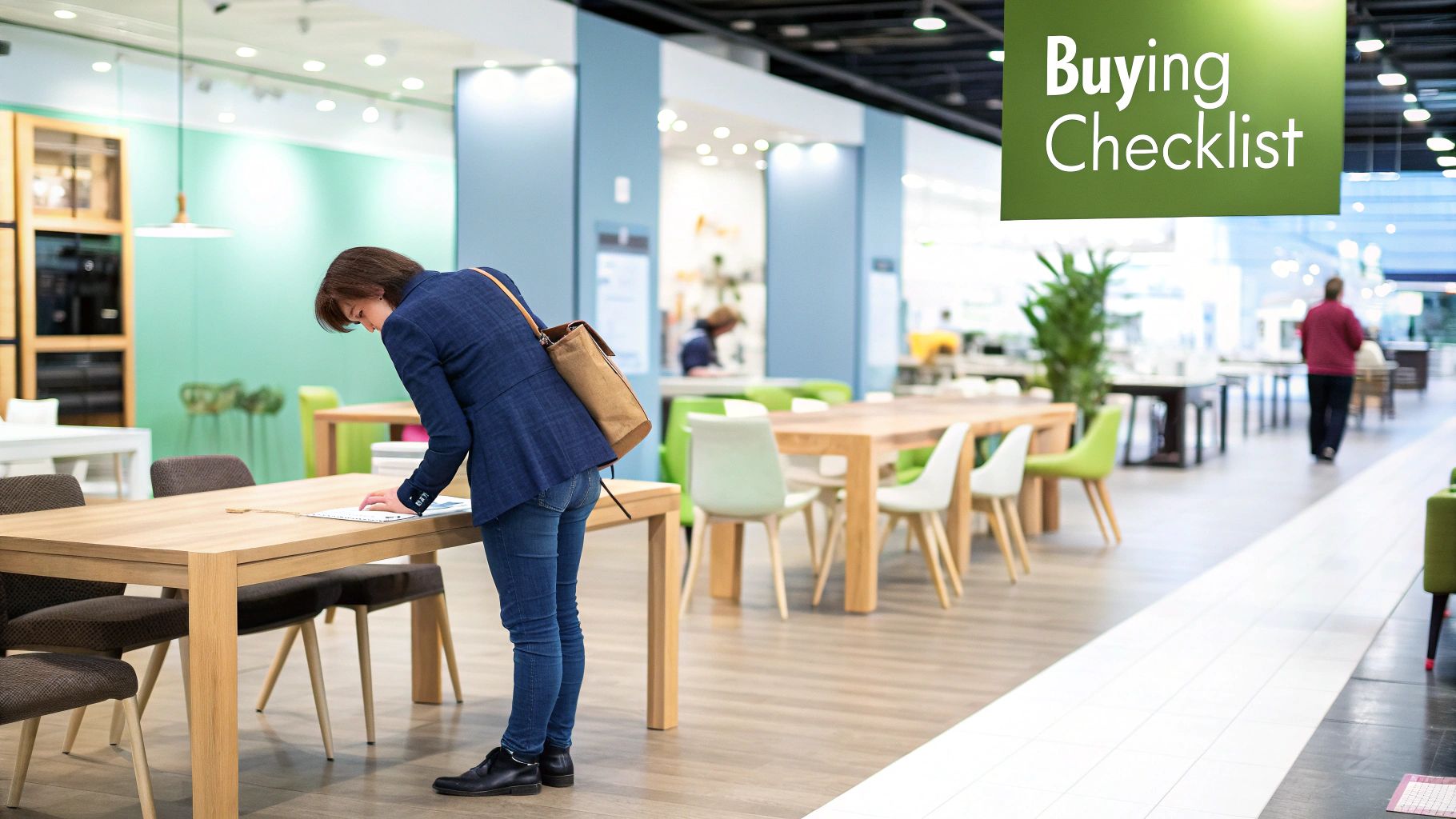
Picking the right material for your dining table is a bit like choosing the personality for your dining room. It sets the tone for everything – the look, the feel, how much care it needs, and how it will age with your family. It’s a big decision, and it’s one that Kiwis take seriously.
Just how seriously? The dining table and kitchen furniture sector here in New Zealand is expected to pull in around USD 219.66 million in revenue by 2025. That tells you just how central these pieces are to our homes. If you're interested in the numbers, you can see detailed furniture sector forecasts on Statista.com to get the full picture.
So, let's walk through the most popular materials for a dining table in New Zealand. My goal is to help you find one that’s not just beautiful, but a perfect fit for your lifestyle.
The Timeless Appeal of Solid Wood
There’s a reason solid wood is the undisputed classic. It’s got warmth and character that no other material can quite replicate. Every table tells a story through its unique grain, knots, and natural imperfections. A solid wood table doesn't just fill a space; it brings a tangible piece of nature right into your home.
Here in New Zealand, we're lucky to have a fantastic range of timbers, from our own native treasures to popular imported woods.
- Rimu: This beautiful native timber is loved for its deep, warm colouring and distinctive grain. Buying a Rimu table feels like investing in a piece of Kiwi heritage, and it's the kind of thing that often becomes a treasured family heirloom.
- Oak: A true workhorse, Oak is famous for its strength and lovely grain patterns. It's incredibly versatile, looking just as good in a rustic country home as it does in a sleek, modern apartment, depending on the finish. It’s a fantastic all-rounder.
- American Ash: If you love the light, airy feel of Scandinavian or contemporary design, American Ash is a brilliant choice. It’s strong, with a lighter colour and a striking grain that brightens up a room.
Of course, solid wood needs a bit of love. It can be scratched and is sensitive to big swings in temperature or moisture. But here's its superpower: a solid wood table can be sanded down and refinished, effectively erasing years of wear and tear to look brand new again.
Modern and Minimalist Materials
If your style is more contemporary, you've got some great options that offer clean lines and a modern vibe. These materials can help make a room feel bigger, brighter, and perfectly in sync with an industrial or minimalist aesthetic.
Think of these materials as architectural elements. A glass top creates an illusion of openness by letting light flow right through it. A metal frame, on the other hand, acts like a strong, graphic outline that defines the dining space with confidence.
Here are a few of the top contenders in the modern category:
- Glass: A glass-topped table is a magic trick for smaller rooms, creating a wonderful sense of space. It's a breeze to wipe down, though you will be chasing fingerprints. Always look for tempered glass—it’s essential for safety and durability.
- Metal: You’ll often see metal, like steel or aluminium, used for the base or frame. It brings an industrial edge and is incredibly strong. It’s frequently paired with a timber or glass top for a look that feels both sturdy and stylish.
- Concrete and Stone: Nothing makes a statement quite like marble, granite, or polished concrete. These materials are exceptionally durable and heat-resistant, but they can be porous. This means they might stain if you don't keep them properly sealed. They are also incredibly heavy, so make sure your floor is up to the task!
Budget-Friendly and Practical Alternatives
Let’s be realistic. For a busy household, especially one with kids, or if you're working with a tighter budget, engineered materials offer amazing value and durability without forcing you to compromise on style. They've come a long way and now come in stunningly realistic finishes that mimic natural wood or stone.
Engineered woods like MDF (Medium-Density Fibreboard) or particleboard, finished with a veneer or laminate, are fantastic, practical choices.
What to Expect from Engineered Materials
| Feature | High-Pressure Laminate (HPL) | Wood Veneer |
|---|---|---|
| Durability | Exceptionally resistant to scratches, stains, and heat. A brilliant choice for high-traffic family tables. | It's a thin slice of real wood, so it looks authentic but can be more vulnerable to scratches and water damage. |
| Appearance | Comes in a huge variety of colours and patterns, including some very convincing wood-grain effects. | Gives you the genuine look and feel of real wood because it is real wood. Every piece has a unique grain. |
| Maintenance | Super low-maintenance. Just wipe it clean with a damp cloth and you're done. | Needs a bit more care, much like solid wood. Use coasters and avoid harsh chemical cleaners. |
| Cost | Generally one of the most affordable and cost-effective options you can find. | Cheaper than solid wood, but usually a bit pricier than laminate options. |
In the end, the best material for your dining table in New Zealand is the one that ticks your boxes for budget, style, and the reality of your daily life. Whether it’s the enduring character of Rimu or the bomb-proof practicality of laminate, the right choice will be the heart of your home for many years to come.
Matching a Table to Your Home's Style
Your dining table needs to do more than just fit in a room; it has to fit the vibe of your home. Think of it as a central character in your home’s story. Get it right, and it feels like it’s always been there. Get it wrong, and it’ll stick out like a sore thumb.
Finding a table that sings in harmony with your existing decor is that final, crucial step. Let's walk through some of the most-loved styles in Kiwi homes to help you find that perfect match for your space.
The Relaxed Vibe of Coastal and Bach Style
We all know that classic Kiwi bach feeling—it’s relaxed, breezy, and completely unpretentious. The coastal style aims to bottle that holiday mood, using light colours, natural textures, and an airy feel to make you feel connected to the outdoors.
To get this look, think organic and a little bit weathered. A table crafted from a light timber like American Ash or even a whitewashed recycled wood is a fantastic choice. The whole point is to create a casual, inviting spot where you wouldn't stress about a bit of sand from the beach.
Pair it with a simple bench or even a collection of mismatched wooden chairs to really nail that easy-going, "collected over time" atmosphere.
The Clean Lines of Scandinavian Design
There’s a reason Scandinavian (or Scandi) design is so popular in New Zealand. It’s all about beautiful simplicity, minimalism, and things that just work. This style is built on clean lines and a deep respect for natural materials, resulting in a space that feels calm, uncluttered, and practical.
A Scandi dining table is often easy to spot. Look for slender, tapered legs and a beautifully simple, unadorned top. Light-coloured woods like oak and ash are the heroes here, chosen for their ability to make a room feel bright and open. The real beauty shines through in the quality of the timber and the craftsmanship.
At the heart of Scandinavian design is the concept of "hygge"—a Danish word for a feeling of cosy contentment. A Scandi dining table is the perfect anchor for this feeling, creating a warm hub for family and friends in the most understated way.
To truly make your dining table the heart of your home, ensure it complements your existing aesthetic. You can find inspiration and shop home decor by style to perfectly match your new dining table.
The Raw Honesty of Industrial Style
Taking its cues from old warehouses and factories, the industrial look is all about celebrating raw materials. We're talking exposed brick, metal pipes, and weathered timber. An industrial dining table isn't shy; it makes a bold statement and often becomes the undeniable centrepiece of the room.
The magic of this style lies in the combination of rugged materials. A classic industrial table features a thick, solid wood top set on a strong metal base, usually in black or dark grey steel. It's this contrast between the warm, natural wood and the cool, hard metal that gives it such a unique character.
Don't shy away from knots, scuffs, or the distinct grain of reclaimed wood—these "imperfections" are what give the piece its story and charm. Getting the chairs right is also key; you can find great tips in our guide on dining chairs in New Zealand and how to balance style and function.
The Enduring Charm of Country and Farmhouse
The country or farmhouse style is like a warm hug. It's all about creating a hearty, rustic, and welcoming space where the dining table is the true heart of the home. This look is built on sturdiness, comfort, and timeless tradition.
A big, chunky wooden table is the cornerstone of the farmhouse aesthetic. Look for pieces made from solid timbers like rustic oak or pine, often with a distressed finish that tells a story of a long, happy life. Details like turned legs or a trestle base are common features that give these tables a grounded, substantial presence.
This style is a natural fit for a large, open-plan kitchen-diner, where the table is the central hub for everything from family meals and homework to weekend baking projects. It’s a look that feels honest, durable, and deeply rooted in a sense of home.
Where to Buy a Dining Table in New Zealand
You've got a clear idea of your dream table, so the last step is figuring out where to actually buy it. When it comes to finding a dining table in New Zealand, you're in luck. The scene is incredibly diverse, with options for every budget, style, and how you like to shop. Knowing where to look is key to making the final part of your journey a complete success.
Your first decision point is often between the big, national chains and the smaller, independent shops. They each have their own strengths, and the best choice really depends on what's most important to you.
Large National Retailers
For many Kiwis, the big nationwide furniture stores are the natural first stop. Their biggest advantage? Sheer volume. You can walk in and see a massive range of styles all in one place, from sleek contemporary designs to timeless classics. It makes comparing different materials and price tags incredibly efficient.
These larger stores are usually a safe bet for good value and convenience. They’re always running sales or promotions, and their delivery networks are well-oiled machines, making it easy to get your table home no matter if you're in a main centre or a more rural spot.
Independent Boutiques and Local Artisans
If you’re after something with a bit more soul, this is where the smaller players shine. Independent furniture boutiques and local artisans offer a shopping experience that feels much more personal. These shops often feature carefully curated collections you simply won't find in a big-box store, including beautiful pieces from smaller Kiwi designers or unique imported brands.
Even better, a local craftsperson can build a bespoke dining table in New Zealand that is uniquely yours. Just imagine a table crafted from stunning native Rimu or sustainably sourced Southland Beech, made to fit your space perfectly. This is how you get a true, one-of-a-kind heirloom that tells a story.
Buying from a local maker is more than just a purchase; it's a direct investment in Kiwi craftsmanship and your community. You’re not just bringing home a table—you’re bringing home a piece with a story, often built by hand with incredible care.
Online Shopping vs. the In-Store Experience
The classic dilemma: do you click "buy now" from your sofa, or do you head to a physical showroom? Honestly, there’s no wrong answer, as both have some serious pros.
Online Stores Offer:
- Ultimate Convenience: Browse hundreds of tables without leaving your lounge.
- Endless Aisles: Your selection isn't limited by floor space; you can shop from retailers all over the country and even overseas.
- Easy Price Checks: Quickly compare prices across different sites to make sure you’re getting a sharp deal.
In-Store Showrooms Provide:
- The Touch Test: Nothing beats seeing the true colour, feeling the grain of the wood, and giving the table a good wobble to test its sturdiness.
- Expert Advice on Tap: The people on the floor can answer your questions on the spot and offer genuinely helpful insights.
- Zero Surprises: What you see is precisely what you get. You can walk away confident, with no worries about the quality or colour being different from a picture.
This thought process isn't unique to furniture. Our guide on where you should buy your appliances explores similar trade-offs between the ease of online shopping and the certainty of buying in person.
It’s no surprise we’re putting more thought into our dining spaces. The growing Kiwi passion for food and gathering is booming. With the local hospitality industry expecting a 20% revenue surge from more people dining out, it’s clear that we value creating special mealtime experiences. That same desire is flowing back into our homes, inspiring us to invest in the perfect setting for bringing whānau and friends together. You can explore the full hospitality trend report on Scoop.co.nz to see what’s driving this trend.
Frequently Asked Questions
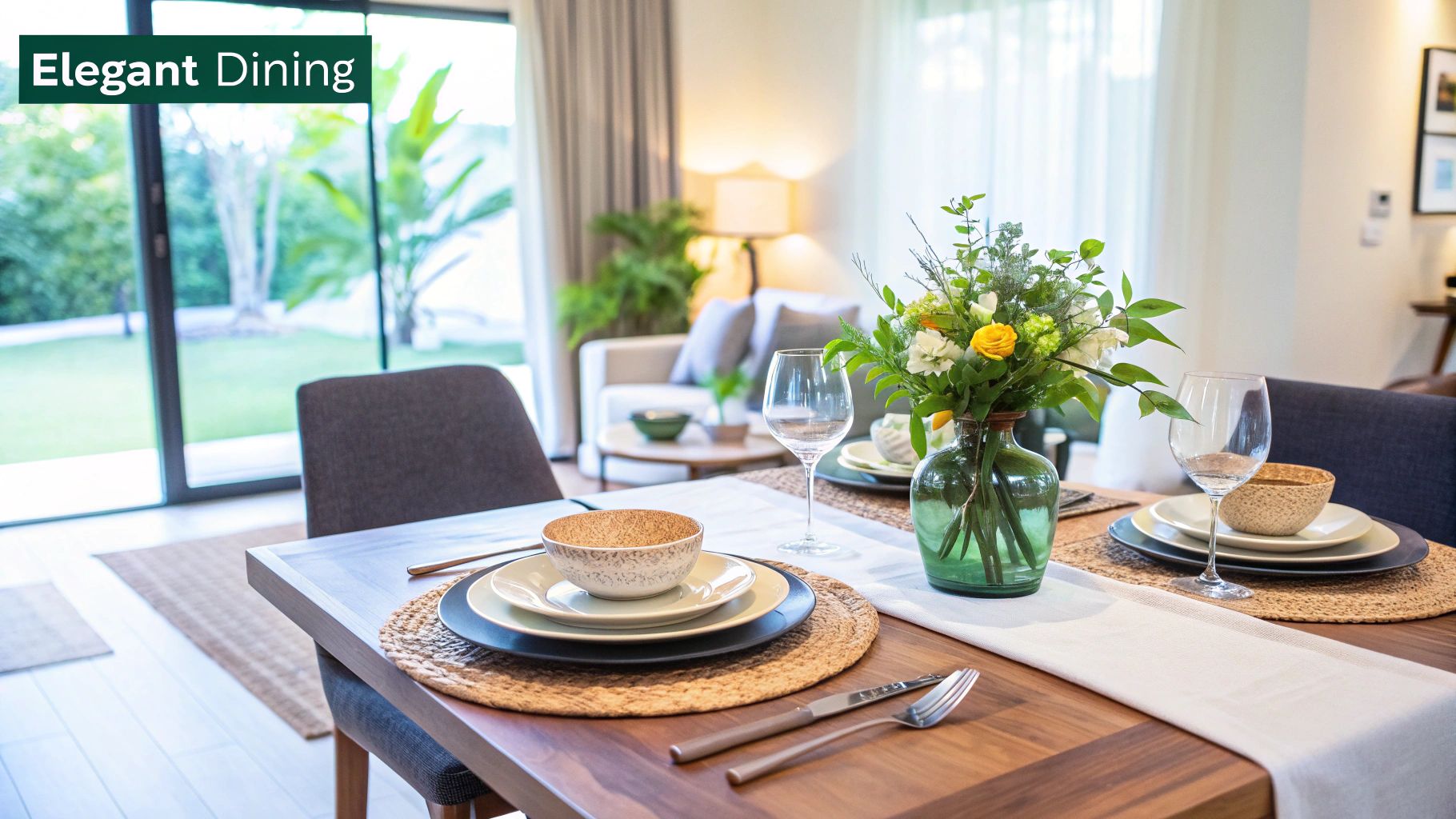
It’s natural to have a few questions when you’re about to make a big purchase like a dining table. Here are some of the most common queries we get from Kiwis, with practical answers to help you choose with confidence.
What Is the Standard Dining Table Height in New Zealand?
In New Zealand, you'll find most dining tables stand somewhere between 74cm and 76cm high. This isn't just a random number; it’s the sweet spot that works perfectly with standard dining chairs, which usually have a seat height of around 45cm to 48cm.
Getting this right means everyone has enough legroom and can sit comfortably without feeling like their chin is on the table or they're sitting up too high. It’s a small detail that makes a huge difference to everyday comfort.
How Should I Care for a Solid Wood Dining Table?
Looking after a solid wood table is mostly about simple, consistent habits. A quick dust with a soft, dry cloth every few days will stop grit from building up.
The golden rule is to always use coasters and placemats. They’re your best defence against dreaded heat rings and moisture marks. If you do get spills or sticky spots, a soft cloth lightly dampened with a mild soap and water solution is perfect. Just be sure to wipe it completely dry straight away. Steer clear of harsh chemical sprays, as they can strip the protective finish from the timber over time.
For a bit of extra TLC, a good quality furniture polish or wax applied every so often will keep the wood nourished and looking its best.
Are Extendable Dining Tables a Good Investment?
Absolutely. For many New Zealand homes, an extendable table is one of the smartest furniture investments you can make. They are brilliant space-savers for daily life but give you the flexibility to welcome extra friends and whānau for special occasions.
If you love to host but are short on space, an extendable dining table is a fantastic solution. My one piece of advice? Before you buy, always try the extension mechanism in the store. Make sure it’s smooth, feels solid, and is easy enough for one person to manage.
How Much Space Should I Leave Around My Dining Table?
You need to give your table some breathing room. A good rule of thumb is to leave at least 90cm of clear space between the edge of your table and the nearest wall or piece of furniture.
This clearance gives people enough room to pull their chairs out and sit down without bumping into things. It also means someone can walk behind a seated person without anyone having to squeeze past. If it's a main walkway—say, between the kitchen and the lounge—aiming for closer to 110cm is even better for household traffic flow.
Ready to find the perfect centrepiece for your home? At Folders, we have a fantastic range of dining tables to suit every Kiwi home and style. Explore our collection and discover quality, style, and value today at https://folders.co.nz.