

Fisher & Paykel Rangehoods Your Complete Guide
A good rangehood isn't just another kitchen gadget; it's an essential piece of equipment for keeping your home healthy and clean. Fisher & Paykel rangehoods are specifically designed to be brilliant at whisking away airborne grease, steam, and cooking smells, which helps protect your cabinetry and makes the air in your home much fresher. They really nail that sweet spot between elegant design and powerful extraction.
Why You Can't Ignore Kitchen Ventilation
It helps to think of your rangehood as the lungs of your kitchen. Every time you sizzle a steak, simmer a bolognese, or fry up some bacon, you're sending a cloud of tiny particles into the air. This cloud is a mix of grease, moisture, smoke, and odours that will happily settle on every single surface if you let them. Over time, they build up into a sticky film, causing lasting damage to your walls and cupboards.
A proper ventilation system, like the ones inside Fisher & Paykel rangehoods, grabs these contaminants right at the source. It stops them from wandering around your house, making sure the air you're breathing is cleaner and your kitchen doesn't smell like last night's dinner. It’s not just about keeping things tidy; it's about creating a much more pleasant, healthy space for you and your family. For a deeper dive, check out our guide on the key roles of a rangehood.
What Makes Fisher & Paykel Stand Out?
Fisher & Paykel have earned their reputation by really getting the modern home. Their whole approach, which they call 'The Social Kitchen', is about creating appliances that don't just work well but fit beautifully into our daily lives. Their gear is designed to turn the kitchen into a hub for connecting and getting creative, not just a factory for making meals.
A well-designed kitchen appliance should do its job quietly and effectively in the background, letting life unfold around it. Fisher & Paykel rangehoods are built to pull out steam, grease, and odours with as little fuss as possible, making your kitchen a better place to hang out.
This focus on quality and user-friendly design is exactly why the brand is such a familiar name in Kiwi households.
A Kiwi Icon in the Kitchen
The trust Kiwis have in Fisher & Paykel is obvious when you look at the numbers. Within New Zealand's Household Appliance Wholesaling industry, Fisher & Paykel Appliances commands the largest market share, with an estimated revenue of a whopping NZD 269.3 million. Holding the top spot in a competitive NZD 1.4 billion industry speaks volumes about the brand’s lasting legacy and the confidence local consumers have in their products. You can discover more insights about the NZ appliance market on ibisworld.com.
In this guide, we'll get into the details of what makes their rangehoods a key part of this success story.
Choosing Your Ideal Fisher & Paykel Rangehood Style
Picking the right Fisher & Paykel rangehood isn't just about ventilation; it's about finding the perfect match for your kitchen's design, your cooking style, and how you live. It's a bit like choosing a piece of furniture – it needs to work hard, but it also has to look right in the space.
Fisher & Paykel has a rangehood for pretty much any kitchen imaginable. Whether you want it to be a show-stopping centrepiece or completely invisible, there's an option designed to fit right in.
This quick visual guide breaks down the key things to look for.
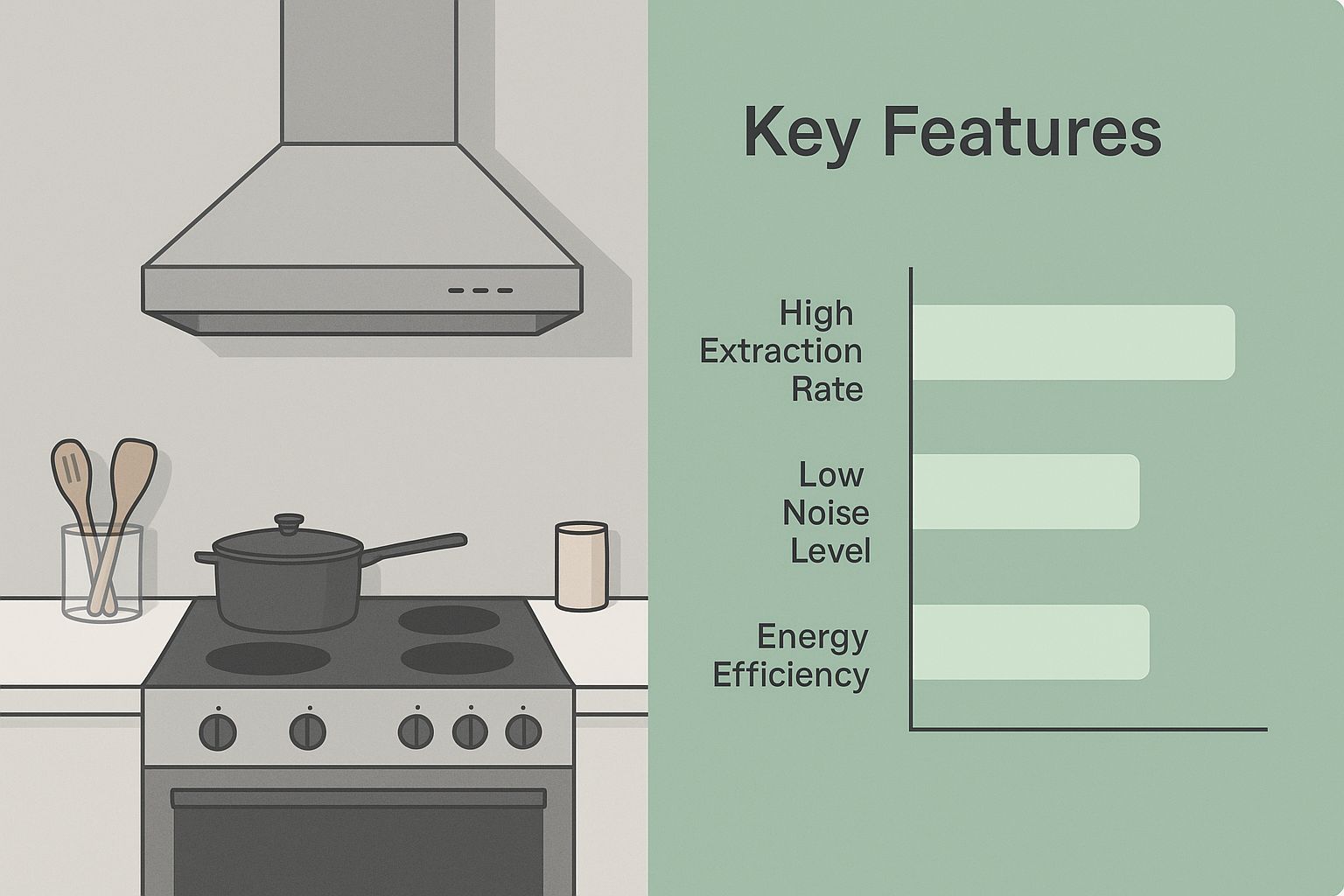
As you can see, features like extraction power and noise levels are important across the board, but it’s the physical form that really defines each style.
Integrated Rangehoods for a Minimalist Look
If you love that clean, seamless look in a kitchen, an Integrated rangehood is your best friend. These are designed to be built right into your overhead cabinetry, tucking away neatly so they're completely hidden from view.
The beauty of an Integrated model is its subtlety. You get all the power of a high-performance extractor fan without it interrupting the flow of your kitchen design. It lets your beautiful cabinetry or a statement splashback take centre stage, which is why it's a go-to for modern, open-plan homes.
These are a perfect fit for:
- Minimalist Kitchens: Where appliances are meant to blend in, not stand out.
- Custom Cabinetry: They make a truly cohesive, bespoke kitchen design possible.
- Smaller Spaces: Hiding the appliance helps the kitchen feel more spacious and less cluttered.
Wall Rangehoods as a Design Statement
In complete contrast, Wall rangehoods are made to be seen. Mounted on the wall directly above your cooktop, these models often become a focal point, catching the eye with striking shapes and premium finishes like brushed stainless steel or sleek black glass.
Think of a Wall rangehood as functional art for your kitchen. Fisher & Paykel offers a great variety, from classic canopy shapes to ultra-modern flat or angled designs. This means you can find one that not only works well but also elevates the whole look of your cooking space.
This style is the obvious choice when your cooktop is against a wall and you want to create a strong visual anchor for the room.
Island Rangehoods for Open Kitchens
When your cooktop is the star of a kitchen island, you need an extractor that’s up to the task. Island rangehoods are built specifically for this, suspended from the ceiling to provide powerful ventilation right in the heart of your kitchen.
Because they’re on display from every angle, these rangehoods are designed with a 360-degree aesthetic in mind – they have to look good from the front, back, and sides. They become a major architectural feature, adding a touch of drama and sophistication to open-plan living areas.
They are the go-to for:
- Kitchen Islands with Cooktops: This is what they were made for.
- Open-Plan Living Areas: Perfect for when the kitchen is a central, social hub.
- High Ceilings: They can create a stunning vertical element in a spacious room.
Fisher & Paykel Rangehood Models at a Glance
To help you visualise which style might suit you, this table breaks down the main types, their ideal use, and how they fit into different kitchen aesthetics.
| Rangehood Type | Best For | Design Style | Typical Installation |
|---|---|---|---|
| Integrated | Seamless, minimalist kitchens where appliances are hidden. | Clean, modern, and uncluttered. | Built directly into overhead cabinetry above the cooktop. |
| Wall | Kitchens where the cooktop is against a wall; creating a visual focal point. | Versatile – from traditional canopy to contemporary flat designs. | Mounted on the wall between cabinets, above the cooktop. |
| Island | Open-plan kitchens with a cooktop on a central island. | A statement piece, designed to be seen from all angles. | Suspended from the ceiling over the kitchen island. |
| Downdraft | Island cooktops where an overhead hood would block views or feel intrusive. | The ultimate discreet solution; completely invisible when not in use. | Rises from and retracts into the benchtop behind the cooktop. |
Each model offers a distinct solution, so the best choice really comes down to how your kitchen is laid out and the final look you're hoping to achieve.
Downdraft Systems: The Discreet Alternative
So, what if you have an island cooktop but can’t stand the thought of a big hood hanging from the ceiling? That’s where the ingenious Downdraft system comes in. This sleek solution sits flush with your benchtop, rising up at the touch of a button only when you need it.
Instead of pulling air up, a Downdraft system draws steam, smoke, and odours downwards, away from the cooking surface. Once you're done, it retracts back into the bench, leaving you with a completely clear, unobstructed countertop. It’s a fantastic choice for maintaining that open, airy feeling, especially if you have a great view you don’t want to block.
If you're still weighing your options, our guide on how to choose your rangehood offers more helpful tips.
Understanding Key Features and Technologies

What really sets a Fisher & Paykel rangehood apart isn't just its good looks—it's the clever technology and thoughtful details working behind the scenes. These aren't just specs on a fact sheet; they're genuine solutions that make your kitchen cleaner, quieter, and a more pleasant place to be.
When you understand what these features actually do, you can see past the numbers and pick a model that truly fits the way you cook. Let's dive into the key technologies that make these rangehoods perform so well.
Mastering Air Extraction Power
The first thing most people look at is the extraction rate, measured in cubic metres per hour (m³/hr). It’s a simple metric: the higher the number, the more air the unit can move. This translates to more power to suck up steam, smoke, and cooking smells before they have a chance to drift through your home.
If you’re a keen cook who loves searing steaks, flash-frying in a wok, or anything that creates a lot of smoke and steam, a high extraction rate is an absolute must. It’s the difference between a kitchen that smells fresh and one where last night’s dinner still lingers in the air. Fisher & Paykel designs its rangehoods to deliver powerful suction exactly where it’s needed.
Think of it like this: a weak rangehood is like trying to clear a smoky room by waving a tea towel around. A powerful Fisher & Paykel rangehood is like throwing open a massive window on a windy day—it gets the job done fast, leaving the air completely clear.
The Science of Quiet Operation
Of course, power is only half the story. No one wants a rangehood that sounds like a jet engine taking off, especially in an open-plan living area where the kitchen is the heart of the home.
Noise levels are measured in decibels (dB), and with rangehoods, lower is always better. A loud appliance can easily drown out conversations or your favourite cooking playlist. Fisher & Paykel puts a huge emphasis on quiet performance, using advanced motor technology and aerodynamic fan designs to keep noise to a minimum without compromising on power. Many of their models are no louder than a quiet chat.
To get the best performance, it’s crucial to match the rangehood size to your cooktop. For a deep dive into this, check out our guide on how to choose the right rangehood size.
Smart Features That Simplify Cooking
Beyond the basics of extraction and noise, it’s the smart, user-friendly touches that really define the Fisher & Paykel experience. These are the small things that make a big impact on your day-to-day cooking.
- Dimmable LED Lighting: Bright, clear, and energy-efficient LED lights give you a perfect view of your cooktop. The best part? You can dim them down to create a softer, more relaxed mood in the kitchen when you're done cooking.
- Dishwasher-Safe Filters: Let’s be honest, cleaning greasy rangehood filters is a job nobody enjoys. Fisher & Paykel makes it easy with multi-layered mesh filters that you can simply unclip and put straight into the dishwasher for a spotless, no-fuss clean.
- Auto-Off Timers: This handy function lets you set the rangehood to keep running for a few minutes after you’ve finished cooking, clearing out any last traces of steam or smells. It then turns itself off, so you can walk away and not have to worry about it.
It’s this deep understanding of how people actually use their kitchens that has kept the brand at the top of its game. For example, even in tougher economic times, Fisher & Paykel's Appliances division grew its New Zealand sales revenue by 2.9% in the ten months to January 2008. In Australia, sales revenue shot up by an impressive 17.2% during the same period, driven by the popularity of their new products. You can read the full market performance report here.
By blending raw power with quiet performance and genuinely useful features, Fisher & Paykel rangehoods offer a complete ventilation solution that simply makes your kitchen a better place to cook.
Ducted vs Recirculating Installation Explained
Choosing the perfect Fisher & Paykel rangehood is a great start, but its real-world performance comes down to one crucial decision: how you install it. The ventilation method you pick will make all the difference in how well it clears your kitchen of steam, grease, and cooking smells.
The choice boils down to two options: ducted or recirculating.
Think of it this way: where does the dirty air go? Each method is suited to different kitchen layouts and home designs. Getting this right is the key to unlocking your rangehood's true potential. Let's walk through how they work and figure out which one is the best fit for you.
The Power of Ducted Systems
A ducted system is, without a doubt, the most effective way to clear the air in your kitchen. It's like having a purpose-built exit right above your cooktop. It captures everything you don't want hanging around—smoke, steam, greasy fumes, and last night's curry smell—and physically sends it straight outside your home through a pipe (the ducting).
This isn't just treating the air; it's removing it completely. Because a ducted rangehood isn't trying to filter the air before getting rid of it, it can run at full power, giving you maximum extraction. This makes it the go-to choice for anyone who loves to cook with high heat—we’re talking searing steaks, frying, or firing up the wok. If your kitchen layout allows for it, ducted is always the way to go for the best performance.
A ducted rangehood is the ultimate "set and forget" solution for kitchen air quality. It gets the contaminated air out of your house for good, ensuring your home stays fresh and free from lingering cooking odours.
If you're heading down this path, our rangehood ducting guide for NZ is a must-read. It’s packed with the essential details you'll need for a successful installation.
When Recirculating Is the Smart Choice
But what if you can't just run a duct to an outside wall or up through the roof? This is a common hurdle in apartments, townhouses, rental properties, or kitchens stuck in the middle of a home. That's where a recirculating installation saves the day.
Think of a recirculating rangehood as a high-tech air purifier designed specifically for your kitchen. Instead of sending air outside, it pulls it in and puts it through a multi-stage filtering process.
- Grease Filters: First, the air passes through aluminium mesh filters that trap the bigger, greasy particles.
- Charcoal Filters: Next up are the special carbon or charcoal filters. Their job is to absorb and neutralise smoke and odours.
- Clean Air Return: Finally, the freshly cleaned air is released back into the kitchen.
While it's not quite as powerful as a fully ducted setup, a modern Fisher & Paykel rangehood fitted with high-quality charcoal filters is surprisingly effective. It’s a brilliant, practical solution when venting outside just isn't on the cards. When planning your budget, it's helpful to see how this fits into the bigger picture of the average cost of kitchen installation.
Key Differences at a Glance
So, which one is for you? It really comes down to your home's layout and how you cook. Here’s a quick comparison to help you weigh it up.
| Feature | Ducted System | Recirculating System |
|---|---|---|
| Airflow Path | Sucks air up and expels it completely outside. | Sucks air up, filters it, and returns it to the kitchen. |
| Effectiveness | Maximum. The gold standard for removing all contaminants. | Good. Excellent for grease and smells, but can't remove steam. |
| Installation | More involved. Requires running ducting to an exterior wall or the roof. | Much simpler and more flexible. No need for external venting. |
| Best For | All types of cooking, especially heavy frying, grilling, and wok cooking. | Apartments, rentals, or any kitchen where ducting is impractical. |
| Maintenance | Regular cleaning of the grease filters. | Regular cleaning of grease filters plus replacing the charcoal filters periodically. |
At the end of the day, the right choice is the one that works for your home. By understanding these key differences, you can make sure your new Fisher & Paykel rangehood keeps your kitchen air as clean and fresh as it deserves to be.
Simple Maintenance for Lasting Performance

You’ve invested in a quality Fisher & Paykel rangehood, and the good news is, keeping it running like new is surprisingly simple. A little bit of regular care is all it takes to make sure it performs at its best, protecting your kitchen and looking great for years to come.
Think of it like a quick health check for your kitchen's hardest-working appliance. Just as a car needs regular oil changes to keep the engine humming, your rangehood needs clean filters to breathe properly. This simple upkeep stops grease from building up, keeps the airflow strong, and helps the motor last longer.
Keeping Your Filters in Top Shape
The filters are your first line of defence, trapping airborne grease before it can clog the internal mechanics of your rangehood or settle on your kitchen surfaces. Fisher & Paykel generally uses two types of filters, and each needs a slightly different approach.
Most of their ducted and recirculating models come with multi-layered aluminium mesh filters. These are designed to be super effective and incredibly easy to handle.
- How Often: For average home cooking, give them a clean every 2-4 weeks. If you do a lot of frying or use a lot of oil, you’ll want to do it more often.
- How to Clean: Here’s the best part—they’re dishwasher-safe. Just unclip them from the rangehood, pop them in the dishwasher, and you’re done. Alternatively, you can soak them in hot, soapy water and give them a gentle scrub with a soft brush.
If you have a recirculating model, you’ll also have charcoal (or carbon) filters to neutralise cooking odours.
- How Often: Unlike the mesh filters, these can’t be washed and need to be replaced. They typically last anywhere from 3 to 6 months, depending on how you cook.
- When to Replace: You'll know it's time for a new set when you notice cooking smells hanging around longer than they should. Fresh charcoal filters will get your rangehood’s odour-trapping power right back to where it should be.
Cleaning the Exterior Surfaces
Keeping the outside of your Fisher & Paykel rangehood looking pristine is just as important for the overall look of your kitchen.
For stainless steel, grab a soft microfibre cloth and a proper stainless steel cleaner. Always remember to wipe in the direction of the grain to avoid any scratches. If you have a glass or painted finish, a simple mix of warm water and a mild detergent is usually all you need. Steer clear of any harsh, abrasive cleaners that could damage the surface.
A consistent cleaning routine does more than just keep things looking good; it's about protecting the appliance's longevity. By preventing grease build-up on both the inside and outside, you're safeguarding the high-quality engineering that Fisher & Paykel is known for.
This commitment to quality is backed by serious investment. Fisher & Paykel Healthcare, the parent group, reported a total operating revenue of NZD 2.02 billion for the financial year ending March 2025, with a massive 11% of that revenue going straight into research and development. This focus on innovation is what ensures products like their rangehoods are built to perform and last.
Simple Troubleshooting Tips
Even with the best care, you might notice a small change in performance now and then. Before you pick up the phone to call a professional, here are a few quick checks you can do yourself:
- Reduced Airflow: This is almost always a sign of clogged filters. Give your aluminium mesh filters a good clean, and if you have a recirculating model, check if the charcoal filters are due for a change.
- Unusual Noises: Have a look to see if the filters are clipped in securely. A loose filter can vibrate when the fan is on and cause a rattling sound.
- Lights Not Working: The first thing to check is the bulb. Your user manual will tell you the specific type you need and how to replace it for your particular model.
By following these simple steps, you can keep your appliance performing beautifully. For more guidance, be sure to check out our comprehensive rangehood buying guide for NZ kitchens.
Got a Question? Your Rangehood FAQs Answered
Choosing a new appliance always brings up a few questions. That's completely normal. To help you get everything straight, we've put together answers to the most common queries we hear about Fisher & Paykel rangehoods.
Think of this as a quick chat with an expert, clearing up those final details so you can feel totally confident you're making the right choice for your kitchen.
What’s the Perfect Height to Install a Rangehood?
Getting the installation height spot-on is a big deal. It's a balancing act between safety and performance. Go too low, and you've got a potential fire hazard that gets in the way of your pots and pans. Go too high, and it simply won't do its job of catching steam, smoke, and cooking smells.
For Fisher & Paykel rangehoods, the sweet spot is generally between 600mm and 750mm above the surface of your cooktop. But the type of cooktop you have makes a difference:
- Electric or Induction Cooktops: You can usually go with a minimum height of 600mm.
- Gas Cooktops: That open flame needs a bit more breathing room. The safety standard here is a minimum height of 650mm.
My best advice? Always, always check the specific installation manual that comes with your model. It's your ultimate guide and will give you the exact measurements needed for safe, optimal performance.
How Much Extraction Power Do I Actually Need?
This is a great question. The power you need, which is measured in cubic metres per hour (m³/hr), really comes down to your kitchen's size and how you cook. It’s not about chasing the biggest number; it's about finding what’s right for your space.
Here’s a simple rule of thumb to get you started. Figure out your kitchen's volume (Length x Width x Height in metres), then multiply that number by 10. This gives you a rough idea of the extraction rate needed to clear the air in your kitchen ten times an hour.
For instance, a kitchen measuring 4m long, 3m wide, and 2.5m high has a volume of 30 cubic metres. Multiply that by 10, and you get a target extraction rate of 300 m³/hr. This is a solid starting point for everyday cooking.
However, if you're a passionate home chef who loves a good sear, wok-frying, or grilling indoors, you'll want to aim much higher. Look for something with 700 m³/hr or more to really tackle that intense smoke and grease.
Can I Install a Fisher & Paykel Rangehood Myself?
I know it can be tempting to roll up your sleeves and do it yourself, but installing a rangehood is one of those jobs best left to the professionals. This is especially true for ducted models, which involve cutting into your wall or ceiling and making sure every connection is perfectly sealed for top performance.
A qualified installer will make sure that:
- The rangehood is mounted securely at the correct, safe height.
- All the electrical work is done safely and meets New Zealand regulations.
- The ducting is fitted correctly to pull the maximum amount of air with minimum noise.
Hiring a pro doesn't just give you peace of mind that the job's done right—it also protects the warranty on your brand new Fisher & Paykel rangehood.
Just How Noisy Are Fisher & Paykel Rangehoods?
Fisher & Paykel puts a huge amount of effort into engineering appliances that work hard without making a racket. Their rangehoods are designed to be powerful but quiet, with noise levels measured in decibels (dB).
On the lowest setting, many models hum along at a level similar to a quiet chat, usually around 50-55 dB. Even when cranked up to full power, they're built to be as unobtrusive as possible. It's also worth remembering that the installation plays a big part in the final noise level. Smooth, rigid ducting will always be quieter than the flexible, ribbed kind.
Ready to find the perfect Fisher & Paykel rangehood for your kitchen? Explore our complete collection at Folders and get ready for a fresher, cleaner cooking experience. Discover the full range of Fisher & Paykel rangehoods on folders.co.nz.