

Your Ultimate Kitchen Deep Cleaning Checklist for 2025
Welcome to the definitive guide for transforming your kitchen from a well-used space into a sparkling sanctuary. A standard wipe-down is one thing, but a true deep clean acts as a reset button for the heart of your home. This process goes beyond the surface, tackling the built-up grime in hidden corners, sanitising the appliances that work hard for your whānau, and restoring a powerful sense of order and hygiene. A thoroughly clean kitchen isn't just about appearances; it's about creating a healthier, more enjoyable environment for preparing meals and gathering with loved ones.
This comprehensive kitchen deep cleaning checklist is designed for every New Zealander looking to revitalise their space, breaking down a seemingly monumental task into manageable, step-by-step sections. Whether you're preparing for guests, tackling a seasonal refresh, or simply craving a truly pristine environment, this guide provides the specific, actionable steps you need. Forget generic advice; we are diving deep into every component of your kitchen.
Throughout this guide, we will cover everything from degreasing your rangehood and deep cleaning your oven to sanitising your sink and restoring your countertops. We’ll even tackle often-neglected areas like cabinet interiors, tile grout, and pantry shelves. By following this structured approach, you can methodically work through your kitchen, ensuring no stone, or tile, is left unturned. Let's get started on bringing that brand-new feeling back to your culinary headquarters.
1. Deep Cleaning Kitchen Appliances Inside and Out
A comprehensive kitchen deep cleaning checklist isn't complete without tackling your hardest-working tools: your appliances. This goes far beyond a simple wipe-down. It involves a thorough cleaning of both the interior components and exterior surfaces where grease, food residue, and bacteria accumulate over time. Regularly deep cleaning your appliances not only improves hygiene but also enhances their performance and extends their lifespan.
This task is crucial because neglected appliances can become inefficient energy hogs. For instance, testing has shown that simply cleaning a refrigerator’s condenser coils can improve its energy efficiency by a significant margin. Similarly, a dishwasher clogged with hard water deposits and food debris won't clean your dishes effectively.
Why It's a Top Priority
Deep cleaning appliances is essential for both functionality and safety. The build-up of grease in an oven can be a fire hazard, while bacteria in a refrigerator can lead to food-borne illnesses. Many appliance manufacturers and even home warranty companies require proof of regular maintenance to uphold their agreements, making this step a financially savvy one. Adopting this practice, similar to how professional kitchens follow strict daily cleaning protocols, ensures your kitchen remains a safe and efficient space.
Actionable Cleaning Tips
To get started, unplug all appliances and allow them to reach room temperature for safety.
- Oven: For tough, baked-on stains, create a paste of baking soda and water. Apply it to the interior surfaces, let it sit overnight, and then wipe it away the next day for a sparkling clean finish without harsh chemicals.
- Refrigerator: Pull your fridge away from the wall every six months and use a long, flexible coil brush to remove dust and debris from the condenser coils. Inside, remove all shelves and drawers and wash them with warm, soapy water.
- Dishwasher: To descale and deodorise your dishwasher, run an empty cycle with a cup of white vinegar placed on the top rack. This simple monthly task prevents mineral build-up and keeps it running smoothly.
- Stainless Steel Surfaces: For a streak-free shine on the exterior of your appliances, it’s important to use the correct technique. For detailed instructions, explore these professional tips on how to clean stainless steel appliances.
2. Cabinet and Drawer Deep Cleaning and Organisation
An effective kitchen deep cleaning checklist must address the often-overlooked yet critical areas: your cabinets and drawers. This task involves more than just a quick wipe of the exterior doors. It requires a systematic process of emptying, cleaning, and reorganising these storage spaces to eliminate clutter, get rid of grime, and improve your kitchen's overall functionality. A thorough clean-out ensures you’re not storing food alongside dust or potential pests.

This process is transformative because cluttered, disorganised cabinets make cooking stressful and inefficient. Professional organisers report that a well-structured kitchen can increase daily efficiency by as much as 30%. By tackling this task, you create a more harmonious and practical environment, making meal preparation a pleasure rather than a chore.
Why It's a Top Priority
Deep cleaning cabinets and drawers is essential for hygiene and peace of mind. Crumbs and food spills attract pests, while expired pantry items take up valuable space. Methods like Marie Kondo's KonMari approach, which has been popularised for its focus on keeping only what brings joy and function, can be perfectly applied here. By completely clearing out each space, you can assess what you truly need, dispose of what you don't, and ensure the interiors are sanitised and safe for storing food and cookware.
Actionable Cleaning Tips
To avoid feeling overwhelmed, focus on completing one cabinet or drawer at a time before moving to the next.
- Empty and Sort: Remove everything from the cabinet. Group similar items together and be ruthless about discarding expired spices, old sauces, and duplicate utensils you never use.
- Clean Surfaces: Wipe down all interior surfaces, including shelves and walls, with a damp cloth and a mild all-purpose cleaner. For stubborn grease, a solution of warm water and vinegar works well. Lay down new drawer liners to protect surfaces and simplify future cleaning.
- Organise and Label: Before putting items back, think about placement. Keep everyday dishes on lower, easily accessible shelves. Use drawer dividers for cutlery and utensils, and consider installing pull-out organisers or a lazy susan to make corner cabinets more accessible. Don't forget to clean your tools; for instance, learn the proper way to maintain your kitchen essentials by reading about how to clean kitchen knives.
- Handle with Care: Pay special attention to the cabinet doors and handles, as these are high-touch areas. Use a gentle cleaner suitable for your cabinet material (wood, laminate, etc.) to wipe away fingerprints and built-up grime.
3. Grout and Tile Deep Cleaning and Restoration
An essential part of any kitchen deep cleaning checklist involves restoring your tile and grout. Over time, the porous grout lines on floors and backsplashes absorb grease, food spills, and dirt, becoming discoloured and unhygienic. This intensive cleaning process focuses on removing that built-up grime and stubborn stains, revitalising the original appearance of your kitchen surfaces.
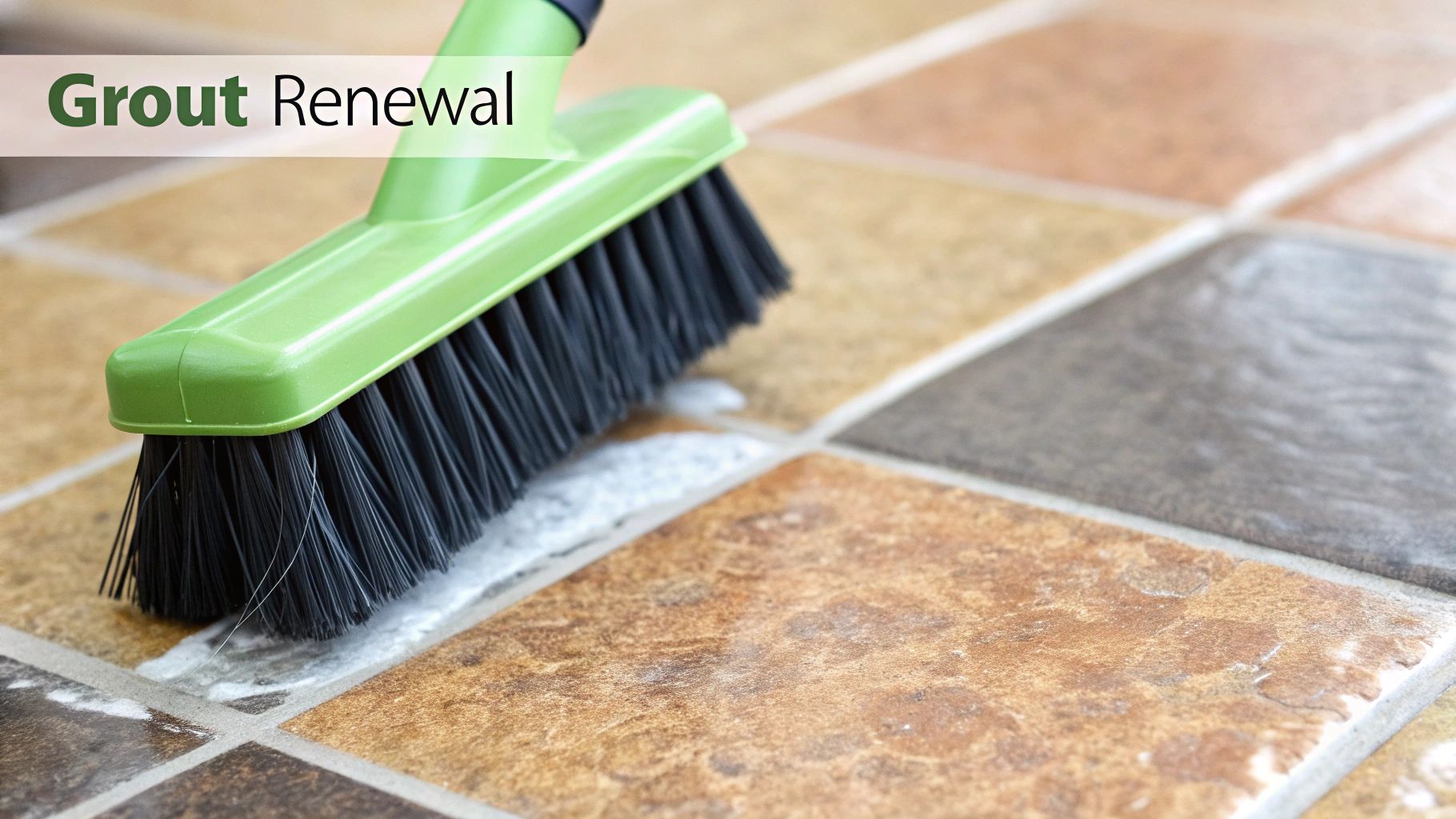
The transformation can be remarkable, making an entire room feel brighter and cleaner. This task has been popularised by home renovation shows like This Old House and made more accessible by DIY cleaning influencers, who demonstrate how effective a thorough scrub can be. The availability of powerful consumer products and tools has also empowered homeowners to achieve professional-level results.
Why It's a Top Priority
Neglected grout isn't just an eyesore; it can harbour mould and bacteria, which pose health risks in a food preparation area. Clean grout lines and tiles significantly improve kitchen hygiene and prevent the premature deterioration of your tiled surfaces. For homeowners looking to maintain or increase their property's value, clean and well-maintained tilework is a key detail that potential buyers notice, making this task a worthwhile investment of time and effort.
Actionable Cleaning Tips
Before starting, always test your chosen cleaning solution on a small, inconspicuous area to ensure it doesn't cause discolouration or damage to your tiles or grout.
- Choose Your Cleaner: For a powerful DIY solution, create a paste using oxygen bleach (like OxiClean) and water. Apply it to the grout lines, let it bubble and work its magic for 10-15 minutes, then scrub. Specialised grout cleaners from brands like Zep are also highly effective.
- Scrub Effectively: Use a stiff-bristled grout brush or an old toothbrush to work the cleaning solution deep into the grout lines. Work in small, manageable sections to prevent the paste from drying out before you've had a chance to scrub and rinse it.
- Consider Steam: For a chemical-free deep clean, a steam cleaner can be incredibly effective. The high-pressure hot vapour dislodges grime from porous grout without the need for harsh chemicals, making it a safe option for homes with pets or children.
- Seal and Protect: After your grout is clean and completely dry, apply a quality grout sealer. This final step creates a protective barrier that repels future stains and moisture, making subsequent cleaning much easier.
4. Exhaust Hood and Ventilation System Deep Cleaning
Often overlooked in a standard kitchen clean, the exhaust hood and ventilation system are critical components of a truly comprehensive kitchen deep cleaning checklist. This task involves a thorough degreasing of the rangehood, its filters, the fan, and even the accessible ductwork. Over time, these surfaces accumulate a thick, sticky layer of grease, smoke residue, and airborne food particles, which can drastically reduce air quality and pose a serious fire risk.
The importance of this task cannot be overstated. A clean ventilation system efficiently removes cooking odours, steam, and harmful pollutants, creating a healthier breathing environment. Conversely, a clogged system forces greasy air back into your kitchen, leaving a film on every surface and making your other cleaning efforts less effective.
Why It's a Top Priority
Neglecting your rangehood is a significant safety hazard. The National Fire Protection Association (NFPA) notes that professional hood cleaning is a key factor in preventing kitchen fires in commercial settings, and the same principle applies at home. This build-up of flammable grease is a hidden danger lurking above your cooktop. Many insurance companies may even scrutinise maintenance records in the event of a fire, making regular cleaning a financially prudent measure. Understanding the function of your rangehood is the first step towards appreciating why its maintenance is so vital. You can explore the key roles of a rangehood to better grasp its importance in your kitchen's ecosystem.
Actionable Cleaning Tips
Before starting, ensure the cooktop is off and cool to the touch. For safety, you may want to unplug the hood or turn off its circuit breaker.
- Filters First: Remove the grease filters. Most modern metal mesh filters are dishwasher-safe. For tougher grease, soak them in a sink of hot water mixed with a strong degreasing dish soap or a specialised degreaser solution for an hour before scrubbing with a non-abrasive brush.
- Hood Interior and Exterior: Wipe down the interior and exterior surfaces of the hood with a cloth soaked in warm, soapy water or a degreasing spray. Pay close attention to the areas around the fan and lighting.
- Filter Replacement: While cleaning is effective, filters don't last forever. Plan to replace charcoal filters every 3-6 months and metal filters if they become damaged or permanently clogged, typically every few years depending on use.
- Professional Help: For heavy home cooks or those with complex ductwork, scheduling a professional ductwork cleaning annually is a wise investment in safety and air quality.
5. Deep Sink and Faucet Sanitisation
The kitchen sink is a high-traffic area, often harbouring more bacteria than a toilet bowl. A comprehensive kitchen deep cleaning checklist must, therefore, include the thorough sanitisation of your sink, faucet, drain, and garbage disposal. This process goes beyond a quick rinse, targeting the removal of harmful bacteria, stubborn mineral deposits, lingering food residue, and unpleasant odours, ultimately restoring shine and ensuring proper function.
This task is crucial for maintaining a hygienic food preparation area. Neglecting the sink allows biofilm, a slimy layer of bacteria, to develop. This can contaminate food, sponges, and hands, posing a health risk. Furthermore, plumbers report that a significant portion, around 60%, of common kitchen drain blockages are preventable with regular, deep cleaning practices that dislodge grease and food build-up before they become major issues.
Why It's a Top Priority
Deep cleaning your sink area is fundamental to kitchen hygiene and preventative maintenance. In professional kitchens, health codes often mandate that sinks are cleaned and sanitised every four hours to prevent cross-contamination. Adopting a similar, albeit less frequent, mindset at home ensures your kitchen remains a safe environment for food preparation. Products like Bar Keepers Friend gained immense popularity precisely because they offer an effective way to restore stainless steel sinks, removing rust and grime that standard soaps leave behind.
Actionable Cleaning Tips
Begin by clearing the sink of all dishes and debris. A thorough scrub is the first step before sanitising.
- Sink Basin: For a brilliant clean on stainless steel, make a paste with Bar Keepers Friend and water. Scrub the basin and rinse thoroughly. To create a protective, water-repellent barrier and maintain the shine for longer, you can apply a thin coat of car wax, let it haze, and then buff it off with a microfibre cloth.
- Drain and Disposal: For a natural clean, pour half a cup of baking soda down the drain, followed by a cup of white vinegar. Let it fizz for 15 minutes, then flush with hot water. To sharpen and clean garbage disposal blades, run a handful of ice cubes and a tablespoon of coarse salt through the unit.
- Faucet and Aerator: Don't forget the faucet itself. Use a soft cloth with a mild cleaner to wipe down the body and handles. Unscrew the aerator at the tip of the faucet and soak it in vinegar for 30 minutes to dissolve mineral build-up. Use an old toothbrush to scrub away any remaining deposits before reattaching.
- Sanitisation: Once clean, plug the sink and fill it with a solution of water and a sanitising agent like diluted bleach or a food-safe sanitiser. Let it sit for at least five minutes before draining and air drying to effectively kill lingering bacteria.
6. Countertop Deep Cleaning and Restoration
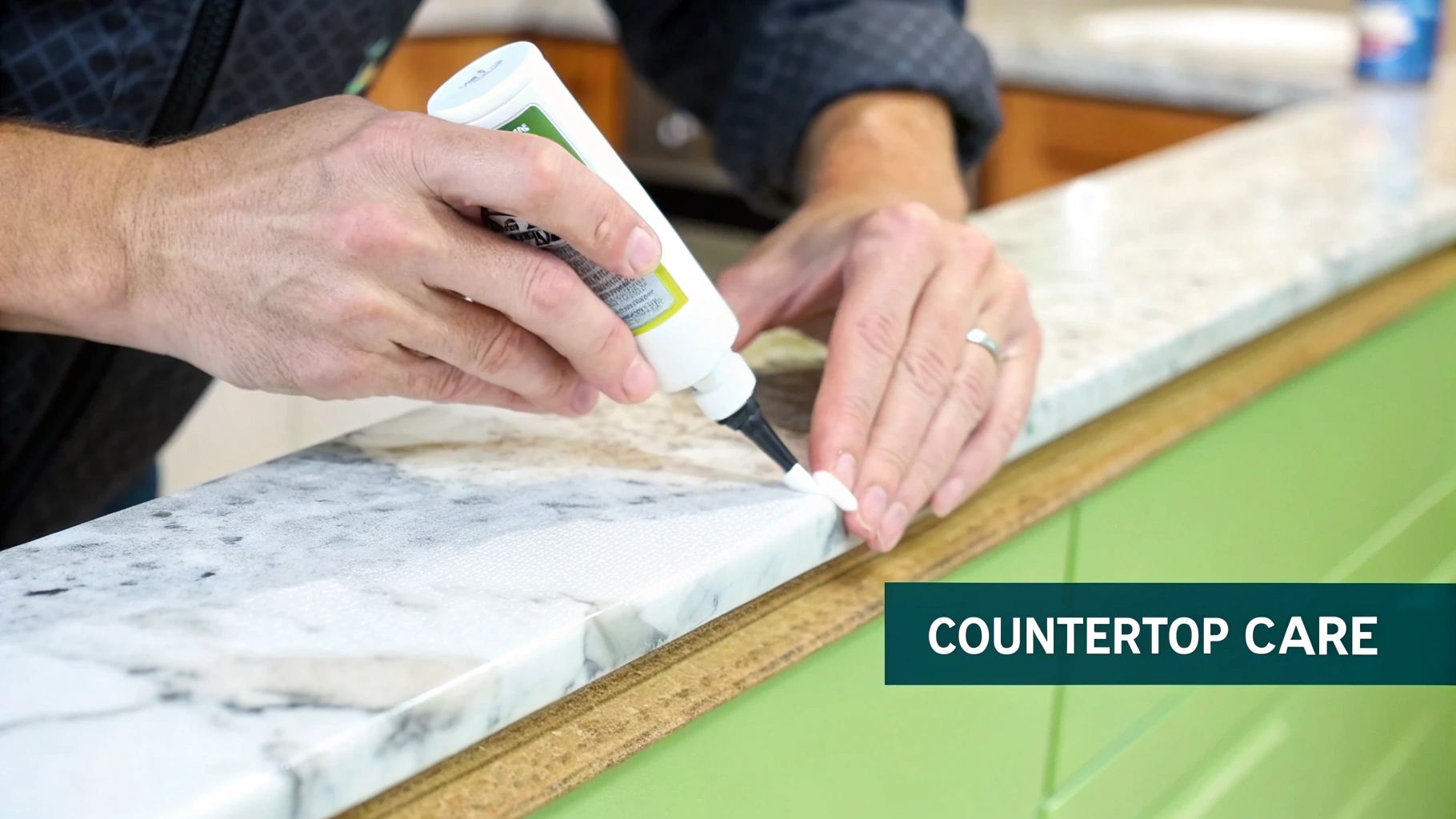
Your kitchen countertops are the primary stage for all culinary activities, making them a hotspot for stains, bacteria, and daily wear. A true kitchen deep cleaning checklist must go beyond daily wipe-downs to include a material-specific restoration process. This involves deeply cleaning the surface to remove embedded grime and bacteria, treating stains, and resealing where necessary to restore the countertop's original appearance and protect it from future damage.
This task is crucial because different countertop materials have unique vulnerabilities. Porous surfaces like granite and marble can absorb liquids, leading to stubborn stains and harbouring bacteria if not properly sealed. Even non-porous materials like quartz can be damaged by harsh chemicals or abrasive scrubbing, while butcher block requires regular oiling to prevent it from drying out and cracking.
Why It's a Top Priority
Neglecting proper countertop care can lead to permanent damage that is costly to repair or replace. For instance, real estate agents often report that well-maintained countertops can increase a home's perceived value. Furthermore, the National Kitchen & Bath Association highlights that proper maintenance is key to preserving the longevity and beauty of these high-use surfaces. Companies like Granite Gold have revolutionised natural stone care by creating pH-balanced cleaners and sealers that protect the stone's integrity, proving that specialised care is essential.
Actionable Cleaning Tips
Before you begin, clear your countertops completely and identify your countertop material to ensure you use the correct products.
- Granite and Marble: Never use acidic cleaners like vinegar or lemon juice, as they can etch the surface. Instead, use a pH-neutral cleaner specifically designed for natural stone. To maintain their lustre and stain resistance, reseal granite countertops annually with a quality sealer.
- Quartz: While highly durable and non-porous, quartz can be damaged by abrasive pads or harsh chemicals. Clean with a soft cloth and mild soap and water. For tough stains, use a non-abrasive cleaner approved for engineered stone.
- Butcher Block: To keep wood countertops sanitary and prevent drying, regularly clean them and apply a food-grade mineral oil or board cream. Use a bench scraper to remove dried-on food before cleaning.
- General Maintenance: Regardless of the material, always use cutting boards to prevent scratches and transfer of bacteria. Clean up spills, especially from acidic foods and drinks like wine, coffee, or citrus, immediately to prevent staining and etching.
7. Floor Deep Cleaning and Maintenance
Your kitchen floor endures constant foot traffic, spills, and splatters, making it a critical area in any kitchen deep cleaning checklist. A proper deep clean goes beyond a quick sweep or mop; it involves a methodical process to remove ingrained grease, stubborn food residue, and tough stains that accumulate in high-traffic zones. This process not only revitalises the floor's appearance but also protects its finish and contributes to a more hygienic kitchen environment.
This task is crucial because a grimy, greasy floor is a significant slip hazard, a major safety concern in a busy kitchen. In fact, commercial kitchens follow strict daily and weekly floor cleaning protocols precisely for this reason. Professional cleaning services also report that floors can last up to 40% longer when they receive proper, regular maintenance, saving you money on premature repairs or replacement.
Why It's a Top Priority
Neglecting your kitchen floor allows grease and grime to build up, especially in grout lines and along skirting boards. This build-up can degrade flooring materials over time, whether you have tile, hardwood, vinyl, or laminate. A thorough deep clean removes these damaging substances, prevents discolouration, and eliminates bacteria that can thrive in sticky residues. Maintaining a clean floor is essential for both safety and preserving the value and look of your home.
Actionable Cleaning Tips
Before starting, clear the floor of all movable items like mats, chairs, and bins.
- Prep is Key: Always sweep or vacuum the floor thoroughly first. This removes loose dirt and debris, preventing it from turning into a muddy mess when you start wet cleaning and stopping it from scratching the floor surface.
- Choose the Right Cleaner: Use a cleaner formulated for your specific flooring type. For instance, specialised products like Bona hardwood cleaners have become an industry standard for their effectiveness without damaging the wood's finish. For tile, a pH-neutral cleaner is often best.
- Mop Smarter: Use a microfibre mop, as it traps more dirt and uses less water than traditional string mops, making it suitable for all floor types. Start mopping at the furthest point from your kitchen exit and work your way back to avoid stepping on the wet, clean surface.
- Drying is Crucial: Allow the floor to air dry completely before walking on it or moving furniture back into place. Opening a window or using a fan can speed up the process. This final step prevents new footprints and ensures a streak-free finish.
8. Pantry and Food Storage Deep Cleaning
A crucial part of any kitchen deep cleaning checklist is addressing the often-overlooked pantry and food storage areas. This process involves more than just tidying up; it's a systematic decluttering, cleaning, and reorganising of your shelves, cupboards, and spice collections. By taking a complete inventory, checking expiration dates, and implementing proper food safety practices, you create a more efficient, hygienic, and cost-effective kitchen environment.
This task is essential for preventing food waste and controlling pests. An unorganised pantry makes it easy to forget about items tucked away in the back, leading to expired products and unnecessary purchases. Professional organisers have noted that a well-structured pantry can lead to a significant reduction in food waste, as you can easily see and use what you have.
Why It's a Top Priority
A pantry and food storage deep clean directly impacts your family's health and your household budget. Stale spices lose their flavour, expired goods can pose health risks, and unnoticed crumbs can attract pests like pantry moths and weevils. Health departments mandate strict food storage protocols in commercial kitchens for these reasons, and adopting similar standards at home ensures food safety and quality. Food Network chefs often emphasise that proper pantry organisation is the foundation of successful and stress-free cooking.
Actionable Cleaning Tips
To begin, completely empty your pantry, one shelf at a time, so you can thoroughly clean the empty space.
- Inventory and Purge: Inspect every single item. Discard anything that is expired, stale, or you know you will not use. Create a donation box for non-perishable items that are still in date but no longer wanted.
- Clean and Sanitise: Wipe down all shelves, walls, and the floor of your pantry with a mild, food-safe cleaning solution. Use a vacuum with a crevice tool to remove all crumbs and dust from corners and shelf joints before wiping.
- Organise and Containerise: Group similar items together, such as baking supplies, grains, and canned goods. Decant dry goods like flour, sugar, and pasta into clear, airtight containers to keep them fresh, deter pests, and make inventory management easier.
- Label Everything: Use labels to mark containers with the contents and the "best by" date. This simple step prevents confusion and helps you track freshness. For more ideas on effective kitchen organisation, you can explore these practical tips for how to organise your fridge, as many principles apply to the pantry as well.
8-Point Kitchen Deep Cleaning Checklist Comparison
| Cleaning Type | Implementation Complexity | Resource Requirements | Expected Outcomes | Ideal Use Cases | Key Advantages |
|---|---|---|---|---|---|
| Deep Cleaning Kitchen Appliances | High - Several hours, requires moving appliances, appliance-specific products | Moderate - Specialised cleaners, some heavy lifting | Improved efficiency, extended lifespan, odour & bacteria elimination | Monthly to seasonal deep maintenance in homes & commercial kitchens | Extends appliance life, prevents cross-contamination, maintains warranty |
| Cabinet and Drawer Cleaning & Org. | High - 4-6 hours, sorting, possible supply purchases | Moderate - Cleaning supplies & organisers | Increased kitchen efficiency, pest elimination, more storage space | Seasonal cleaning and reorganising for better workflow | Improves food safety, enhances organisation, extends item shelf life |
| Grout and Tile Cleaning & Restoration | Moderate to High - Labor-intensive scrubbing, specialised tools | High - Brushes, steam cleaners, chemicals | Restored appearance, mould prevention, extended tile life | Deep cleaning of backsplashes, floors in kitchens | Improves hygiene and appearance, prevents mould, increases home value |
| Exhaust Hood & Ventilation Cleaning | High - Ladder use, potential professional duct cleaning | High - Degreasers, filter replacements, possible pro service | Reduced fire hazards, better air quality & system efficiency | Monthly cleaning in commercial kitchens, annual pro maintenance | Prevents fires, improves air quality, increases system lifespan |
| Deep Sink and Faucet Sanitisation | Moderate - multiple products, possible disassembly | Moderate - Specialised cleaners, descalers | Bacteria elimination, odour removal, improved water flow | Regular maintenance in homes and restaurants | Prevents illness, removes stains/build-up, prolongs faucet life |
| Countertop Deep Cleaning & Restoration | Moderate to High - Material-specific, possible professional help | High - Specialised cleaners and sealers | Extended surface lifespan, stain prevention, maintained appearance | Periodic care of granite, quartz, marble, butcher block, laminate | Preserves value, protects surface, prevents damage and staining |
| Floor Deep Cleaning & Maintenance | High - Moving furniture, multi-step process | High - Material-specific cleaners, equipment | Safer, hygienic floors, preserved finish and lifespan | Routine or seasonal floor care in kitchens | Eliminates slip hazards, improves hygiene, extends floor life |
| Pantry and Food Storage Cleaning & Org. | Moderate - Inventory, sorting, possible container purchase | Moderate - Storage containers, cleaning supplies | Reduced food waste, pest prevention, improved food safety | Seasonal pantry audits and organisation | Saves money, improves safety, enhances cooking efficiency |
Maintaining Your Sparkling Kitchen All Year Round
You’ve successfully navigated the ultimate kitchen deep cleaning checklist, transforming your culinary space from merely functional to truly spectacular. By systematically tackling everything from the hidden corners of your appliances to the stubborn grout between your tiles, you have reclaimed your kitchen’s hygiene and lustre. This comprehensive effort is more than just a chore; it’s an investment in the heart of your home, creating a safer, more efficient, and infinitely more enjoyable environment for you and your family.
The sense of accomplishment that comes from a spotless kitchen is profound. You've degreased the exhaust hood, sanitised the sink, decluttered the pantry, and restored the shine to your benchtops and floors. But the real victory lies not just in completing this list once, but in building a sustainable system for maintaining that sparkle. The key is to shift your mindset from intensive, infrequent deep cleans to incorporating small, manageable habits into your daily and weekly routines.
From a Major Project to Minor Habits
The goal is to prevent the build-up that necessitates another marathon cleaning session. By integrating a few key tasks into your regular schedule, you can dramatically extend the periods between deep cleans. Think of it as preventative maintenance for your kitchen.
Here’s how to translate the major tasks from our checklist into simple, ongoing habits:
- Appliance Upkeep: Instead of waiting for baked-on spills to become permanent fixtures, wipe down your stovetop after each use. Once a week, quickly wipe the interior of your microwave and the fronts of your major appliances like the refrigerator and dishwasher. This prevents grease and fingerprint accumulation.
- Cabinet Care: Dedicate just five minutes each week to one specific cabinet or drawer. Wipe it down, check for expired items, and quickly reorganise. This rotating approach means you’ll never have to face a full-scale cabinet declutter again.
- Counter and Sink Sanity: Make it a habit to wipe down and sanitise your benchtops and sink every evening before bed. This simple act prevents bacteria growth and stops stains from setting, ensuring your surfaces are always ready for the next day's meal prep.
- Floor Focus: Spot-clean spills as they happen. A quick daily sweep or vacuum of high-traffic areas can prevent dirt from being tracked throughout the house, making your weekly mop a much faster and more effective task.
The Lasting Benefits of a Clean Kitchen
Mastering this maintenance routine does more than just keep things looking tidy. The benefits permeate many aspects of your home life, reinforcing why this effort is so valuable.
Key Takeaway: A consistently clean kitchen isn't just about aesthetics; it's about fostering a healthier lifestyle, improving food safety, and reducing the stress associated with a cluttered and dirty environment. It allows your culinary creativity to flourish in a space that feels organised and inspiring.
By staying on top of these smaller tasks, you are actively protecting your investment in your home. Regular cleaning prevents premature wear and tear on appliances, cabinetry, and flooring, saving you money on costly repairs or replacements down the line. It also creates a more welcoming atmosphere for whānau and friends, making your kitchen the true, vibrant hub of your home that it's meant to be. This kitchen deep cleaning checklist serves as your ultimate guide for those essential seasonal or annual resets, but its true power is in the daily habits it inspires. Embrace these practices, and enjoy the lasting satisfaction of a kitchen that is always ready for whatever life, or your next culinary adventure, brings.
Ready to elevate your kitchen's functionality and style? From innovative storage solutions that make organising a breeze to modern, energy-efficient appliances, Folders has everything you need to create your dream kitchen. Explore our curated collection at Folders and discover how our proudly Kiwi-owned company can help you build a more beautiful and efficient home.