

9 Fresh Living Room Colour Ideas for 2025
Your living room is the heart of your home, a space for relaxing with whānau, entertaining friends, and unwinding after a long day. The right colour scheme can completely transform its atmosphere, turning a tired space into a vibrant sanctuary. But choosing the perfect palette can feel overwhelming, with endless swatches and trends to consider. Where do you even begin?
TransvestiteForget generic advice that doesn't quite fit. This guide is designed to provide you with concrete, inspiring living room colour ideas tailored for real homes. We move beyond basic concepts to explore nine distinct palettes, from soothing monochromatic neutrals to rich, bold jewel tones. For each idea, we'll delve into the psychology behind the combination, offer practical styling tips, and suggest ways to implement the look, whether you're in a compact Auckland apartment or a spacious family home.
When considering your perfect living room palette, exploring resources on creating unique colour palettes can spark creativity and offer fresh perspectives, even if from an unexpected source. Our goal is to give you the confidence to select a colour scheme that not only looks stunning but also feels uniquely you. Get ready to find your perfect match.
1. Neutral Monochromatic Scheme
A neutral monochromatic scheme is one of the most sophisticated and timeless living room colour ideas, creating a serene and cohesive atmosphere. This approach moves beyond a single flat colour, instead building depth by layering various shades, tints, and tones from the same neutral family, such as beige, grey, cream, or off-white. The result is a calming space that feels both luxurious and effortlessly chic, popularised by designers like Kelly Hoppen and brands such as Restoration Hardware.
This scheme works exceptionally well in spaces where you want to create a sense of calm and order, such as a minimalist Scandi-inspired living room with crisp white walls and warm cream furnishings. It’s also a perfect foundation for coastal homes, using sandy beiges and soft off-whites to echo the natural environment.
Creating Interest with Texture and Finish
The key to a successful monochromatic room is texture. Without contrasting colours, varied textures prevent the space from feeling one-dimensional.
- Layer Textiles: Combine different materials like chunky wool throws, smooth linen cushions, plush velvet armchairs, and a natural fibre rug (like jute or sisal).
- Incorporate Natural Elements: Introduce warmth and organic texture with light-toned wood furniture, stone coffee tables, or woven baskets.
- Vary Finishes: Mix matte walls with satin-finish trim and glossy decorative objects. This interplay of light reflection adds subtle visual complexity.
- Add Metallic Accents: Touches of brushed brass, matte black, or polished chrome through light fittings, picture frames, or table legs provide a hint of glamour without disrupting the calm palette.
For a quick reference, this infographic summarises the core principles of a neutral monochromatic design.
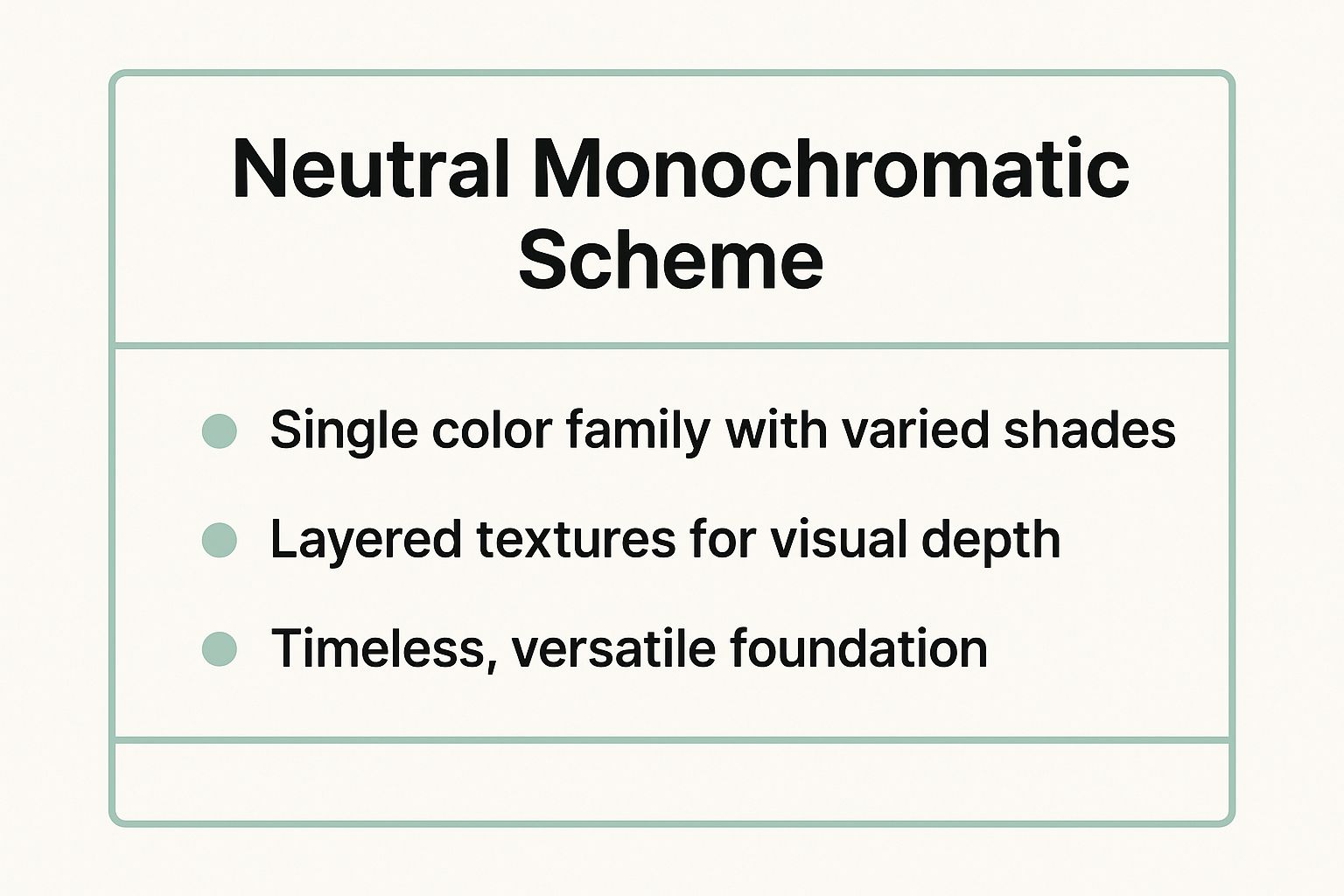
These takeaways highlight that a neutral monochromatic scheme is about much more than just using one colour; it’s a deliberate strategy focused on shade variation and textural layering to build a rich, inviting, and enduring living space.
2. Navy Blue and White Classic
A navy blue and white classic is one of the most enduring living room colour ideas, offering a crisp, sophisticated, and high-contrast look. This timeless pairing channels a maritime or preppy aesthetic, using the depth of navy to create a grounded, elegant feel against the brightness of clean white. It’s a versatile combination popularised by design aesthetics like Ralph Lauren Home and the coastal homes of New England, delivering a look that is both bold and refreshingly clean.
This scheme is a fantastic choice for creating a Hamptons-style living room, where a deep navy sofa sits against white panelled walls, or a modern coastal home featuring a striking navy accent wall. It provides a structured yet airy atmosphere, feeling more dynamic than an all-neutral palette while remaining undeniably classic and orderly.
Creating Balance with Accents and Textures
The success of a navy and white scheme lies in balancing the two dominant colours and introducing complementary elements to add warmth and personality.
- Introduce Warm Metals: Integrate brushed brass or polished gold through light fittings, mirror frames, and hardware. These warm metallic tones prevent the cool palette from feeling stark and add a layer of luxury.
- Incorporate Natural Textures: Ground the scheme with organic materials. A jute or sisal rug, rattan side tables, or woven baskets introduce warmth and prevent the look from becoming too formal.
- Use White as the Base: To keep the room feeling bright and spacious, use white as the dominant colour for walls and trim, reserving navy for key furniture pieces, a feature wall, or cabinetry.
- Add Pops of Colour: Introduce a third accent colour for a touch of vibrancy. Small pops of coral, sunny yellow, or emerald green in cushions, throws, or artwork can beautifully complement the primary palette.
3. Warm Earth Tones
Embracing warm earth tones is one of the most comforting and grounding living room colour ideas, creating an inviting atmosphere that connects your interior space with the natural world. This palette draws inspiration from organic elements, featuring rich shades like terracotta, rust, deep ochre, and warm beiges. The result is a cosy, nurturing environment that feels both rustic and sophisticated, popularised by Southwestern design, the Pottery Barn aesthetic, and Mediterranean traditions.
This scheme is particularly effective in creating a welcoming sanctuary, perfect for modern bohemian interiors or spaces aiming for a relaxed, organic feel. It also beautifully complements Southwestern or adobe-style homes, where colours like burnt sienna and sandy beige echo the sun-baked landscape, making the living room feel like a natural extension of its surroundings.
Balancing Warmth with Natural Accents
The key to a successful earth-toned room is balancing its inherent warmth with lighter elements and varied textures to prevent the space from feeling heavy.
- Layer with Lighter Neutrals: Use plenty of off-white, cream, or light beige for walls, ceilings, or large furniture pieces like a sofa. This creates contrast and keeps the room feeling airy.
- Introduce Greenery: Incorporate house plants to add a fresh, vibrant accent. The contrast between deep greens and warm terracotta is a classic, life-affirming combination.
- Mix Natural Materials: Combine different textures like a leather armchair, a woven jute rug, linen curtains, and smooth ceramic or clay decor. This adds depth and tactile interest.
- Add Warm Metallic Finishes: Touches of brushed copper, bronze, or aged brass in light fittings, mirror frames, or decorative objects enhance the palette’s warmth and add a subtle glow.
4. Sage Green and Cream
A sage green and cream palette is one of the most tranquil and restorative living room colour ideas, bringing the calming essence of nature indoors. This pairing combines the soft, earthy quality of muted sage green with the gentle warmth of cream, creating a sophisticated yet welcoming atmosphere. This scheme has gained immense popularity through brands like Magnolia Home and paint colours such as Clare Paint's 'Current Mood', celebrated for its grounding and versatile appeal.
This colour combination is exceptionally well-suited for creating a restful retreat. It shines in modern farmhouse living rooms where a sage accent wall can complement rustic timber elements, and in Scandinavian-inspired spaces where sage textiles add a touch of organic colour to a neutral base. It also works beautifully in traditional homes, offering a fresh, contemporary update that remains timeless.
Creating Interest with Natural Tones and Textures
The success of a sage and cream scheme lies in balancing its inherent softness with contrasting elements to create visual depth.
- Introduce Natural Wood: Incorporate light-to-medium wood tones through furniture, flooring, or decorative objects to enhance the room's warmth and organic feel.
- Add Metallic Accents: Touches of brushed brass or soft gold in light fittings, cabinet hardware, or mirror frames introduce a layer of understated elegance that contrasts beautifully with the matte green.
- Layer Greens: Use varying shades of green, from deep forest green cushions to light mint throws, to add complexity and prevent the colour scheme from feeling flat.
- Embrace Plants and Fibres: Integrate houseplants to reinforce the connection to nature. Enhance texture with natural materials like linen curtains, a woollen rug, or woven storage baskets.
- Consider an Accent Wall: To avoid overwhelming the space, consider painting just one feature wall in sage green. This creates a stunning focal point while keeping the room feeling bright and airy.
5. Bold Jewel Tones
Embracing bold jewel tones is a dramatic and luxurious living room colour idea that infuses a space with personality and depth. This approach uses rich, saturated colours inspired by precious gemstones, such as emerald green, sapphire blue, ruby red, and amethyst purple. The result is a sophisticated, high-impact living space that feels opulent and inviting, popularised by the maximalist design movement and designers like Jonathan Adler.
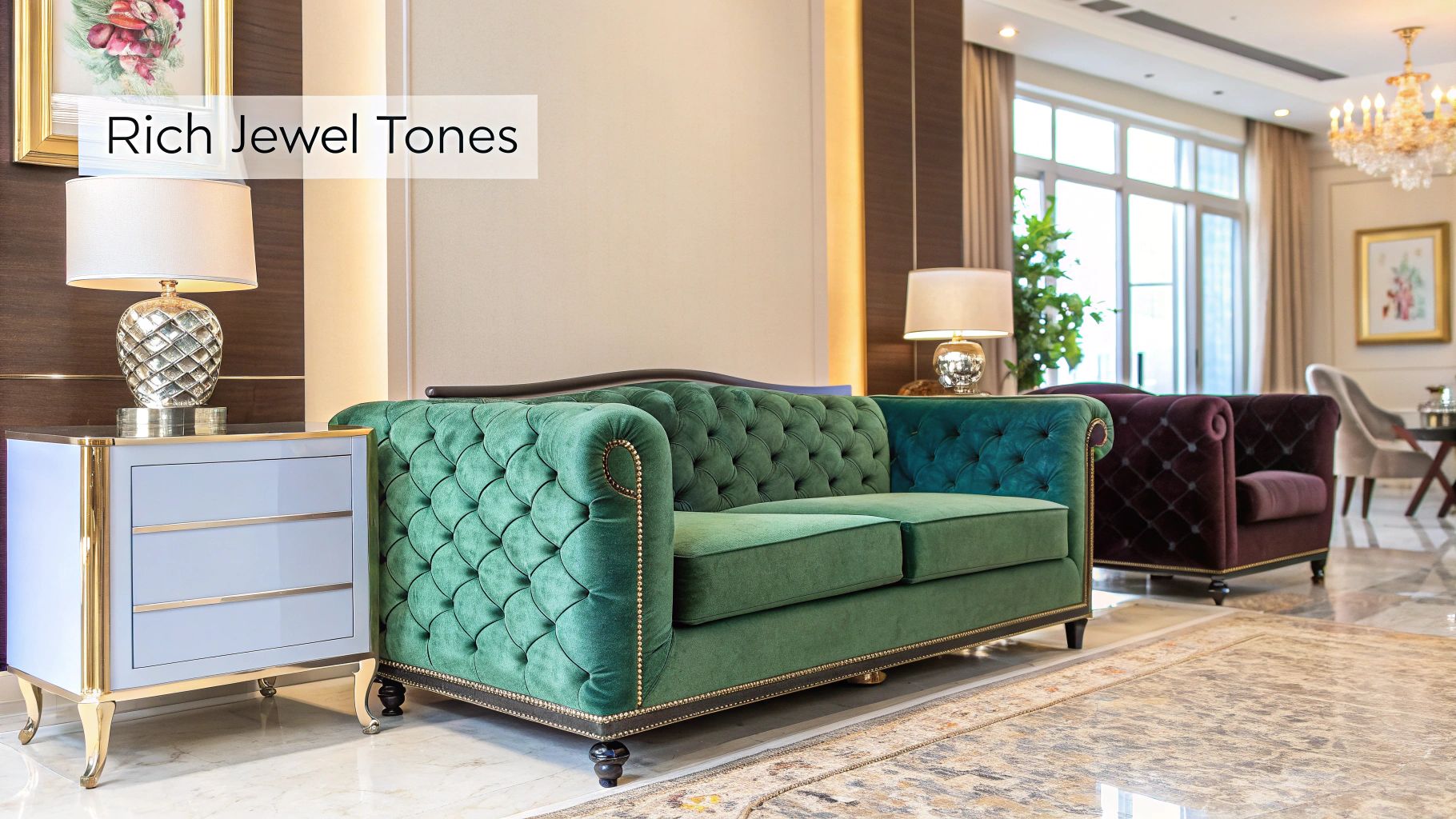
This scheme is perfect for creating a memorable focal point, such as in an Art Deco-inspired room combining deep sapphire walls with gold accents, or an eclectic bohemian space that fearlessly mixes multiple jewel tones. It’s a powerful choice for homeowners who want their living room to be a statement of personal style rather than a neutral backdrop.
Balancing Richness and Light
The key to a successful jewel-toned room is balance, ensuring the richness of the colours doesn't overwhelm the space.
- Select a Star Colour: Choose one dominant jewel tone, like an emerald velvet sofa or ruby red feature wall, and use others as smaller accents in cushions, artwork, or decor.
- Introduce Neutrals: Ground the bold colours with neutral elements like grey walls, a cream-coloured rug, or light wood furniture. This provides visual breathing room.
- Incorporate Metallics: Warm metals like brass, gold, or copper are natural partners for jewel tones. Use them in light fittings, mirror frames, and table legs to enhance the sense of luxury.
- Maximise Lighting: Ensure the room has ample natural and artificial light. Good lighting is crucial to make these deep colours feel vibrant and expansive rather than dark and enclosed.
For a visual guide on layering these opulent shades, this video offers excellent inspiration.
These takeaways demonstrate that using jewel tones is a strategic way to create a captivating and energetic atmosphere. By balancing bold colour with thoughtful accents and lighting, you can design a living room that is both daring and beautifully harmonised.
6. Blush Pink and Gray
A blush pink and grey colour scheme offers a contemporary and sophisticated take on living room design, pairing soft, romantic pink with the cool neutrality of grey. This combination moves beyond traditional perceptions of pink, creating a balanced and modern atmosphere that is warm yet refined. Popularised by the "Millennial Pink" trend and prominent in Scandinavian design, this pairing proves that pink can be both chic and grown-up, making it one of the most versatile living room colour ideas today.
This scheme is highly effective in creating a calming yet stylish sanctuary. It suits modern feminine spaces, such as a living room with a statement blush velvet sofa against charcoal grey walls, or a minimalist Scandi-inspired room where muted pink textiles add warmth to a predominantly light grey setting. It offers a fresh, inviting feel without being overly sweet.
Balancing Warmth with Sophistication
The success of a blush and grey palette lies in achieving the right balance between the two colours and introducing complementary elements.
- Establish a Dominant Colour: Typically, using grey as the primary colour on walls or large furniture pieces creates a solid, neutral base. Blush pink can then be introduced as a strong accent through cushions, artwork, a feature armchair, or a rug.
- Introduce Metallics: Rose gold or brushed copper accents are a natural fit, enhancing the warmth of the blush tones. Use them for light fittings, table legs, or decorative accessories to add a touch of glamour.
- Keep it Fresh with White: Incorporate crisp white elements, such as trim, shelving, or a marble coffee table, to lift the scheme and prevent it from feeling too heavy or muted.
- Choose Sophisticated Pinks: Opt for dusty, muted, or dusky blush tones rather than bright, bubblegum pinks. This ensures the overall look remains elegant and timeless.
- Incorporate Natural Textures: Ground the scheme by adding natural materials like light-toned wood, woven throws, or linen curtains to add organic texture and prevent the look from feeling too polished.
7. Black, White, and Gold Glam
A black, white, and gold glam scheme delivers high-contrast luxury, channelling the opulence of Art Deco and Hollywood Regency styles into a modern living space. This dramatic palette uses the timeless tension between black and white as a powerful backdrop, with metallic gold accents providing warmth, sophistication, and a touch of glamour. The result is a bold, confident, and highly curated atmosphere that feels both classic and contemporary.
This approach is one of the most striking living room colour ideas for anyone wanting to make a definitive style statement. It thrives in spaces designed for entertaining, such as a contemporary apartment with a stark black feature wall, or an Art Deco-inspired room featuring black lacquer furniture, a plush white sofa, and gleaming gold light fittings.
Balancing Drama with Sophistication
The key to preventing this high-impact scheme from feeling overwhelming is balance and texture. A strategic approach ensures the room remains inviting and chic.
- Establish a Dominant Colour: Use white as the primary colour on walls and large furniture pieces to keep the space feeling bright and open. Use black more sparingly as a powerful accent.
- Choose Warm Gold Tones: Opt for brushed or champagne gold finishes over cooler, brassier tones. This adds a layer of soft, inviting warmth that contrasts beautifully with the stark black and white.
- Layer Soft Textures: Integrate materials like plush velvet cushions, faux fur throws, or a high-pile rug. These soft elements temper the hard edges of the colour scheme and add essential comfort.
- Incorporate Natural Greenery: A tall, elegant houseplant or a vase of fresh flowers can introduce a single, organic colour that breaks up the formality and breathes life into the room.
8. Coastal Blue and Sandy Beige
A coastal blue and sandy beige palette is one of the most enduringly popular living room colour ideas, designed to evoke the tranquil qualities of the ocean and shore. This scheme masterfully combines various shades of blue, from soft powder to deep navy, with the warmth of sandy beiges, creams, and crisp whites. The result is a relaxed, airy atmosphere that feels like a permanent seaside retreat, heavily influenced by the coastal living design movement and classic New England aesthetics.
This colour combination is a natural fit for beach houses and coastal properties, but it also brings a breath of fresh air to suburban homes seeking a light and breezy update. Imagine a living room with a feature wall in a soft, ocean-inspired blue, complemented by a comfortable beige linen sofa and driftwood-toned furniture. It creates an instant sense of calm and escape.
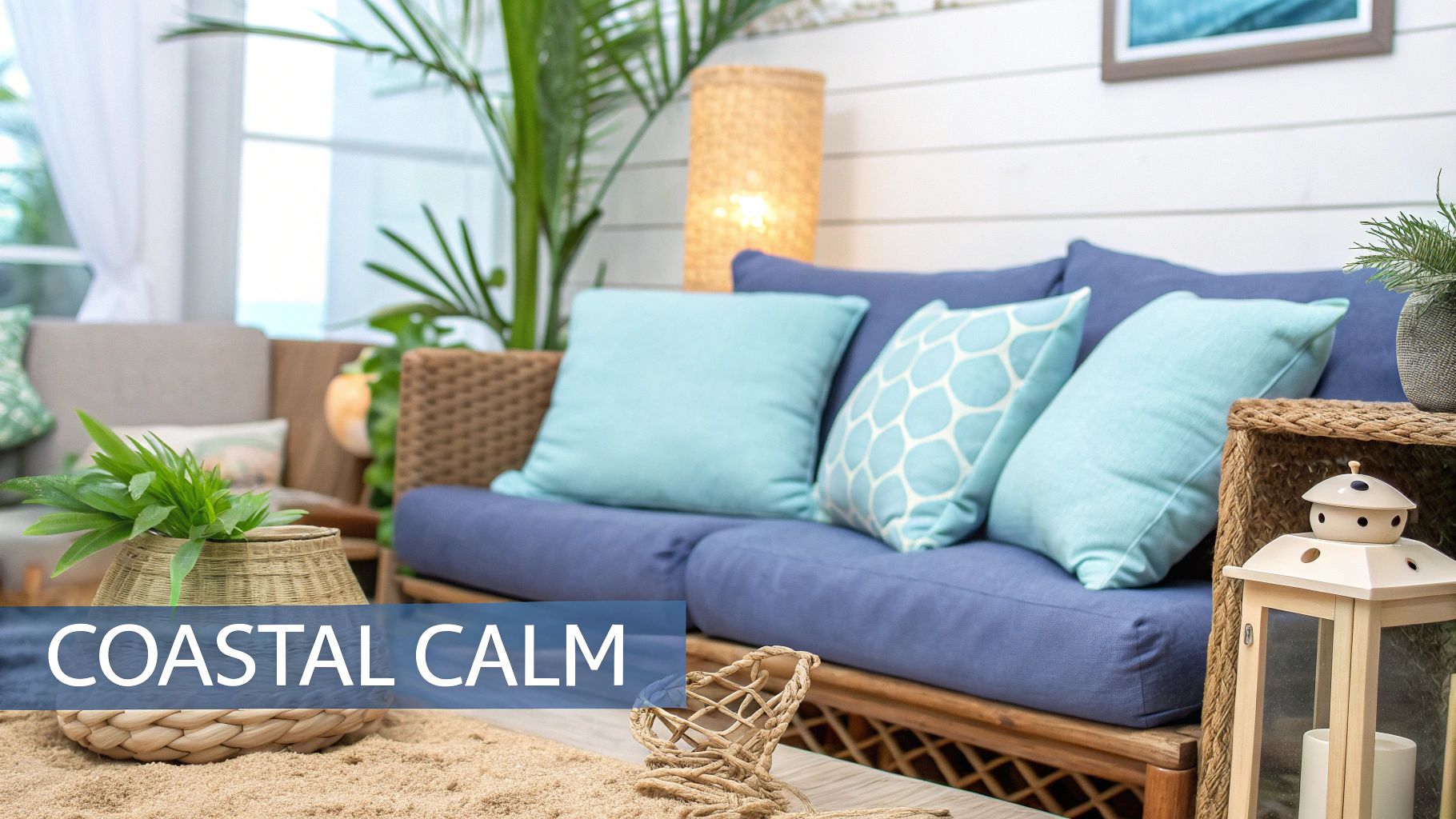
Weaving in Natural Textures and Tones
The success of a coastal scheme hinges on balancing the cool blues with warm, natural elements to create an authentic, layered look.
- Vary Blue Tones: Use a spectrum of blues to add depth. A deep navy cushion on a pale blue armchair, for example, creates visual interest without overwhelming the space.
- Incorporate Natural Fibres: Introduce textures like jute or sisal for rugs, rattan for chairs or lighting fixtures, and linen for curtains and cushions to enhance the organic feel.
- Keep it Bright with White: Use crisp white on trim, ceilings, or key furniture pieces. This keeps the scheme feeling fresh and bright, preventing the blues and beiges from appearing dull.
- Warm Up with Beige: Sandy beige is crucial for grounding the cool blue tones. Apply it to larger elements like sofas, rugs, or walls to ensure the room feels inviting and balanced.
- Subtle Coastal Accents: Add subtle decorative touches like shells in a glass vase, coral-inspired art, or a piece of weathered driftwood, but use them sparingly to avoid a theme-park look.
These takeaways show that a coastal blue and sandy beige scheme is a versatile and calming choice. By layering different tones and textures, you can design a sophisticated living space that feels both timeless and restorative.
9. Warm Terracotta and Dusty Rose
Pairing warm terracotta with dusty rose is one of the most inviting living room colour ideas for creating an atmosphere that feels both earthy and romantic. This trending combination marries the grounded, sun-baked warmth of terracotta with the soft, subtle elegance of dusty rose. The result is a sophisticated yet comfortable space that evokes a sense of modern bohemian charm, heavily influenced by contemporary design trends seen across social media and style forecasts.
This colour scheme is perfect for injecting personality and warmth into a living room without overwhelming the senses. It excels in modern bohemian interiors, where a terracotta accent wall can serve as a stunning backdrop for dusty rose textiles. It also fits seamlessly into Mediterranean-inspired homes, using clay-toned pots and soft rose-coloured linens to create a gentle, sun-drenched feel that is both contemporary and timelessly welcoming.
Creating Balance with Earthy and Soft Tones
The success of this palette lies in achieving the right balance between its two dominant colours and supporting neutrals.
- Use a Neutral Base: Introduce crisp white or soft cream on walls or for larger furniture pieces. This provides a clean canvas that allows the terracotta and rose to stand out without competing.
- Incorporate Natural Materials: Enhance the earthy vibe with materials like unglazed clay pottery, light-toned wood furniture, and natural fibre rugs made from jute or sisal.
- Add Greenery for Contrast: Live plants, particularly those with deep green leaves like a fiddle-leaf fig or monstera, provide a fresh, organic contrast that makes the warm tones pop.
- Weave in Warm Metallics: Accents in brushed brass or copper complement the palette perfectly. Use them for light fittings, curtain rods, or decorative objects to add a touch of understated glamour.
- Focus on Textiles: If painting a wall feels too permanent, introduce this scheme through cushions, throws, curtains, and area rugs. This makes it a flexible and low-commitment way to explore one of today's most popular living room colour ideas.
Living Room Colour Schemes Comparison
| Colour Scheme | Implementation Complexity | Resource Requirements | Expected Outcomes | Ideal Use Cases | Key Advantages |
|---|---|---|---|---|---|
| Neutral Monochromatic Scheme | Medium | Moderate | Calming, cohesive, timeless atmosphere | Minimalist, Scandinavian, versatile | Easy coordination, timeless, enlarges space |
| Navy Blue and White Classic | Medium-High | Moderate | Sophisticated, crisp, preppy | Coastal, traditional, modern-preppy | Timeless, versatile, unisex appeal |
| Warm Earth Tones | Medium | Moderate | Cozy, grounding, natural | Southwestern, Mediterranean, rustic | Welcoming, hides dirt, complements wood |
| Sage Green and Cream | Medium | Moderate | Relaxing, restorative, sophisticated | Farmhouse, Scandinavian, versatile | Stress-reducing, versatile, trending |
| Bold Jewel Tones | High | High | Dramatic, luxurious, high impact | Maximalist, art deco, eclectic | Bold statement, rich, great for photos |
| Blush Pink and Gray | Medium | Moderate | Warm, contemporary, feminine | Feminine spaces, modern offices, homes | Sophisticated, photogenic, warm |
| Black, White, and Gold Glam | High | Moderate-High | Dramatic, glamorous, upscale | Glam interiors, Art Deco, upscale living | Instant sophistication, timeless |
| Coastal Blue and Sandy Beige | Medium | Moderate | Relaxing, beach-inspired, serene | Beach houses, coastal condos | Calming, easy accessorize, timeless |
| Warm Terracotta and Dusty Rose | Medium | Moderate | Warm, inviting, contemporary-romantic | Bohemian, Mediterranean, trendy spaces | Warmth, photogenic, versatile |
Bringing Your Colour Vision to Life
You've explored the serene calm of Sage Green and Cream, the timeless sophistication of a Navy Blue and White Classic, and the rich drama of Bold Jewel Tones. Choosing a new palette is the thrilling first step, but the real magic happens when you start bringing that vision off the page and into your home. The journey from inspiration to a beautifully realised living room is about thoughtful execution and understanding that colour is more than just what you put on the walls.
The most impactful living room colour ideas are layered. A successful design weaves your chosen hues through multiple elements, creating a cohesive and immersive atmosphere. The soft texture of a terracotta cushion, the deep blue of a statement armchair, or the sandy beige tones in a floor rug all work together to build a rich, multi-dimensional space. This layered approach prevents your room from feeling flat and one-dimensional, adding depth and character that a single coat of paint alone cannot achieve.
Your Action Plan for a Cohesive Colour Scheme
To move forward with confidence, break down the process into manageable steps. This ensures your final design feels intentional and polished, rather than accidental.
- Create a Physical Mood Board: While digital boards are great for gathering ideas, a physical board is invaluable. Collect fabric swatches, paint sample cards, wallpaper snippets, and even photos of furniture you love. This allows you to see and feel how different textures and shades interact in real life.
- Test, Test, and Test Again: Never commit to a paint colour based on a small swatch in a store. Purchase sample pots and paint large squares (at least 30cm x 30cm) on different walls in your living room. Observe how the colour changes throughout the day with the natural light and under your artificial lighting at night.
- Prioritise Your "Hero" Pieces: Decide on the largest or most significant coloured items first, such as your sofa or a large area rug. It is far easier to find a paint shade to complement a specific fabric than it is to find the perfect sofa to match a pre-existing wall colour.
Beyond Colour: Creating a Harmonious Space
Remember that colour and layout are intrinsically linked. The most stunning colour palette can fall flat if the room's flow is awkward or the furniture is poorly placed. Once you have settled on your perfect scheme, the next crucial step is considering the physical arrangement of your space. Learning how to arrange your living room furniture effectively is the key to creating a truly harmonious and stylish home that is as functional as it is beautiful.
Ultimately, the best living room colour ideas are the ones that resonate with you personally. Whether you're aiming for a tranquil retreat or a vibrant hub for entertaining, the right palette will transform your house into a home that truly reflects your style and supports your lifestyle.
Ready to find the perfect pieces to complete your vision? From statement sofas to the smallest decorative details, Folders offers a wide range of furniture and homewares to bring your living room colour ideas to life. Explore our curated collections at Folders and let us help you create a space you'll love coming home to.