

Small Kitchen Ideas: Maximise Space & Style in 2025
Making the Most of Your Small Kitchen
A small kitchen can be both stylish and functional. This listicle provides ten small kitchen ideas to maximise space and efficiency. Learn how to optimise vertical storage, incorporate multi-functional islands, integrate compact appliances, and employ clever design strategies. From hidden storage and smart organisers to foldable furniture and corner solutions, discover how to create the kitchen of your dreams, regardless of size. Check out Folders, a New Zealand retailer, for more small kitchen appliances and inspiration.
1. Vertical Storage Solutions
For small kitchen ideas in NZ, thinking vertically is key. Vertical storage solutions maximise wall space by utilising the height of the room rather than valuable floor space, a crucial tactic in compact Kiwi kitchens. This approach involves installing tall cabinets, floating shelves, hanging racks, and wall-mounted organisers to store everything from everyday essentials to occasionally used appliances, freeing up precious counter space for food preparation and other activities.
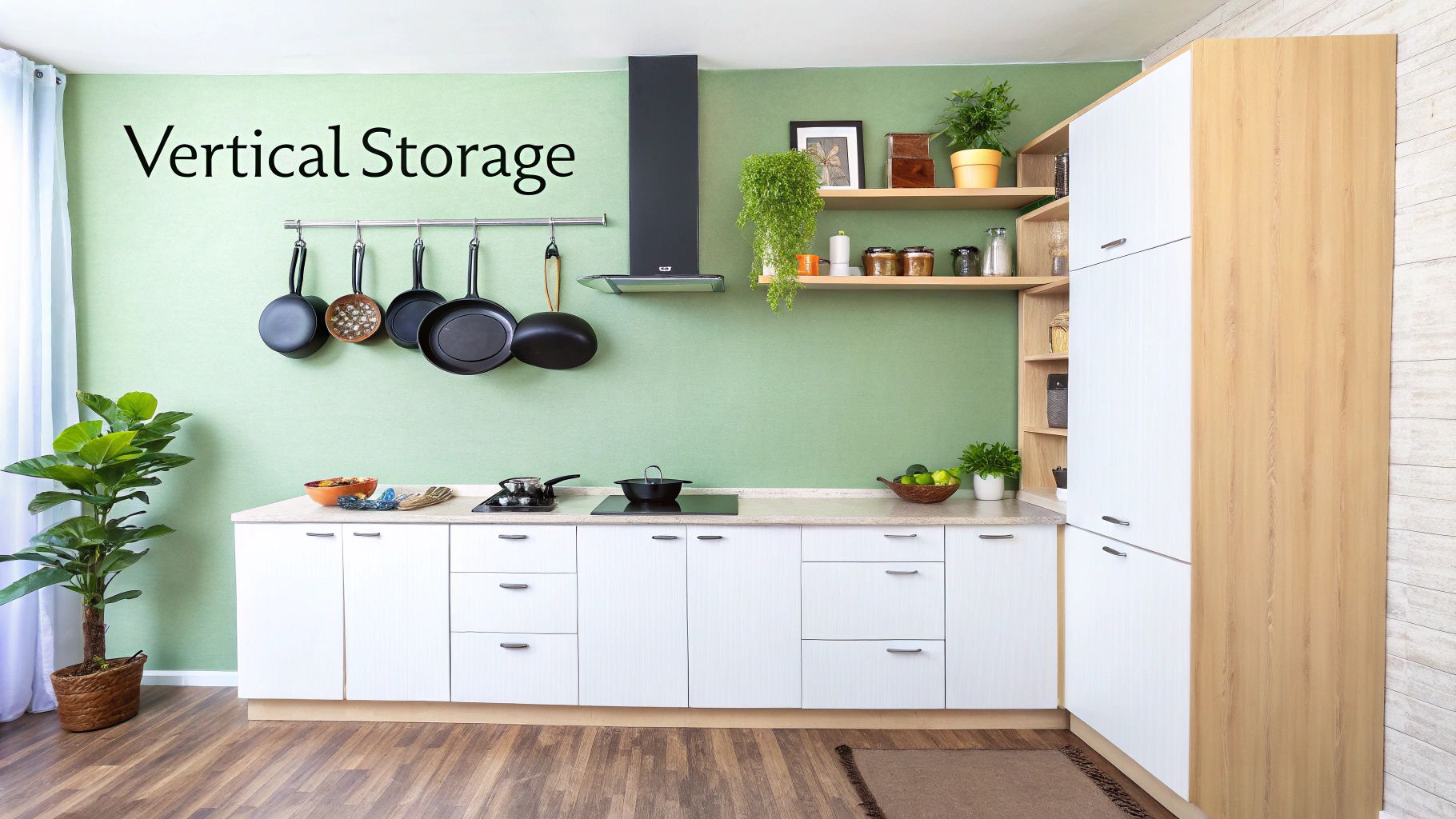
This method is particularly effective because it transforms often-under utilised wall space into valuable storage. Think ceiling-mounted pot hangers, magnetic knife strips and spice racks affixed to the wall, or even floor-to-ceiling cabinets that make the most of every inch. Features like wall-mounted shelving and racks not only provide extra storage but can also add visual interest and showcase decorative items, turning a practical solution into a stylish design element. For those seeking small kitchen ideas, vertical storage easily earns its place at the top of the list.
Successful implementation can be seen in products like IKEA's VÄRDE wall shelf with 5 hooks, perfect for hanging utensils. More comprehensive systems like Pottery Barn's modular kitchen wall storage offer customised solutions. For more budget-friendly options, The Container Store's elfa utility kitchen wall rack provides a sturdy and versatile storage solution. These examples demonstrate the versatility of vertical storage and its adaptability to various budgets and styles. Learn more about Vertical Storage Solutions
Pros:
-
Maximises space in kitchens with limited square footage.
-
Keeps frequently used items easily accessible.
-
Creates visual interest and can showcase decorative items.
-
Reduces countertop clutter.
Cons:
-
May require drilling into walls or ceilings.
-
Upper storage can be difficult to access for shorter individuals.
-
Can make a small space feel cluttered if overdone.
-
Requires regular dusting of open shelving.
Tips for Implementing Vertical Storage:
-
Install shelves at varying heights to create visual interest and accommodate items of different sizes.
-
Use uniform containers on open shelving for a clean, organised look.
-
Place frequently used items at eye level and less-used items higher up.
-
Consider using a small step stool for accessing higher storage safely and easily.
-
Combine closed and open storage for a balance of functionality and aesthetics.
This approach is ideal for anyone dealing with a small kitchen, from apartment dwellers to homeowners with compact cooking spaces. Whether you're a seasoned home cook looking to optimise your workspace, a new homeowner outfitting your first kitchen, or a renter looking for space-saving solutions, vertical storage is a game-changer. It aligns perfectly with the minimalist organisational philosophy popularised by Marie Kondo and the small space design expertise of Whitney Leigh Morris, while also being reflected in IKEA's small space living solutions. By implementing these vertical storage ideas, you can transform your small kitchen into a highly functional and stylish space.
2. Multi-functional Kitchen Islands
Maximising space is key in any small kitchen, and a multi-functional kitchen island can be a game-changer. These compact, often mobile units offer a clever solution for small kitchen ideas, providing a versatile surface that serves multiple purposes. They can act as extra prep space, a dining area, a storage hub, or even a mobile bar, adapting to your needs and the limited space available. This flexibility makes them a valuable addition for Kiwi homeowners and renters looking to optimise their compact kitchens.
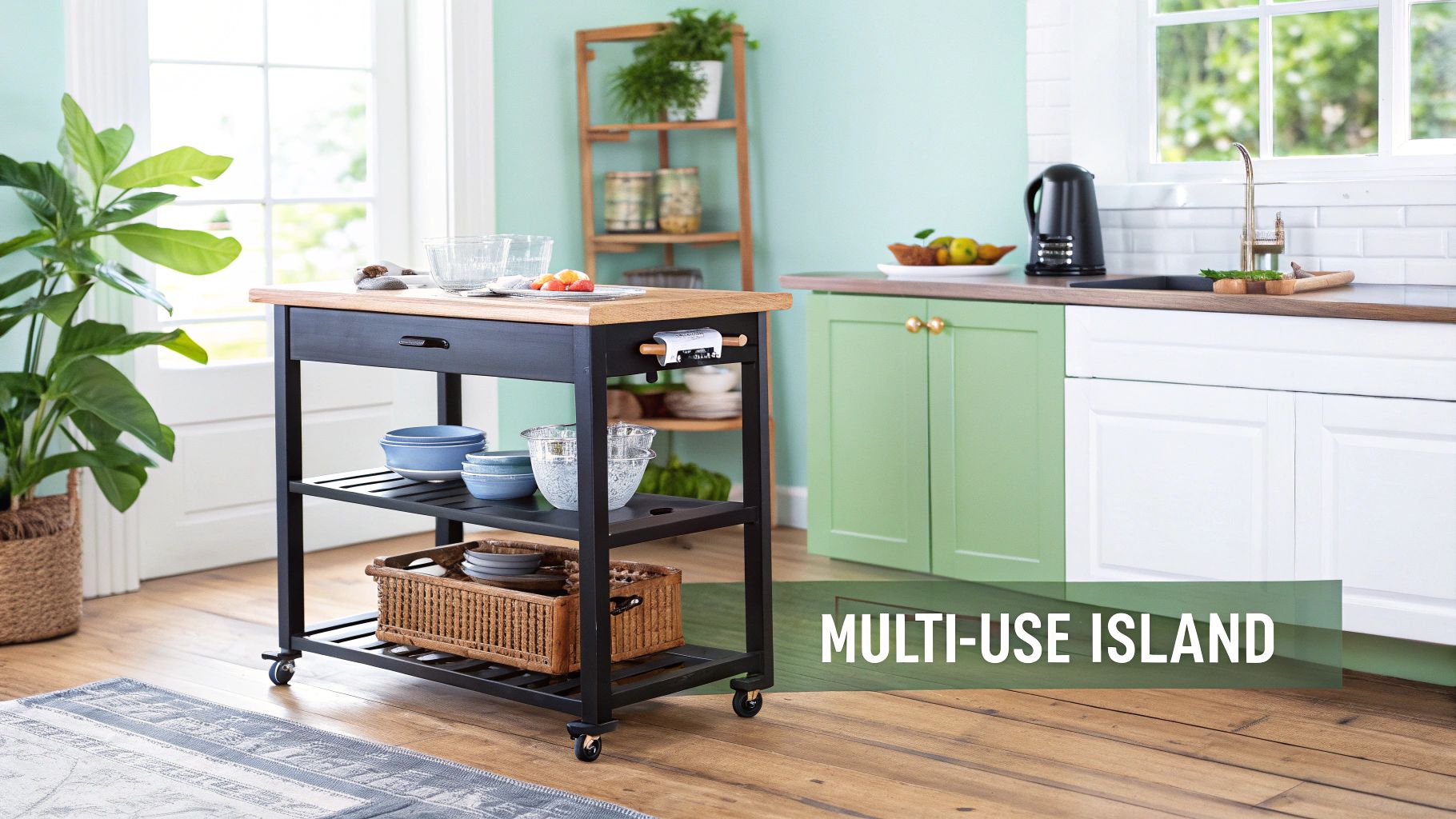
A multi-functional kitchen island works by incorporating several key features into a compact design. Wheels allow for easy mobility, enabling you to tuck the island away when not in use or reposition it as needed. Extendable or foldable surfaces provide extra counter or dining space when required, and then neatly retract to save space. Built-in storage drawers or shelves offer a convenient place to store kitchen essentials, keeping countertops clutter-free. Some models even feature butcher block or heat-resistant tops for added practicality, and adjustable height options allow for customised comfort.
Several popular examples showcase the versatility of these islands. IKEA's STENSTORP kitchen cart provides handy drawers and shelves for storage. Crate & Barrel's Belmont kitchen island features a drop leaf for flexible dining or prep space. And for truly compact spaces, the Origami folding kitchen island, a favourite in studio apartments, folds down completely when not in use. These adaptable designs, popularised by personalities like Joanna Gaines of Magnolia and Fixer Upper, and featured in collections like West Elm's small space furniture line, are now common recommendations from Food Network kitchen designers.
Tips for Choosing and Using a Multi-functional Kitchen Island:
-
Proportionality: Choose an island that’s proportional to your kitchen’s size. Avoid overwhelming the space with a piece that's too large.
-
Locking Wheels: Look for models with locking wheels for stability while you’re using the island for prepping or dining.
-
Electrical Outlets: Consider islands with built-in electrical outlets for powering small appliances.
-
Vertical Storage: Utilise the island's sides for hanging towels, utensils, or cutting boards.
-
Style Coordination: Select a style that complements your existing kitchen design.
Pros and Cons:
Pros:
-
Provides additional counter space when needed.
-
Creates a dining space in kitchens too small for traditional tables.
-
Offers extra storage for kitchen essentials.
-
Can be moved aside when not in use.
-
Serves as a visual divider in open-concept spaces.
Cons:
-
Even compact islands require some floor space.
-
Quality options can be expensive.
-
May limit movement in very tight kitchens.
-
Storage capacity is limited compared to built-in cabinetry.
Multi-functional kitchen islands deserve their place on this list because they address a crucial challenge in small kitchens: the need for more space and functionality without compromising flow and movement. They offer a practical and stylish solution for maximising the use of limited square footage, making them an ideal small kitchen idea for Kiwi homes.
3. Hidden and Pull-Out Storage
Maximising space in a small kitchen is crucial, and hidden and pull-out storage solutions offer an ingenious way to achieve this. This approach focuses on utilising every nook and cranny, transforming wasted space into functional storage. It involves incorporating concealed compartments and pull-out mechanisms that keep items organised and easily accessible, while maintaining a clean, uncluttered look. Think pull-out pantries, toe-kick drawers, cleverly designed cabinet organisers, and narrow gap fillers that make the most of otherwise unused areas. This is a particularly effective small kitchen idea as it helps maintain a streamlined and efficient cooking space.
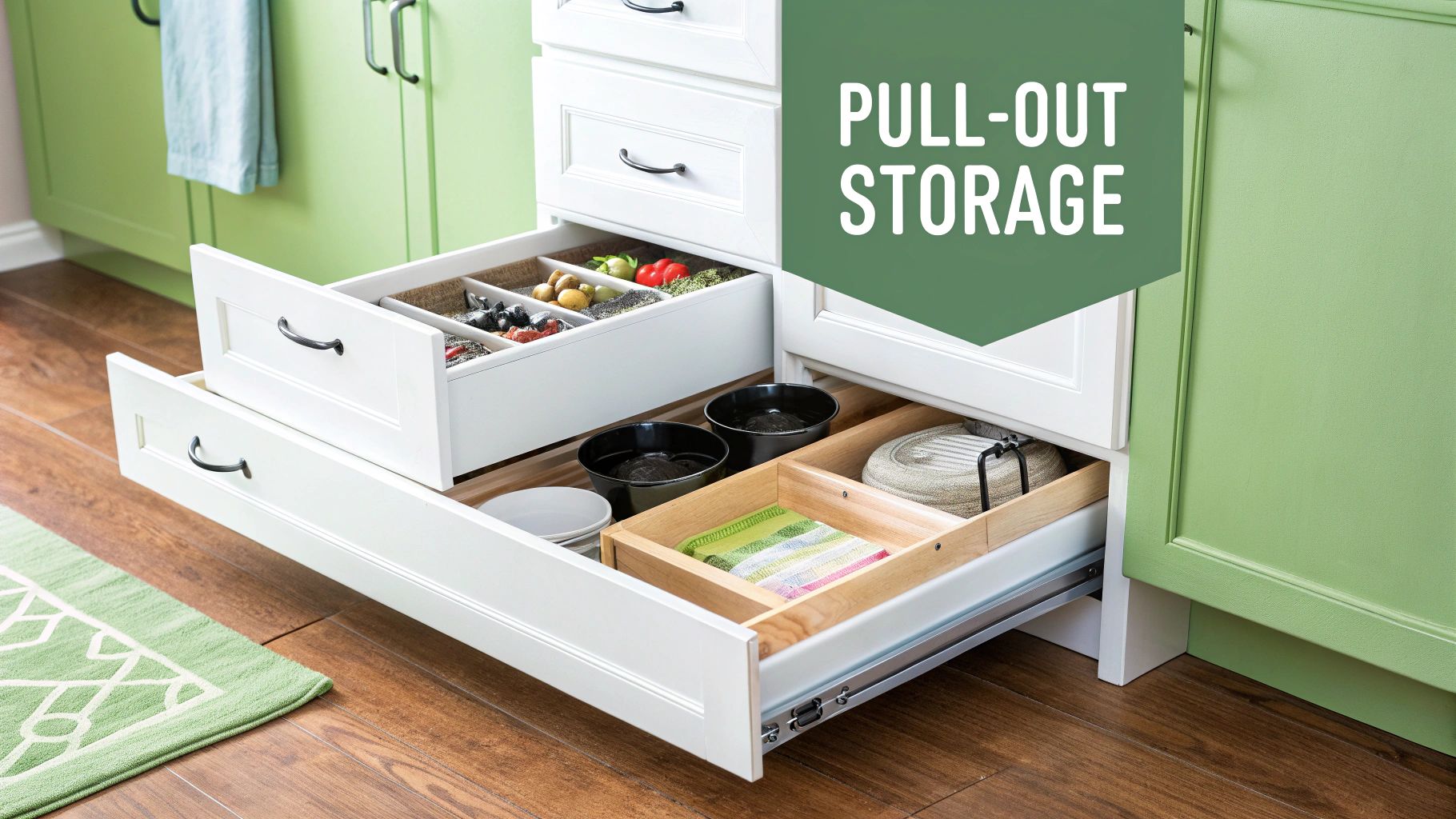
Specifically, features like pull-out cabinet organisers, narrow gap fillers between appliances, under-sink organisers, and toe-kick drawers beneath base cabinets can drastically increase your storage capacity. Even cabinet doors can become valuable real estate with mounted racks and bins. This is especially helpful for small kitchen ideas in NZ homes, where space is often at a premium. You can discover more options by exploring resources like Learn more about Hidden and Pull-Out Storage.
For example, Rev-A-Shelf offers a wide range of pull-out spice racks and pantry systems perfect for making the most of deep cabinets. IKEA's MAXIMERA drawer system, with its customisable dividers, provides excellent organisation within drawers. For a truly impressive larder solution, Blum's SPACE TOWER pull-out unit is hard to beat. These systems not only increase storage but also improve accessibility, making it easier to find and retrieve items.
When planning your hidden storage, careful measurement is key. Before purchasing any inserts, meticulously measure your cabinet interiors to ensure a perfect fit. Consider incorporating soft-close mechanisms to prevent slamming and prolong the life of your hardware. Using clear containers inside pull-outs allows for easy identification of contents, and installing lighting in deeper pull-outs can significantly improve visibility. Prioritising high-quality hardware is especially important for frequently used pull-outs, ensuring they withstand daily wear and tear.
While hidden storage solutions are undeniably beneficial for small kitchens, there are some potential drawbacks. Installation or retrofitting can be expensive, often requiring precise measurements and professional installation. Moving parts may wear out over time, necessitating repairs or replacements. Finally, while maximising available space, these solutions may sometimes reduce overall storage volume compared to traditional shelving due to the mechanisms themselves taking up some space.
Despite these potential downsides, the benefits of hidden and pull-out storage for small kitchen ideas are undeniable. They utilise every inch of available space, keep items organised and easily accessible, maintain clean visual lines when closed, make deep cabinets and awkward corner spaces more functional, and are adaptable to the specific dimensions of your kitchen. This approach is ideal for anyone looking to maximise storage in a small kitchen, creating a more efficient and enjoyable cooking environment.
4. Integrated and Compact Appliances
Maximising space in a small kitchen is crucial, and integrated and compact appliances are a game-changer in achieving this. These specially designed appliances, often smaller in scale or cleverly integrated into your cabinetry, seamlessly fit into limited kitchen spaces without sacrificing essential functionality. This approach allows you to enjoy the convenience of modern appliances while maintaining a streamlined and spacious feel. Think slimline dishwashers that tuck neatly under the counter, 18-24 inch ranges that pack a punch in a smaller package, and refrigerator drawers that offer flexible placement options. Multifunctional appliances, like combination microwave-convection ovens, further optimise space by combining the roles of several devices into one.
For Kiwis looking to optimise their small kitchen space, this approach offers a blend of style and functionality. From apartment-sized 24" or even compact 20" ranges to counter-depth refrigerators that sit flush with your cabinetry, there's a range of options available. Drawer dishwashers and refrigerators offer unique flexibility for placement, and panel-ready appliances seamlessly blend with your existing cabinetry for a cohesive look. Even induction cooktops can double as extra counter space when not in use. Brands like Fisher & Paykel, known in NZ for their innovative designs, offer drawer dishwashers (DishDrawer™) perfect for this approach. If you're looking for a multifunctional marvel, Miele's combination steam-convection oven is a great example of maximising functionality in a minimal footprint. Contact us if you beleive Miele the the appliance of choice.
This strategy deserves a spot on our list of small kitchen ideas because it directly addresses the challenge of limited space while prioritising functionality. The benefits are clear: saving valuable floor and counter space, creating a streamlined and cohesive look, and often enjoying better energy efficiency compared to full-sized models. The customised layout options afforded by compact appliances open up design possibilities not achievable with standard sizes. However, it's important to be aware of the potential drawbacks. Compact appliances are generally more expensive than their standard counterparts and may have a smaller capacity, requiring more frequent use. Repairs can also be more complex and costly, and the selection is more limited than with standard sizes. Some models might require specialised installation, so factor that into your budget.
Tips for Implementing Compact Appliances:
-
Prioritise: Determine which full-sized appliances are truly essential for your cooking style and prioritise those for compact versions.
-
Consider European Brands: European manufacturers often offer a wider range of compact options.
-
Multifunctional Appliances: Look for appliances that combine multiple functions to reduce the number of separate devices.
-
Measure Carefully: Ensure accurate measurements, including space for ventilation and door clearance.
-
Panel-Ready Options: Choose panel-ready appliances for a seamless integration with your cabinetry.
This trend has been popularised by European kitchen manufacturers like Electrolux and Beko. The tiny house movement has also significantly contributed to the demand and innovation in compact appliance design, as has the work of designers like Sarah Richardson, known for her clever small-space renovations. This makes integrated and compact appliances a smart choice for small kitchen ideas, especially in the NZ market where space-saving solutions are highly valued.
5. Light-Enhancing Design Strategies
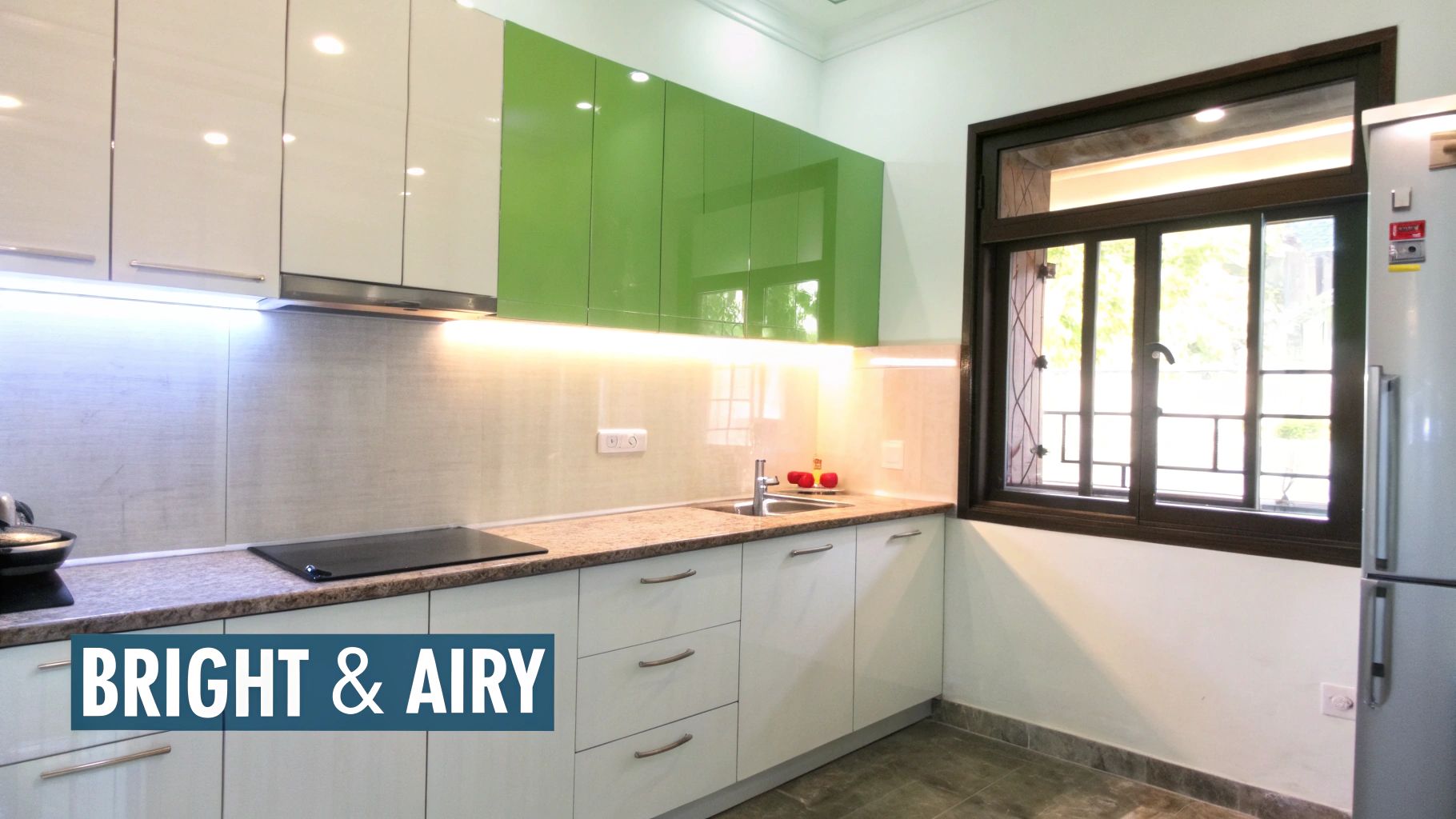
In a small kitchen, every square centimetre counts. Light-enhancing design strategies offer a powerful way to create the illusion of spaciousness without knocking down walls or undertaking major renovations. This approach leverages reflective surfaces, strategic lighting, and a considered colour palette to make compact kitchens feel brighter, more open, and significantly larger. This makes it a crucial consideration for any small kitchen in NZ, where maximising space is often a priority.
How it Works: The core principle is to maximise both natural and artificial light and encourage its reflection throughout the space. Light colours reflect light, making the room feel airy, while dark colours absorb light, making the space feel smaller. Reflective surfaces further amplify this effect, bouncing light around the room and creating depth. Strategic lighting ensures every corner is well-illuminated, eliminating dark, cramped-feeling areas.
Features and Benefits:
-
Reflective Backsplashes and Countertops: Materials like glass, stainless steel, or polished stone bounce light back into the room, creating a sense of depth.
-
Under-Cabinet LED Lighting: Illuminates work surfaces efficiently, reduces eye strain during meal prep, and adds a warm, inviting glow.
-
Light, Neutral Colour Schemes: Whites, creams, and light greys create a sense of airiness and spaciousness. Consider popular Resene colours like "Alabaster" or "Half Black White" for a fresh NZ feel.
-
Glossy Cabinet Finishes: Reflective cabinet doors amplify light and add a touch of modern elegance.
-
Minimalist Window Treatments: Sheer curtains or blinds allow maximum natural light to enter without sacrificing privacy.
-
Strategically Placed Mirrors: Carefully positioned mirrors can reflect light sources and visually expand the space.
Pros:
-
Creates the perception of a larger space without structural changes, a significant advantage in smaller NZ homes and apartments.
-
Improves kitchen functionality with better task lighting.
-
Reduces eye strain during food preparation.
-
Can be implemented in rental properties with minimal permanent changes, ideal for renters in NZ's competitive rental market.
-
Often enhances mood and kitchen atmosphere.
Cons:
-
Reflective surfaces show fingerprints and smudges more readily.
-
Requires more frequent cleaning to maintain the desired effect.
-
A limited colour palette may feel less personalised, although accent colours can be introduced through accessories and smaller décor items.
-
Quality lighting fixtures can be expensive, though the long-term benefits often outweigh the initial investment.
Examples:
-
Think of the sleek efficiency of a Manhattan micro-apartment with white lacquered cabinetry and a mirror backsplash.
-
Envision the airy brightness of a Scandinavian-inspired kitchen with white surfaces and natural wood accents.
-
Picture a Parisian studio apartment using a strategically placed mirror to double the perceived size of the kitchen area. These principles translate beautifully to NZ homes.
Actionable Tips for Small Kitchen Ideas:
-
Layer Lighting: Combine ambient, task, and accent lighting for a balanced and functional space.
-
Light and Dark Contrast: Use light colours for large surfaces (cabinets, walls) and darker accents for visual interest.
-
Illuminate Glass-Front Cabinets: Install lighting inside glass-front cabinets to add depth and showcase your dinnerware.
-
Strategic Mirror Placement: Use mirrors to reflect windows or light sources, effectively doubling their impact.
-
Light-Coloured Flooring: Consider light-coloured flooring to brighten the space from below.
-
Glass Cabinet Doors: Opt for semi-transparent or glass cabinet doors for a sense of visual openness.
Popularised By: The effectiveness of light-enhancing design strategies has been championed by interior designers like Nate Berkus, incorporated into Scandinavian design principles, and showcased in the minimalist architecture of John Pawson. Shows like HGTV's Small Space, Big Style series have further demonstrated the transformative power of these techniques.
This approach deserves a place on this list because it offers a cost-effective and impactful way to address a common challenge in small kitchens – limited space. By thoughtfully implementing these design strategies, you can create a kitchen that feels significantly larger and more welcoming, maximising both its functionality and aesthetic appeal. This is particularly relevant for NZ homeowners and renters looking to make the most of their compact kitchens.
6. Smart Storage Containers and Organisers
Maximising space in a small kitchen is crucial, and smart storage containers and organisers are key to achieving this. These specialised systems transform chaotic cabinets and drawers into efficient, accessible storage spaces, making them a must-have for any small kitchen in NZ. This approach is especially valuable in small kitchen ideas as it helps to create a more functional and organised cooking environment without costly renovations.
These solutions aren't just about shoving things into boxes; they're about creating a system where everything has its place and is easy to find. Think nesting cookware and bakeware that save cupboard space, stackable food storage containers for keeping your pantry tidy, and adjustable drawer dividers to keep cutlery and utensils organised. Cabinet shelf risers and expanders create extra vertical storage, while vacuum-sealed storage bags are ideal for compact storage of seasonal items or bulky foods. Even magnetic spice containers on the fridge can free up valuable shelf space. This systematic approach helps make the most of every inch, a vital aspect of small kitchen ideas.
Examples of Successful Implementation:
-
Joseph Joseph's nesting bowl and measuring cup sets: These cleverly designed sets nest together, taking up minimal space in your cupboards.
-
OXO's Pop Containers for pantry organisation: Airtight and stackable, these containers keep pantry staples fresh and organised. They're especially helpful for small kitchens where pantry space is at a premium.
Actionable Tips for NZ Homeowners:
-
Declutter first: Before investing in any organisers, declutter your kitchen and get rid of anything you don’t use or need. This will give you a clearer picture of your storage needs.
-
Measure precisely: Accurate measurements of your cabinets and drawers are essential for choosing organisers that fit perfectly.
-
Choose transparent containers: Opt for clear containers for pantry items, allowing you to see what's inside without having to rummage.
-
Modular systems: Choose modular systems that can be expanded or adapted as your needs change. This is particularly important for renters or those anticipating future kitchen renovations.
-
Label everything: Clearly labelled containers prevent confusion and make it easier to find what you're looking for.
-
Regular reassessment: Periodically review your organisation system and adjust as needed. Your kitchen needs may evolve over time, and your storage solutions should adapt accordingly.
Pros and Cons:
Pros:
-
Increases usable storage space without expensive renovations
-
Makes items more accessible and visible
-
Reduces food waste by keeping the pantry organised
-
Prevents avalanches of stacked items
-
Often budget-friendly compared to built-in solutions
Cons:
-
Requires consistent maintenance to remain effective
-
May need replacement as kitchen needs change
-
Can look cluttered if styles don't match
-
Some specialised organisers can take up more space than they save if not chosen carefully
Why this deserves a spot on the list:
Smart storage containers and organisers are a cornerstone of small kitchen design in NZ. They offer a practical, affordable, and effective way to maximise space and improve functionality without undertaking major renovations. By implementing these tips and choosing the right organisers, you can transform your small kitchen into a well-organised and efficient cooking space. This method resonates particularly well with the NZ audience, from budget-conscious homeowners to design enthusiasts, looking to make the most of their space without compromising on style or functionality. The influence of professional organisers like Marie Kondo and The Home Edit, readily accessible online, has also contributed to the popularity of this approach. While Container Store may not have a physical presence in NZ, their online resources and the numerous kitchen organisation posts by bloggers like Minimalist Baker offer ample inspiration and practical guidance for local homeowners.
7. Foldable and Convertible Furniture
For small kitchen ideas, especially in NZ where space can be at a premium, foldable and convertible furniture is a game-changer. This ingenious approach maximises functionality without sacrificing precious floor space, making it perfect for compact kitchens and studio apartments. It revolves around incorporating furniture that can expand when needed and neatly tuck away when not in use, offering a flexible solution to the challenges of a small kitchen.
This method works by utilising clever design and engineering. Think wall-mounted drop-leaf tables that disappear against the wall after breakfast, extending console tables that transform into full-fledged dining tables for dinner parties, and nesting stools that stack away effortlessly. Other examples include folding kitchen carts, Murphy-style fold-down counters or tables, and even collapsible dish racks and cutting boards. These pieces allow you to have the full functionality of essential kitchen items only when you require them.
Several successful implementations demonstrate the power of this small kitchen idea. IKEA's NORDEN gateleg table is a classic example, expanding from a slim console to comfortably seat up to six people. Resource Furniture, known for its transformable designs, offers innovative pieces like the Goliath transforming console-to-dining table, perfect for maximising space in smaller NZ homes. Even iconic designs like Artek's stacking Alvar Aalto 60 stools exemplify this principle, providing flexible seating options that can be easily stored. In Japan, where small space living is an art form, origami-inspired folding kitchen carts are extremely popular.
Pros:
-
Provides full functionality only when needed.
-
Maximises floor space during non-meal times.
-
Adapts to varying numbers of users.
-
Often serves multiple purposes.
-
Ideal for truly tiny kitchens or studio apartments.
Cons:
-
May be less sturdy than fixed furniture.
-
Requires effort to convert between states.
-
Often more expensive than standard furniture.
-
May have limited design options.
-
Moving parts can wear out over time.
Tips for Choosing Foldable Furniture:
-
Choose pieces with smooth, easy-to-use mechanisms. Test folding furniture before purchasing to ensure durability and ease of operation.
-
Consider weight and maneuverability, especially for frequently moved items.
-
Look for designs that look intentional in both expanded and collapsed states, contributing to your overall kitchen aesthetic.
-
Invest in quality hardware for folding mechanisms that will see daily use. This ensures longevity and smooth operation.
Foldable furniture earns its place on this list of small kitchen ideas because it directly addresses the challenge of limited space. It's particularly beneficial in NZ homes and apartments where maximising every square meter is crucial. This approach allows homeowners and renters to enjoy a fully functional kitchen without feeling cramped. Learn more about Foldable and Convertible Furniture
The popularity of foldable furniture has been fuelled by innovative companies like Resource Furniture and the tiny house movement. Even architect Graham Hill's LifeEdited apartment concepts showcased the effectiveness of this approach. The Japanese philosophy of small space design also champions this principle, proving its effectiveness and long-term viability as a small kitchen idea.
8. Open Shelving and Glass-Front Cabinets
Open shelving and glass-front cabinets are a clever way to maximise the sense of space in a small kitchen, making it feel larger and brighter. This design approach strategically replaces some or all solid cabinet doors with either open shelves or glass-front doors, creating visual openness while still offering practical storage solutions. This makes it a worthy addition to our list of small kitchen ideas, especially for Kiwi homeowners looking to enhance their compact cooking spaces.
This concept works by minimising visual bulk. Solid cabinet doors can make a small kitchen feel closed in. By replacing them with open shelving or glass, your eye can travel further, creating a sense of depth and airiness. It also allows natural light to penetrate deeper into the kitchen, amplifying the illusion of spaciousness. This is particularly beneficial in smaller NZ homes where maximising natural light is often a priority.
Features of Open Shelving and Glass-Front Cabinets:
-
Floating shelves: These can replace upper cabinets entirely, offering a modern, minimalist look.
-
Glass-front cabinet doors: Allow you to display attractive dishware and glassware while keeping them protected from dust.
-
Mix of open and closed storage: Combines the benefits of both, providing concealed storage for less aesthetically pleasing items.
-
Display-worthy organisation systems: Utilising attractive baskets, trays, and containers to keep open shelves tidy.
-
Integrated lighting: Under-shelf lighting can further enhance the displayed items and contribute to the overall ambience.
Pros:
-
Creates visual openness and depth perception, making the kitchen feel larger.
-
Makes frequently used items more accessible.
-
Provides display space for decorative items, cookbooks, and plants.
-
Generally less expensive than closed cabinetry.
-
Easier to install as DIY projects, perfect for budget-conscious Kiwis.
Cons:
-
Exposed items collect dust and grease, requiring regular cleaning.
-
Requires consistent organisation to look tidy and avoid a cluttered appearance.
-
Less storage capacity than traditional cabinets.
-
Contents must be visually appealing, as everything is on display.
-
May not be practical in earthquake-prone areas of NZ, posing a safety risk.
Tips for Implementing Open Shelving in Your Small Kitchen:
-
Limit open shelving to 1-2 walls: This creates a balance of form and function, avoiding a cluttered look.
-
Display cohesive collections: Rather than random items, showcase curated sets of dishware, glassware, or cookbooks.
-
Use matching containers: Store staples like flour, sugar, and grains in attractive, uniform containers.
-
Incorporate plants and personal objects: This adds warmth and personality to your kitchen.
-
Keep heaviest items on lower shelves: This is crucial for safety and stability, especially in earthquake-prone New Zealand.
-
Maintain a consistent colour palette: A harmonious colour scheme will create a cohesive and visually appealing look.
Popularised By:
The popularity of open shelving has been influenced by figures like interior designer Joanna Gaines, food stylist Donna Hay, trending Instagram kitchen styling, and lifestyle guru Martha Stewart.
By carefully considering the pros and cons and implementing these tips, you can successfully incorporate open shelving and glass-front cabinets into your small kitchen design, creating a stylish and functional space that feels significantly larger than its actual footprint. This approach offers a perfect blend of practicality and aesthetics, making it a winning small kitchen idea for NZ homeowners.
9. Corner Maximising Solutions
Corner cabinets are notorious for being awkward and difficult to access, often leaving valuable space under utilised. This is a significant concern in small kitchens where every square inch counts. Corner maximising solutions offer clever designs and organisational systems that transform these tricky spaces into functional storage areas, making them a must-consider small kitchen idea.
These solutions range from simple and affordable to more complex and high-end. Rotating shelves, also known as Lazy Susans, are a popular choice, allowing you to spin the shelves and easily access items stored in the back. Diagonal corner cabinets offer more accessible storage compared to traditional right-angled cabinets. For maximum efficiency, pull-out corner organisers, sometimes called "magic corners," bring the entire contents of the cabinet out to you, eliminating the need to reach deep inside. Even corner floating shelves can be a great way to utilise vertical space and add a touch of style. For a truly integrated approach, consider a corner sink installation which maximises counter space and improves workflow.
Features like Blum's SPACE CORNER drawer system and Hafele's LeMans corner cabinet pull-out exemplify the sophisticated engineering that goes into these systems. These mechanisms are designed for smooth and effortless access, maximising storage capacity in a way that traditional corner cabinets simply can't. Even more budget-friendly options like Rev-A-Shelf's kidney-shaped lazy Susan or IKEA's UTRUSTA corner base cabinet carousel can dramatically improve the usability of these awkward spaces.
While corner maximising solutions offer significant benefits, including utilising otherwise wasted space, making deep corner cabinets fully accessible, increasing overall storage capacity, and improving kitchen workflow, they also come with some considerations. These systems are often more expensive than standard cabinetry, and the specialised hardware might be difficult to replace. Installation typically requires professional expertise, and the limited standardisation can make replacing components challenging.
Before investing in a corner maximising solution, consider what items you'll be storing in the unit. Prioritise accessibility over maximum capacity, particularly if opting for a simpler solution like a Lazy Susan. If you plan on storing infrequently used items, a basic rotating shelf may suffice. For frequently used items, invest in a pull-out system for optimal accessibility. Once installed, keep your corner cabinets organised by category to prevent losing items in the back. Test the chosen mechanism thoroughly before finalising the installation to ensure smooth operation.
Learn more about Corner Maximising Solutions
For Kiwi homeowners and renters dealing with the challenges of small kitchens, corner maximising solutions are especially valuable. They offer a practical and efficient way to maximise storage and improve functionality, making even the smallest kitchen feel more spacious and organised. These innovations, popularised by European kitchen design companies like Poggenpohl and Bulthaup and innovative hardware companies like Blum and Hafele, are becoming increasingly popular in NZ, reflecting a growing awareness of the importance of smart storage solutions in modern kitchen design. This smart small kitchen idea truly deserves its place on this list for its ability to transform a challenging area into a highly functional asset.
10. Zoned Micro-Kitchens: Maximising Efficiency in Small Spaces
Small kitchen ideas are often about making the most of what you have, and the concept of zoned micro-kitchens takes this to a new level. This clever approach transforms limited space into a highly efficient cooking area by strategically dividing it into dedicated functional zones. Perfect for compact NZ homes and apartments, zoned micro-kitchens offer a practical solution for maximising every square centimetre. This method deserves a spot on this list because it truly revolutionises how we think about small kitchen design, prioritising workflow and functionality above all else.
Instead of a single, cramped workspace, a zoned micro-kitchen is organised into distinct areas for specific tasks. These zones typically include:
-
Prep Zone: Dedicated to chopping, mixing, and preparing ingredients.
-
Cooking Zone: Houses the cooktop, oven, and related tools.
-
Cleaning Zone: Centred around the sink and dishwasher for easy clean-up.
-
Storage Zone: Organised for efficient storage of pantry items, cookware, and utensils.
This strategic zoning encourages a logical workflow, minimising unnecessary movement and maximising efficiency. Imagine prepping ingredients in your dedicated prep zone, then seamlessly transitioning to the adjacent cooking zone – no more crisscrossing a tiny kitchen!
Features that make zoned micro-kitchens shine:
-
Task-specific work zones: Each zone is equipped for its designated purpose.
-
Vertical zoning: Frequently used items are stored at eye level, less frequently used items go higher or lower.
-
Overlapping functions: In very small kitchens, a single space might serve multiple purposes, perhaps with movable elements to delineate the zones.
-
Movable boundaries: Using trolleys or sliding partitions can create flexible zones that adapt to changing needs.
-
Workflow-optimised layouts: The arrangement of zones prioritises a smooth and efficient cooking process.
Real-World Examples:
Think of Japanese one-wall kitchens with their sliding workspace covers, cleverly concealing appliances when not in use. European efficiency apartments often feature modular zone systems, and tiny house kitchens often utilise folding zone expansions to maximise limited space. Even a dedicated, culinary school-inspired prep station in a standard NZ kitchen can be a form of micro-zoning.
Pros:
-
Creates highly efficient workflows in limited space.
-
Reduces unnecessary movement between tasks.
-
Minimises clutter by assigning designated homes for all items.
-
Adaptable to various kitchen shapes and sizes.
-
Makes cooking in small spaces more enjoyable.
Cons:
-
Requires thoughtful planning and organisation.
-
May limit flexibility for multiple cooks working simultaneously.
-
Sometimes prioritises function over traditional aesthetics.
-
Can be challenging to implement in oddly shaped kitchens.
Tips for Creating Your Own Zoned Micro-Kitchen:
-
Analyse your cooking habits: Consider your typical workflow and prioritise zones accordingly.
-
Prioritise accessibility: Keep frequently used items in the most accessible areas.
-
Landing zone: Designate a 'landing zone' near the entrance for groceries.
-
Proximity storage: Store items near where they'll be used (e.g., pots and pans near the cooktop).
-
Workflow-driven appliance placement: Consider your workflow when positioning appliances.
-
Vertical space: Maximise vertical space within each zone for zone-specific storage.
The concept of zoned micro-kitchens has been popularised by professionals like chef and kitchen designer Susan Serra, and kitchen workflow expert Melissa Coleman (The Faux Martha). It's also a key principle in the culinary efficiency movement seen in professional kitchens and micro-apartment designs in urban centres like Hong Kong and New York. By adopting this approach, even the smallest NZ kitchen can be transformed into a highly efficient and enjoyable cooking space.
Top 10 Small Kitchen Ideas Comparison
|
Idea |
Implementation Complexity 🔄 |
Resource Requirements ⚡ |
Expected Outcomes 📊 |
Ideal Use Cases 💡 |
Key Advantages ⭐ |
|---|---|---|---|---|---|
|
Vertical Storage Solutions |
Medium: Requires wall/ceiling mounting, drilling |
Moderate: Shelves, racks, tools |
Maximises vertical space, reduces countertop clutter |
Small kitchens with limited floor space |
Space maximisation, accessibility, visual interest |
|
Multi-functional Kitchen Islands |
Medium: Requires some floor space and furniture |
Moderate to high: Quality mobile islands |
Adds counter, dining, and storage space; flexible |
Small kitchens needing extra prep or dining areas |
Mobility, multifunctionality, visual division |
|
Hidden and Pull-Out Storage |
High: Precise measurements, professional install |
High: Custom hardware and installation |
Efficient use of hidden spaces, clean look |
Kitchens needing concealed, organised storage |
Maximises every inch, maintains neat appearance |
|
Integrated and Compact Appliances |
High: Specialised appliances, possible modifications |
High: Premium compact appliances |
Saves floor/counter space, full functionality |
Small kitchens needing appliance efficiency |
Space-saving, cohesive design, energy-efficient |
|
Light-Enhancing Design Strategies |
Low to Medium: Mostly design/lighting upgrades |
Low to moderate: Fixtures, paint |
Creates illusion of larger, brighter space |
Small kitchens needing visual spaciousness |
Brightness, mood improvement, minimal structural change |
|
Smart Storage Containers and Organisers |
Low: Purchase and arrange containers |
Low: Cost of containers and dividers |
Improved cabinet/drawer organisation and visibility |
Any kitchen needing better internal organisation |
Budget-friendly, increases usable space, reduces waste |
|
Foldable and Convertible Furniture |
Medium: Needs quality mechanisms and design |
Moderate to high: Specialty furniture |
Space-saving furniture usable as needed |
Tiny kitchens, studio apartments |
Adaptability, space optimisation, multifunctional use |
|
Open Shelving and Glass-Front Cabinets |
Low to Medium: Simple installation, some maintenance |
Low to moderate: Shelves, glass doors |
Visual openness, easy access to frequently used items |
Kitchens wanting openness and display options |
Openness, accessibility, decorative display |
|
Corner Maximising Solutions |
High: Custom cabinets, professional installation |
High: Specialised hardware |
Accesses wasted corner space, increases storage |
Kitchens with under utilised corners |
Space recovery, workflow improvement |
|
Zoned Micro-Kitchens |
Medium: Requires careful planning and layout |
Low to moderate: Organisational adjustments |
Efficient workflows and minimised clutter |
Small kitchens optimised for cooking efficiency |
Workflow efficiency, reduced movement, ergonomic benefits |
Creating Your Dream Small Kitchen
Transforming a small kitchen in NZ doesn't have to be a daunting task. By embracing clever small kitchen ideas like vertical storage, multi-functional islands, hidden storage, integrated appliances, strategic lighting, and smart organisation, you can maximise every inch of your space. Remember, the key takeaways here are maximising vertical space, streamlining workflow, and choosing space-saving solutions. Mastering these concepts will not only improve the functionality of your kitchen but also enhance its aesthetic appeal, creating a space that is both beautiful and practical. Imagine enjoying cooking again in a kitchen designed specifically for your needs, a kitchen that feels open, airy, and surprisingly spacious, despite its smaller footprint.
These small kitchen ideas allow you to create a kitchen that truly works for you, whether you're a seasoned home cook whipping up a feast or simply grabbing a quick breakfast. From cleverly designed corner solutions and zoned micro-kitchens to the transformative power of foldable furniture and open shelving, these strategies offer a wealth of inspiration for any small kitchen renovation in 2025. Ready to start building your dream small kitchen? Explore innovative space-saving appliances and clever storage solutions at Folders, your one-stop shop for optimising small kitchen spaces in New Zealand. Discover how Folders can help you turn your small kitchen dreams into reality.