

Air Fryer Cooking Times – An Easy Guide
Welcome! You've found the ultimate resource for nailing air fryer cooking times, complete with a handy free printable chart designed specifically for Kiwi kitchens. This guide gives you solid starting points for everything from kūmara chips to lamb chops, so you can ditch the guesswork.
Your Ultimate Guide to Air Fryer Cooking Times
Getting the hang of your air fryer really comes down to one key idea: cooking times and temperatures are more of a guideline than a hard-and-fast rule. Think of them as a starting point. Things like your air fryer's specific model, its wattage, and even the size and thickness of your food will mean you'll need to make small tweaks.
For instance, you'll find that small cauliflower florets get perfectly roasted in about 12 minutes at 200ºC, but a whole chicken needs closer to an hour at 180ºC. The real secret is learning the core principles. Always give your air fryer a moment to preheat, and never overcrowd the basket—that’s how you get that incredible crispy, delicious finish every time.
Once you feel comfortable with the basics, you'll be all set to dive into some fantastic and easy air fryer recipes. Building this foundation of knowledge is what will give you the confidence to turn your air fryer into your go-to for quick, flavourful meals.
Printable Air Fryer Chart for Vegetables
If you've ever wondered how to get your vegetables perfectly roasted and crispy every single time, this chart is for you. I've pulled together all my go-to timings and temperatures for popular New Zealand produce, from classic potatoes and kūmara to broccoli and capsicum. Getting the prep right is half the battle – simply chopping your veggies into uniform pieces and giving them a light toss in oil will make all the difference to their final crispiness and flavour.
And once you've mastered the basics, why not try something a bit more adventurous? We've put together a simple guide on making an incredible air fryer lasagne that you might enjoy.
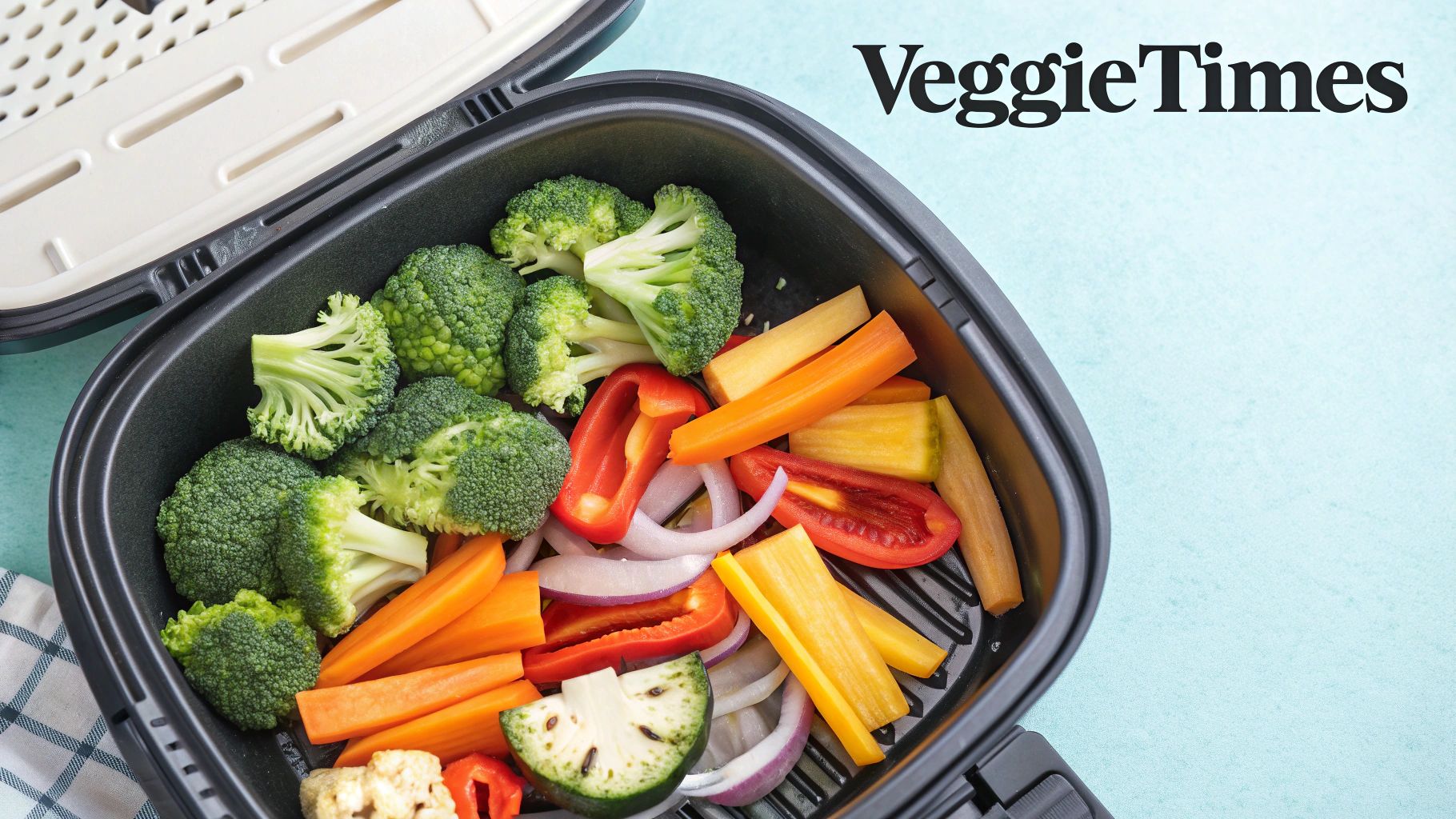
Here is my free printable chart of air fryer cooking times for fresh vegetables. It’s designed to be a handy kitchen reference that takes all the guesswork out of cooking, helping you whip up delicious and healthy meals with confidence.
My number one tip? Always arrange your veggies in a single layer. This simple step is crucial because it allows the hot air to circulate all around each piece, giving you that irresistible golden-brown finish we all love.
Air Fryer Cooking Times for Fresh Vegetables
This quick-reference chart provides my tested cooking times and temperatures for a variety of common fresh vegetables. Remember that times can vary slightly depending on your specific air fryer model and the size of your vegetable pieces, so it's always a good idea to check on them a minute or two before the time is up.
| Vegetable | Preparation | Temperature (°C) | Time (minutes) | Notes |
|---|---|---|---|---|
| Asparagus | Trim ends, toss with oil | 200°C | 6-8 | Shake basket halfway. Thicker spears may need more time. |
| Broccoli | Cut into bite-sized florets | 190°C | 8-10 | Add 1 tbsp of water to the bottom of the drawer to steam slightly and prevent burning. |
| Brussels Sprouts | Trim ends, halve, remove loose leaves | 190°C | 15-20 | Shake vigorously halfway through for even browning. |
| Capsicum (Peppers) | Cut into 2.5 cm strips or chunks | 200°C | 10-12 | Great for fajitas. Cook until tender-crisp with slight charring. |
| Carrots | Peel, cut into 1 cm sticks or rounds | 200°C | 15-20 | For a sweeter flavour, toss with a little honey or maple syrup before cooking. |
| Cauliflower | Cut into bite-sized florets | 200°C | 12-15 | Shake halfway. Great with a sprinkle of curry powder or paprika. |
| Corn on the Cob | Shuck, brush with butter or oil | 200°C | 10-12 | Turn cobs halfway through for even cooking. |
| Courgette (Zucchini) | Cut into 1 cm rounds or spears | 200°C | 12-15 | Don't overcrowd the basket, as courgette releases a lot of water. |
| Green Beans | Trim ends, toss with oil | 190°C | 8-10 | Cook until tender and slightly blistered. |
| Kūmara (Sweet Potato) | Peel, cut into 2.5 cm cubes | 200°C | 15-20 | Shake basket halfway. Perfect for a crispy exterior and fluffy interior. |
| Mushrooms | Halve or quarter, depending on size | 190°C | 10-12 | Cook until they release their liquid and start to brown. |
| Onions | Cut into wedges or thick slices | 200°C | 12-15 | Separate the layers for better crisping. |
| Potatoes (for chips) | Cut into 1 cm thick chips, soak in cold water for 30 mins, then dry thoroughly | 200°C | 20-25 | Shake at least twice during cooking for maximum crispiness. |
| Potatoes (for roasting) | Cut into 2.5 cm cubes | 200°C | 20-25 | Parboiling for 5-7 minutes first can result in an even fluffier centre. |
Using this chart as a starting point will have you air frying vegetables like a seasoned pro. Feel free to print it out and stick it on the fridge for easy access. Happy cooking
Printable Air Fryer Chart for Meat and Poultry
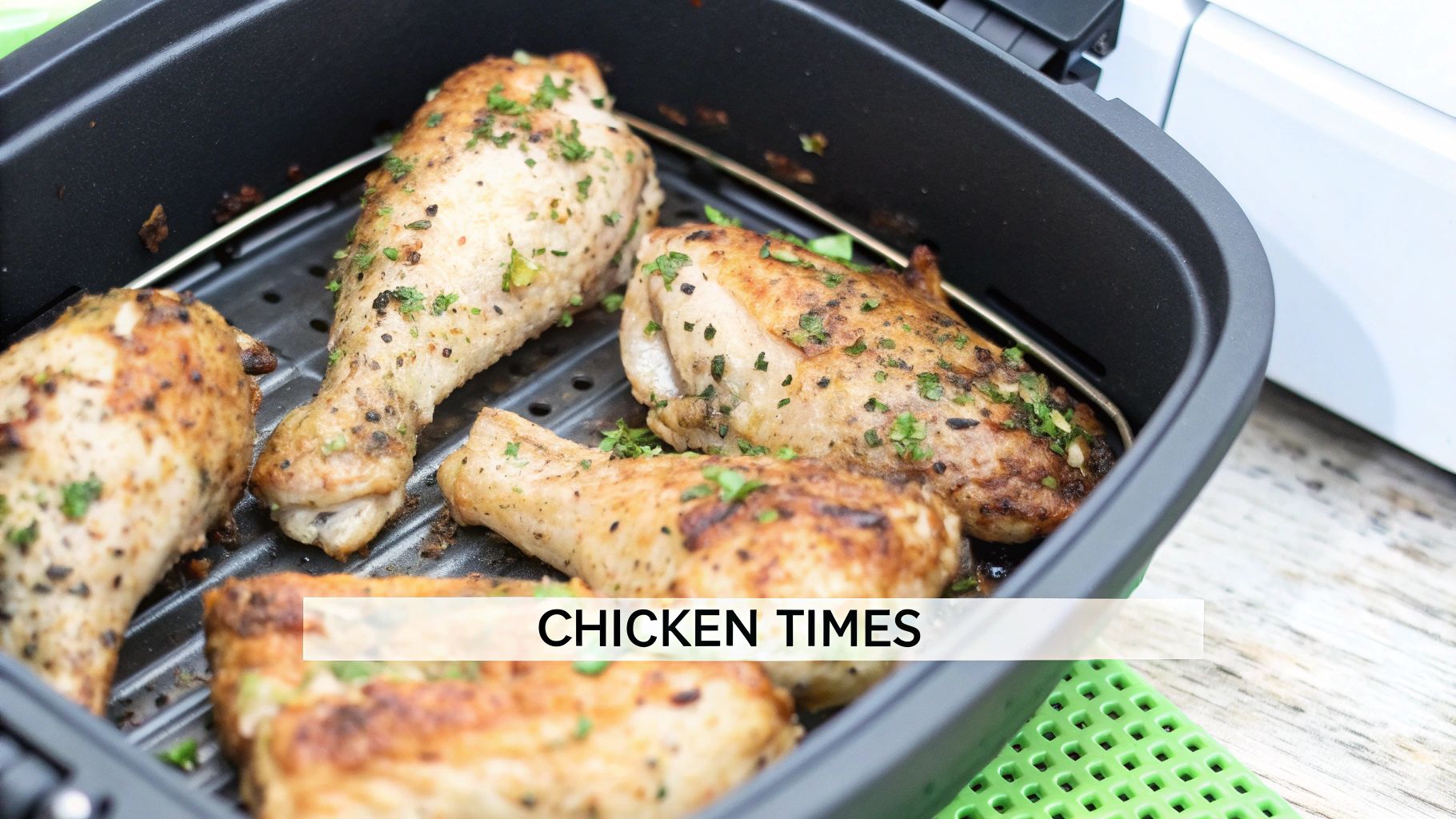
Getting meat and poultry just right in the air fryer can feel like a bit of a guessing game, but it doesn't have to be. This chart is your new best friend for cooking Kiwi favourites like chicken breasts, lamb chops, steak, and sausages, giving you the ideal air fryer cooking times and temperatures.
| Cut | Temp °C (°F) | Time | Flip/Rotate | Preparation |
|---|---|---|---|---|
| Chicken breast (boneless) | 180 °C (350 °F) | 18–20 min (flip after 10 min) | Flip at 10 min | Pound to even thickness; pat dry and season lightly |
| Chicken thigh (bone‑in) | 200 °C (390 °F) | 22–25 min (flip after 12 min) | Flip at 12 min | Remove excess skin; season under skin for flavor |
| Whole chicken (1.2–1.5 kg) | 180 °C (350 °F) | 45–50 min (rotate at 25 min) | Rotate basket at 25 min | Truss legs; rub with oil and herbs under skin |
| Turkey breast (boneless) | 180 °C (350 °F) | 25–30 min per 500 g | Flip halfway through cooking | Brush with butter; season with salt & pepper |
| Pork chop (1.5 cm thick) | 200 °C (390 °F) | 12–15 min (flip halfway) | Flip halfway | Marinate or brine briefly; pat dry before cooking |
| Steak (2 cm thick) | 200 °C (390 °F) | 8–12 min (flip halfway) | Flip halfway | Bring to room temp; season just before air frying |
| Lamb chop (2 cm thick) | 200 °C (390 °F) | 10–14 min (flip halfway) | Flip halfway | Rub with garlic & rosemary; let sit 10 min before |
| Sausages (fresh) | 180 °C (350 °F) | 10–12 min (shake basket halfway) | Shake basket at 6 min | Prick lightly; arrange in single layer |
Notes for best results:
-
Preheat your air fryer for 3 min.
-
Don’t overcrowd—leave space for even air flow.
-
Use a meat thermometer to confirm internal temps (chicken & turkey 74 °C, pork 63 °C).
-
Rest meat 5 min after cooking to lock in juices.
It's no surprise that reliable guides like this are in high demand. Kiwis have really embraced air frying for its speed and convenience, pushing the New Zealand air fryer market to a value of US$4.82 million in early 2024. If you're interested in the numbers, you can explore more about the market growth on Statista.com.
Pay close attention to the 'Notes' column in our chart—that’s where the magic happens. We’ve packed it with little tips I've picked up over the years for getting that perfectly crispy chicken skin or a beautiful sear on a steak, ensuring everything comes out juicy and full of flavour. And remember, for safety and perfect results, a meat thermometer is non-negotiable.
Air Fryer Chart for Frozen Foods
Here's your secret weapon for those busy weeknights: a chart designed specifically for frozen foods. As a core part of any good air fryer cooking times guide, this chart is perfect for getting those family favourites like chips, chicken nuggets, fish fillets, and spring rolls on the table in a flash.
| Food | Temp °C (°F) | Time | Shake/Turn | Preparation |
|---|---|---|---|---|
| Frozen French fries | 200 °C (390 °F) | 12–15 min | Shake basket at 7 min | Lightly spray with oil for extra crispiness |
| Frozen potato wedges | 200 °C (390 °F) | 15–18 min | Shake basket at 9 min | Toss in a pinch of seasoning before cooking |
| Chicken nuggets | 190 °C (375 °F) | 10–12 min | Flip at 6 min | Arrange in single layer; don’t overcrowd |
| Fish sticks | 200 °C (390 °F) | 8–10 min | Flip at 5 min | Pat dry any excess ice crystals |
| Mozzarella sticks | 180 °C (350 °F) | 6–8 min | Shake halfway | Freeze on tray for 5 min extra to prevent leaks |
| Onion rings | 200 °C (390 °F) | 8–10 min | Shake basket at 5 min | Spray with oil and season immediately before air fry |
| Frozen veggies | 180 °C (350 °F) | 8–10 min | Shake halfway | Toss with a light coat of oil and salt |
| Spring rolls | 200 °C (390 °F) | 10–12 min | Flip at 6 min | Brush with oil to promote even browning |
| Falafel (frozen) | 190 °C (375 °F) | 8–10 min | Shake halfway | Spray lightly with oil to crisp the surface |
| Frozen burgers (pre‑cooked) | 180 °C (350 °F) | 8–10 min | Flip at 5 min | Thaw 5 min at room temp for more even heating |
Tips for best results:
-
Preheat the air fryer for 3 min.
-
Do not overcrowd—leave space for airflow.
-
Check doneness early; adjust time by ±1–2 min based on your model.
-
Use light oil spray for extra crispiness where desired.
The real magic of an air fryer is its ability to cook food straight from the freezer, giving you that satisfying, takeaway-style crunch without any hassle. Make sure you check the 'Notes' column in the chart, as it's packed with little tips—like when to shake the basket—that make all the difference to getting an even cook.
The number one rule for cooking frozen foods? Don't crowd the basket. If you give your chips or nuggets plenty of room, the hot air can get all around them, guaranteeing a perfectly crispy, golden-brown result every single time.
Achieve Perfect Results with These Air Frying Techniques
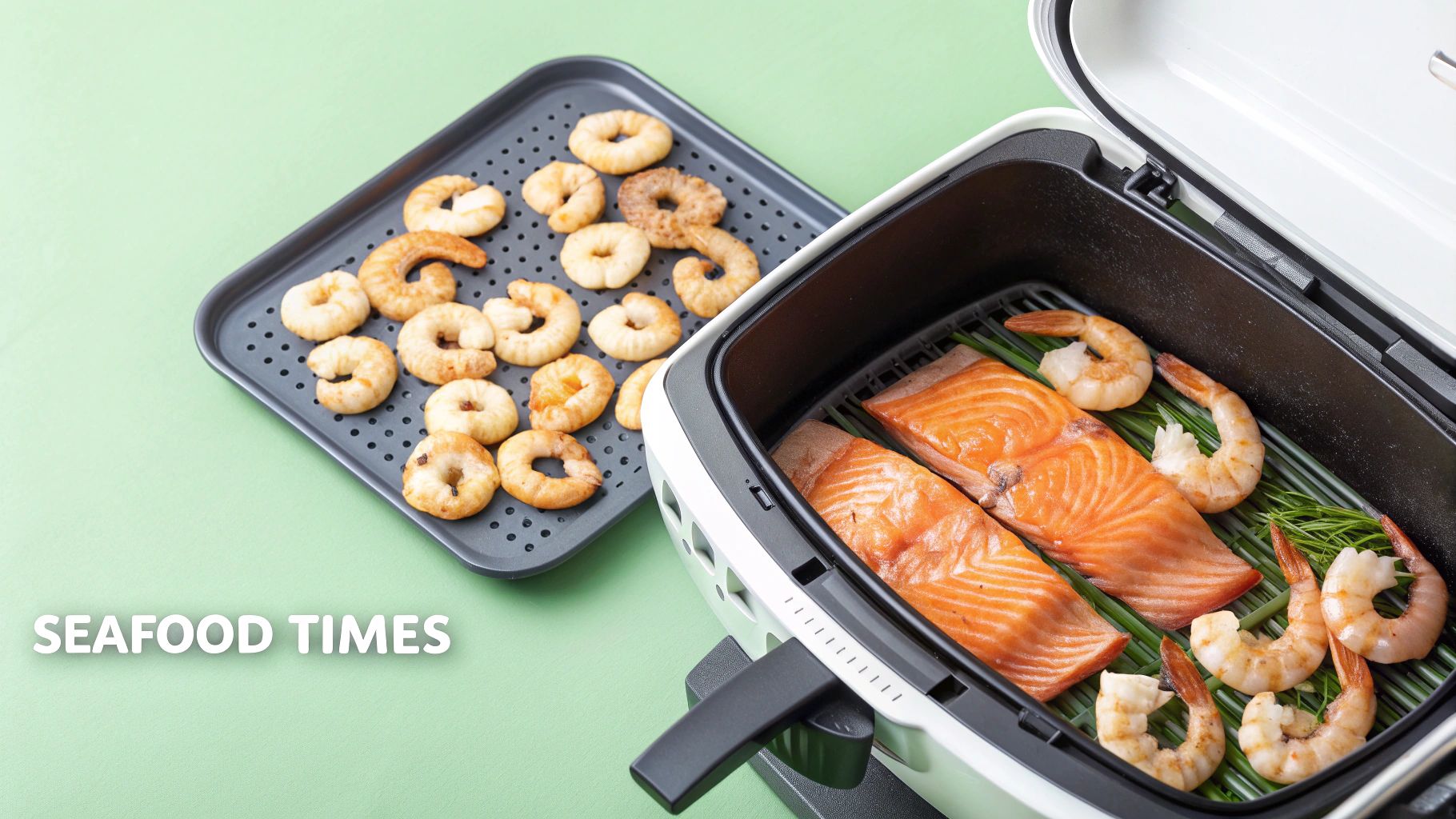
While our air fryer cooking times charts give you a fantastic head start, there are a few tried-and-true techniques that will really take your cooking to the next level. Think of these as the secrets to moving from simply making meals to mastering them.
Good preparation is everything. Before you even think about putting food in, make sure you preheat your air fryer—it’s just like preheating an oven. Arrange everything in a single, even layer, giving it room to breathe. Crowding the basket just steams your food, which is the opposite of what you want.
A light spritz or toss with oil is also key for getting that beautiful golden-brown colour and delicious, crispy texture. For instance, if you're making those salmon bites pictured above, tossing them in a bowl with a bit of oil and your favourite seasonings first is what guarantees they'll come out perfectly cooked and full of flavour.
These simple steps make a world of difference. To see how these techniques apply to specific models, you might want to check out the benefits of Sunbeam air fryers and how they can help you get consistently great results.
Is an Air Fryer More Cost-Effective Than an Oven?
Because they’re so much smaller than a conventional oven and heat up incredibly fast, air fryers simply don't need as much power to cook most meals. This is especially true for smaller portions.
Consumer NZ recently looked into this and their findings back it up. They found that for meals that take less than 30 minutes and for smaller amounts of food, an air fryer is definitely the more energy-efficient option. You can see their full analysis on the Consumer NZ website.
This efficiency is a huge part of their appeal and something we explore in our own https://folders.co.nz/blogs/folders-home-learning-centre/air-fryer-showdown-nz. Making smarter choices with your appliances also ties in nicely with a more sustainable kitchen, a philosophy you can explore further with these fantastic Zero Waste Kitchen Tips for Sustainable Living.
Common Air Fryer Questions Answered
Even with the best air fryer cooking times chart in hand, a few questions are bound to pop up. Getting truly comfortable with your air fryer is all about knowing how to tweak things based on your specific machine and what you're cooking.
Do I Need to Adjust Cooking Times for My Specific Air Fryer?
Yes, almost certainly. Not all air fryers are created equal; differences in wattage and fan power mean they cook at slightly different speeds. Think of our charts as a solid starting point, not a strict rule.
It's a great idea to check on your food a few minutes before the recommended time is up, especially the first time you cook a new recipe. Once you've perfected a dish, jot down the time and temperature that worked for your model. Over time, you'll build your own personalised cooking guide.
How Do I Convert Oven Recipes for an Air Fryer?
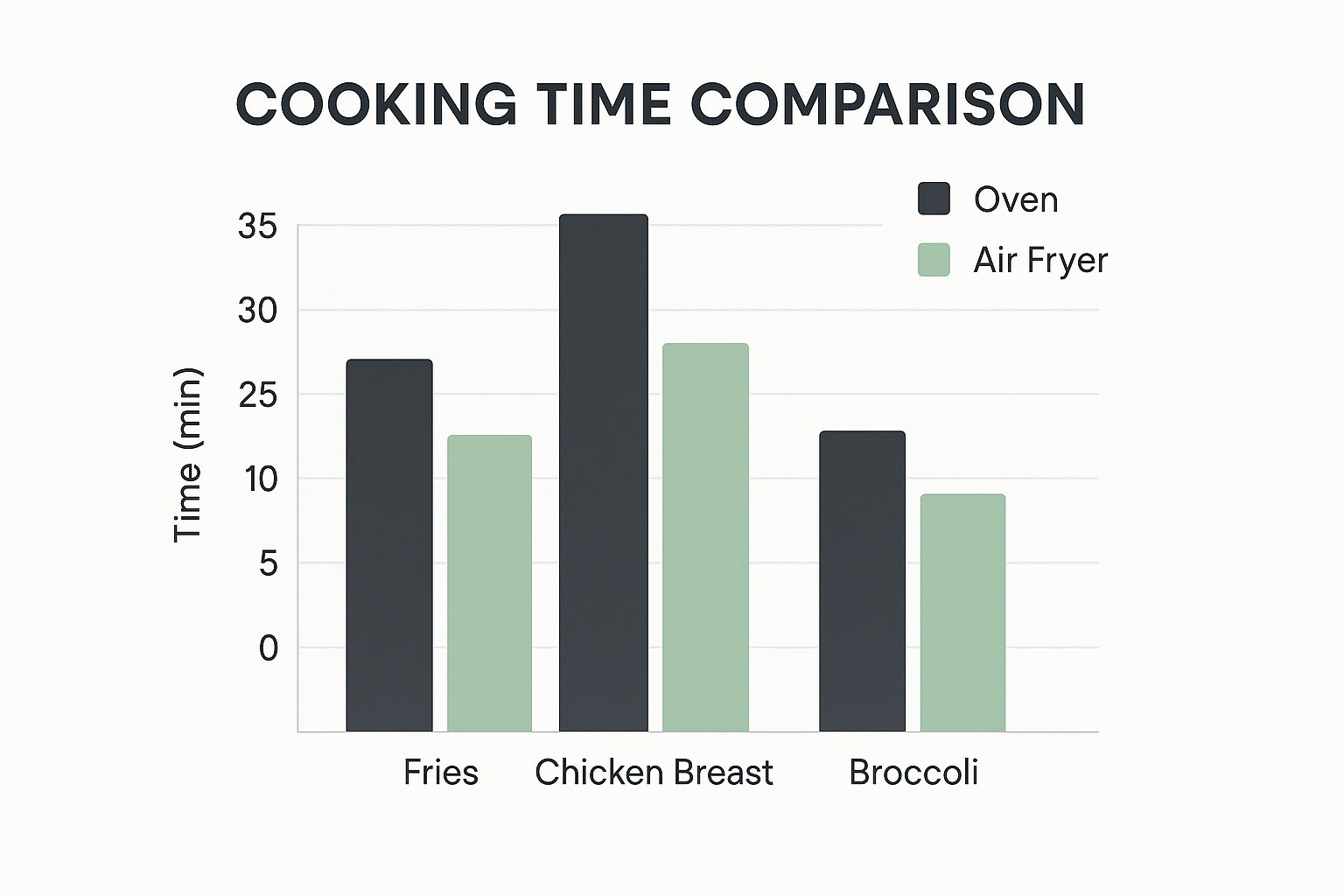
A good rule of thumb is to drop the oven temperature by about 15-20°C and shorten the cooking time by roughly 20%.
For example, if an oven recipe calls for baking at 200°C for 30 minutes, you’d start by setting your air fryer to 180°C and checking it after about 22-24 minutes. Keep a close eye on it towards the end, as things can go from perfectly cooked to overdone quite quickly.
Safety First: If you're using baking paper or foil, make sure it's properly weighed down by the food. You don't want it flying up and touching the hot heating element. Always ensure you aren't blocking the machine's airflow.
For more handy advice, take a look at these tips you need to know when buying appliances
At Folders, we have a fantastic range of air fryers to help you make delicious meals with ease. Explore our collection here.