

Ultimate Guide to Choosing the Right Cookware Materials for Your Kitchen
Choosing the right cookware is one of those secrets that can take your cooking from pretty good to genuinely great. It’s not just about following the recipe; the pan you choose is an active partner in the process. It dictates how evenly your food cooks, whether you get that perfect sear on a steak, or if you can gently scramble eggs without them sticking like glue.
Why Your Cookware Material Actually Matters
I like to think of a cookware collection like a set of athletic shoes. You wouldn't wear heavy hiking boots for a 100-metre sprint, and you definitely wouldn't wear track spikes for a long mountain trek. Each is designed for a specific job, and using the wrong one just leads to poor performance and a whole lot of frustration. The exact same logic applies in your kitchen.
A delicate non-stick pan is your best friend for flipping pancakes but will quickly get ruined under the intense heat needed for searing. On the other hand, a heavy cast iron skillet creates an unbeatable crust on meat but can be far too aggressive for a delicate piece of fish. The material itself is the single most important factor in how a pan performs.
The Three Pillars of Cookware Performance
Every material interacts with heat differently, so getting your head around a few core concepts is the key to making a smart choice. There are really three main properties that define a pan's personality on the stovetop:
- Heat Conductivity: This is all about how quickly and evenly a pan heats up. Materials like copper are fantastic conductors—they respond almost instantly when you turn the heat up or down, giving you incredibly precise control.
- Reactivity: Some metals, like unlined copper or aluminium, can react with acidic foods (think tomatoes, vinegar, or lemon juice). This can sometimes alter the flavour and even the colour of your dish. Non-reactive materials like stainless steel are neutral players that won't interfere with your ingredients.
- Durability and Maintenance: This covers how well a pan stands up to daily use and the effort needed to keep it in good nick. Stainless steel is a real workhorse that can handle metal utensils.
Your pan isn't just a container for food; it's a tool that manages heat. Mastering your cookware begins with understanding that the material dictates how that heat is transferred to your ingredients, ultimately shaping the final result on your plate.
This growing awareness is something we're seeing in the market, too. Globally, the cookware market was valued at USD 30.59 billion in 2023 and is projected to climb to USD 49.85 billion by 2030. The Asia Pacific region, which includes New Zealand, is actually the largest market.
With home improvement being a priority for 58% of homeowners, it's clear that Kiwis are investing more in quality kitchen tools to match their culinary ambitions. It's a trend that makes perfect sense—the right gear makes all the difference.
The All-Rounder: Stainless Steel
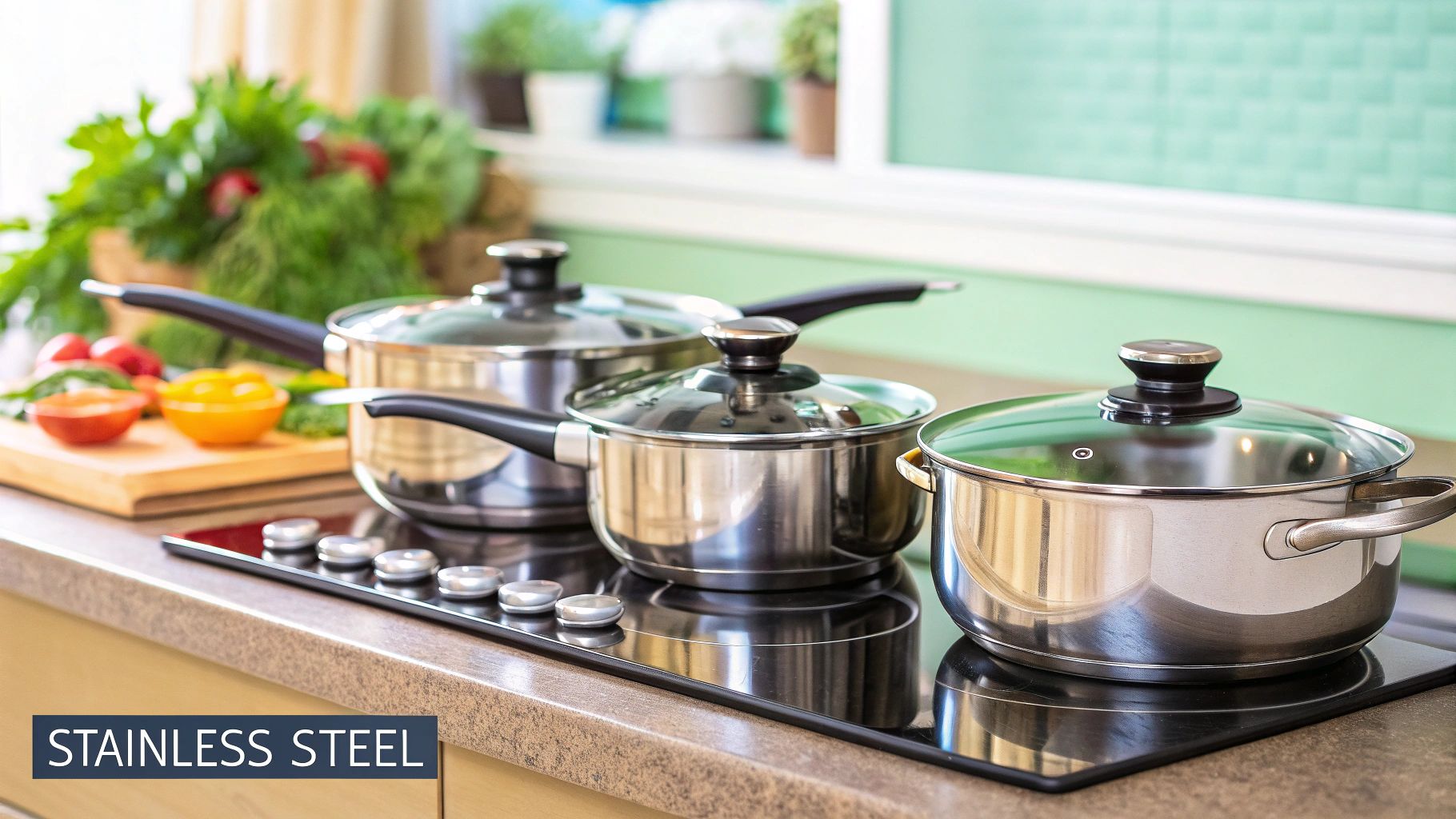
If there’s one true workhorse in the kitchen, it has to be stainless steel. You’ll find it everywhere, from bustling professional kitchens to the homes of passionate cooks, and for good reason. It’s the definition of a reliable all-rounder, ready for just about any task you can throw at it, whether you're searing a steak or simmering a delicate sauce.
But what makes it so special? The secret isn't actually the steel itself, but what’s hidden inside. On its own, stainless steel is a pretty poor conductor of heat. To get around this, manufacturers create what’s called clad cookware. The easiest way to think of it is like a metallic sandwich.
They take a core of a highly conductive material—usually aluminium or sometimes copper—and layer it between durable, non-reactive stainless steel. This clever construction gives you the best of both worlds: the quick, even heating from the core and the tough, food-safe surface of the steel.
Why Stainless Steel Shines
The biggest drawcard for stainless steel is its sheer durability. This is cookware that's built to last for decades, not just a few years. You can use metal utensils on it without worrying about scratching the surface, and it can go from the stovetop straight into a piping hot oven without any trouble.
On top of that, stainless steel is non-reactive. This is a huge deal and something you'll often see mentioned when choosing the right cookware.
What non-reactive means is that you can cook acidic ingredients—think tomatoes, wine, or citrus—without the pan giving your food a weird metallic taste or causing discolouration. This makes it the perfect choice for whipping up a rich, flavourful pan sauce right after you've seared a piece of meat.
It’s this versatility that really makes stainless steel a cornerstone of any well-stocked kitchen. You'll find it's the pan you reach for day in and day out.
Mastering The Learning Curve
Of course, no material is perfect. The most common complaint you’ll hear about stainless steel is that food can stick. Unlike a non-stick pan, you do need a bit of technique to get a slick cooking surface, but it's a skill that’s surprisingly easy to pick up.
The whole secret is proper heat management. Food sticks when a pan is heated too quickly from cold, or when you add your ingredients before the pan is hot enough. The goal is to heat your pan gently and evenly over a medium heat before any oil or food goes in.
A classic trick to check if your pan is ready is the 'water test'. Once the pan feels hot, just flick a few drops of water onto the surface.
- If the water sizzles and evaporates instantly, the pan is too hot. Let it cool a bit.
- If the water breaks up into little droplets that dance around, it’s still too cold.
- But, if the water comes together to form a single, shimmering ball that glides across the pan like mercury, you've hit the sweet spot.
Once you see that mercury ball, you can add your oil, let it warm up for a few seconds, and then add your food. This creates a temporary vapour barrier between the hot pan and your ingredients, giving you a naturally stick-resistant surface.
It sounds technical, but after a few tries, it becomes second nature. For a more detailed walkthrough, have a look at our guide to seasoning a stainless steel frying pan. A little practice is all it takes to get that perfect sear and easy food release, unlocking everything this kitchen champion has to offer.
The Heritage Hero: Cast Iron
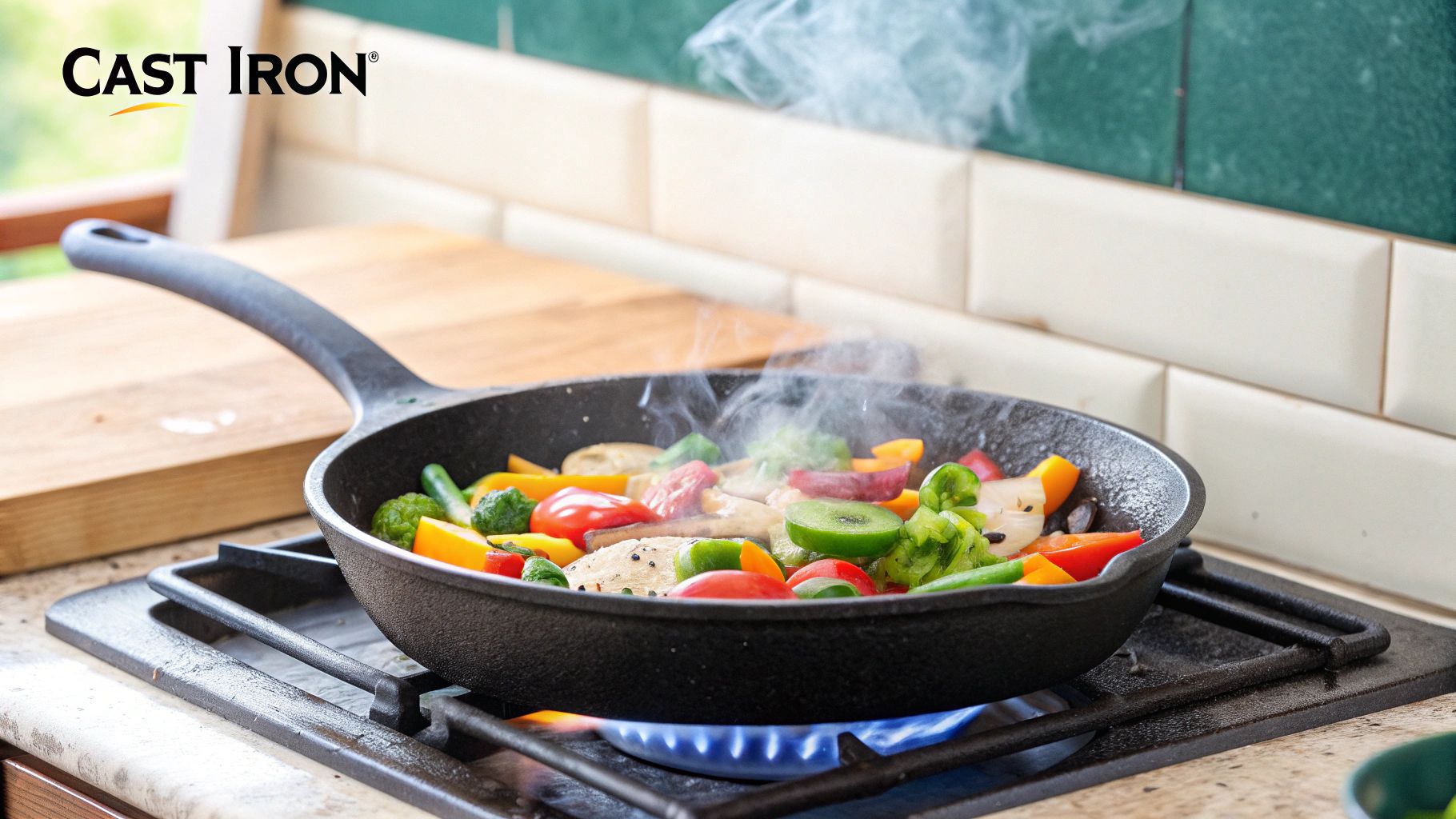
If stainless steel is the reliable workhorse, then cast iron is the seasoned, time-tested champion of the kitchen. This isn't just another pan; it’s a piece of culinary history in the making. Many families pass down cast iron skillets through generations, and for good reason—they are nearly indestructible and genuinely get better with every meal you cook.
What gives cast iron its legendary status is its incredible heat retention. Think of it as a thermal battery for your stovetop. While it takes a bit longer to heat up, its sheer mass means that once it’s hot, it stays seriously hot. This steady, unwavering heat is the secret to getting that perfect, deep-brown crust on a steak or achieving beautifully caramelised vegetables.
The Magic of Seasoning
The most misunderstood part of owning cast iron is the "seasoning." It's not just a quick wipe of oil; it's a fascinating bit of kitchen science. When you heat a thin layer of fat on the pan's surface, the oil molecules break down and bond directly to the metal in a process called polymerisation.
This process creates a tough, cross-linked coating that’s fused to the iron. This is what gives a well-loved cast iron pan its beautiful black patina and naturally non-stick properties.
Every time you cook with oil or fat, you're adding another microscopic layer to this seasoning, continuously improving its performance. Over time, this surface becomes incredibly slick, allowing you to fry an egg with nothing more than a gentle nudge. For a deep dive, this essential guide to seasoning cast iron is a fantastic resource.
Pros and Cons of Cast Iron
Like any material, cast iron has its own personality, with a unique set of strengths and weaknesses. Figuring out if it’s the right fit for you is key.
Key Advantages:
- Unbeatable Heat Retention: Perfect for searing and frying. It holds its temperature steady even when you add cold food to the pan.
- Built to Last: With a bit of care, a cast iron pan can literally last for centuries. It's an investment for life.
- Incredibly Affordable: A basic cast iron skillet is one of the most budget-friendly, high-performance pieces of cookware you can buy.
- Naturally Non-Stick: A well-seasoned pan gives you a brilliant, chemical-free non-stick surface that just keeps getting better.
Potential Downsides:
- It's Heavy: That brilliant heat retention comes from its density, which also makes it quite heavy to lift and manoeuvre.
- Slow to Heat Up: You'll need to give it a few extra minutes to preheat properly compared to lighter pans.
- Needs a Little TLC: It can't go in the dishwasher and has to be dried immediately after washing to prevent rust.
- Can be Reactive: Highly acidic foods like tomatoes or wine can sometimes strip the seasoning and impart a slight metallic taste, especially in a newer pan.
Looking After Your Cast Iron
The care routine for cast iron might seem a bit intimidating at first, but it quickly becomes second nature. After cooking, let the pan cool down a bit, then scrape out any leftover food. A simple wash by hand with hot water and a stiff brush is usually all it takes. While the old rule is "no soap," a tiny drop of mild dish soap is perfectly fine for greasy messes—just make sure you re-oil it after.
The most important step is to dry it completely right away. You can towel it dry or pop it back on a low burner for a minute to evaporate any remaining moisture. To finish, while it’s still warm, just wipe a very thin layer of cooking oil over the entire surface. For a more detailed walkthrough, our guide on how to https://folders.co.nz/blogs/folders-home-learning-centre/maintain-cast-iron-cookware covers everything you need to know.
The Modern Workhorse: Non-Stick Cookware
Let's be honest, in a busy Kiwi kitchen, non-stick cookware is often the hero. If you’ve ever fought with a stubborn, stuck-on omelette or spent ages scrubbing a pan after dinner, you already know the appeal. Non-stick promises a flawless flip, a super-quick clean-up, and the freedom to cook with far less oil.
It’s this sheer convenience that has made non-stick pans a staple in just about every home. They fit perfectly with our move towards healthier cooking and time-saving solutions. You can see this trend in the numbers, too.
The New Zealand non-stick market is booming, valued at USD 12.73 billion in 2024 and projected to climb to USD 19.15 billion by 2032. Pans, in particular, are leading the way with 7.58% annual growth as more of us choose cookware that makes life easier. If you're interested in the data, you can explore more on these market trends to see how our buying habits are shaping the industry.
How Does Non-Stick Actually Work?
When we talk about "non-stick," we're usually talking about a special coating applied to a metal pan, which is most often aluminium. There are two main players in this space, and it’s worth knowing the difference.
The classic, and still most common, is Polytetrafluoroethylene (PTFE). This is a synthetic material that creates an incredibly slick, low-friction surface – it’s the magic that makes your eggs slide right out. Modern, quality PTFE is perfectly safe; the old concerns about PFOA are a thing of the past, as reputable brands phased it out years ago.
The other option you’ll see is ceramic non-stick. It's not made from the same stuff as your ceramic mugs. Instead, it’s a silica-based gel that's sprayed onto the pan and baked on. It’s often touted as a "green" choice and works well, though from my experience, the non-stick properties on ceramic coatings tend to fade a bit quicker than on a good PTFE pan.
This image gives a great snapshot of how the coating type relates to its durability and heat limits.
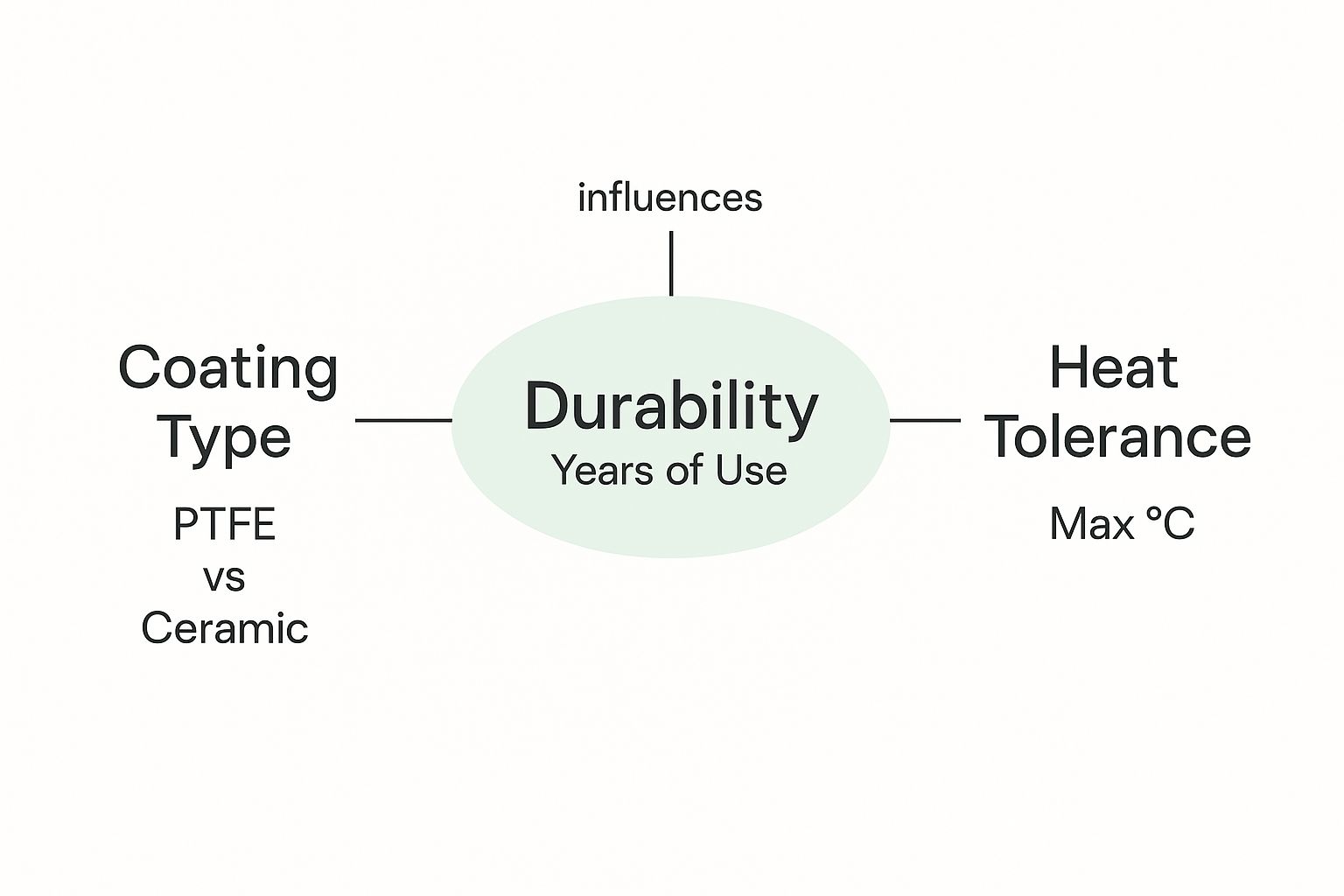
As you can see, PTFE coatings often last longer, but both have very clear heat thresholds. Pushing past these is the fastest way to ruin your pan.
The Price of Convenience
As wonderful as non-stick is, it does come with a few trade-offs. Knowing what these are is the key to getting the most out of your pan and not having to replace it every year.
The golden rule of non-stick is to treat its surface with respect. Unlike a sturdy cast iron or stainless steel pan, this coating is delicate. It simply isn't built for scorching-hot temperatures or metal utensils.
The biggest compromise is its lifespan. Even if you look after it perfectly, a non-stick coating will eventually wear out, giving you anywhere from two to five years of good service. Heat is its number one enemy; it breaks down the coating and destroys its slick properties.
To make your pan last, a few simple habits are all it takes:
- Mind the Heat: Never crank the element to high. Low to medium heat is all you need and will keep the coating intact.
- Use the Right Tools: Ditch the metal fish slice! Stick to silicone, wood, or nylon utensils to avoid scratching the surface.
- Clean Gently: Forget the steel wool or harsh scourers. A soft sponge with a bit of dish soap and warm water is perfect.
Follow these rules, and you'll get so much more life out of your cookware. Once you notice deep scratches or the coating starts to peel, it's definitely time for a new one. A great non-stick pan is the perfect tool for specific jobs—think eggs, pancakes, or delicate fish—making it an essential player in any well-rounded kitchen.
Specialist Materials For The Enthusiast
Once you've got your kitchen workhorses sorted with stainless steel and non-stick, you might start itching for something with a bit more character. This is where the specialist materials come in. They offer unique performance advantages for cooks who are serious about getting specific jobs done just right. Think of these not as your everyday pans, but as high-performance tools for when precision really counts.
Let's start with copper, the undisputed king of heat control. If cookware were cars, copper would be a finely tuned Formula 1 machine. It has phenomenal thermal conductivity, which means it heats up in a flash and—just as crucially—cools down the second you pull it off the heat. This lightning-fast response gives you an incredible amount of control.
It's for this exact reason that pastry chefs melting sugar or sauciers making delicate sauces swear by copper. There’s simply no better material for tasks where a few degrees can be the difference between perfection and a burnt disaster.
Of course, this elite performance doesn't come cheap. Copper is pricey, needs a bit of polishing to keep its beautiful shine, and can react with acidic foods. To get around this, most quality copper pans are lined with a non-reactive metal like stainless steel.
The Restaurant Kitchen Favourite: Carbon Steel
If cast iron is the trusty, rugged farm ute, then carbon steel is its lighter, nimbler city cousin. Made from a simple mix of iron and carbon, it has many of cast iron's best traits but in a much more manageable package. It’s a permanent fixture in restaurant kitchens for good reason: it can handle incredibly high temperatures but is still light enough for a chef to flick and toss food around a pan.
Just like cast iron, carbon steel needs to be seasoned. This is the process of building up a layer of polymerised oil that creates a fantastic natural non-stick surface. The more you cook with it, the better it gets, eventually developing that deep, slick black patina that's the mark of a well-loved pan.
Its ability to get screaming hot, combined with its lighter weight, makes carbon steel the go-to for a few key tasks:
- Perfect Searing: You can get a deep, flavourful crust on a steak or piece of fish in moments.
- Stir-Frying: The high heat and slick surface are what you need for that authentic "wok hei" flavour.
- Roasting Vegetables: It's brilliant for getting beautifully charred and caramelised edges on everything from potatoes to broccoli.
Is It Right For Your Kitchen?
While carbon steel is certainly more affordable than copper, it does need a bit more attention than your stainless steel pans. You’ll need to wash it by hand and dry it immediately to prevent rust—the same rules as cast iron. It also doesn’t play equally well with all hobs; it's a dream on gas, but its performance can vary on others. If you're weighing up your options, our detailed comparison of an induction cooktop vs a gas cooktop can help you figure out which setup best suits these specialist materials.
Ultimately, whether you decide to add copper or carbon steel to your collection really comes down to how you cook. If you're chasing that next level of precision for delicate sauces or want the high-heat power for a perfect sear, then these pans are a fantastic investment that can really elevate your cooking.
Building Your Perfect Cookware Collection
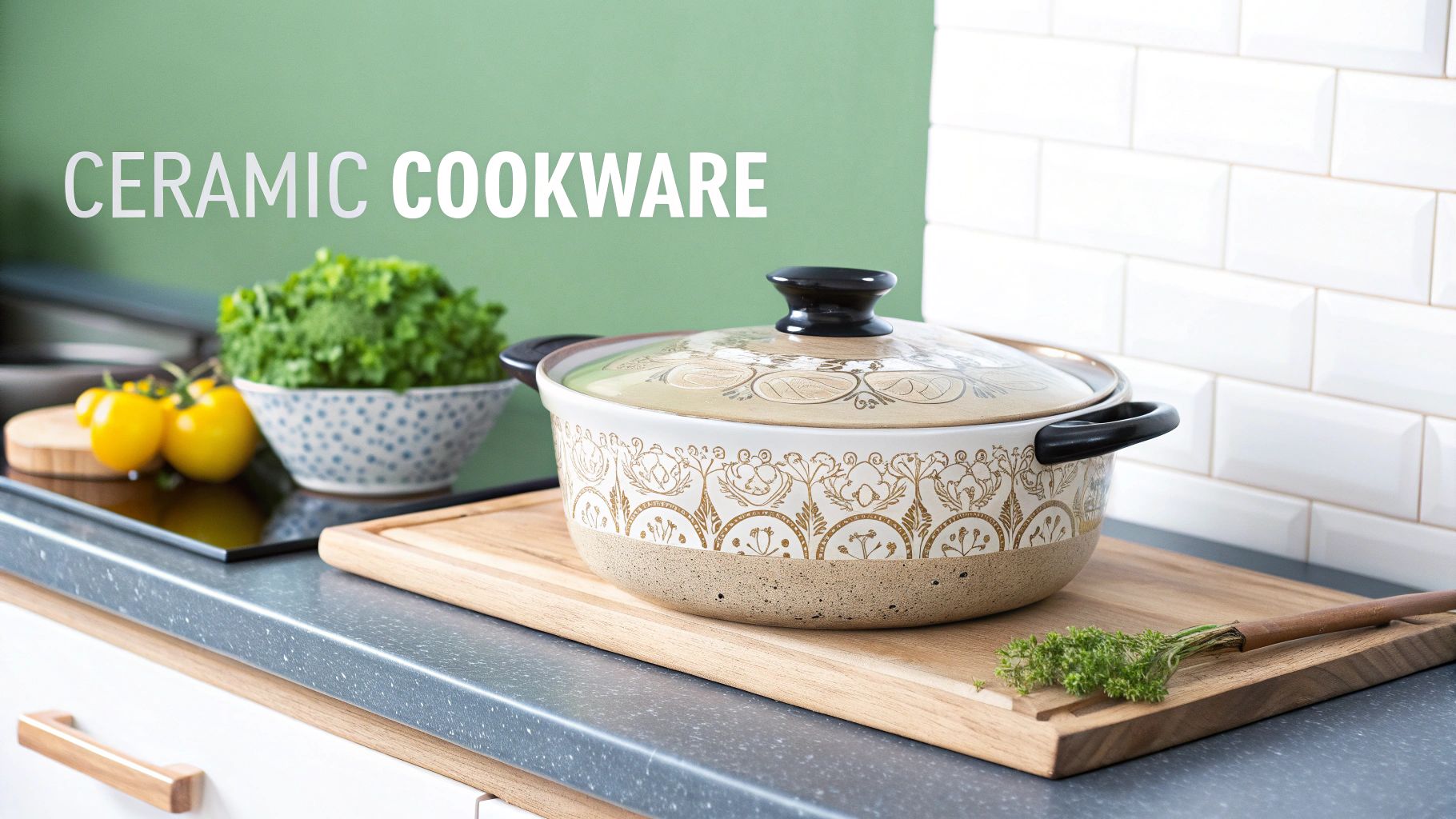
Alright, you've learned about all the different materials, so where do you go from here? Staring at a wall of pots and pans can feel a bit daunting, but the goal isn't to own one of everything. It's about building a smart, personalised toolkit that actually works for you—your cooking habits, your budget, and how you live.
The best way to start is to forget about those massive, one-size-fits-all sets. Instead, take a moment to think about what you genuinely need. What dishes are on repeat in your kitchen every week? Are you constantly searing steaks and making stir-fries, or is your go-to a perfectly cooked omelette?
Be honest about your tolerance for maintenance, too. Do you find the ritual of seasoning a pan satisfying, or is the idea of anything that can’t go in the dishwasher a deal-breaker? Answering these questions first will point you toward materials you’ll actually enjoy using, rather than pans that just gather dust.
Start With a Foundational Trio
For most of us, a strategic trio of pans can handle about 90% of what we cook. This minimalist approach means every piece you own is a true workhorse. It lets you put your money towards quality over quantity, and you can always add more specialised pieces later.
A great starting point looks something like this:
- The Versatile Skillet: A 25-30 cm stainless steel skillet is the ultimate all-rounder. It’s brilliant for getting a hard sear on meat, building a flavourful pan sauce, or sautéing vegetables.
- The Everyday Essential: A 20-25 cm non-stick pan is your best friend for convenience. Keep it for the delicate stuff—eggs, pancakes, and flaky fish—to protect its coating and make it last.
- The Deep Pot: A large, sturdy pot, like a Dutch oven or a stockpot, is a must-have for simmering soups and stews, boiling pasta, or braising a cut of meat until it's falling apart.
This focus on practicality and ease of use is a growing trend. The non-stick cookware market in Australia and New Zealand is expected to jump from USD 254.62 million to USD 356.78 million by 2032. It’s a clear sign that busy lifestyles are pushing us towards kitchen tools that just make life easier. You can dig into the numbers in this comprehensive market analysis.
Expanding Your Collection Intelligently
Once you've got your core trio sorted, you can start adding pieces that reflect what you love to cook. If you discover a passion for searing, a cast iron skillet is the natural next step. To get the most out of it, you'll want to learn how to look after it, starting with the best oil to season cast iron.
Building your collection piece by piece is not only more economical but also ensures that every pan you own has a purpose. It transforms your kitchen from a storage space into a highly functional workshop tailored specifically to you.
At the end of the day, the best cookware is the cookware you use. When you choose materials that match what and how you cook, you’re setting yourself up for years of creating delicious food with total confidence.
Still Have Questions About Cookware?
Even after digging into the details, you might have a few lingering questions before you're ready to commit. That's perfectly normal. Let's tackle some of the most common queries I hear from people trying to find the perfect pans for their kitchen.
Is Non-Stick Cookware Really Safe?
Absolutely, as long as you use it correctly. The big scare a while back was about a chemical called PFOA, which used to be part of the manufacturing process for non-stick coatings. The good news is that reputable manufacturers stopped using it years ago.
The real key to safety with modern non-stick is temperature control. If you let a pan get scorching hot—we're talking above 260°C—the coating can start to break down. To keep things safe, just stick to low or medium heat, never heat an empty pan, and if you see deep scratches or flaking, it's time to say goodbye to that pan.
Can I Use Metal Utensils On My Stainless Steel Pans?
Go for it! One of the best things about stainless steel is how tough it is. It's built to handle the hustle and bustle of a real kitchen, so you can grab your metal spatulas, whisks, and tongs without a second thought.
You might see a few minor scuffs appear on the surface over the years, but don't worry—they're purely cosmetic. Those little marks won't change how the pan cooks one bit, making it a true workhorse you can rely on for just about anything.
Choosing the right cookware is all about matching the material's strengths to your cooking style. A durable stainless steel pan is built for high-heat searing with metal tools, while a delicate non-stick pan excels at gently cooking eggs with a silicone spatula.
What’s The Best Way To Build A Cookware Set?
My advice is always to build your collection piece by piece. It's tempting to grab one of those big, all-in-one boxed sets, but you often end up with pots and pans you'll never use. A much smarter way is to start with a few high-quality essentials that fit the way you actually cook.
For most home cooks, a solid starting lineup looks something like this:
- A 25-30 cm stainless steel frying pan: This will be your go-to for searing meat, sautéing vegetables, and whipping up delicious pan sauces.
- A 20-25 cm non-stick frying pan: Keep this one just for the delicate stuff—think eggs, pancakes, and flaky fish. It'll last so much longer.
- A large Dutch oven or stockpot: Perfect for big batches of soup, stews, boiling pasta, or braising a roast on a lazy Sunday.
Once you have this core trio, you've got a foundation that can handle almost any recipe. From there, you can slowly add more specialised pans—maybe a cast iron skillet for that perfect steak crust or a carbon steel wok for stir-fries—as you find you really need them. This way, every piece in your kitchen earns its keep.
Ready to build your perfect kitchen toolkit? At Folders, we offer a curated selection of high-quality cookware from New Zealand's most trusted brands, ensuring you find the right piece for every recipe. Explore our extensive range and start your culinary journey today at https://folders.co.nz.