

Falcon Freestanding Ovens A Complete Buying Guide
Falcon freestanding ovens are something special. Think of them as the complete, professional-grade cooking centrepiece for your kitchen. Born from a legacy of British engineering, they combine a high-performance cooktop and a versatile oven into a single, robust unit. For Kiwi home cooks who are serious about their food, a Falcon is a long-term investment in both style and substance.
Why Choose a Falcon Freestanding Oven

Picking a new oven isn't just about buying an appliance; it's about choosing the very heart of your kitchen. For many passionate home chefs, a Falcon freestanding oven is a clear statement—a commitment to cooking at a higher level. Unlike built-in models that split your cooktop and oven, a freestanding cooker gives you a powerful, unified solution that makes a real impact.
This all-in-one design is where Falcon really shines. Picture it as a professional kitchen workstation, cleverly scaled for your home. You get the instant convenience of a high-performance hob sitting right on top of a massive, feature-packed oven. This creates a natural workflow, whether you're searing a steak up top or slow-roasting a lamb shoulder down below.
A Legacy of British Engineering
Every Falcon oven is built on a foundation of quality that started way back in 1830. This isn't just marketing fluff; you can feel the heritage in the materials. The heavy-duty construction, premium-grade stainless steel, and tough cast-iron components are all proof of a machine built to last. This solid build quality means your oven will stand up to daily family meals and ambitious dinner parties for decades.
Investing in a Falcon is less like buying an appliance and more like commissioning a permanent fixture for your home. Its durability and timeless design ensure it remains a reliable kitchen partner, not just a temporary tool.
This reputation for quality has made Falcon a major player in New Zealand's premium appliance market. They’re a popular choice because they blend that authentic British engineering with fuel options to suit any Kiwi home. These high-end cookers are available nationwide through specialist dealers.
More Than Just an Oven
Ultimately, choosing a Falcon comes down to appreciating how it perfectly merges form and function. These appliances are engineered not just to cook brilliantly but to be the visual anchor of your kitchen design. They offer a blend of professional power and aesthetic elegance that’s hard to find elsewhere.
Here’s why so many homeowners are drawn to Falcon:
- Integrated Design: The all-in-one setup simplifies your kitchen layout and installation, giving you a clean, cohesive look.
- Superior Build Quality: Made with commercial-grade materials, these ovens are built for the long haul and consistent high performance.
- Culinary Versatility: With multiple functions and fuel types, they cater to every cooking style, from a traditional Sunday roast to precise, delicate baking.
Before you make a final decision, it's always a good idea to weigh up your options. To help you along, check out our comprehensive oven buying guide for New Zealand homeowners.
Finding the Right Falcon Model and Size
Choosing a Falcon freestanding oven isn't just about picking an appliance; it's about deciding on the heart and soul of your kitchen. This is the centrepiece that will define the room's character and the way you cook for years to come. Thankfully, Falcon offers a brilliant line-up of models, each with its own distinct personality, ensuring there’s a perfect match for every home chef.
Picking a Style that Fits Your Kitchen
Your journey starts by getting to know the core Falcon families available here in New Zealand. The best way to think of them is as different design philosophies.
- The Professional+ is the no-nonsense workhorse, built for performance with a clean, industrial aesthetic. It’s for those who see the kitchen as a high-functioning workshop.
- The Classic Deluxe is the charming traditionalist. It perfectly marries that timeless, country-style look with all the modern cooking technology you could want.
- Then you have the Nexus, the sleek innovator of the family, offering a crisp, contemporary design packed with the latest features.
Each series brings something completely different to the table. Your choice really shapes the feel of your kitchen. Are you after a warm, rustic hub for the family, or a streamlined, modern space for culinary experiments? Figuring that out is the first big step. If you want to dive deeper into features, this practical guide to comparing commercial oven options has some great insights that can be useful, even though Falcon ovens are built for the home.
To make things a bit clearer, let's look at the main models side-by-side.
Falcon Freestanding Oven Model Comparison
This table breaks down the most popular Falcon series we see in Kiwi homes, highlighting what makes each one unique. It’s a quick way to see which model lines up with your cooking style and kitchen aesthetic.
| Model Series | Key Features | Available Sizes | Best For |
|---|---|---|---|
| Professional+ | Modern industrial design, robust build, multi-function ovens, powerful hob burners | 90cm, 100cm, 110cm | Serious home cooks who prioritise performance and a sleek, contemporary look. |
| Classic Deluxe | Traditional bevelled doors, classic colour palette, multi-function ovens, glide-out grill | 90cm, 100cm, 110cm | Those wanting to create a warm, country-style or traditional kitchen vibe without sacrificing modern features. |
| Nexus | Ultra-modern aesthetic, sleek rotary controls, bread proving drawer, steam injection | 90cm, 110cm | Tech-savvy cooks and bakers who love innovative features and a sharp, minimalist design. |
As you can see, whether you lean towards the rugged functionality of the Professional+ or the timeless appeal of the Classic Deluxe, there’s a Falcon designed with you in mind.
Matching Size to Your Culinary Ambitions
Once you’ve settled on a style you love, the next critical choice is size. Falcon ovens generally come in three standard widths: 90cm, 100cm, and 110cm. It’s easy to think "bigger is better," but it’s much smarter to match the oven to your actual life.
Think of it like choosing a car. You wouldn't buy a massive van for a daily city commute, and you wouldn't try to squeeze a big family into a two-seater for a holiday.
-
The 90cm Falcon: This is your versatile all-rounder. It's perfect for most families, giving you plenty of oven space and five hob burners without taking over the whole kitchen. It’s the go-to for passionate cooks who need flexibility for everything from weeknight dinners to weekend entertaining.
-
The 100cm Falcon: Stepping up, this model offers more oven capacity and often adds an extra goodie, like a dedicated slow-cook oven. It's ideal for larger families or anyone who loves to batch cook or host regular get-togethers.
-
The 110cm Falcon: This is the undisputed king of capacity. With multiple large ovens and an expanded hob, it’s built for the serious home entertainer, the person who hosts Christmas every year, or anyone who regularly juggles multiple complex dishes at once.
Remember, choosing the right size is about more than just fitting it in the space—it's about efficiency. A huge oven that’s constantly half-empty is just wasting energy. The sweet spot is an oven that handles your average cooking load perfectly but still has the grunt for those special occasions.
Before you set your heart on a size, you absolutely must measure your space. Don't just measure the gap! You need to account for ventilation and utility connections, too. To make sure you get it right, we've put together a simple, step-by-step guide on how to measure your space for appliances and furniture.
Understanding Key Falcon Oven Benefits
Across every model and size, Falcon ovens are built on a foundation of quality. This infographic breaks down the key advantages that really make them stand out.

As the diagram shows, whether you land on a 90cm Professional+ or a 110cm Classic Deluxe, you're investing in a cooker built for speed, versatility, and durability. By thinking carefully about the model that suits your style and the size that fits your life, you can confidently choose a Falcon that will be a trusted partner in your kitchen for many years to come.
Choosing Your Perfect Fuel Type

The heart of your cooker isn't just the oven cavity—it's the fuel that brings it to life. Deciding on the right energy source for your Falcon freestanding oven is a big one, as it genuinely shapes how you'll cook every single day. The choice really boils down to three main contenders: dual fuel, all-gas, or the modern powerhouse, induction.
Each option has its own distinct personality and workflow. Think of it like a musician choosing an instrument; a guitarist gets a completely different feel and sound from an acoustic versus an electric. In the same way, how you control the heat, tackle the cleanup, and even the pots and pans you use will all come down to the fuel type you pick.
Let's break them down so you can find the perfect fit for your kitchen.
The Best of Both Worlds: Dual Fuel
There's a good reason dual fuel is a classic combination. It pairs the raw, responsive power of a gas cooktop with the consistent, even heat of an electric oven. For many serious home cooks, this is the ultimate setup, offering the best of both without compromise.
On top, the gas hob gives you that instant, visual control over the flame. This means you can make immediate adjustments, which is perfect for getting a perfect sear on a steak or gently simmering a delicate sauce. There's no waiting around for an element to heat up or cool down; the response is right there, right when you need it.
Underneath, the electric oven provides a dry, stable heat that’s absolutely ideal for baking. From cakes that rise beautifully to roasts that cook through to perfection, electric ovens are known for their temperature stability and precision. It’s a truly versatile and powerful cooking partnership.
This hybrid approach is incredibly popular here in New Zealand. Home chefs really appreciate having that precise oven control for baking alongside the rapid heat of gas burners for the stovetop. It’s a demand for professional-style performance that Falcon meets perfectly.
In fact, market insights show that a huge chunk—around 40-50%—of Kiwis looking for a premium cooker lean towards dual-fuel models. They value the blend of features this setup provides, aligning perfectly with the professional-grade options in the Falcon range.
The Modern Efficiency of Induction
If you're ready to step into the future of cooking technology, then induction is for you. A Falcon induction cooktop offers a totally different experience, using magnetism to heat your cookware directly, instead of heating the hob surface first. This method is incredibly fast, precise, and remarkably energy-efficient.
Imagine boiling a pot of water in a fraction of the time it takes on a standard hob. That's the magic of induction. And because the cooktop surface itself doesn't get scorching hot, spills don't burn on, making cleanup a simple wipe-down. This also makes it a much safer option, especially if you have little ones running around the kitchen.
If you're weighing up the pros and cons, our detailed comparison can help clear things up. Take a look at our guide on induction cooktops versus gas cooktops to see which one is a better match for your cooking style.
Making Your Final Decision
So, how do you choose? It really comes down to your cooking habits, your kitchen's setup, and what you personally prefer.
To make it a bit easier, think about it this way:
- For the Traditionalist: If you love the visual feedback and classic feel of an open flame, dual fuel is almost certainly your perfect match.
- For the Modernist: If you value speed, safety, energy efficiency, and a sleek, easy-to-clean surface, then induction is the clear winner.
- Kitchen Logistics: Don't forget the practical side! Make sure your home is equipped for your choice. Gas models need a certified gas connection, while both induction and dual fuel ovens have specific electrical requirements.
Ultimately, whether you land on the balanced power of dual fuel or the clever performance of induction, a Falcon freestanding oven gives you a professional-quality foundation for countless memorable meals.
Diving Into Falcon's Smart Cooking Technology
While the striking good looks and solid build of a Falcon freestanding oven are what first catch your eye, it's the smart technology inside that really makes them shine. These aren't just features for a spec sheet; they’re engineered to make a real difference to your cooking, giving you the kind of flexibility and control that makes you want to get creative in the kitchen.
Think about it – one oven that can gently prove bread dough, slow-cook a casserole for hours, and then switch to a powerful fan-forced heat for the perfect crispy roast potatoes. That's the beauty of Falcon's multi-function oven. Instead of being stuck with one way of heating, you get a whole toolkit of cooking modes to choose from.
This means you can pick the perfect mix of heat from the top, bottom, or rear elements—with or without the fan—to suit whatever you're making. From delicate cakes that need a soft, even bake to a steak that needs a direct blast of heat from the grill, the oven works around your recipe, not the other way around.
The Brilliant Energy Saving Panel
One of the most impressive innovations from Falcon is the Energy Saving Panel (E.S.P.). This is a genuinely clever piece of design that lets you physically divide the main oven, instantly turning a huge cavity into a smaller, more focused one.
It’s a simple, practical idea. You wouldn't use a giant stockpot to boil a single egg, right? The E.S.P. brings that same common sense to your oven. For smaller weekday meals—a tray of roasted veggies or a pie for two—you just slide the panel in. This dramatically shrinks the space that needs heating, meaning it gets to temperature faster and uses a whole lot less power.
This is a huge plus for Kiwi households. With electricity costs climbing by around 20% over the last five years, energy efficiency is more important than ever. In fact, local appliance retailers report that over 60% of people buying a premium oven say efficiency is one of their top priorities.
The Energy Saving Panel isn't just a gimmick to save a bit of power. It’s about making a professional-level oven practical for everyday life. You get the full, massive capacity when you need it for family gatherings, and the efficiency of a smaller oven for everything else.
Features Designed for Real-World Cooking
Beyond the big-ticket items, Falcon ovens are full of thoughtful details that show they’ve been designed by people who actually cook. These aren't just flashy extras; they are practical tools that make your time in the kitchen easier and more enjoyable.
Here are a few of the standout features:
- Glide-Out Grill: Say goodbye to awkwardly reaching into a scorching hot grill. The Falcon grill is mounted on telescopic runners, so it slides out smoothly and safely. This makes checking, turning, and retrieving your food a breeze.
- Dedicated Wok Burner: Many of the gas and dual fuel models feature a powerful, multi-ring wok burner. It’s designed to deliver the intense, focused heat you need for a proper stir-fry—something a standard burner just can’t replicate.
- Catalytic Liners: Cleaning is less of a chore thanks to special catalytic liners inside the oven. These surfaces are treated to absorb grease and fat splashes, which are then oxidised and burned away at high temperatures. The result is far less scrubbing and no need for harsh chemicals.
Planning Your Kitchen and Installation
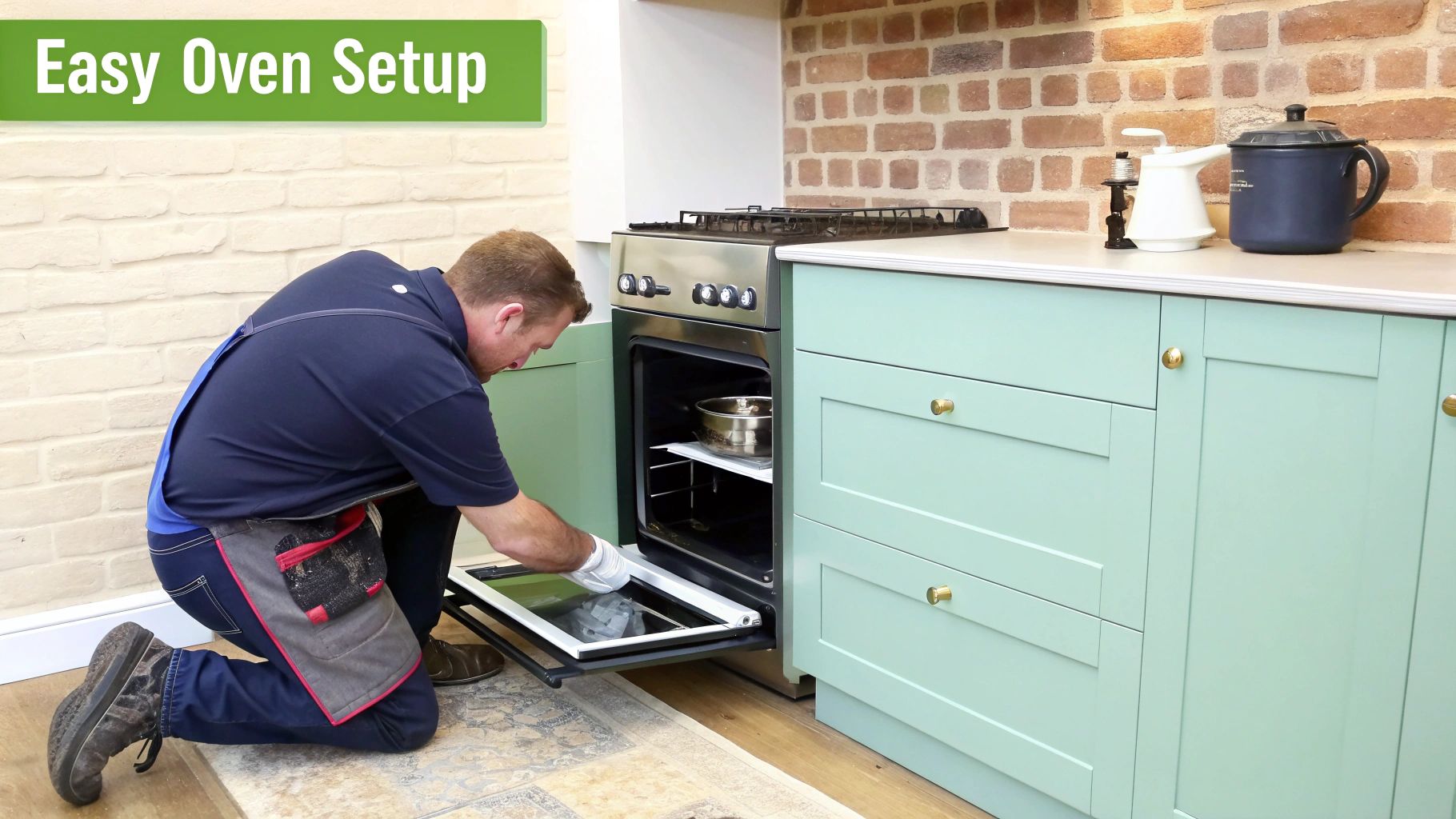
Bringing a Falcon freestanding oven into your home isn't just about finding an empty space for it. This is an appliance that’s built to be the heart of your kitchen—a true centrepiece that shapes the entire room. Proper planning is what makes the difference between an oven that just fits and one that elevates your whole cooking experience from the moment it’s installed.
A smooth installation actually starts long before the delivery truck pulls up. It begins with a practical checklist to sidestep those common little issues that can turn into major headaches later on. Taking the time to confirm everything, from the exact measurements to the necessary utility hook-ups, ensures the whole process is seamless, getting you cooking sooner.
Your Pre-Purchase Installation Checklist
Before you finalise your purchase, it's crucial to make sure your kitchen is ready for its new star. A few minutes spent on these checks now will save you a world of time, money, and hassle.
-
Measure, Then Measure Again: Pull out the tape measure and be meticulous. You need the exact width, depth, and height of the space where the oven will go. Don't forget to look up the specific ventilation clearances for your chosen Falcon model—a fit that’s too snug can affect both performance and safety.
-
Confirm Your Utilities: What connections do you have? If you're eyeing a dual fuel model, you'll need both a certified gas line and the right kind of electrical outlet within reach. For an all-electric or induction cooker, you’ll need to confirm your home’s wiring can handle the required amperage.
-
Plan the Delivery Path: It’s a simple step that’s so easy to forget. Map out the oven's journey from the front door to the kitchen. Measure doorways, hallways, and any awkward corners to be certain the delivery team can get it in without a scratch.
In New Zealand, installing a Falcon oven is absolutely not a DIY job. For your own safety and to keep your warranty valid, you must use a licensed gasfitter for gas connections and a registered electrician for all hardwiring. This is non-negotiable.
Designing Your Kitchen Around Your Falcon
You don't hide a Falcon oven; you design your kitchen around it. Its bold presence is the perfect opportunity to create a stunning, cohesive look. The aim is to make it feel like it was always meant to be there, creating a kitchen layout that flows naturally. For some great ideas on creating a functional space, it’s worth reading up on mastering kitchen efficiency layout.
Thinking about what goes around the oven is just as important as the cooker itself. A well-matched rangehood, for example, is more than just a functional necessity; it’s a style statement. Your splashback is another chance to introduce colour and texture that perfectly frames your new appliance.
Here are a few design tips to get you started:
-
Create a Focal Point: If you're lucky enough to have a chimney breast, it's the ideal spot for a Falcon. This naturally frames the oven, making it an intentional and dramatic feature.
-
Select a Complementary Rangehood: Look for a rangehood that matches the oven's width and complements its style. A sleek, stainless steel model looks fantastic with the Professional+ series, while a more decorative canopy might be the perfect partner for a Classic Deluxe.
-
Choose a Durable Splashback: Whether you go for classic subway tiles, a clean sheet of tempered glass, or industrial-style stainless steel, your splashback needs to be both hard-wearing and stylish, tying the whole look together.
-
Flank with Smart Cabinetry: This is all about workflow. Position your most-used drawers and cupboards right beside the oven. This creates an efficient ‘cooking zone’ where your pots, pans, utensils, and spices are always an easy grab away.
By thinking through these design and technical details upfront, you can ensure your new Falcon oven is not just an appliance, but a flawless, functional masterpiece in your home.
Keeping Your Falcon Oven in Top Shape for Years to Come
A Falcon freestanding oven isn't just another kitchen appliance; it’s a real investment and the centrepiece of your culinary adventures. To make sure it keeps performing beautifully for years, a little bit of regular care goes a long way. Think of it like a quality cast-iron pan—a simple routine keeps it seasoned and ready for anything.
Looking after your oven isn't just about keeping it looking sharp. A clean, well-maintained oven heats more evenly, gets up to temperature faster, and ultimately, cooks your food better. We're not talking about hours of scrubbing, just smart, simple habits that stop a small spill from turning into a baked-on nightmare.
Maintaining Your Cooktop
The cooktop is usually the first place to show signs of a busy kitchen, so it pays to give it some regular attention. How you clean it will depend on whether you've got gas or induction, but the end goal is the same: keeping it spotless and working perfectly.
-
For Gas Hobs: Once the hob is completely cool, you can lift off the heavy-duty cast-iron pan supports. Give them a good wash in warm, soapy water with a soft sponge. If you’ve got some stubborn, burnt-on food, a simple paste made from baking soda and water is fantastic for lifting it off without scratching the surface.
-
For Induction Hobs: That smooth ceramic glass is wonderfully easy to clean. All you need is a soft cloth and a cleaner made specifically for ceramic hobs to wipe away any mess. Just one tip: if you spill anything sugary, wipe it up straight away while it’s still hot (and be careful!). If it cools and hardens, it can actually pit the glass.
A quick wipe-down after you finish cooking is the single best thing you can do. It literally takes less than a minute but prevents grease and food from building up, keeping your cooktop looking and performing like it’s brand new.
Cleaning the Oven Itself
Keeping the inside of your Falcon oven clean means every meal is cooked in a fresh, hygienic space. The good news is that many Falcon models come with catalytic liners, which are designed to do most of the hard work for you. These clever liners absorb grease and food splashes while you cook, then break them down when the oven is hot.
To keep these liners working well, just run a monthly 'maintenance cycle'. Heat the empty oven to about 220°C for 30 minutes, and this will help burn off any lingering residue. If your oven doesn't have these liners, a regular wipe-down with a damp cloth and a bit of mild detergent is all it needs. For those times you need a deeper clean, there are some great homemade oven cleaner recipes that actually work.
Quick Checks to Ensure Peak Performance
Beyond cleaning, a few quick monthly checks can help you catch any small issues before they turn into bigger problems.
- Check the Door Seal: Take a look at the seal running around the oven door. This is what keeps the heat locked in. Check for any splits, fraying, or caked-on food. A dodgy seal means heat is escaping, which messes with your cooking times and wastes energy.
- Inspect the Gas Burner Igniters: For gas models, find the little ceramic spike next to each burner—that’s the igniter. Make sure it's clean and clear of any food debris. A blocked igniter is the most common reason a burner won't light.
- Test All the Functions: Once a month or so, just turn the dial through all the different functions—fan, grill, defrost, etc.—to make sure every element is heating up as it should.
By making these simple cleaning and inspection steps a part of your kitchen routine, your Falcon freestanding oven will remain the reliable, high-performing heart of your home for countless delicious meals to come.
Got a Few Last Questions About Falcon Ovens?
Choosing a major appliance like a Falcon freestanding oven is a big decision, and it’s completely normal to have a few final questions buzzing around. We get it. This is the new heart of your kitchen, and you want to be absolutely sure.
To help you feel confident in your choice, we’ve rounded up the most common questions we hear from homeowners across New Zealand and answered them straight. Think of this as the final check-in before you bring your dream oven home.
Are Falcon Freestanding Ovens Worth the Money?
In a word: absolutely. If you’re someone who values exceptional build quality, precise cooking, and an appliance that’s genuinely built to last, a Falcon oven is a brilliant investment. These aren’t your average, mass-produced cookers. Their professional-grade construction means they are designed to perform beautifully for decades, unlike many alternatives that might give up the ghost much sooner.
Yes, the initial outlay is higher, but that cost translates directly into superior heat control, powerful features like the Energy Saving Panel, and rock-solid reliability. When you factor in the total cost of ownership over 15+ years, a Falcon isn’t just an oven; it’s a long-term investment in your home and your love for cooking.
What’s the Real Difference Between Dual Fuel and Induction?
This all comes down to the cooktop and how you personally love to cook. The oven performance is identical across both types.
-
Dual Fuel: This is the classic choice for a reason. You get the best of both worlds: a gas cooktop with its instant, visible flame control, paired with a fantastically consistent electric oven. It’s the setup professional chefs have sworn by for years, prized for its responsiveness and sheer versatility.
-
Induction: This is the modern, high-tech option. It uses a magnetic field to heat the pan directly, not the cooktop. The result? Incredible speed, amazing energy efficiency, and a huge safety bonus, as the surface itself stays much cooler to the touch.
It really is a personal choice. If you adore the hands-on, traditional feel of cooking over a live flame, dual fuel is your winner. If you’re all about cutting-edge speed, safety, and a sleek, easy-to-clean surface, then induction is the way to go.
No matter which fuel type you lean towards, you're getting the same high-calibre Falcon performance in the oven cavities. The decision is purely about how you prefer to interact with your cooktop.
How Do I Get a Falcon Oven Installed in NZ?
Getting your Falcon installed is straightforward, but a little bit of planning goes a long way. First things first: double-check that your kitchen space meets the oven’s exact dimensions, ventilation needs, and utility requirements before you order.
In New Zealand, it’s a legal requirement to use a licensed gasfitter for any gas connections and a registered electrician for the electrical work. Your Falcon retailer can usually point you toward trusted local professionals who know these units inside and out. Using certified installers isn’t just a good idea—it’s absolutely essential for safety, peak performance, and keeping your warranty valid.
Ready to make your kitchen the true heart of your home? Explore the full range of Folders' Falcon freestanding ovens and find the perfect model for your culinary adventures today.