

7 Easy Rice Cooker Recipes for Effortless Meals (2025)
Your trusty rice cooker, a cornerstone of many Kiwi kitchens, is capable of so much more than just making flawless rice. This humble appliance is a secret weapon for creating a wide variety of delicious, fuss-free meals with minimal effort and cleanup. This guide moves beyond the basics to explore a collection of surprisingly easy rice cooker recipes that will transform how you view this countertop workhorse.
Whether you're a busy parent, a student in a small flat, or simply looking to simplify your cooking routine, these recipes prove that a great meal is just one button-press away. We will cover everything from a one-pot chicken and rice dish and steamed fish with vegetables to breakfast porridge and even a flavourful quinoa pilaf. The rice cooker's versatility allows you to easily incorporate a variety of healthy ingredients into your meals, from staples to seasonal favourites. For more inspiration on incorporating nutritious ingredients into your cooking, you can explore guides like this one on the 5 Favorite Health Foods for Fall.
Prepare to be amazed by the delicious possibilities waiting inside your rice cooker. Let’s unlock its full potential.
1. Perfect Rice Cooker White Rice
Mastering the art of cooking perfect white rice is the first step in unlocking your appliance's full potential, forming the foundation for countless easy rice cooker recipes. This foundational recipe moves beyond guesswork, utilising the rice cooker's automated technology to deliver consistently fluffy, perfectly separated grains every single time. It's a method perfected by Japanese manufacturers like Zojirushi and Tiger, whose appliances are staples in homes and restaurants where flawless rice is a daily necessity.
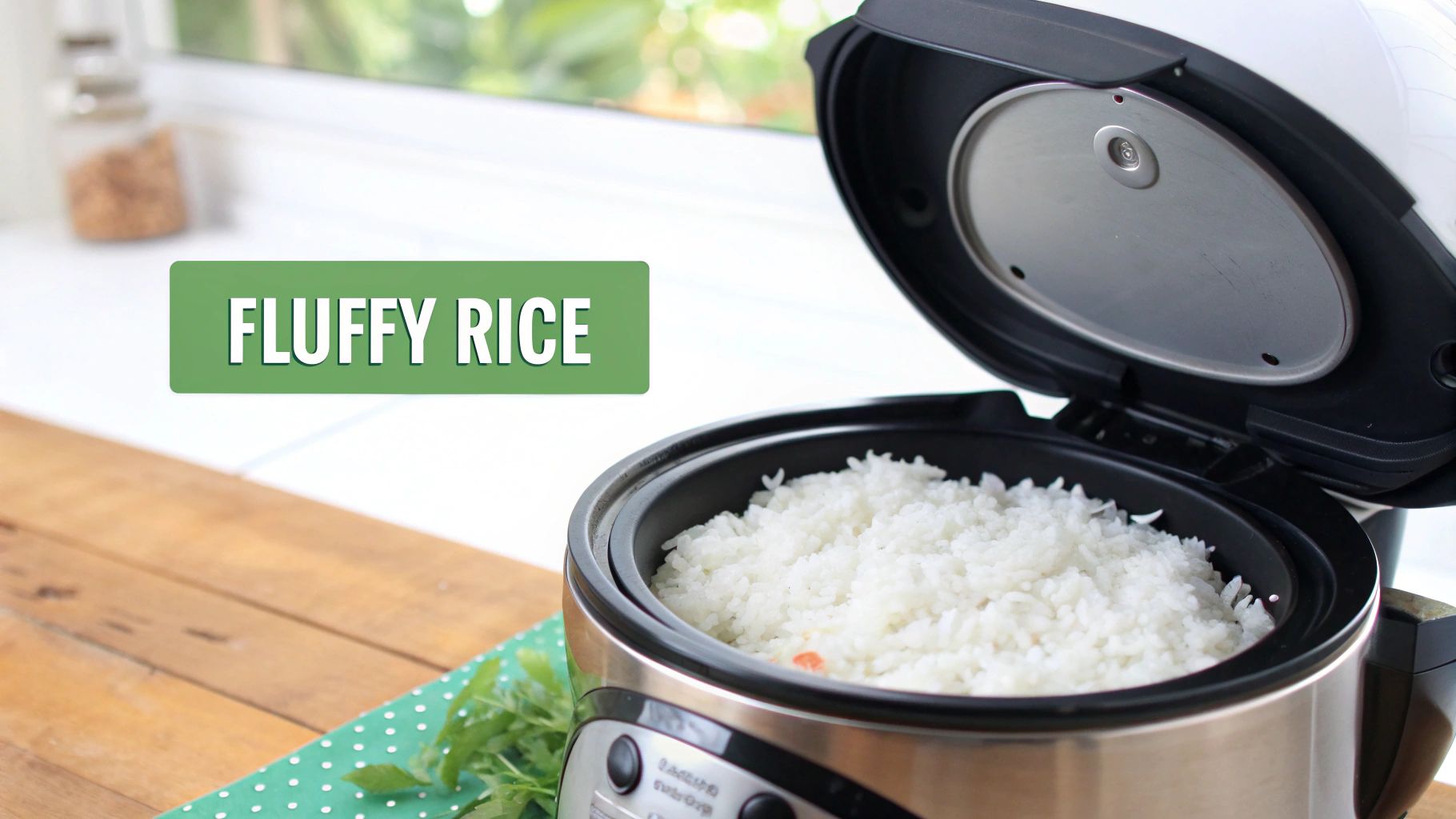
The principle is simple: precise measurement and heat management. The cooker brings the water to a boil, allows the rice to absorb it, and then switches to a 'keep warm' mode, letting the residual steam finish the cooking process. This controlled environment prevents common pitfalls like scorched bottoms or mushy, waterlogged textures.
Key Steps for Flawless Rice
To achieve that sought-after restaurant quality, follow these non-negotiable steps. This technique works for most long and medium-grain white rice varieties.
- Rinse Thoroughly: Place your desired amount of rice in the cooker's inner pot. Cover with cool water, swirl gently with your fingers, and carefully pour out the cloudy water. Repeat this process 3-4 times, or until the water runs mostly clear. This removes excess surface starch, which is the primary cause of gummy or sticky rice.
- Measure Accurately: Use the measuring cup that came with your rice cooker, as it is typically calibrated to the machine's water lines (usually about 180ml, or ¾ of a standard cup). For every "cup" of rinsed rice, add water up to the corresponding numbered line inside the pot.
- Rest Before Serving: Once the cooking cycle finishes, resist the urge to open the lid immediately. Let the rice rest on the 'keep warm' setting for at least 10 minutes. This critical step allows the moisture to redistribute evenly throughout the grains, ensuring a uniform texture.
- Fluff and Serve: After resting, open the lid and use a rice paddle or spatula to gently fluff the rice, separating the grains before serving.
Pro Tip: For a subtle enhancement that makes the grains shine, add a small pinch of salt and a half-teaspoon of a neutral oil (like canola or vegetable oil) to the water before starting the cooking cycle.
2. One-Pot Rice Cooker Chicken and Rice
Moving beyond simple grains, this recipe transforms your appliance into a one-pot wonder, creating a complete and flavourful meal with minimal effort. This is one of the most popular easy rice cooker recipes because it combines seasoned chicken, rice, and vegetables, all cooked together. The steam and rendered juices from the chicken infuse the rice below, creating a rich, savoury base while ensuring every component is cooked perfectly. This method has been widely adopted by everyone from university students in dorms to busy parents needing a quick, balanced family meal.
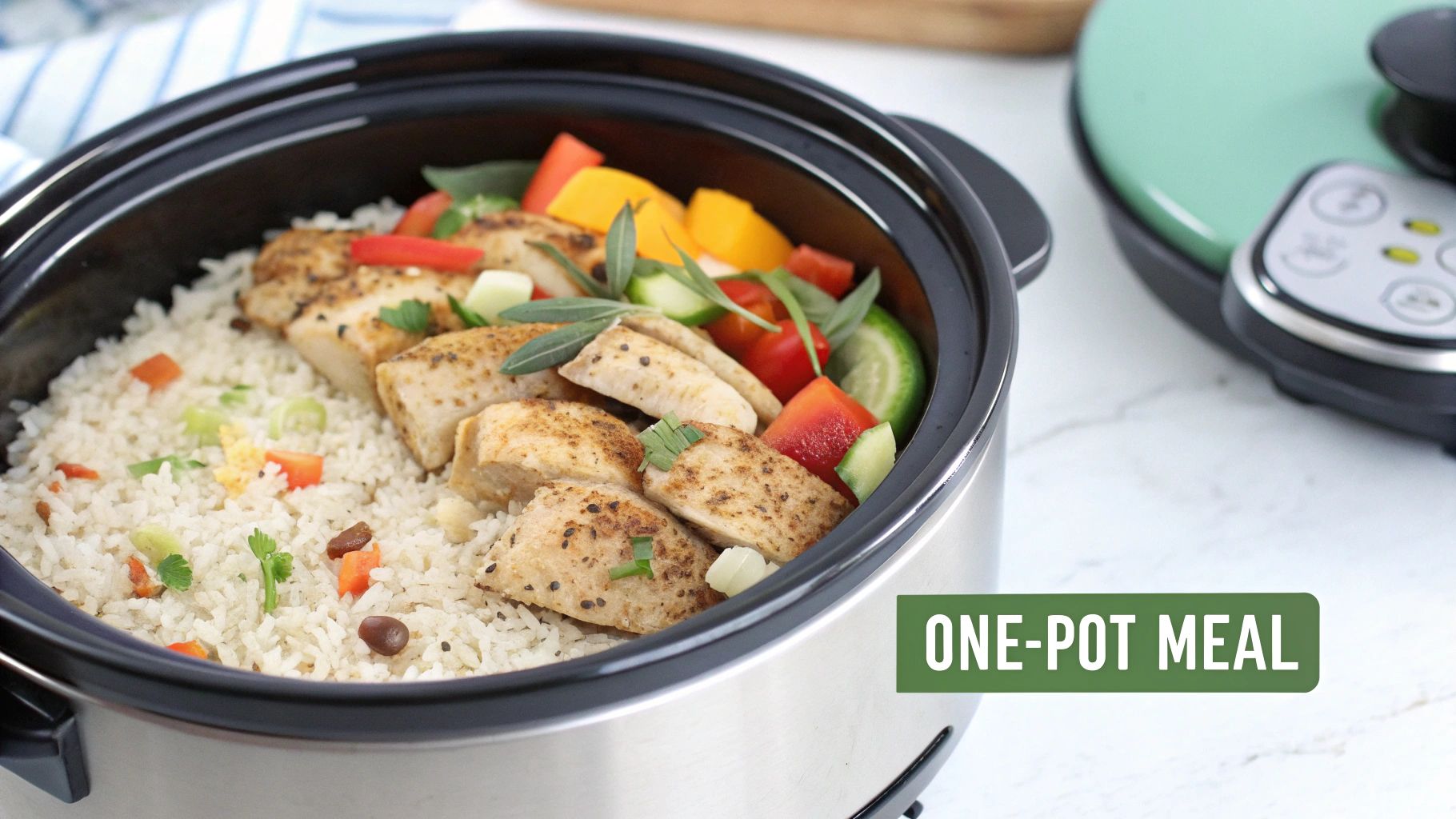
The genius of this dish lies in its simplicity and efficiency. By layering ingredients, you leverage the rice cooker's heat and steam to cook everything simultaneously, drastically reducing cleanup time. This approach has been popularised by food bloggers specialising in one-pot meals and is a staple in meal-prep routines for its convenience and delicious results. Getting this right starts with knowing your appliance; for more details, check out these tips for buying kitchen appliances.
Key Steps for a Perfect One-Pot Meal
To ensure the chicken is tender and the rice is perfectly cooked, follow this layering technique.
- Season and Sear (Optional): For a richer flavour, season chicken pieces (thighs work best for moisture) with salt, pepper, soy sauce, and ginger. You can marinate them for 30 minutes or, for extra depth, briefly sear them in a pan before adding them to the cooker.
- Layer Correctly: After rinsing your rice, place it in the pot with the appropriate amount of water or chicken broth. Place the seasoned chicken pieces directly on top of the uncooked rice. This allows the chicken juices to drip down and flavour the grains as they cook.
- Time Your Vegetables: Add hard vegetables like carrots or potatoes at the beginning with the chicken. For softer vegetables like broccoli, peas, or spinach, wait until the last 10 minutes of the cooking cycle to add them on top, or they will become mushy.
- Rest and Combine: Just like with plain rice, let the entire dish rest for 10 minutes after the cooker switches to 'keep warm'. Afterwards, open the lid, fluff the rice, and gently mix the chicken and vegetables into the rice before serving.
Pro Tip: Use chicken broth instead of water for an extra layer of savoury flavour. A splash of soy sauce, a drizzle of sesame oil, and some chopped spring onions added to the liquid will elevate the dish significantly.
3. Rice Cooker Steamed Fish with Vegetables
Transform your rice cooker into a health-focused appliance with this method for steaming fish and vegetables. This one-pot technique leverages gentle steam to cook food, a method deeply rooted in Asian culinary traditions that preserves nutrients, moisture, and delicate flavours. It's one of the most nourishing easy rice cooker recipes, producing a light, restaurant-quality meal without the need for heavy oils or fats.
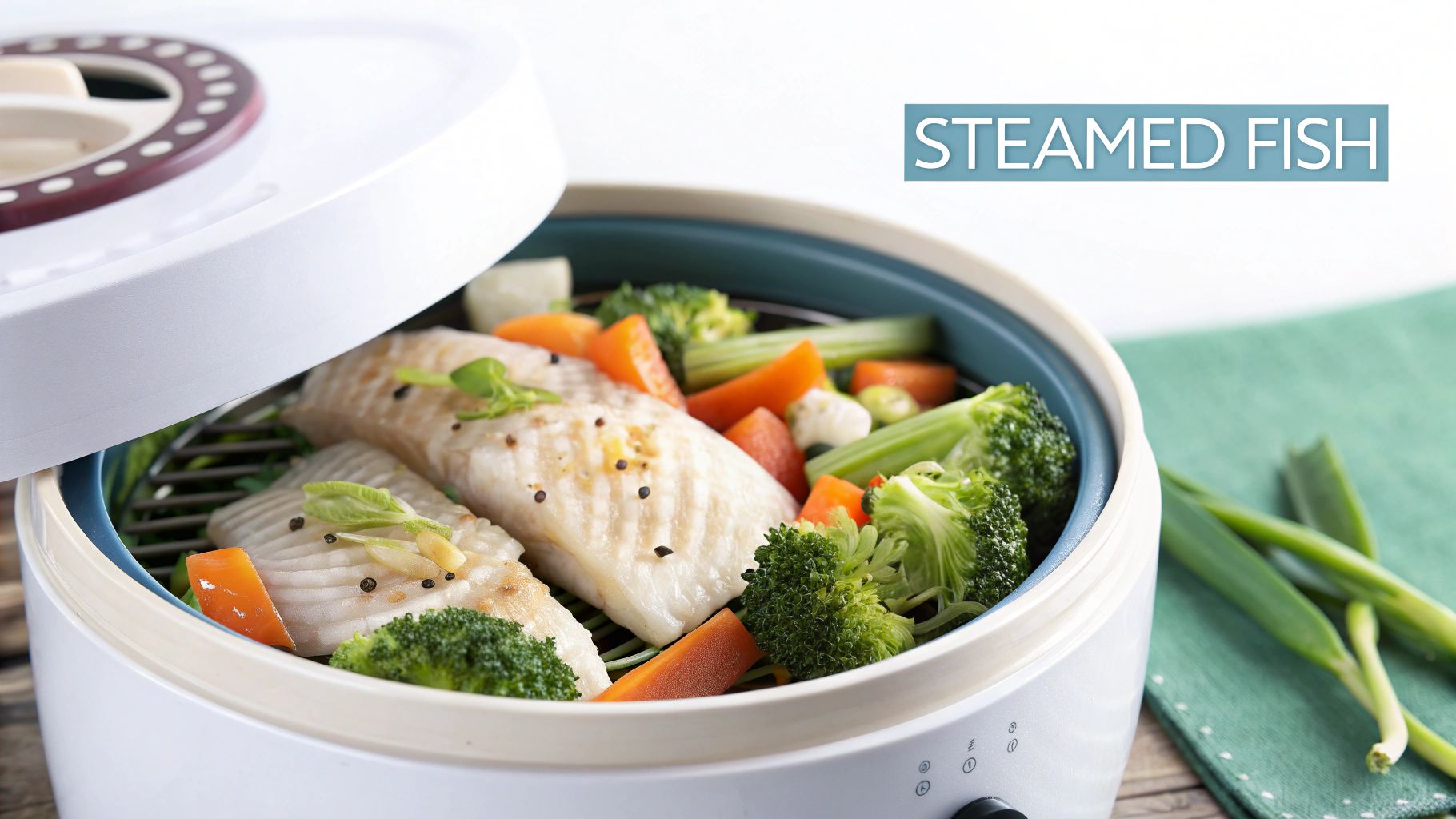
The process is remarkably efficient: as rice cooks in the main pot below, the steam it generates rises to cook the fish and vegetables placed in the steamer basket above. This simultaneous cooking is perfect for busy weeknights and a core principle in health-conscious meal planning. You can explore the full potential of this cooking method and unlock the power of steamers in this ultimate guide.
Key Steps for a Perfectly Steamed Meal
To create a flavourful and perfectly cooked dish, careful preparation and timing are essential. This technique is ideal for creating a balanced meal with minimal effort.
- Choose the Right Ingredients: Opt for firm-fleshed fish fillets like salmon, cod, or sea bass that hold their shape well when steamed. Pair them with vegetables that have similar cooking times, such as broccoli florets, sliced carrots, or asparagus spears.
- Prepare the Steamer Basket: For effortless cleanup and to prevent the fish from sticking, line the rice cooker's steamer basket with a piece of baking paper. Place the seasoned fish fillet in the centre of the paper.
- Season for Flavour: Before steaming, season the fish generously. A classic combination includes thinly sliced ginger, chopped scallions (spring onions), and a drizzle of soy sauce. This infuses the fish with a delicate, aromatic flavour as it cooks.
- Time it Right: Add the steamer basket to the rice cooker during the final 10-15 minutes of the rice cooking cycle. Most fish fillets will cook through in this time. Adding it too early will result in overcooked fish and vegetables.
Pro Tip: Create a simple finishing sauce by combining a tablespoon of soy sauce, a teaspoon of sesame oil, and a pinch of sugar. Drizzle this over the hot, steamed fish and vegetables just before serving for an extra layer of flavour.
4. Rice Cooker Coconut Rice
Elevate your weeknight meals by creating a rich, fragrant coconut rice, one of the most flavourful and easy rice cooker recipes you can master. This technique simply involves substituting a portion of the cooking water with coconut milk, infusing each grain with a creamy, tropical essence. It’s a staple in Thai and Southeast Asian cuisines, often served alongside spicy curries and grilled meats to provide a cooling, aromatic balance.

The rice cooker flawlessly manages the slightly thicker liquid, steaming the rice to a perfect, non-sticky finish without any risk of scorching, which can easily happen on the stovetop. This method has been widely adopted by vegan food bloggers and chefs who use it to achieve a luscious, dairy-free creaminess in their dishes, proving its versatility beyond traditional pairings.
Key Steps for Creamy Coconut Rice
Achieving the ideal balance of flavour and texture requires a few simple adjustments to the standard rice-making process. This method works best with jasmine or other long-grain white rice.
- Balance the Liquids: The key is the right ratio. For one cup of rinsed rice, use one cup of full-fat canned coconut milk and a half-cup of water. Mixing with water prevents the rice from becoming overly heavy or oily and ensures it cooks through properly.
- Rinse with Care: As with plain rice, rinsing is crucial. Rinse your rice until the water runs mostly clear to remove excess starch. This step is even more important here, as the fats in coconut milk can make starchy rice unpleasantly gummy.
- Season Before Cooking: Before closing the lid, add a generous pinch of salt and about a teaspoon of sugar directly into the pot. The salt enhances the coconut flavour, while the sugar provides a subtle sweetness that balances the richness, creating a more complex and authentic taste profile.
- Rest and Fluff: Once the cooker switches to 'keep warm', let it sit for 10-15 minutes. This allows the creamy goodness to settle and distribute. Fluff gently with a fork or rice paddle before serving to separate the grains.
Pro Tip: For an extra layer of aromatic complexity, add a pandan leaf (tied in a knot) or a few kaffir lime leaves to the pot before cooking. Remove them before serving. Garnish with toasted coconut flakes or fresh coriander for a professional finish.
5. Rice Cooker Breakfast Porridge
Transform your rice cooker from a dinner workhorse into a morning champion with this incredibly simple breakfast porridge. This set-and-forget method creates a warm, creamy, and nutritious start to the day, proving that easy rice cooker recipes can extend far beyond savoury meals. It’s a popular solution for busy families and health-conscious individuals who want a wholesome breakfast without the stovetop monitoring.
The principle is gentle, slow cooking. The rice cooker maintains a steady, low temperature that breaks down the starches in the rice, creating a thick, porridge-like consistency without scorching. This approach is favoured by wellness bloggers and is a testament to the versatility modern home appliances bring, a trend Kiwis are embracing as they explore new ways to use their kitchen gadgets.
Key Steps for Creamy Porridge
To get a consistently delicious and comforting breakfast, follow these core steps. This technique is highly adaptable to different types of rice and milks.
- Choose Your Base: While short-grain or jasmine rice works well for a classic texture, you can also use whole grains like steel-cut oats or quinoa. Rinse your chosen grain thoroughly to remove excess starch.
- Get the Ratio Right: The key to creamy, not clumpy, porridge is the liquid ratio. A good starting point is 1 part grain to 4 parts liquid. Use a combination of milk (dairy, almond, or coconut) and water for the best flavour and texture.
- Add Flavour Early: Incorporate sweeteners like a drizzle of maple syrup, a spoonful of brown sugar, and spices like cinnamon or nutmeg directly into the cooker with the grains and liquid. Dried fruits like raisins or chopped apricots can also be added now, as they will plump up during cooking.
- Set and Forget: Combine all ingredients in the inner pot, give it a quick stir, and set your rice cooker to its 'Porridge' or 'Congee' setting. If it only has a standard 'Cook' setting, that will work perfectly too. Once done, let it rest for 5-10 minutes before serving.
Pro Tip: For a richer, more decadent porridge, stir in a splash of cream or a knob of butter after the cooking cycle is complete. Top with fresh fruits like berries or sliced banana and a sprinkle of nuts for added crunch and nutrition.
6. Rice Cooker Fried Rice
This clever method adapts the beloved stir-fry classic for the modern kitchen, transforming your rice cooker into a surprisingly effective all-in-one cooking station. It bypasses the need for a traditional wok and intense heat, making it one of the most innovative and easy rice cooker recipes for a quick, satisfying meal. This approach is a lifesaver in small kitchens, apartments, or student dorms where high-powered stovetops aren't available, proving that great flavour doesn't require complex equipment.
The technique leverages the cooker's consistent heating element and non-stick pot to sauté ingredients in sequence before combining them. By first scrambling the eggs, then cooking proteins and vegetables, and finally incorporating day-old rice and seasonings, you can build authentic fried rice flavours without ever turning on the stove. This method has been popularised by food bloggers and home cooks seeking simpler, less messy versions of restaurant favourites.
Key Steps for Perfect Fried Rice
To achieve a result that rivals the takeaway version, follow these essential steps. This technique works best with a basic rice cooker that has a simple "cook" and "warm" function.
- Start with Cold Rice: The single most important rule for good fried rice is using day-old, refrigerated rice. Cold, dry grains separate easily and won't turn to mush when stir-fried. Fresh, warm rice contains too much moisture and will become gummy.
- Sauté in Stages: Add a little oil to the inner pot and press the 'cook' button. Once hot, pour in beaten eggs and scramble them until just cooked. Remove the eggs and set them aside. Add a bit more oil and sauté your protein (like diced chicken or prawns) and hardy vegetables (like carrots and peas).
- Combine and Season: Add the cold rice to the pot, breaking up any large clumps with your spatula. Stir in your seasonings: soy sauce, a dash of sesame oil, and a pinch of white pepper are classic choices. Cook for a few minutes, stirring occasionally, until the rice is heated through.
- Finish and Serve: Turn off the cooker, stir the scrambled eggs back in, along with any delicate greens like spring onions. Give it one final mix and serve immediately.
Pro Tip: For a richer flavour, add a small knob of butter along with the oil before you add the rice. It adds a delicious creaminess and helps the grains toast beautifully in the pot. For more innovative single-appliance meal ideas, explore these easy air fryer recipes.
7. Rice Cooker Quinoa Pilaf
Expanding beyond rice, the rice cooker proves to be an exceptional tool for preparing other grains, and quinoa is a standout example. This nutritious, protein-packed seed cooks to a perfect, fluffy texture using the appliance's precise temperature control, making it a fantastic base for a vibrant pilaf. The controlled cooking environment ensures the quinoa doesn't turn mushy, a common issue when cooking it on the stovetop. It has become a staple in health-conscious cafes and gluten-free meal plans for good reason.
The principle is identical to cooking rice: the machine brings the liquid to a simmer, the quinoa absorbs it, and the 'keep warm' cycle allows it to steam and finish perfectly. This method simplifies one of the most versatile and easy rice cooker recipes, delivering a complete protein dish that adapts beautifully to Mediterranean, Middle Eastern, or Latin American flavour profiles.
Key Steps for Perfect Quinoa Pilaf
To create a flavourful and perfectly textured pilaf every time, follow these essential steps. This technique is similar to using a multi-cooker, which also excels at grain preparation. You can learn more about the versatility of these appliances on folders.co.nz.
- Rinse Thoroughly: This is a crucial step for quinoa. Place your quinoa in a fine-mesh sieve and rinse under cool running water for at least 30-60 seconds, rubbing the grains with your fingers. This removes the natural coating called saponin, which can impart a bitter or soapy taste.
- Use the Right Ratio: The ideal liquid-to-quinoa ratio is 2:1. For every one cup of rinsed quinoa, add two cups of liquid (water or, for more flavour, vegetable or chicken broth) to the rice cooker pot.
- Add Aromatics and Vegetables: Sautéing is not required. Simply add finely diced vegetables like carrots, celery, and onions, along with your chosen herbs and seasonings, directly into the pot with the quinoa and liquid before cooking.
- Rest and Fluff: Once the cooking cycle is complete, let the quinoa pilaf rest with the lid on for 5-10 minutes. This allows the grains to absorb any final traces of steam. Afterwards, use a fork, not a spoon, to gently fluff the quinoa, separating the grains without mashing them.
Pro Tip: For a deeper, nuttier flavour, toast the rinsed and dried quinoa in the rice cooker pot for a few minutes before adding the liquid. Some advanced rice cookers have a "sauté" or "brown" function for this, but even on the regular 'cook' setting, a few minutes of dry heat will enhance its taste.
Quick Comparison of 7 Easy Rice Cooker Recipes
| Recipe | Implementation Complexity | Resource Requirements | Expected Outcomes | Ideal Use Cases | Key Advantages |
|---|---|---|---|---|---|
| Perfect Rice Cooker White Rice | Low - simple rice-to-water ratio | Low - standard rice & water | Consistently fluffy, non-sticky white rice | Daily basic rice preparation | Foolproof, hands-off, energy efficient |
| One-Pot Rice Cooker Chicken and Rice | Medium - layering & seasoning | Medium - rice, chicken, veggies | Flavourful, protein-rich complete meal | Quick family dinners, meal prep | Time-saving, minimal cleanup, rich flavour |
| Rice Cooker Steamed Fish with Vegetables | Medium - timing & steaming | Low - fish, veggies, seasoning | Moist, healthy, nutrient-preserved dish | Health-conscious, low-fat cooking | Healthy, quick, easy cleanup |
| Rice Cooker Coconut Rice | Low - coconut milk substitution | Low - coconut milk & rice | Creamy, aromatic tropical-flavoured rice | Side dish for Asian & Caribbean meals | Gourmet flavour, dairy-free, simple method |
| Rice Cooker Breakfast Porridge | Medium - longer cooking, stirring | Medium - rice, milk, sweeteners | Creamy, warm, customisable breakfast | Healthy breakfast, meal prep | Satisfying, economical, adaptable |
| Rice Cooker Fried Rice | Medium - timing, ingredient prep | Medium - day-old rice, proteins | Authentic fried rice flavour without wok | Small kitchens, leftover rice use | No special equipment, customisable flavour |
| Rice Cooker Quinoa Pilaf | Low to medium - rinsing & flavouring | Low - quinoa, veggies, seasonings | Fluffy, protein-rich gluten-free grain dish | Gluten-free, vegetarian, healthy meals | High protein, quick cooking, versatile |
Your Kitchen's Unsung Hero
The journey through these seven easy rice cooker recipes reveals a truth many seasoned home cooks already know: the humble rice cooker is far more than a single-purpose gadget. It's a versatile, time-saving, and surprisingly creative culinary partner. From the foundational perfection of fluffy white rice to a complete one-pot chicken dinner, a fragrant coconut rice, and even a hearty breakfast porridge, this appliance has proven its worth as an indispensable kitchen workhorse.
By now, you should feel empowered to look beyond the basic "cook" button. The real magic lies in understanding the core principles we've explored. The precise liquid-to-grain ratios, the art of layering ingredients for even cooking, and the simple flavour infusions are techniques that unlock a world of culinary potential. These aren't just recipes; they are templates for your own creativity.
Key Takeaways for Your Culinary Journey
Mastering your rice cooker is about embracing efficiency without sacrificing flavour. The most important lessons from this collection include:
- Versatility is Standard: Your rice cooker can handle breakfast, lunch, and dinner. It expertly steams, simmers, and sautés (with the right model), proving it’s a true multi-cooker.
- Layering is Key: For one-pot meals like the Chicken and Rice or Steamed Fish, layering ingredients correctly ensures everything is cooked to perfection simultaneously. Denser ingredients go on the bottom, and delicate ones on top.
- Flavour Infusion is Simple: Swapping water for broths, coconut milk, or juices is the easiest way to elevate any dish. Adding aromatics like ginger, garlic, and herbs directly to the pot infuses every grain with incredible flavour.
- Clean-up is Minimal: The single-pot nature of these easy rice cooker recipes means less time spent washing up and more time enjoying your delicious, home-cooked meal.
Putting Your Rice Cooker to Work
The next step is simple: start cooking! Don't be afraid to experiment. Use the One-Pot Chicken and Rice recipe as a base, but try it with pork chops and apple slices. Adapt the Quinoa Pilaf by adding your favourite roasted vegetables or a handful of toasted nuts for extra crunch. Your rice cooker is a forgiving appliance, making it the perfect canvas for culinary experimentation. The more you use it, the more you'll realise its incredible value in your daily routine, simplifying meal prep and expanding your menu.
Ultimately, embracing your rice cooker is about making your life easier and your meals more delicious. It’s a small appliance that delivers a huge impact, consistently producing satisfying results that will impress your family and friends.
Ready to unlock your kitchen's full potential or find the perfect model to get started? Explore the fantastic range of modern, easy-to-use rice cookers and other essential kitchenware at Folders. As a proudly Kiwi-owned company, we're here to help you create a home you love with quality products at everyday low prices.