

9 Minimalist Living Room Ideas for a Calm Kiwi Home
In a world full of noise, our homes should be a sanctuary of calm. For many Kiwis, the living room is the heart of the home, a place to unwind, connect with whānau, and recharge. Adopting a minimalist approach isn't about creating stark, empty spaces; it's about intentionality. It's about curating a room that feels spacious, organised, and deeply personal by focusing on the principle of 'less is more'. This philosophy champions quality over quantity, function over frills, and serenity over stimulation.
This guide explores nine distinct yet achievable minimalist living room ideas, specifically tailored for New Zealand homes. We move beyond theory to provide actionable tips, smart layout advice, and product suggestions to help you craft a space that is both beautiful and functional. To truly transform your living room into a minimalist haven, consider incorporating elements that foster a sense of comfort and tranquillity. For a deeper dive into this, you can find practical tips to create comfort and coziness in your home.
We'll cover everything from neutral colour palettes and multi-functional furniture to the strategic use of negative space and hidden storage. Let's explore how to declutter your space and your mind, one thoughtful element at a time.
1. The Art of the Neutral Colour Palette
A neutral colour palette is the cornerstone of many exceptional minimalist living room ideas. This approach utilises a cohesive blend of soft whites, calming greys, warm beiges, and muted earthy tones to create a serene and uncluttered foundation. For Kiwi homes, particularly those with smaller living areas, this strategy is incredibly effective. It enhances natural light, making the space feel larger, brighter, and more inviting.
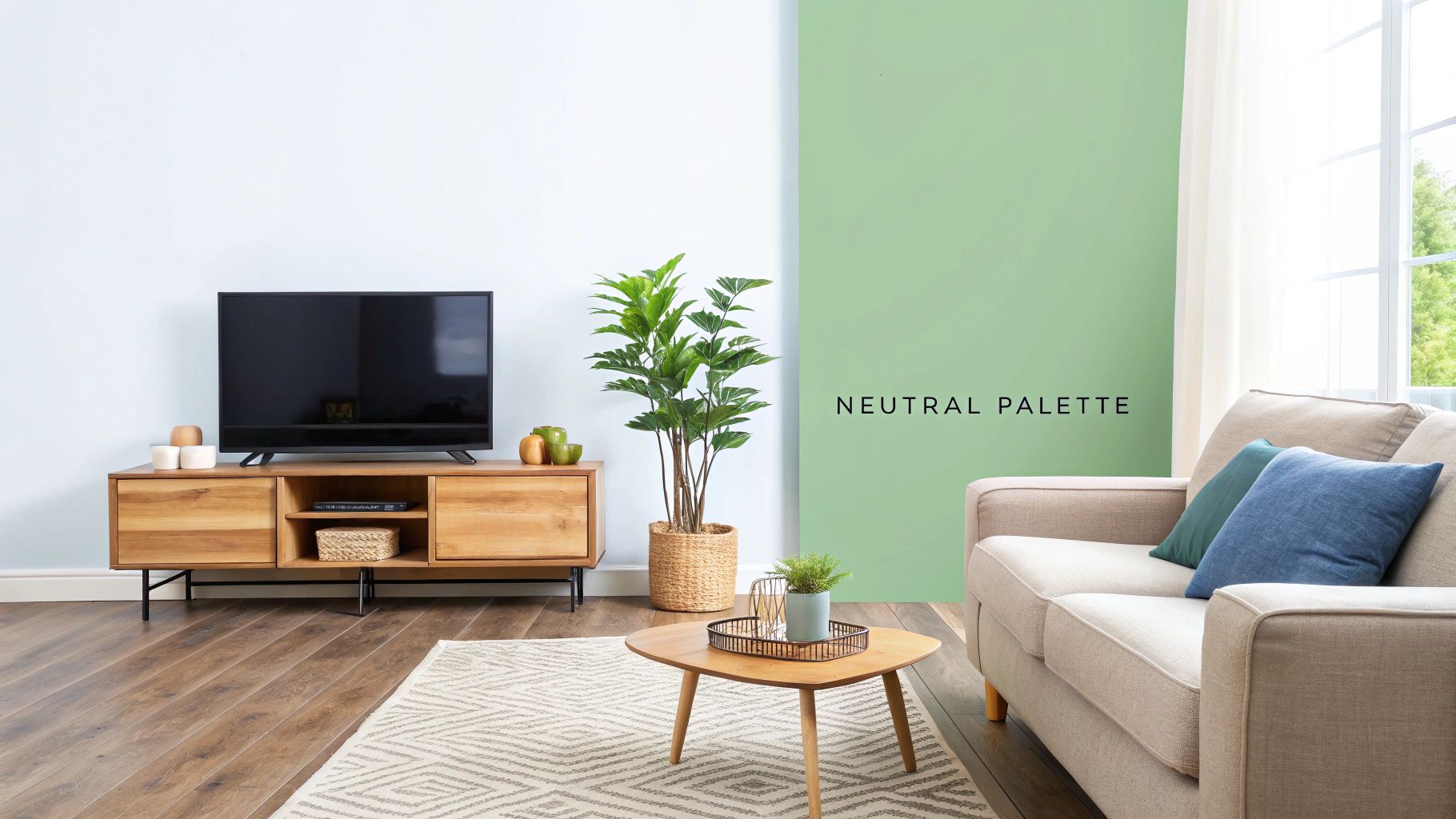
The brilliance of a neutral scheme lies in its subtlety. Rather than appearing bland, it allows the room's architecture, textures, and the deliberate placement of furniture to become the focal points. This creates a sophisticated, timeless aesthetic that feels both calm and curated. It serves as a versatile canvas that can be easily updated with seasonal accents, a vibrant piece of art, or a change in soft furnishings.
How to Implement a Neutral Palette
- Layer Tones: To avoid a flat, one-dimensional look, layer different shades of the same neutral colour. For instance, pair a soft dove grey sofa with charcoal cushions and a light silver-grey throw rug. This tonal variation adds visual interest and depth.
- Introduce Natural Textures: Warmth is crucial in a minimalist space. Integrate materials like a chunky wool knit blanket, linen curtains, a light oak coffee table, or a jute rug. These textures prevent the room from feeling cold or sterile.
- Use Plants for Colour: A touch of greenery from indoor plants like a fiddle-leaf fig or a string of pearls provides a natural, organic pop of colour that complements the neutral backdrop beautifully.
- Strategic Lighting: Combine ambient, task, and accent lighting to create a warm, inviting atmosphere. A floor lamp with a warm bulb can soften corners and eliminate harsh shadows in the evening.
This approach is perfect for homeowners who desire a tranquil, organised living space that feels both modern and enduring. By carefully selecting your decor, you can transform your house into a true home. To explore this concept further, you can find valuable insights on how to use home decor to make a house your home.
2. Multi-functional Furniture
Embracing multi-functional furniture is a cornerstone of intelligent and practical minimalist living room ideas. This strategy involves selecting pieces that serve multiple purposes, thereby reducing the total number of items needed and maximising floor space. For Kiwi homes where efficient space utilisation is often a priority, this approach is invaluable. It helps maintain a clean, uncluttered aesthetic without sacrificing the everyday functionality your family needs.
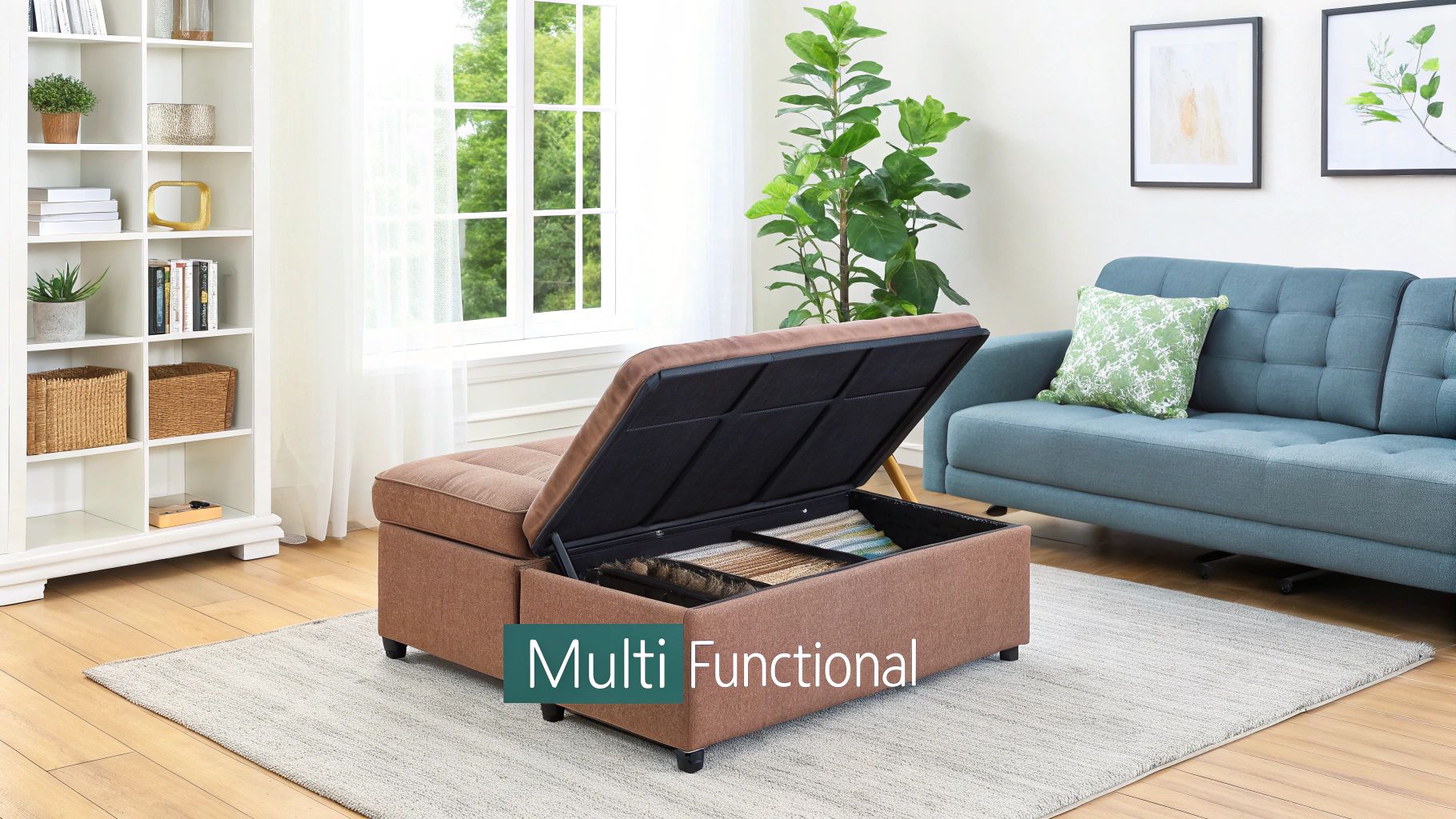
The genius of multi-functional design lies in its inherent efficiency. A coffee table with hidden storage, a sofa that converts into a bed, or a modular shelving unit that doubles as a room divider all work to keep your living area organised and versatile. This approach allows a single room to adapt to various activities, from relaxing and entertaining to working from home, all while maintaining a cohesive and streamlined look.
How to Implement Multi-functional Furniture
- Prioritise Quality: Since these pieces will be used frequently and in various ways, invest in well-made items. Look for durable materials and sturdy mechanisms to ensure longevity and reliable performance.
- Match Lifestyle Needs: Choose furniture that solves a specific problem for your household. If you often have guests, a stylish sofa bed is a wise choice. If you work from the living room, a console table that can double as a desk is ideal.
- Consider Scale and Proportion: Ensure the furniture fits comfortably in your space in all its configurations. Measure carefully to confirm an extendable table or sofa bed won’t overwhelm the room when in use.
- Test Functionality: Before buying, test the moving parts yourself. Make sure drawers slide smoothly, lids lift easily, and conversion mechanisms are simple to operate. This ensures the piece is a help, not a hassle.
This method is perfect for anyone living in a smaller home, apartment, or for those who simply want a smarter, more adaptable living space. It proves that you don't need more furniture, you just need more functional furniture.
3. Clean Lines and Geometric Shapes
Embracing clean lines and simple geometric shapes is a fundamental principle behind many successful minimalist living room ideas. This design approach prioritises unadorned surfaces, straight lines, and fundamental forms like squares, circles, and rectangles. It deliberately moves away from ornate details and complex patterns, creating a sense of visual order, calm, and modern sophistication that is perfect for a restful living space.
The power of this concept, popularised by movements like Bauhaus and Mid-century modern design, is its ability to make a room feel intentional and uncluttered. Furniture becomes sculptural, from a sleek, low-profile sofa to a sharp-angled armchair or a circular coffee table. Each piece contributes to the room's structure without adding visual noise, allowing for a space that feels both organised and artistically curated. This is a timeless aesthetic that celebrates simplicity in form.
How to Implement Clean Lines and Geometric Shapes
- Select Key Furniture: Choose anchor pieces with strong, simple silhouettes. A modular shelving system with clean squares, a credenza with flat-front doors, or a sofa with a distinct rectangular frame are excellent starting points.
- Balance with Curves: To prevent the space from feeling too rigid or clinical, introduce softer geometric shapes. A round mirror, a curved floor lamp, or a circular ottoman can soften the hard edges and add a dynamic, balanced feel.
- Highlight Architecture: Use lighting to draw attention to the clean lines of the room itself. LED strip lighting along a bulkhead or a track light aimed at a minimalist fireplace surround can accentuate the room's inherent geometric structure.
- Embrace Shaker Style: For built-in elements, the principle of clean lines is paramount. When considering cabinetry, for a quintessential example of clean lines, compare Shaker vs Raised Panel cabinets and see why Shaker often champions minimalist design.
4. Strategic Negative Space
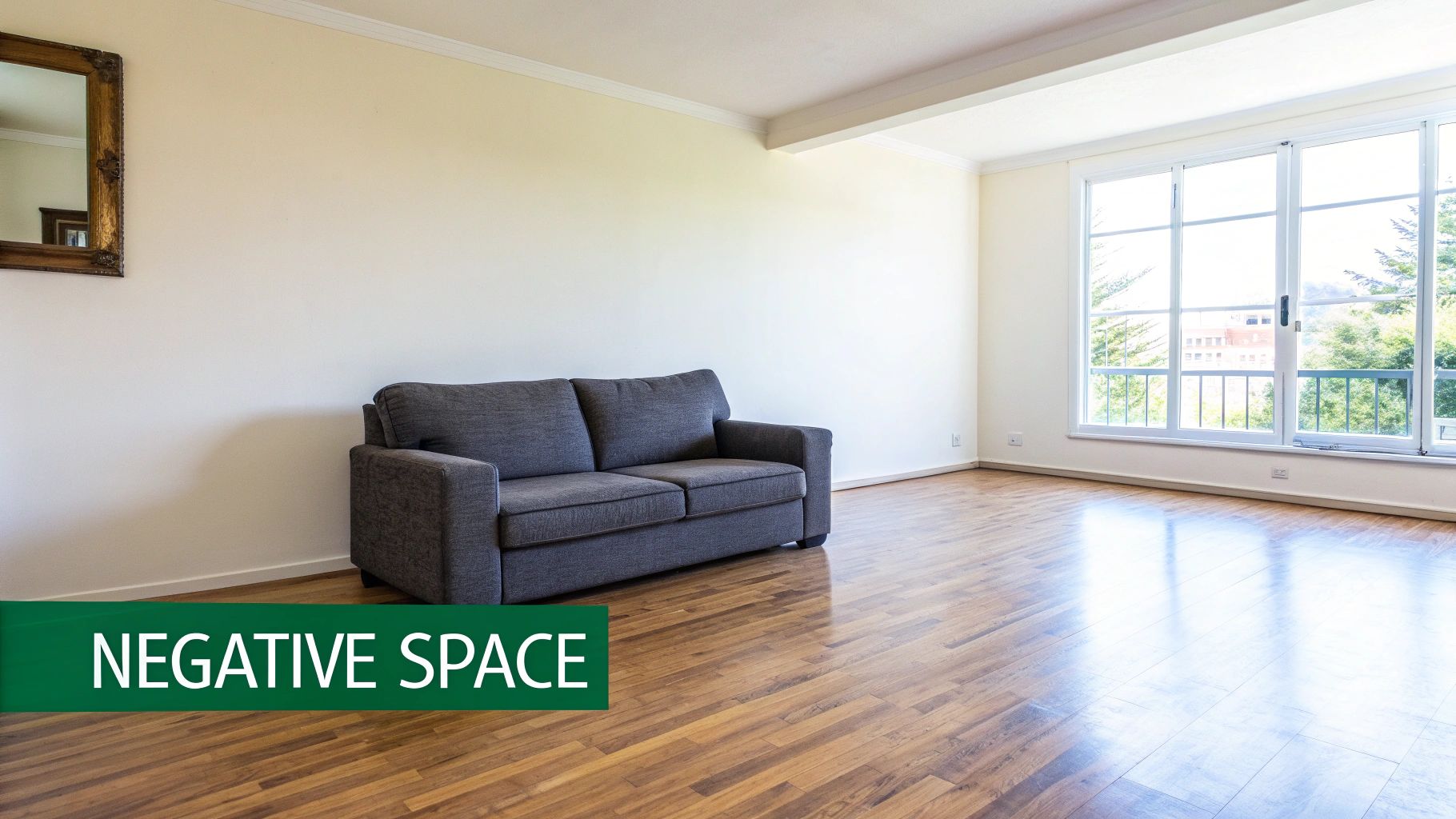
Negative space, or the empty area around and between objects, is a powerful and often overlooked element in exceptional minimalist living room ideas. Far from being simply "empty," this intentional space acts as a design tool in its own right. It provides visual breathing room, allowing key furniture pieces and decor items to stand out and be appreciated without the distraction of clutter. This principle is fundamental to creating a tranquil, open, and organised atmosphere.
Inspired by Japanese design philosophy, using negative space effectively prevents a room from feeling busy or overwhelming. It draws attention to the form and function of each selected item, celebrating quality over quantity. For Kiwi homes, particularly those with open-plan living, this approach helps define zones and creates a sophisticated sense of flow and calm, making the entire area feel more spacious and serene.
How to Implement Strategic Negative Space
- Float Your Furniture: Avoid pushing all your furniture against the walls. Pulling your sofa and armchairs away from the perimeter, even by a few centimetres, creates a pocket of air that makes the room feel larger.
- Curate Your Surfaces: Resist the urge to fill every shelf or tabletop. A large coffee table might only need a single beautiful book or a simple vase. This deliberate placement turns everyday objects into focal points.
- Mind the Gaps: When hanging art, leave ample wall space around each piece. A gallery-style display with generous spacing feels more curated and less cluttered than a tightly packed arrangement.
- Clear the Floor: Opt for furniture with legs, like a mid-century modern credenza or sofa, to reveal more visible floor space. This enhances the sense of openness and makes cleaning easier too.
This method is ideal for those who want a living room that feels restful and uncluttered. By thoughtfully arranging your layout, you can create a truly peaceful retreat. For more guidance on arranging furniture in constrained areas, explore these small living room layout ideas.
5. Natural Materials and Textures
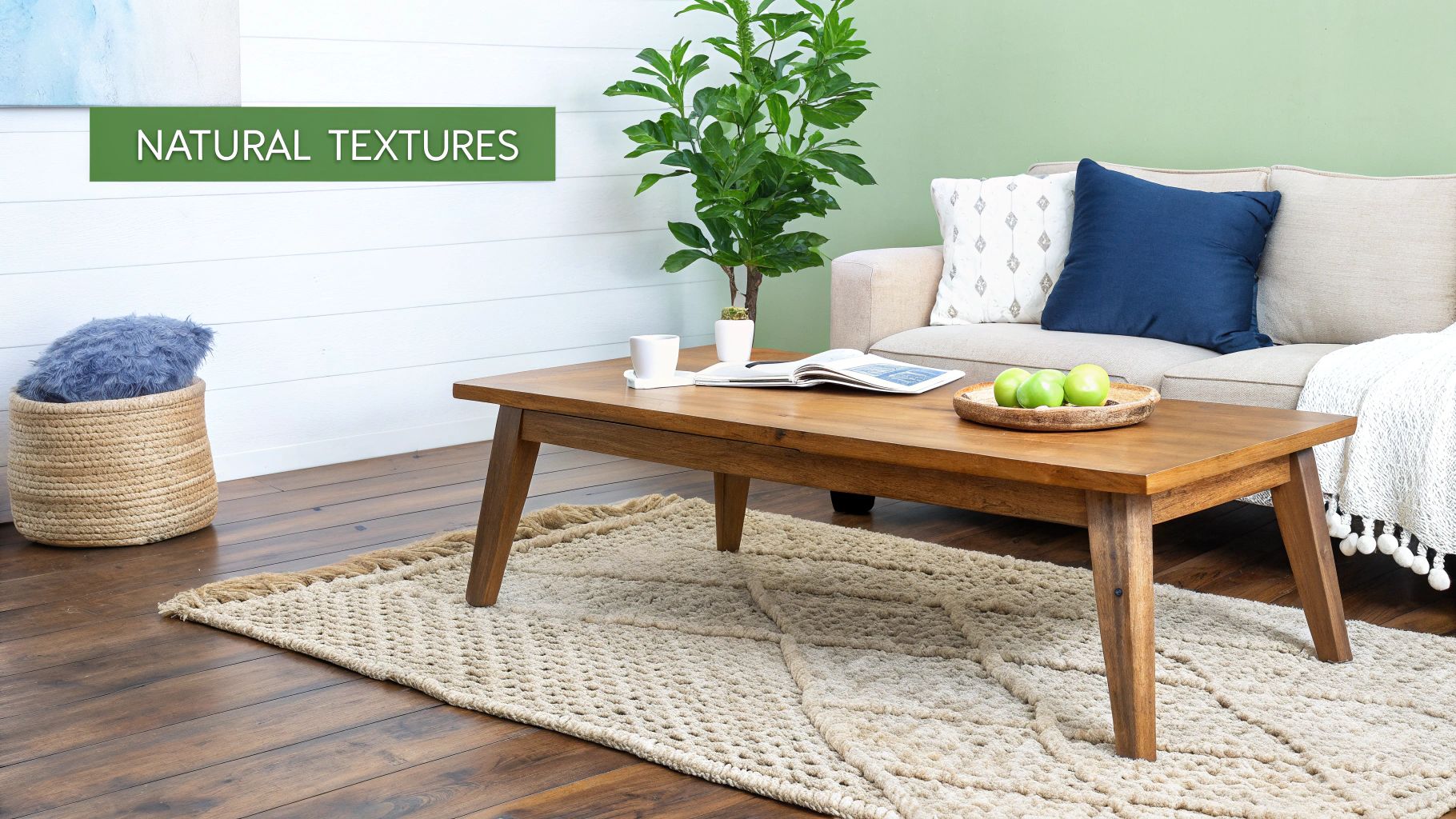
Incorporating natural materials is a fundamental strategy for creating minimalist living room ideas that feel warm and inviting rather than stark or cold. This approach brings organic elements like wood, stone, linen, wool, and cotton into the forefront, adding tactile interest and a connection to the natural world. For Kiwi homes, this concept resonates deeply, reflecting the country's stunning landscapes and enhancing a sense of grounded tranquility within the living space.
The beauty of using natural materials lies in their inherent imperfections and unique character. A reclaimed wood coffee table, a hand-woven woollen rug, or breezy linen curtains each introduce a layer of depth and authenticity that polished, synthetic materials cannot replicate. This focus on texture creates a sensory-rich environment that is visually clean yet feels comfortable and lived-in, perfectly aligning with the minimalist ethos of mindful, intentional living.
How to Implement Natural Materials and Textures
- Layer Various Textures: Combine different tactile surfaces to build visual depth. Pair a smooth leather armchair with a chunky knit throw, or place a sleek stone-top side table on a soft, high-pile wool rug. The contrast is what makes the space compelling.
- Embrace Wood Grains: Let the natural beauty of timber shine. Opt for furniture made from light woods like ash or oak, characteristic of Scandinavian design, to keep the room feeling bright. A native rimu or mataī feature can also add a distinct local touch.
- Use Natural Textiles: Swap synthetic fabrics for natural ones. Linen curtains diffuse light beautifully, while cotton or wool cushions add softness and comfort to a sofa. A jute or sisal rug introduces a rustic, earthy element underfoot.
- Incorporate Stone and Ceramic: Introduce accessories like a marble tray, slate coasters, or handmade ceramic vases. These elements provide a cool, solid counterpoint to the softer textures of wood and fabric, creating a balanced and sophisticated scheme.
This approach is ideal for anyone wanting to create a serene, grounded living room that feels both modern and timeless. By prioritising natural, high-quality materials, you build an environment that is not only stylish but also promotes a sense of calm and well-being.
6. Statement Lighting as a Focal Point
In a minimalist design, every element must earn its place. Using statement lighting as a focal point embodies this principle perfectly, turning a functional necessity into a striking piece of art. This approach allows a single, carefully chosen fixture to command attention and define the room's character, reducing the need for other decorative objects and keeping surfaces clear. For Kiwi homes, a sculptural pendant or an elegant floor lamp can add immense visual interest without contributing to clutter.
The power of this idea lies in its dual function. The fixture provides essential illumination while acting as the room's primary artistic expression. This strategy is central to many minimalist living room ideas, offering a sophisticated way to create drama and elegance. It draws the eye upward, can accentuate ceiling height, and anchors the space with a deliberate, curated feel, proving that minimalism is about intention, not absence.
How to Implement Statement Lighting
- Select a Hero Piece: Choose one significant fixture, such as an oversized pendant light above a coffee table or a sculptural floor lamp in a corner. Ensure its scale is appropriate for the room-it should be impactful but not overwhelming.
- Layer Your Lighting: A statement piece works best as part of a layered scheme. Complement it with subtle, hidden sources of light like LED strips behind a media unit or discreet track lighting to provide ambient illumination without competing for attention.
- Install Dimmer Switches: Control is key to creating atmosphere. Dimmers allow you to adjust the intensity of your statement light, transforming the room from bright and functional to soft and intimate, depending on the occasion.
- Consider Bulb Temperature: The colour of the light is crucial. A warm white bulb (around 2700K) creates a cosy, inviting ambience that is ideal for a living room, enhancing the comfort of your minimalist sanctuary.
This approach is ideal for those who appreciate design and want to make a bold yet refined statement. It elevates the living room from a simple space to a thoughtfully designed environment.
7. Hidden Storage Solutions
Effective storage is the unsung hero of all great minimalist living room ideas. The goal is to accommodate your belongings without disrupting the clean, open aesthetic. Hidden storage solutions achieve this by integrating functionality directly into your furniture and architectural elements, keeping surfaces clear and free from visual clutter. This is particularly vital in New Zealand homes where multi-purpose living spaces are common.
The genius of concealed storage is that it allows you to maintain a tidy, serene environment while still having everything you need close at hand. It removes the need for bulky, standalone shelving units or overflowing baskets, preserving the room’s sense of space and calm. From a sleek entertainment unit that hides cables to an ottoman that stores blankets, these solutions are both practical and stylishly discreet.
How to Implement Hidden Storage
- Choose Multi-functional Furniture: Opt for pieces with dual purposes, such as a coffee table with a lift-top mechanism or drawers, a sofa with built-in storage underneath, or an elegant console that conceals electronics and media.
- Utilise Vertical Space: Consider wall-mounted cabinets with solid doors or floating shelves with integrated drawers. These keep items off the floor and create a more open, airy feeling.
- Plan Around Your Needs: Before buying, take stock of what you need to store. This will help you select furniture that perfectly suits your requirements, whether it's for kids' toys, extra cushions, or tech gadgets.
- Maintain Internal Order: Use drawer dividers and small containers within your hidden storage to keep things organised and easy to find. This prevents these clever spaces from becoming chaotic. For more inspiration on smart organisation, you can explore top kitchen storage ideas that can be adapted for the living room.
This approach is perfect for anyone wanting a pristine, uncluttered living area without sacrificing practicality. While integrating hidden storage within your living space is key, for items you don't use daily but wish to keep, exploring external self-storage solutions can further contribute to a clutter-free, minimalist environment.
8. Single Statement Art Piece
Featuring one large, carefully chosen artwork is one of the most impactful minimalist living room ideas. Instead of a gallery wall or multiple small decorations, this approach uses a single piece to command attention, inject personality, and serve as the undisputed focal point. It embodies the 'less is more' philosophy by allowing a singular creative expression to define the room's character and aesthetic.
The power of this technique lies in its confidence and simplicity. A large-scale abstract painting, a striking black and white photograph, or a sculptural wall-mounted piece can introduce colour, texture, and emotion without creating visual clutter. For Kiwi homes, this is an excellent way to personalise a space, making it feel curated and sophisticated while maintaining an open, uncluttered atmosphere.
How to Implement a Statement Art Piece
- Select Personally: Choose a piece that genuinely resonates with you. The artwork should reflect your personality or evoke a specific feeling, as it will set the tone for the entire living area.
- Consider the Scale: The artwork should be proportional to the wall and surrounding furniture. A common mistake is choosing a piece that is too small; it should be large enough to hold its own, often at least two-thirds the width of the sofa it hangs above.
- Allow Negative Space: Let the art breathe. Avoid placing other decorative items on the same wall to ensure the piece remains the primary focus. This negative space is crucial for achieving a minimalist look.
- Use Strategic Lighting: Install a picture light or aim a track light at the artwork to highlight its details and colours, making it a dramatic feature, especially in the evening.
This method is ideal for those who want to make a bold statement with minimal effort. By focusing on one exceptional item, you elevate the entire room's design. To discover more ways to integrate art, explore these creative wall art display ideas.
9. Low-Profile Furniture
Choosing furniture with low heights and sleek, horizontal lines is a powerful minimalist living room idea rooted in Japanese design principles. This approach keeps furniture closer to the ground, which opens up the vertical space in a room and preserves sight lines. For Kiwi homes, especially those with lower ceilings or open-plan layouts, low-profile furniture creates an immediate sense of spaciousness and a grounded, tranquil atmosphere.
The elegance of low-profile design lies in its ability to make a room feel uncluttered and serene without sacrificing comfort or style. It shifts the visual focus downwards, establishing a calm, horizontal plane that feels both modern and relaxing. This style is not just about aesthetics; it encourages a more mindful, laid-back way of living, creating a space that feels both sophisticated and intimately connected to the ground.
How to Implement Low-Profile Furniture
- Select Grounded Seating: Opt for sofas and armchairs that sit low to the floor, such as a Scandinavian-style low-back sofa or a sleek, platform-based sectional. These pieces anchor the room without dominating it.
- Use Area Rugs to Define Zones: A well-placed area rug is essential for grounding a low-profile seating arrangement. It defines the living area and adds a layer of texture and warmth, preventing the furniture from feeling disconnected.
- Balance with Vertical Elements: To avoid a flattened look, introduce a tall, slender floor lamp, a high-reaching fiddle-leaf fig plant, or a single piece of vertically oriented wall art. This creates a pleasing contrast and draws the eye upward.
- Consider Function and Comfort: Ensure your chosen pieces offer adequate back support and suit your lifestyle. While a low Japanese-style coffee table is beautiful, consider if it’s practical for your family's daily use.
This strategy is ideal for homeowners aiming to create a peaceful, airy living space that feels expansive and modern. By carefully selecting furniture that respects the room's vertical space, you can cultivate a truly restful home environment.
Minimalist Living Room Ideas Comparison
| Item | Implementation Complexity | Resource Requirements | Expected Outcomes | Key Advantages | Ideal Use Cases |
|---|---|---|---|---|---|
| Neutral Color Palette | Low — simple color selection | Low — mainly paint, textiles | Calm, cohesive, timeless aesthetic | Makes spaces larger/brighter; timeless style | Minimalist living rooms; social media photography |
| Multi-functional Furniture | Medium — engineering & testing | Medium to High — quality materials | Maximised space efficiency; multi-use practicality | Saves space and cost; adaptable to needs | Small apartments; flexible living spaces |
| Clean Lines & Geometric Shapes | Medium — focus on precise design | Medium — furniture with simple forms | Sophisticated, orderly, modern look | Timeless; easy to coordinate | Modern and contemporary interiors |
| Strategic Negative Space | Medium — requires planning | Low — no extra materials | Spacious, open, relaxed spaces | Reduces clutter; highlights key elements | Minimalist layouts; galleries |
| Natural Materials & Textures | Medium — sourcing natural elements | Medium — cost of organic materials | Warmth and tactile comfort; natural beauty | Aesthetic warmth; sustainable | Scandinavian, rustic, eco-conscious designs |
| Statement Lighting as Focal Point | Medium to High — fixture selection & installation | Medium to High — quality lighting fixtures | Dramatic ambiance and mood setting | Dual function as art and light; adaptable | Dining areas; minimalist rooms needing focal points |
| Hidden Storage Solutions | High — planning and custom builds | Medium to High — carpentry or modular | Clutter-free surfaces with ample concealed storage | Maximises storage; clean appearance | Small homes; organised minimalist spaces |
| Single Statement Art Piece | Low to Medium — art selection & placement | Variable — depends on artwork cost | Strong visual impact; expresses personality | Personal expression; unifies colour schemes | Living rooms; galleries; focused decor |
| Low-Profile Furniture | Medium — sourcing/design selection | Medium — specific furniture styles | Creates openness; improves sight lines | Enhances spaciousness; informal atmosphere | Japanese-inspired; mid-century modern living spaces |
Your Journey to a More Intentional Living Space
Transforming your living room into a minimalist sanctuary is less about following a rigid set of rules and more about embracing a philosophy of intentionality. It's a personal journey toward creating a space that feels calm, organised, and genuinely reflective of how you want to live. Throughout this guide, we've explored a variety of actionable minimalist living room ideas, each designed to help you declutter your home and, by extension, your mind.
The core principles are elegantly simple. By starting with a foundation of a neutral colour palette, you create a serene canvas that feels open and airy. This is complemented by furniture defined by clean lines and geometric shapes, which adds structure without visual noise. Embracing low-profile furniture further enhances this sense of openness, making even compact Kiwi homes feel more spacious.
Key Takeaways for Your Minimalist Transformation
The true power of minimalism lies not in what you remove, but in what you thoughtfully choose to keep and add. Remember these key takeaways as you begin:
- Functionality is Paramount: Every item should earn its place. Prioritise multi-functional furniture and clever hidden storage solutions to maintain a tidy aesthetic while meeting your everyday needs.
- Embrace Texture and Nature: A minimalist space doesn't have to be cold. The strategic introduction of natural materials and textures, like wool, linen, and timber, adds warmth, depth, and a tangible connection to the Kiwi landscape.
- Curate with Intention: Instead of overwhelming the space, select a single statement art piece or a striking statement light fixture to act as a focal point. This creates visual interest without clutter.
- Value Negative Space: Don't be afraid of empty areas. Strategic negative space gives your chosen pieces room to breathe and is crucial for achieving that signature uncluttered, tranquil atmosphere.
Your Actionable Next Steps
Feeling inspired but not sure where to start? Don't try to overhaul everything at once. Begin with a single, manageable step. Choose one corner or one surface, like your coffee table, and apply these principles. Clear it completely, wipe it down, and then intentionally place back only one or two essential or beautiful items.
This small victory will motivate you to tackle the next area. The goal isn't sterile perfection; it's about building a living environment that supports clarity, focus, and peace. By consciously curating your surroundings, you are investing in a more intentional and fulfilling lifestyle, one well-chosen piece at a time. The end result is more than just a beautiful living room; it's a haven that truly serves you and your family.
Ready to find the perfect pieces to bring your minimalist living room ideas to life? Explore the curated collections at Folders. As a Kiwi-owned company, they offer a wide range of stylish, functional furniture and smart storage solutions designed to help you create a beautifully organised and intentional home.