

Moving Home? The Ultimate NZ Checklist for Appliances & Setup
Shifting homes in New Zealand is a massive undertaking, but I've found that having a solid game plan for your appliances can make all the difference. The real secret is to plan your whiteware needs early, get the tape measure out, and coordinate everything before the moving truck even pulls up.
This isn't about just ticking boxes; it's about making sure your new house feels like a home the moment you walk in. A bit of foresight now will save you from the classic moving day headaches, like realising your fridge won’t fit through the door or the washing machine hookups are on the wrong side of the laundry.
Your Pre-Move Appliance Planning Guide
The path to a smooth move really begins weeks, or even months, before moving day. Honestly, this early planning stage is the most critical part. It’s what separates a stress-free appliance setup from a last-minute panic buy. Get this right, and you won’t have that sinking feeling when you discover there’s no spot for your precious espresso machine on the new kitchen bench.
First things first, get organised. Don't just rely on memory—create a proper inventory, either on paper or a spreadsheet. List every major appliance you own, jotting down its age and general condition. This simple audit forces you to be realistic about what’s worth taking.
Decide What Stays and What Goes
Is your current fridge sounding a bit tired? A house move is the perfect excuse for an upgrade. That ten-year-old washing machine might cost you more in moving fees than it's actually worth, especially when you think about the energy savings a modern one could offer.
It’s time to be a bit ruthless. Selling or donating older, less efficient appliances not only lightens your load but also frees up a bit of cash for new gear that’s a better fit for your new space.
Measure Everything Twice
This is the step where so many people come unstuck. It's easy to measure the fridge cavity and think you're done, but what about the hallway you need to get it through? Or that tight corner into the kitchen? A single centimetre can be the difference between a seamless delivery and a logistical nightmare.
Here's what to measure:
- Appliance Spaces: Get the precise height, width, and depth for every spot where an appliance will live.
- Access Routes: Don't forget doorways, stairwells, and any narrow passages on the delivery path.
- Utility Connections: Make a note of where all the power points, water inlets, drains, and gas connections are located.
I've seen this happen time and again: people forget to account for ventilation. Fridges and dryers need breathing room to work properly and safely. Always add a few extra centimetres to your measurements to allow for airflow.
Budgeting Beyond the Sticker Price
The price tag on a new appliance is just the start. Here in New Zealand, there are always a few other costs to keep in mind. Using a detailed ultimate residential moving checklist is a great way to make sure you don't miss any of these hidden expenses.
Be sure to factor these into your budget:
- Delivery Fees: These can really vary depending on where you are and who you're buying from.
- Installation Costs: Some appliances, like gas cooktops or plumbed-in fridges, need a certified professional. That’s an extra cost.
- Old Appliance Removal: Most retailers will take your old one away, but usually for a fee.
A little planning goes a long way and helps you make much better decisions. For more insider advice, our guide has plenty more tips you need to know when buying appliances that will help you pick the perfect models for your new place. This kind of foresight turns a potentially chaotic job into a well-organised project.
The Room-by-Room Appliance Setup Checklist
Alright, with the big-picture planning out of the way, it’s time to get into the nitty-gritty of each room. This isn't just about making a list; it's about creating a game plan to ensure every part of your new home is up and running smoothly. When you break it down space by space, you stop small details from turning into massive moving-day headaches.
Let's be honest, moving is chaotic enough. The last thing you need is to discover your fridge door smacks into a cupboard, or the laundry taps don't match your washing machine. A systematic, room-by-room approach is the key to turning potential chaos into a calm, organised setup.
The visual below maps out the essential checkpoints, starting with the heart of any Kiwi home—the kitchen.
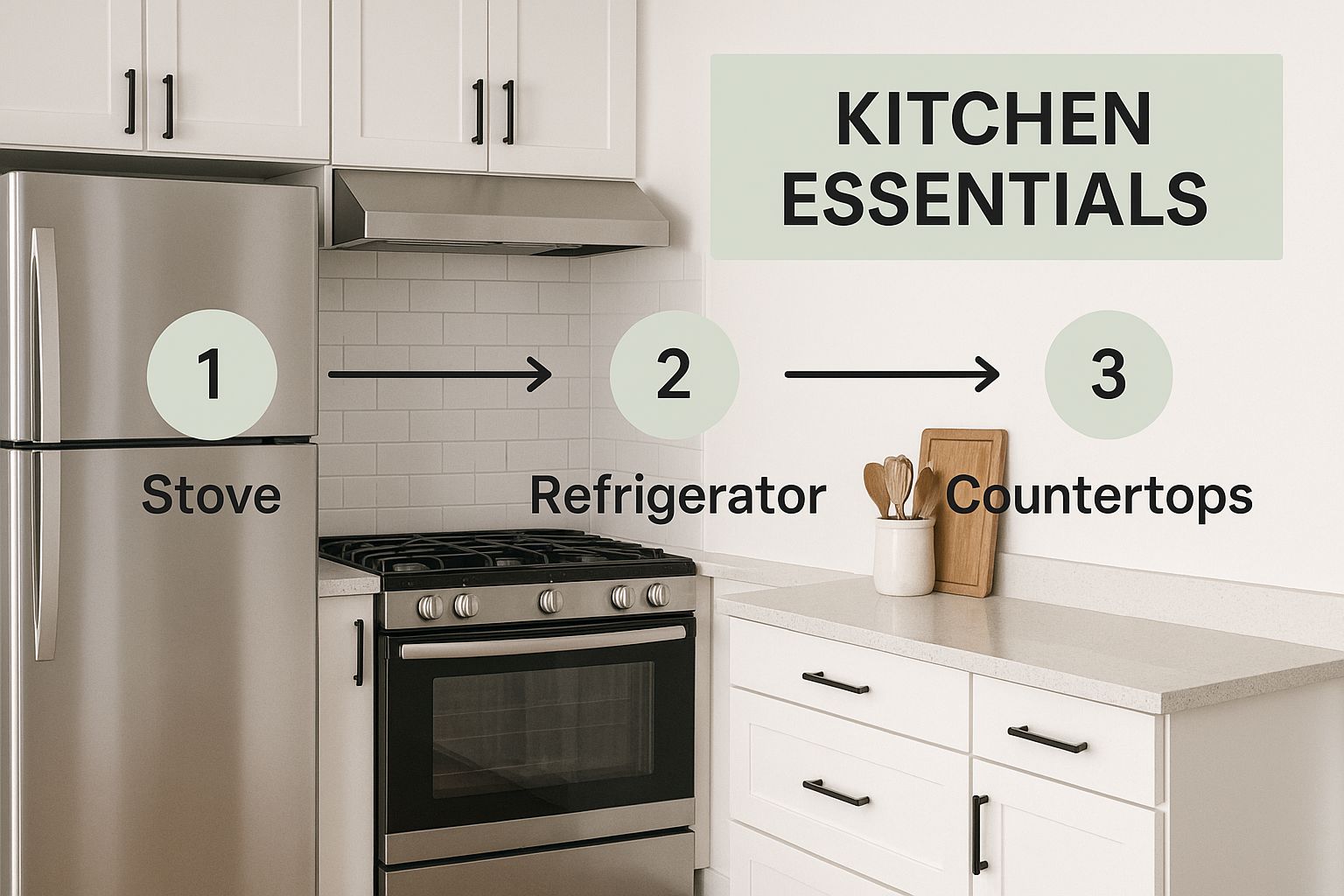
Your Essential Kitchen Checklist
The kitchen is almost always the most appliance-dense room in the house, so it’s the logical place to begin. Getting the kitchen functional from day one makes the entire move feel more settled. There’s nothing quite like being able to make a proper coffee and breakfast on that first morning—it's a small victory that feels huge.
Here’s what to tick off:
- Refrigerator/Freezer: Get your tape measure out and check the cavity dimensions—height, width, and depth. You’ll want to leave at least 5-10cm around the unit for ventilation. Don't forget to check if you need a plumbed-in water line for an ice maker and make sure the power point isn't in an impossible-to-reach spot.
- Oven and Cooktop: Is the connection electric or gas? That’s the first question. If it's gas, you absolutely need a certified gasfitter for the installation. Double-check that the existing cutout in the benchtop actually matches the dimensions of your appliance.
- Dishwasher: Pop your head under the sink and confirm there's a dedicated water inlet and drainage point ready to go. Carefully measure the width of the under-bench space. While the standard is usually 60cm, it pays to be certain.
The Laundry Room Setup
The laundry is so often an afterthought, but it deserves just as much attention as the kitchen. Getting this small but mighty space right from the start means no leaks, less noise, and no nasty mould from poor ventilation. A well-sorted laundry can make that weekly chore feel a whole lot less like, well, a chore.
When setting up your laundry, focus on these points:
- Washing Machine: First, check for both hot and cold water taps. Note where they are—will your machine's hoses reach without being stretched taut? And is the drainpipe secure? A loose drainpipe is a flood waiting to happen.
- Dryer: Are you going with a vented, condenser, or heat pump model? This decision matters. A vented dryer needs a clear path for external ventilation to get rid of moisture and lint, which can be a serious fire hazard. For condenser and heat pump models, you just need a standard power point nearby.
I’ve seen it happen countless times: someone assumes all washing machine fittings are universal. A quick tip is to take a photo of the tap fittings in your new laundry. It’s a simple five-second job that can save you a frustrating trip back to the appliance store.
For a really deep dive into picking the perfect machine, our comprehensive washing machine buying guide for NZ has all the details on the different types and features available.
Essential Appliance Checklist by Room
To keep everything organised, a simple checklist can be a lifesaver. This table helps you track what you need for each room, ensuring you've covered all your bases from measurements to utility connections. It's a quick way to see everything at a glance and make sure nothing gets missed in the moving chaos.
| Room | Appliance | Measurement Check (Yes/No) | Utility Connection Type | Notes (e.g., Venting Needed) |
|---|---|---|---|---|
| Kitchen | Fridge/Freezer | Yes | Standard Electric | Check for plumbing if needed |
| Oven/Cooktop | Yes | Electric or Gas | Gas requires a certified fitter | |
| Dishwasher | Yes | Electric, Water Inlet, Drain | ||
| Laundry | Washing Machine | Yes | Electric, Hot/Cold Taps, Drain | |
| Dryer | Yes | Electric | Check for external vent access | |
| Living | Heat Pump | Yes | Specialised Electric | Professional placement needed |
| TV/Sound System | No | Standard Electric | Plan cable management | |
| Office | Computer/Printer | No | Standard Electric | Check fibre/ethernet port location |
This checklist turns abstract plans into concrete actions. As you work through your new home, simply fill it in to ensure you're on track for a seamless appliance setup.
Living Areas and Beyond
Once the kitchen and laundry are sorted, you can turn your attention to the rest of the house. From keeping the place warm in winter to getting your entertainment hub set up, these final checks will make your new house truly feel like a home.
Think about these other spaces:
- Heating and Cooling: If you’re installing a heat pump, an expert will need to assess the best spot for it to ensure optimal airflow. It’s a good idea to note where the power sources are before they arrive.
- Entertainment Systems: Before you start unpacking boxes, have a think about where the TV, sound system, and consoles will live. Count the power points and consider how you’ll manage the cable spaghetti to keep the space looking tidy.
- Home Office: For anyone working from home, this is non-negotiable. Make sure you have enough outlets for your computer, monitor, printer, and anything else you need. It’s also smart to locate the internet connection points (like fibre or ethernet ports) to guarantee a stable signal.
Coordinating Appliance Delivery and Installation
Once you've picked out your new appliances, the next puzzle is getting them from the store into your new home. This part is all about logistics, and a bit of forward-thinking here will save you a world of headaches on moving day. It’s not just about booking a delivery slot; it's about making sure that slot fits perfectly with your moving timeline.
My best advice? Aim to have your appliances delivered a day or two after you get the keys. This gives you a crucial buffer to get in, have a good clean, and prepare the spaces without delivery drivers trying to manoeuvre a giant fridge around your stacks of boxes. A chaotic delivery day is a stressful one for everyone.
Nail Down the Delivery Details
Before you tap your card, make sure you ask the retailer some very specific questions about their delivery service. Trust me, not all "delivery" is created equal, and knowing exactly what you’re paying for can prevent some nasty surprises.
Get clear answers on these key points:
- Unboxing and Rubbish Removal: Will the team actually unbox the appliance? And more importantly, will they take the mountain of cardboard and polystyrene away with them?
- Old Appliance Removal: Do they offer a service to take away your old whiteware? It's often a small add-on fee but is worth every cent for the convenience.
- Access Issues: Be upfront about any challenges. Got a steep driveway, a tight staircase in an apartment building, or tricky parking? Let them know in advance so the delivery crew can come prepared.
A classic mistake is getting caught out by a "free delivery" offer. This often just means a kerbside drop-off, leaving you and a mate to figure out how to get a 100kg fridge-freezer inside. Always, always confirm that the service includes bringing the appliance right into the room where it will live.
Why Professional Installation Is a Must
It can be tempting to save a few dollars and have a go at installing things yourself, but some jobs are strictly for the professionals. For any appliance that involves gas, complex plumbing, or hard-wired electricity, hiring a certified professional isn’t just a recommendation—it’s essential for your safety, your insurance, and your warranty here in New Zealand.
Getting a registered electrician or a certified plumber/gasfitter ensures the work is done safely and is up to NZ building code standards. This not only protects your appliance’s warranty but, more importantly, keeps your family safe from the risk of water damage, gas leaks, or electrical fires. Your appliance retailer can usually recommend trusted local tradespeople they work with regularly.
To make smarter choices when it comes to your whiteware, check out our guide on where you should buy your appliances for more helpful tips.
Safely Powering Up and Testing Your New Home
Okay, the heavy lifting is over and your new appliances are finally in place. Before you start celebrating, there's one last, crucial job: bringing them to life and making sure they actually work properly. It's tempting to just plug everything in and hope for the best, but a few simple checks now can save you a world of pain down the track.
The first 24 hours in a new place are your golden window for this. Before you start filling the fridge or chucking a load of laundry in, you need to give each machine a proper test run. This is your best shot at catching any installation mistakes or out-of-the-box faults while the memory of the delivery crew is still fresh.
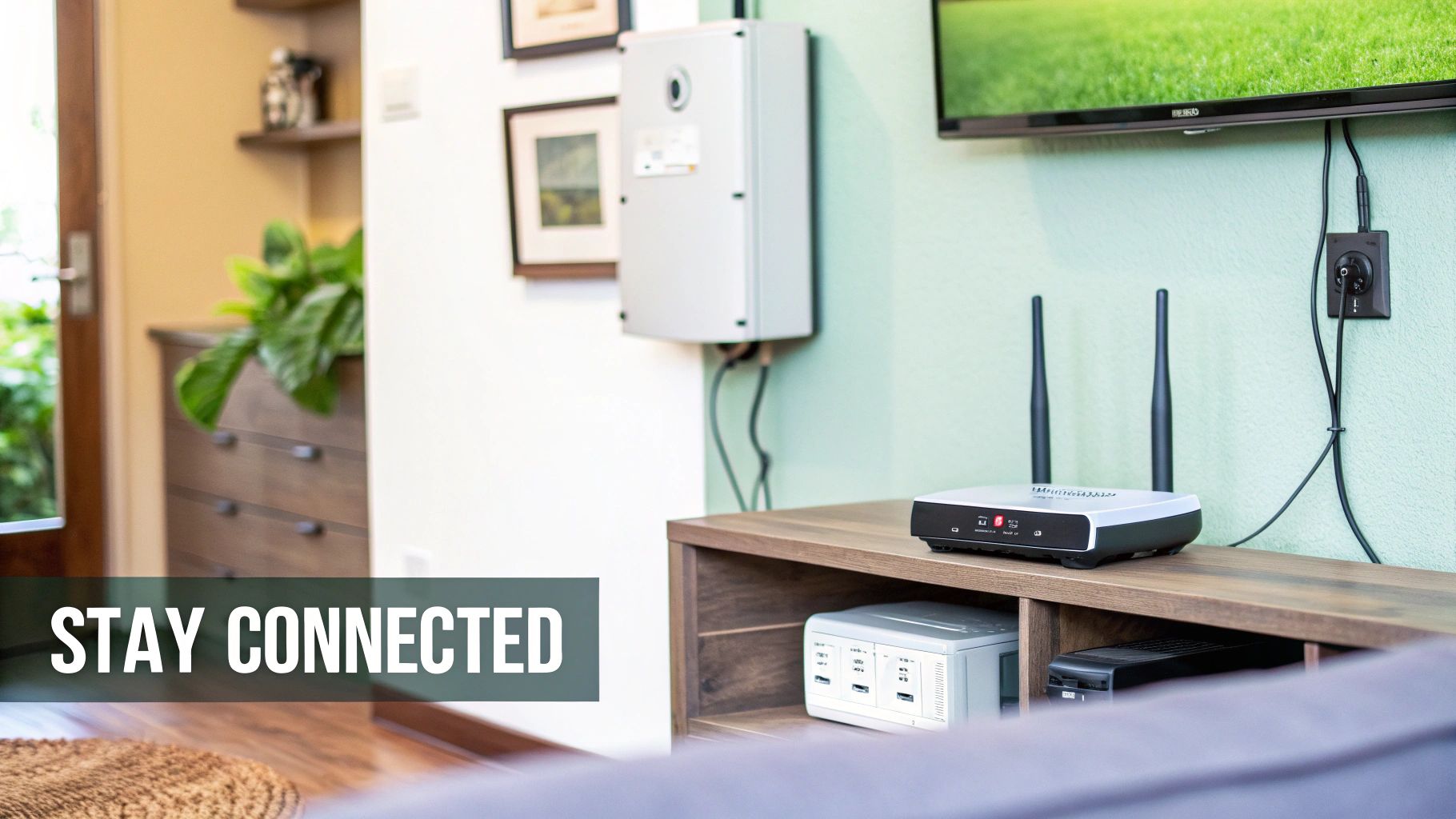
Your Initial Appliance Test Sequence
Don't just run around turning everything on at once. A systematic, one-by-one approach is the way to go. It helps you focus and spot any small detail that might be off.
I always recommend starting with the "wet" appliances first, because a leak is the last thing you want to deal with on move-in day.
- Dishwasher: Set it to a quick, empty rinse cycle. While it's running, get a torch and have a good look under the sink at the water inlet and drain hoses. You’re looking for even the smallest drip.
- Washing Machine: Just like the dishwasher, pop it on a short cycle. Listen out for any strange clunking or grinding noises and watch to see if it’s wobbling wildly during the spin. A little vibration is normal, but it shouldn't be trying to dance across the laundry room.
- Plumbed-in Fridge: If your fridge has a water dispenser or ice maker, run it a few times. Then, carefully check the connection point behind the unit for any dampness.
Once you’re happy there are no leaks, move on to the appliances that heat and cool.
- Fridge and Freezer: Plug them in and let them get down to temperature for a few hours before you put any food inside. You're aiming for around 4°C for the fridge and a frosty -18°C for the freezer. This is also the perfect moment to think about how you'll set it all up. For some great tips, check out our guide on how to organise your fridge.
- Oven and Heat Pump: Just switch them on for a few minutes. You simply want to confirm that the heating elements glow, the fans spin up, and everything sounds as it should.
Smart Connections and Final Safety Checks
Got smart appliances? Now's the time to get them talking to your home Wi-Fi. Download the manufacturer's app and follow the setup instructions. It’s worth testing the remote functions to make sure everything is configured correctly from the start.
Finally, a few last safety checks that are easy to forget in the chaos of moving:
- Clear Airflow: Double-check that dryers and rangehoods have clear, unblocked vents. Proper ventilation is non-negotiable.
- Rock Solid: Give each appliance a gentle but firm push. Does it wobble? It needs to be level and secure on the floor to run safely and quietly.
- Paperwork: Find all the user manuals and warranty cards. Get a folder or a dedicated drawer and put them all in one place. Trust me, you'll thank yourself later if you ever need to find them.
A quick pro tip: don't be too eager to get rid of the packaging. Most retailers will insist on the original box if an appliance is faulty and needs to be returned or swapped in the first few days. Try to hang onto it for at least a week, just in case.
Think Local: Choosing Appliances for Your New Kiwi Home
Moving across New Zealand is more than just a change of scenery; it's often a complete shift in climate. The trusty appliance that served you well in dry, sunny Nelson might struggle in the humid air of the Waikato. Honestly, thinking about your specific region is one of the most overlooked, yet crucial, parts of setting up your new place.
What a Kiwi needs in their home can change dramatically from one town to the next. Let's say you're moving down to chilly Dunedin or Invercargill. A powerful, energy-efficient heat pump isn't just a nice-to-have, it's pretty much essential for surviving those southern winters without a sky-high power bill. But if you’re heading to the subtropical north, a good dehumidifier will be your best friend, helping you fight off dampness and protect your furniture and clothes.
Your New Climate and Lifestyle
The local climate affects way more than just how you heat or cool your house.
In those more humid parts of the country, like Auckland or Northland, a really effective rangehood is a must. It's not just about getting rid of cooking smells; it's about pulling steam and moisture out of your kitchen to stop mould from taking hold. If you're scratching your head about what to look for, our rangehood buying guide for NZ has some great, practical advice.
Something else to consider is the water. Water hardness varies a lot across Aotearoa. If your new home is in a hard water area—common in places like Canterbury and Hawke’s Bay—it can lead to limescale building up inside your dishwasher and washing machine. Over time, this can seriously impact their performance and even shorten their lifespan. It's worth looking into models with built-in water softeners or just being aware of the extra maintenance they might need.
Here's a pro tip from someone who's seen it all: before you move, find a local community Facebook group for your new town. Ask the locals what their must-have appliances are. You'll get the kind of honest, real-world advice that you just can't find on a product spec sheet.
Kiwis Are on the Move
This kind of regional planning for appliances is more important than ever, especially with so many of us moving around. It's staggering, but between 2018 and 2023, around 2.2 million Kiwis moved house within the country. That's nearly 45% of the population!
This massive internal migration includes a significant trend of over 85,000 people heading from the North Island to the South, which really shows how many families are adapting to entirely new environments. You can read more about these moving trends on mpamag.com.
And a final piece of advice: before you get rid of any old whiteware, check the local council rules. How you can dispose of old appliances, and what recycling options are available, can be completely different from one district to another. A quick search on your new council’s website can save you a potential headache and make sure you're doing the right thing.
2. Common Appliance Questions When Moving Home
Even with the most meticulous moving checklist, you're bound to have a few questions pop up. When it comes to getting your appliances sorted in a new place, it's completely normal to hit a couple of snags. Getting a straight answer can be the difference between a tiny hiccup and a full-blown moving day disaster.
Think of this section as your quick-reference guide for those "what do I do now?" moments. I'll run you through some of the most common queries we see from Kiwis setting up their whiteware in a new space.
Can I Install My Own Appliances?
This is the big one, and the honest answer is: it depends.
Plugging in your fridge or hooking up a standard washing machine? You can probably handle that yourself. But as soon as things get more complex, it’s time to call in a professional. In fact, for certain jobs, it's not just a good idea—it's the law here in New Zealand.
- Gas Appliances: If you have a cooktop or heater that connects to a gas line, it must be installed by a licensed gasfitter. No exceptions.
- Hard-Wired Appliances: Ovens, some induction cooktops, and fixed heaters that are wired directly into your home's main electrical circuit require a registered electrician.
- Plumbed-in Fridges: It might seem simple enough to connect a water line for your ice maker, but getting a plumber to do it is smart. They’ll ensure it’s done right, preventing leaks that could potentially void your home insurance.
Trying to DIY these installations isn't just risky; it can invalidate your appliance warranty and create serious safety hazards. It's just not worth the gamble.
A bit of hard-won advice: try to see professional installation not as an extra cost, but as an investment. It’s peace of mind. You’re guaranteeing the job is done right, which protects both your expensive new appliance and your new home.
What If My Appliance Arrives Damaged?
This is a classic moving day worry. The key is to act fast.
Before you even think about signing the delivery docket, get that appliance unboxed. Have a good look over it while the delivery team is still there. If you spot a dent, a big scratch, or anything that doesn’t look right, make a note of it on their delivery form before you sign. Then, get on the phone to the retailer straight away.
Should I Let My Fridge Settle Before Plugging It In?
Yes, one hundred percent. This is a crucial step that people often forget in the rush.
When a fridge is moved, especially if it's been tilted or laid on its side, the oils and coolant in the compressor get sloshed around. They need time to settle back where they belong.
The best practice is to get it standing upright in its final position and leave it for at least four hours before you plug it in and turn it on. Be patient—it’ll protect the motor in the long run.
At Folders, we we have the people that can help you decide the type and need for new appliances as you plan to move. Contact us and we can offer you advice on the many options you could consider. https://folders.co.nz.