

Buy Quality Furniture Online NZ With Confidence
Buying quality furniture online in NZ has gone from being a bit of a gamble to a smart choice for many Kiwis. It’s a process that marries the ease of browsing from your couch with an incredible selection that most physical showrooms just can't match. What once felt like a risky move is now a confident investment for many.
Navigating NZ's Online Furniture Landscape
Let’s be real for a moment. Buying a sofa you've never actually sat on can feel like a massive leap of faith. The idea of clicking 'buy' on a major piece without running a hand over the fabric or giving it a good wobble test is enough to give anyone pause.
And yet, more and more New Zealanders are doing just that, furnishing their homes straight from their laptops. They're drawn in by the very real perks of the digital marketplace.
This isn’t just a passing phase; it’s a genuine shift in how we shop for our homes, and the numbers back it up. The online furniture and homewares market in New Zealand is absolutely booming, pulling in around USD 255 million in revenue in 2024. With experts forecasting up to 15% growth next year, it's obvious Kiwis are getting comfortable with a digital-first approach to decorating.
This growth tells a story: online retailers are getting really good at easing those initial worries, making it simpler than ever to find true quality without leaving the house.
Why More Kiwis Are Clicking 'Add to Cart'
The appeal of buying furniture online goes way beyond just skipping a weekend trip to a crowded retail park (though that is a definite bonus). The real magic is in the details. Online stores completely erase geographical lines, giving someone in Invercargill the exact same access to a boutique Auckland furniture maker as a local.
This opens up some fantastic advantages:
- So Much More Choice: Online shops aren't constrained by four walls. This means you get to explore vast catalogues with far more styles, materials, and unique designs than you could ever hope to see on a single shop floor.
- Sharper Pricing: Without the massive overheads of a physical showroom, online sellers can often offer better prices. Your budget suddenly stretches further, maybe even enough to upgrade to that higher-quality timber or fabric you were eyeing up.
- All the Information You Need: Good retailers provide incredibly detailed product pages, customer reviews, and galleries of high-res photos. All this info is right there, letting you make a considered choice in your own time.
- Finding Those Special Pieces: The internet is a treasure trove for unique furniture. For a sense of the amazing stuff out there, it's well worth exploring luxury homewares, home decor, and furniture brands that you might never find in a local store.
Before we dive deeper, let's quickly stack up the two ways of shopping. It's not about one being definitively 'better'—it's about which one suits your needs for a particular purchase.
Online vs In-Store Furniture Shopping in NZ
| Factor | Online Shopping | In-Store Shopping |
|---|---|---|
| Selection | Virtually limitless, access to national and boutique retailers. | Limited to the physical floor space and stock on hand. |
| Convenience | Shop 24/7 from anywhere. No travel or time pressure. | Ability to see, touch, and test items immediately. |
| Pricing | Often more competitive due to lower overheads. Easy to compare. | Can be higher. Sales may offer good deals but are less frequent. |
| Information | Relies on reviews, photos, and detailed descriptions. | Direct interaction with staff for immediate answers. |
| The "Feel" Test | Cannot physically test comfort or texture before buying. | The biggest advantage—you know exactly what you're getting. |
| Returns | Generally straightforward, but can involve repackaging and hassle. | Often simpler, but policies can be stricter (e.g., store credit). |
Each route has its clear pros and cons. An online store gives you incredible choice and value, while a physical shop offers that crucial hands-on experience. The rest of this guide is about closing that 'feel test' gap.
Overcoming the "Can't Touch It" Hurdle
Of course, the big question remains: how can you possibly judge quality through a screen? That’s exactly what this guide is here to demystify. We’ll teach you how to read between the lines of a product description, what to hunt for in customer photos, and why a retailer’s return policy is your ultimate safety net.
The secret to successful online furniture shopping isn’t about eliminating risk—it’s about knowing how to manage it. A great return policy, a clear warranty, and transparent customer reviews are the three pillars of a trustworthy online retailer.
For example, when you're buying something like a chair or stool, the specifications are everything. If you're in the market for seating, our guide on how to choose the right style, height, and material for bar stools offers practical advice you can apply to almost any online furniture hunt.
By arming yourself with the right knowledge, you can transform that feeling of uncertainty into a confident, well-informed decision.
How to Judge Materials Without Seeing Them
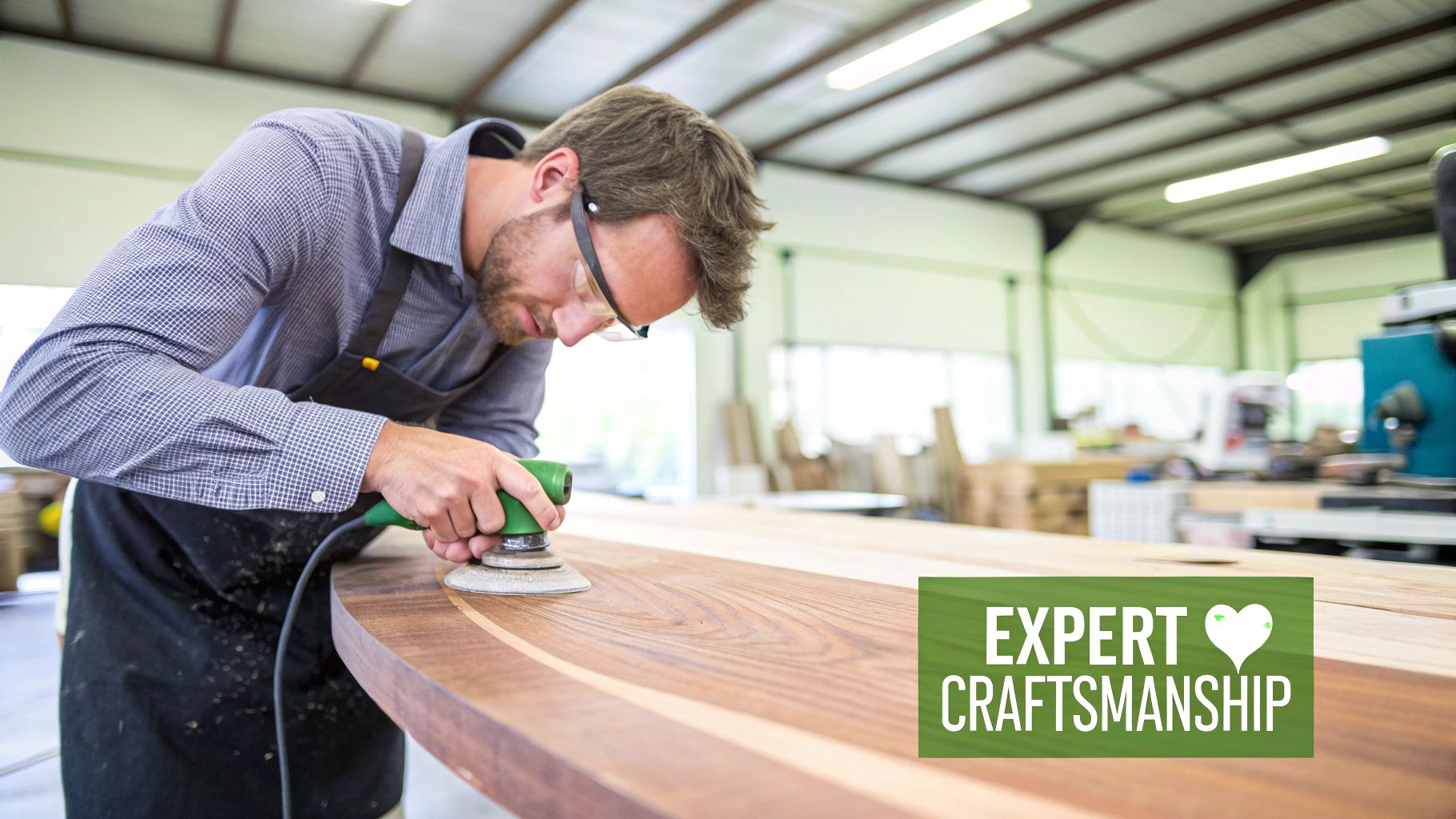
This is probably the biggest hurdle when you buy quality furniture online in NZ. How can you possibly tell if that 'solid wood' table is genuinely durable rimu or just cheap pine with a fancy stain? It might feel like you need a superpower to judge materials through a screen, but it’s a skill anyone can learn.
It really comes down to becoming a bit of a detective. You need to know the language retailers use, scrutinise the photos they provide, and not be afraid to ask questions. The product description is your first set of clues.
Decoding Wood and Timber Descriptions
Let's be honest, not all wood is created equal. Retailers use specific terms to describe what they're selling, and some of these can be a bit misleading. Understanding the difference between a quality indicator and a red flag is essential for making a smart investment.
- Solid Wood: This is the gold standard. It means the piece is made from whole cuts of timber—no veneers, no particleboard core. It’s durable, can be sanded back and refinished if it gets damaged, and has a genuine, natural beauty. For a local touch, keep an eye out for New Zealand timbers like rimu, kauri, or mataī.
- Engineered Wood (MDF/Particleboard): This is essentially wood fibres or particles bonded together with adhesive. It’s much more affordable, but the trade-off is durability. It's prone to water damage and can't be properly refinished. You’ll often find it used for the backs of bookcases or the bottoms of drawers.
- Veneer: This is a thin layer of real wood glued to a core of something cheaper, like MDF or particleboard. It gives you the look of solid wood for less, but you need to be wary of chipping or peeling over time. A good quality veneer can look great, but always check what the core material is.
- Kiln-Dried: Seeing this term is a massive green flag. It means the timber has been dried in a controlled environment to get the moisture content just right. This process is crucial because it prevents warping, splitting, and cracking as the furniture adjusts to the humidity in your home.
A pro tip is to always look for the type of joinery mentioned. Phrases like "dovetail joints" or "mortise and tenon" signal excellent craftsmanship. Furniture held together with just glue and screws simply won't last as long. This detail is often what separates a piece that lasts a lifetime from one that falls apart in a couple of years.
Assessing Upholstery and Fabrics Virtually
Judging fabric online is tricky, but it’s definitely not impossible. The key is to hunt for detailed specifications and use the zoom function on high-resolution images like your life depends on it.
A good retailer’s description should give you a "rub count" or Martindale test number. For something like a family sofa that gets used every day, you’ll want a count of at least 20,000 rubs. Anything less is better suited for decorative pieces, like an occasional chair in the corner of a bedroom.
When it comes to leather, the terminology is everything:
| Leather Type | Description | Durability |
|---|---|---|
| Full-Grain | The absolute best quality. It uses the entire hide, so you see all the natural markings and character. | Extremely durable and develops a beautiful, rich patina over time. |
| Top-Grain | The second-best. The surface has been sanded a little to remove imperfections for a more uniform look. | Very durable, just without the unique character of full-grain. |
| Bonded Leather | Essentially leftover leather scraps bonded together with polyurethane. | Low durability. It's notorious for peeling and cracking quickly. |
It's also worth thinking about the health implications of the materials in your home. This guide on the potential endocrine disruptors in living room furniture is a great read for making healthier choices.
Using Visuals to Your Advantage
High-resolution photos are your best friend here. Learn to ignore the perfectly styled lifestyle shots and go straight for the close-ups that show the product from every angle.
- Examine the Grain: With solid wood, the grain pattern should flow naturally and be a bit inconsistent. If you see a pattern that repeats perfectly, that’s a dead giveaway for a veneer or a laminate finish.
- Check the Seams: For sofas and chairs, zoom right in on the stitching. It should be tight, straight, and even. Any puckering or loose threads are clear signs of poor workmanship.
- Look for Detail Shots: A seller who is confident in their product will provide close-ups of the joints, the hardware, and the texture of the fabric. If these detailed photos are missing, it can be a bit of a red flag.
This same mindset of looking for markers of quality applies to other things you buy for your home. For example, our guide on buying Global knives in NZ talks about how small details in the steel and handle make a huge difference—much like joinery does in furniture. It’s all about training your eye to spot true craftsmanship.
Vetting Retailers and Trusting Reviews
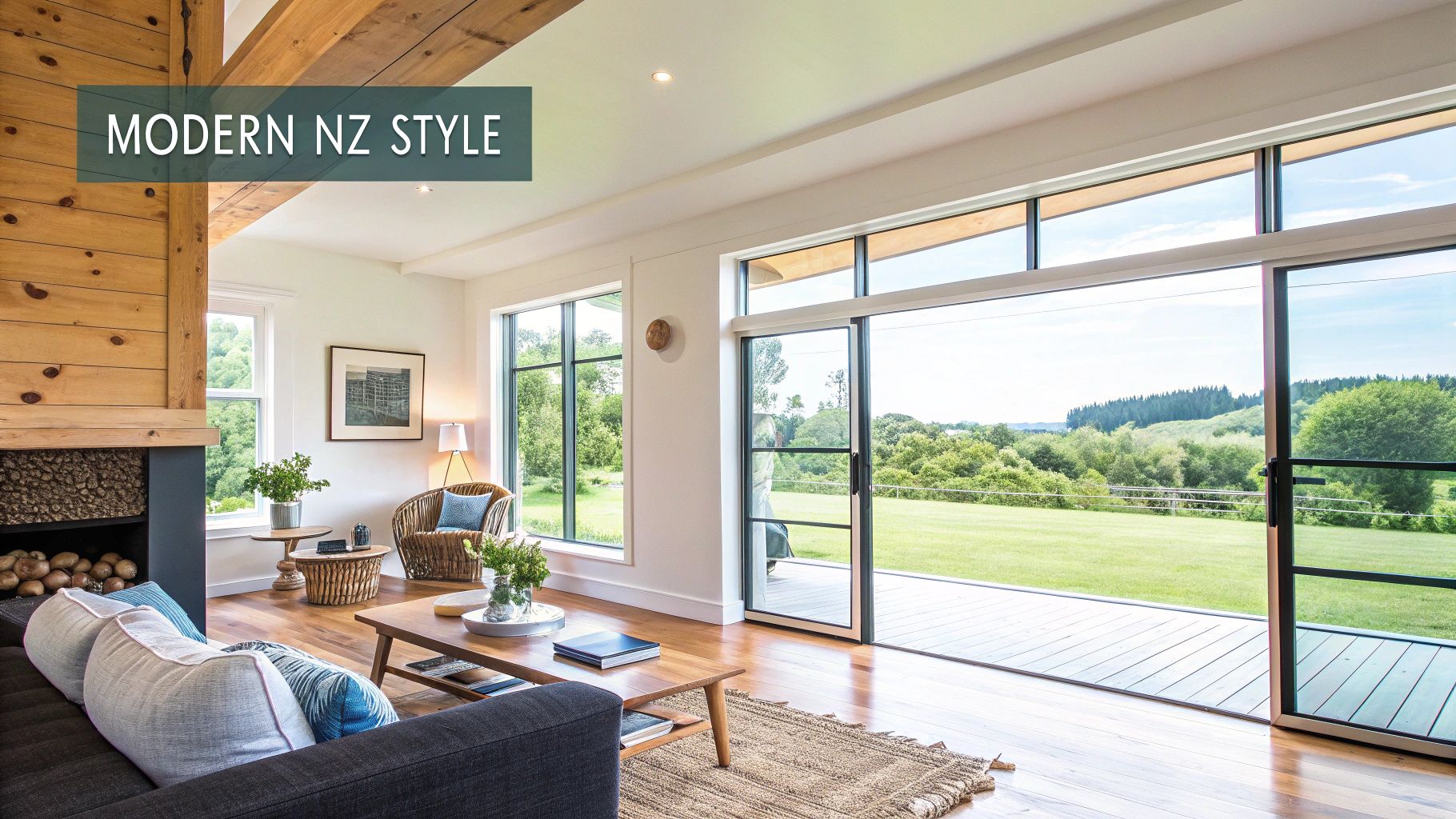
So, you’ve found a piece of furniture that looks perfect. Great! But hold off on hitting that "buy" button just yet. Finding the right item is only half the battle; the other half is making sure you’re buying from a retailer you can actually trust. A stunning website is one thing, but what really matters is the experience after you’ve paid.
This is where you need to put on your detective hat. When you’re looking for quality furniture online in NZ, you’ve got to dig deeper than the glossy photos and clever marketing. It's about checking out their reputation, understanding their policies, and seeing what real customers have to say. A little bit of homework now can save you a world of frustration later.
The New Zealand furniture market is a surprisingly busy place. Valued at roughly NZD 1.5 billion in 2024, it’s made up of around 730 different businesses. The interesting part? No single company dominates the scene. This opens the door for smaller, online-first retailers to offer unique, quality pieces and stand out with exceptional service. All this choice is fantastic for you, but it also means you need to be savvy about who you're giving your money to. You can see more data on the NZ furniture retailing market size on ibisworld.com.
Looking Beyond the Star Rating
Customer reviews are your best friend here, but you need to know how to read them. A simple five-star average just doesn't paint the full picture. The real insights are buried in the comments—the nitty-gritty details of what made someone happy or, more tellingly, what went wrong.
Don't just skim the ratings; look for patterns. Are multiple people flagging the same problem, like frustrating delivery delays or colours that don't match the website photos? On the flip side, do lots of positive reviews mention how solid the construction feels or how helpful the customer service team was? That’s the information you’re really after.
A quick tip from experience: be a little sceptical of reviews that are super vague ("Great!") or sound like an ad. The most trustworthy reviews are usually the balanced ones that give specifics, often pointing out both a pro and a con.
Spotting Genuine Feedback From Fakes
It's a frustrating reality, but not all online reviews are legitimate. Some are fake, designed to artificially boost a product or even sink a competitor. Here are a few tricks to help you separate the genuine feedback from the fluff:
- Check Independent Platforms: Don't just rely on the reviews posted on the retailer’s own website. Head over to Google Reviews, Trustpilot, or even social media pages where it’s much harder for a company to filter out the bad comments.
- Analyse the Language: Real customers talk like real people. They’ll mention specifics, like, "The oak finish was a bit darker than I expected, but the dovetail joints are really well made." Fake reviews tend to be generic and stuffed with buzzwords.
- Look at the Timing: Did a product suddenly get 50 five-star reviews in two days? That’s a bit of a red flag. Genuine customer feedback usually trickles in over weeks and months.
This same critical thinking applies to any major purchase for your home. You can use a similar approach with these helpful tips you need to know when buying appliances.
Your Safety Net: A Solid Return Policy and Warranty
Even after all your research, sometimes a piece of furniture just doesn't feel right in your room once it arrives. This is precisely why a retailer's return policy is so incredibly important—it’s your safety net. Before a piece even makes it into your online cart, you should know their policy backwards and forwards.
Hunt for a policy that is clear and fair. How long do you have to decide? Who foots the bill for return shipping—which can be a hefty cost for a sofa or dining table? Are there any sneaky "restocking fees"? A retailer who is confident in their products will have a transparent, customer-friendly return process.
The warranty is just as crucial. A good warranty is a direct signal of the manufacturer's confidence in their product's durability. Check the specifics: what parts are covered (frame, fabric, mechanisms) and for how long? A one-year warranty is pretty standard, but top-tier pieces often come with much longer guarantees on things like the frame. Think of it as the company's promise of quality, in writing.
Mastering Delivery and Assembly Logistics
You’ve found the perfect piece and hit 'buy'—fantastic! But the journey isn't quite over. The final, crucial step is getting that beautiful new furniture safely into your home. It’s easy to treat delivery and assembly as an afterthought, but a little bit of planning here makes a world of difference. This is the last mile in your quest to buy quality furniture online in NZ, and it really pays to get it right.
First things first, you need to understand the delivery options on the table. Retailers here in New Zealand usually offer a few different levels of service, and the one you pick will impact both the cost and your own effort.
Decoding Your Delivery Options
When you get to the checkout, you'll likely see terms like 'kerbside' or 'in-home' delivery. Trust me, these are not interchangeable. Picking the wrong one can leave you with some seriously heavy lifting you weren't prepared for.
- Kerbside Delivery: This is your basic, most budget-friendly option. The delivery crew will drop the packaged furniture at the nearest accessible point to your property—usually the pavement or the end of your driveway. From there, it's all on you to get it inside.
- Threshold Delivery: This is a good middle-ground. The team will bring the item to your front door or pop it just inside your garage. They won’t take it any further, so you’ll still need to handle the unboxing and moving it into the right room.
- In-Home or White Glove Delivery: This is the premium, totally hassle-free service. The team carries the furniture right into the room of your choice, unboxes it, does the assembly, and even takes away all the rubbish. It costs more, but for big, heavy, or complicated pieces, it's often worth every cent.
When you're still in the process of choosing a retailer, it helps to have a clear game plan. This diagram shows a simple, effective workflow for checking out online stores and making sure they're the real deal.
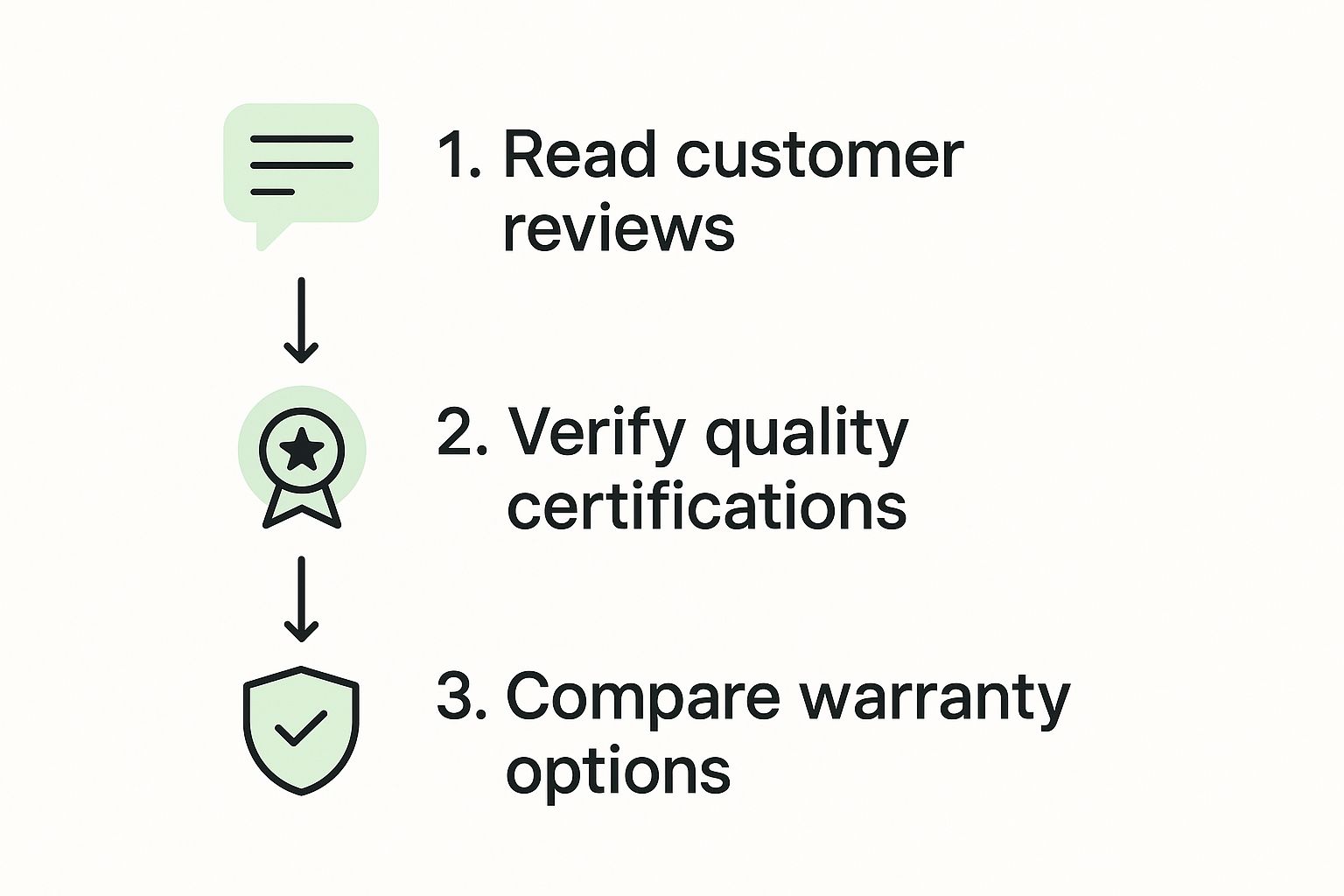
As you can see, checking reviews, verifying quality, and understanding warranties are all sequential steps that build your confidence before you commit to a purchase.
The Arrival Checklist: What to Do on Delivery Day
The moment your new furniture arrives is crunch time. Before you eagerly sign the driver’s paperwork, you absolutely must do a quick but thorough inspection. Once you’ve signed that docket, it becomes much, much harder to claim for any damage that might have happened on the journey to your door.
Always inspect the packaging before the delivery driver leaves. If you spot any major tears, dents, or crushed corners on the box, make a note of it on the delivery receipt before you sign. Better yet, whip out your phone and take a quick photo as evidence.
If you can, try to open the box while the driver is still there to check the item itself. If you spot a scratch, a dent, or a crack, you have every right to refuse the delivery. It’s the cleanest and fastest way to resolve a damage issue right then and there. For more peace of mind, checking out expert tips for safe furniture delivery can give you valuable insight into what to look for.
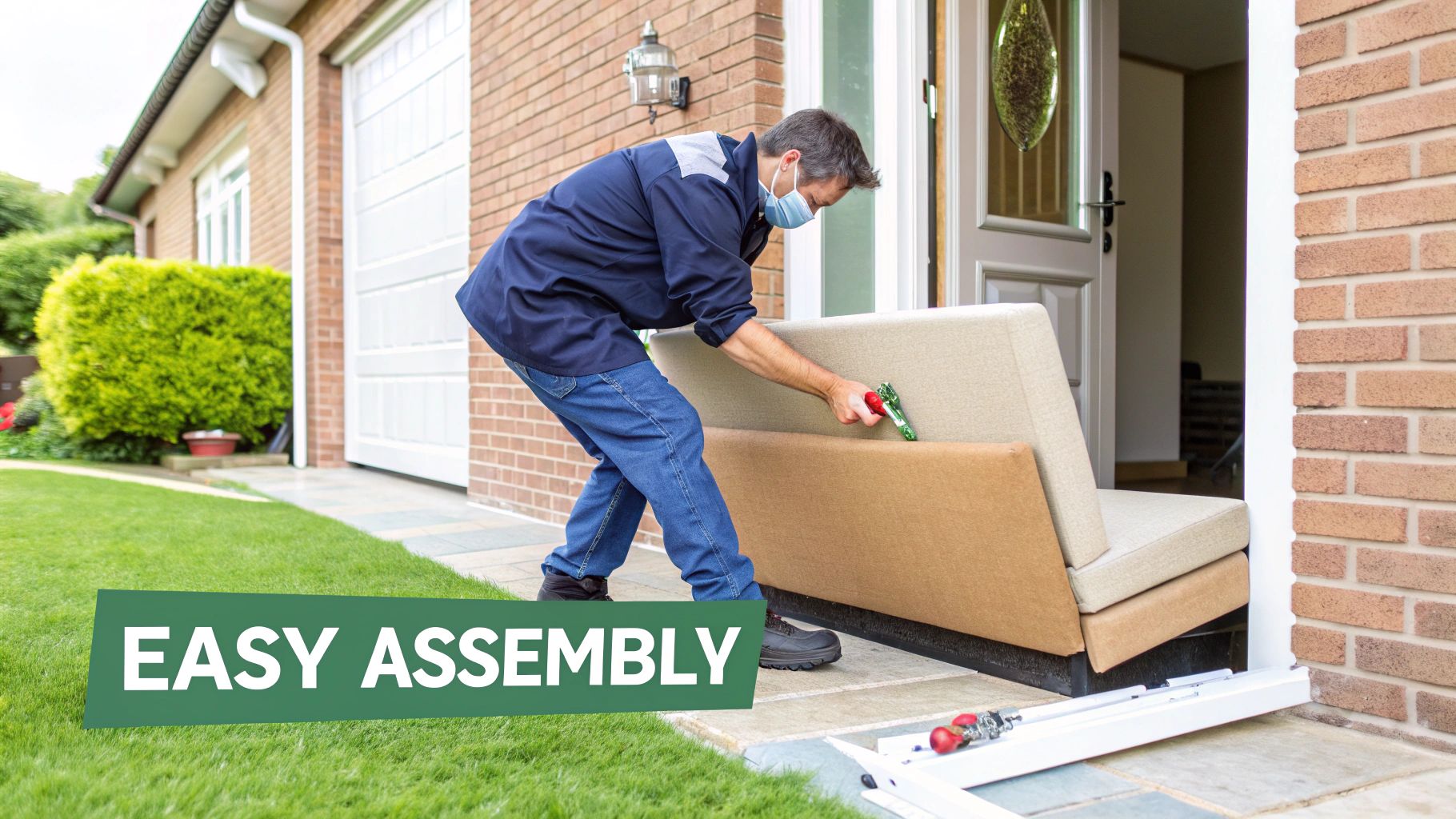
Tackling Assembly Like a Pro
Right, so if you opted out of the white glove service, assembly is your final hurdle. Some pieces arrive ready to go, while others can feel like you're building a complex puzzle.
First, take a deep breath and lay everything out. I always find it helps to organise all the screws, bolts, and bits into little piles—it makes a huge difference and stops that feeling of being overwhelmed.
Most flat-pack furniture comes with a tiny Allen key, but your life will be infinitely easier with a few of your own tools. A good Phillips head screwdriver and a cordless drill with the right bits can turn a two-hour job into a 30-minute one.
Sometimes, though, it’s just smarter to call in a professional. If the instructions look like they're written in a foreign language or you’re dealing with a particularly large piece, hiring a local handyperson can save you time, stress, and potential damage to your new investment. It's a small extra cost for guaranteed peace of mind. And while you're tackling home projects, you might also find our guide on common dishwasher problems and how to fix them a handy resource.
Finding Genuine Value and Budgeting Smart
It’s tempting to think that a bigger price tag means better furniture, but that’s a trap many of us fall into. True value isn’t about spending the most; it's about being a smart shopper and investing in pieces that will actually last, rather than just paying a premium for a trendy brand name.
The real game-changer is shifting your mindset from "how much is it?" to "what am I truly getting for my money?". A cheap, flat-pack bookshelf that starts to sag within a year isn’t a good deal—it’s just a future trip to the dump. On the other hand, a solid timber piece that costs more upfront but looks just as good in ten years' time is where the real savings are found.
Setting a Realistic Furniture Budget
Before you lose yourself in a sea of online catalogues, take a moment to set a realistic budget. This isn’t just about plucking a number out of thin air. It’s about figuring out what you can genuinely afford and what you expect that money to get you in terms of materials, craftsmanship, and durability.
Think of it like buying any other major item for your home. As we explain in our fridge buying guide for NZ, understanding the link between price and long-term performance is what leads to a purchase you'll be happy with for years. A quality sofa, just like a reliable appliance, is an investment in your home.
True value is found in the intersection of price, materials, and craftsmanship. A piece that costs 20% more but lasts three times as long is always the smarter financial decision.
Recognising Quality Beyond the Price Tag
So, how do you spot quality when you can't touch or test the furniture yourself? The devil is in the details—specifically, the product description. You need to look past the professionally styled photos and get to the heart of how the piece is made.
-
Materials Matter: Is that dining table made from solid rimu, or is it just MDF with a thin veneer that will chip easily? For a sofa, are you looking at a durable, high-rub-count fabric or bonded leather that’s notorious for peeling after a year or two?
-
Construction Is Key: Hunt for phrases that signal quality craftsmanship, like "dovetail joints" or "mortise and tenon". These traditional techniques mean a piece is built to withstand daily life, unlike furniture that's simply held together with glue and staples.
-
The Weight Clue: It’s a simple but effective tip. Heavier furniture often means it's made from denser, more robust materials like solid wood and steel, as opposed to flimsy particleboard and plastic.
Timing Your Purchase to Maximise Savings
A little patience can go a long way and save you a lot of money. Most Kiwi furniture retailers, both online and in-store, run sales at predictable times of the year. Buying strategically means you can often afford a much higher quality piece without blowing your budget.
Keep your eyes peeled for the big sales events—think Boxing Day, Queen's Birthday, and Black Friday. These are prime opportunities to snag significant discounts on big-ticket items.
Another clever move is to sign up for newsletters from the retailers you're interested in. You’ll get a heads-up on upcoming sales, access to exclusive discount codes, and alerts for clearance stock where you can find ex-display or last-season models for a steal. It's an easy way to have the deals come directly to you.
It's also worth remembering that the furniture market is always changing. The big shift to online shopping has meant more competition and choice for Kiwis. There's a growing demand for sustainable, well-made pieces that fit our love for modern, minimalist design. You can discover more insights about the online furniture market on straitsresearch.com to get a better sense of how these trends can create new opportunities for savvy buyers like you.
Got a Few Last-Minute Questions?
It's completely normal to have a few final questions buzzing around your head before you hit "buy." Even after hours of research, those last-minute "what ifs" can creep in. So, let's tackle some of the most common queries we hear from Kiwis buying furniture online.
Think of this as your final check-in. We'll cover the practical details that can make all the difference, making sure there are no surprises when that new piece arrives at your door.
How Do I Pick the Right Size Coffee Table for My Couch?
This is a classic for a reason. Get the scale right, and your living room feels complete. Get it wrong, and the whole space can feel... off. A coffee table that’s too big will dominate the room, while one that's too small just looks a bit lost.
Luckily, there’s a simple rule of thumb that designers swear by.
Your coffee table should be at least half, but no more than two-thirds, the length of your sofa. This simple guideline helps create a really pleasing, balanced look that just feels right.
When it comes to height, try to match it to the height of your sofa's seat cushions. A little lower is perfectly fine, but you want to avoid going more than a few inches higher or lower. This keeps everything looking streamlined and makes it a comfortable height to pop your drink or a book on.
A quick tip from experience: think about your sofa's shape. A classic long sofa pairs beautifully with a rectangular or oval table. But if you have a big sectional or L-shaped couch, a square or round table often fits much more naturally into the corner nook.
What's the Real Difference Between a Warranty and a Return Policy?
It’s so easy to get these two mixed up, but they’re your two key safety nets, and they do very different jobs.
Think of a return policy as your short-term "change of mind" cover. It’s for when the piece arrives and, for whatever reason, it’s just not right. Maybe the colour looks different in your home's light, or it doesn't quite fit the space like you'd imagined. This policy gives you a set window—usually 7 to 30 days—to send it back for a refund or credit. Just be aware you might have to cover the return shipping costs.
A warranty, on the other hand, is a long-term promise from the manufacturer. It’s all about the quality and craftsmanship. It covers things that shouldn't go wrong, like manufacturing defects. This could be anything from a faulty joint to a mechanism that breaks down the line. Warranties vary hugely, from one year on fabric to ten years or even a lifetime guarantee on a sofa frame.
Before you commit, make sure you're crystal clear on both:
- How long you have to make a return and what the process is.
- What the warranty covers and for how many years.
Can I Get a Fabric Swatch Before I Buy?
Yes, and you absolutely should! I can't stress this enough. What you see on your screen is almost never a perfect match for the real thing. Your monitor's calibration, the time of day, even the lightbulbs in your room can completely change how a colour looks.
A physical fabric swatch is the only way to be 100% certain of the colour and texture.
Most good online furniture stores here in New Zealand are happy to send you samples, often for free. It’s a game-changer. You can hold the fabric up against your walls, see how it looks next to your curtains, and check it in the morning light versus the evening. It’s a tiny step that removes all the guesswork and prevents that sinking feeling of unboxing something that just doesn't work. Don't ever feel shy about asking for one.
At Folders, we're passionate about helping Kiwis create homes they love with furniture that’s made to last. Our collection brings together timeless style, solid construction, and real value, all backed by our friendly local service. Find that perfect piece for your space and enjoy the confidence that comes with shopping with a trusted NZ-owned retailer.
Discover our range of quality furniture today at https://folders.co.nz