

7 Smart Small Bedroom Layout Ideas for 2025
Feeling closed in by your bedroom walls? You're not alone. Many Kiwis face the challenge of making a small bedroom feel both functional and serene. The good news is that a small footprint doesn't have to mean sacrificing style or comfort. The key lies in strategic planning and clever design. This guide moves beyond generic advice to offer concrete, actionable small bedroom layout ideas, complete with floor-plan concepts and practical styling tips.
We'll explore how innovative furniture and smart placement can completely transform your room. From versatile daybeds to ingenious vertical storage walls, each layout is designed to maximise every square centimetre. To truly reclaim your space and enhance the ambiance, exploring inspirational bedroom skylight ideas can also profoundly transform the feel of your small room by flooding it with natural light. Get ready to unlock your bedroom's true potential, creating a personal sanctuary that feels surprisingly spacious and perfectly organised. We will delve into specific, actionable plans that you can implement right away, turning a cramped room into a restful and efficient retreat.
1. The Transformer: Murphy Bed Layout
For those dealing with truly limited space, the Murphy bed layout isn't just an idea; it's a revolutionary approach to maximising every square metre. Popularised by the urban micro-living movement and perfected by modern furniture designers, this layout centres around a bed that folds vertically into a wall cabinet when not in use. This one piece of furniture can instantly transform a sleeping area into a functional home office, creative studio, or spacious living room.
This design is the ultimate solution for studio apartments, guest rooms that need to serve double duty, or any small bedroom where floor space is a premium commodity. By reclaiming the area typically occupied by a static bed, you unlock new possibilities for your home’s functionality during the daytime.
How to Implement This Layout
The key to a successful Murphy bed layout is integrated planning. The bed unit itself becomes the room's focal point, so complementary furniture should be chosen to work with it, not against it.
- Anchor with the Bed: Position the Murphy bed unit against the largest, most structurally sound wall. This wall needs to support a significant amount of weight, so a professional assessment is crucial.
- Create a "Day Zone": In the space cleared by the folded bed, place a slim-profile desk, a small sofa, or modular shelving units. Brands like Resource Furniture offer systems where a desk or sofa is integrated into the Murphy bed mechanism, creating a seamless transition.
- Plan Your Peripherals: Before installation, map out where you'll need power points for lamps, device chargers, and computers. Many modern Murphy beds, like those from California Closets, can be customised with built-in lighting and charging ports for a high-end, hotel-like feel.
Key Insight: The most effective Murphy bed layouts are those that appear intentional. Aim for a cohesive look by selecting a bed system and accompanying furniture with matching finishes and styles. This prevents the room from feeling like a collection of separate, disconnected pieces.
For a clearer understanding of the space-saving power of this layout, the infographic below summarises its key benefits.
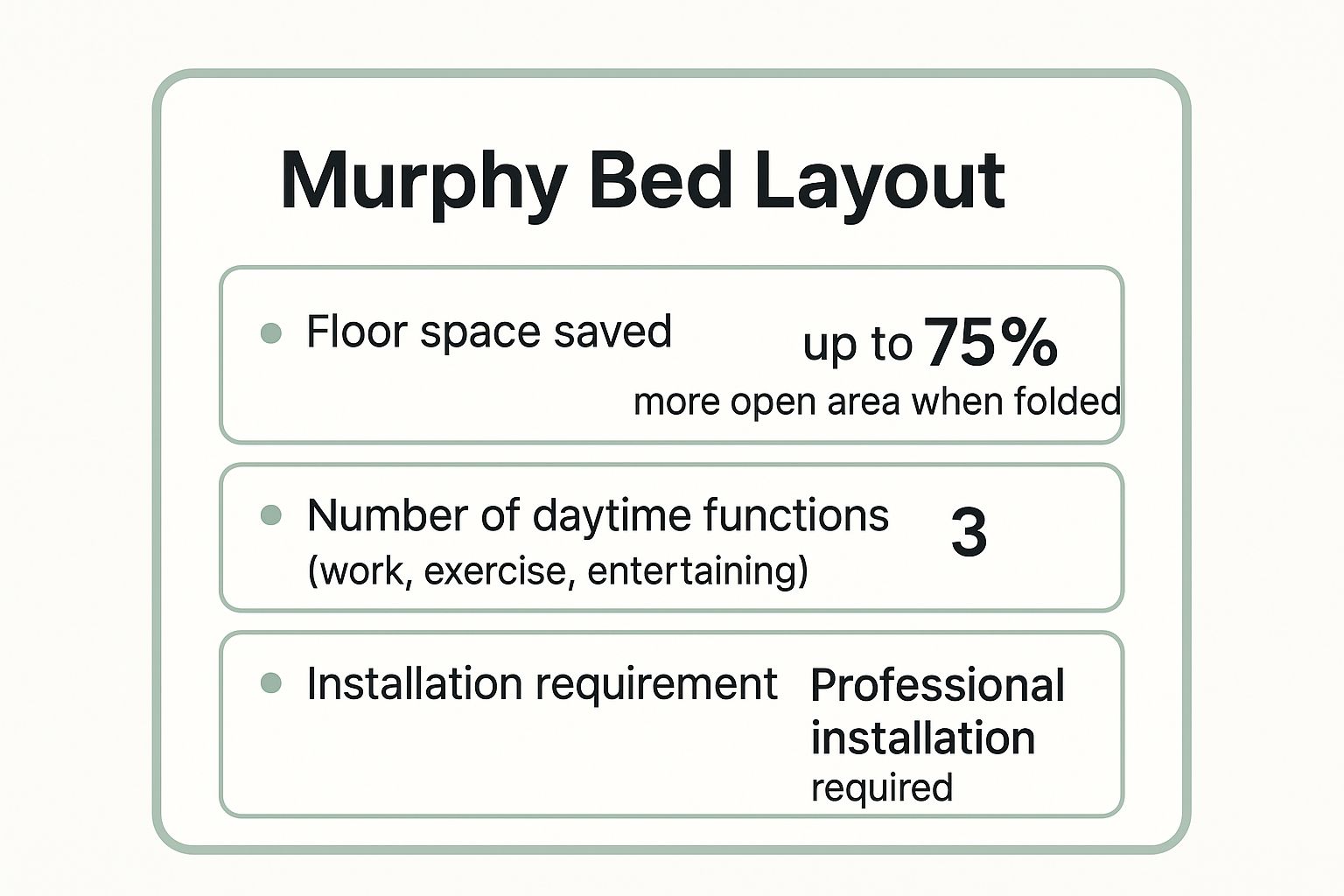
The data clearly shows how this layout dramatically increases usable floor space, making it a powerful choice for multi-functional living.
See how a modern Murphy bed effortlessly transforms a room in the video below.
2. The Vertical Maximiser: Loft Bed Layout
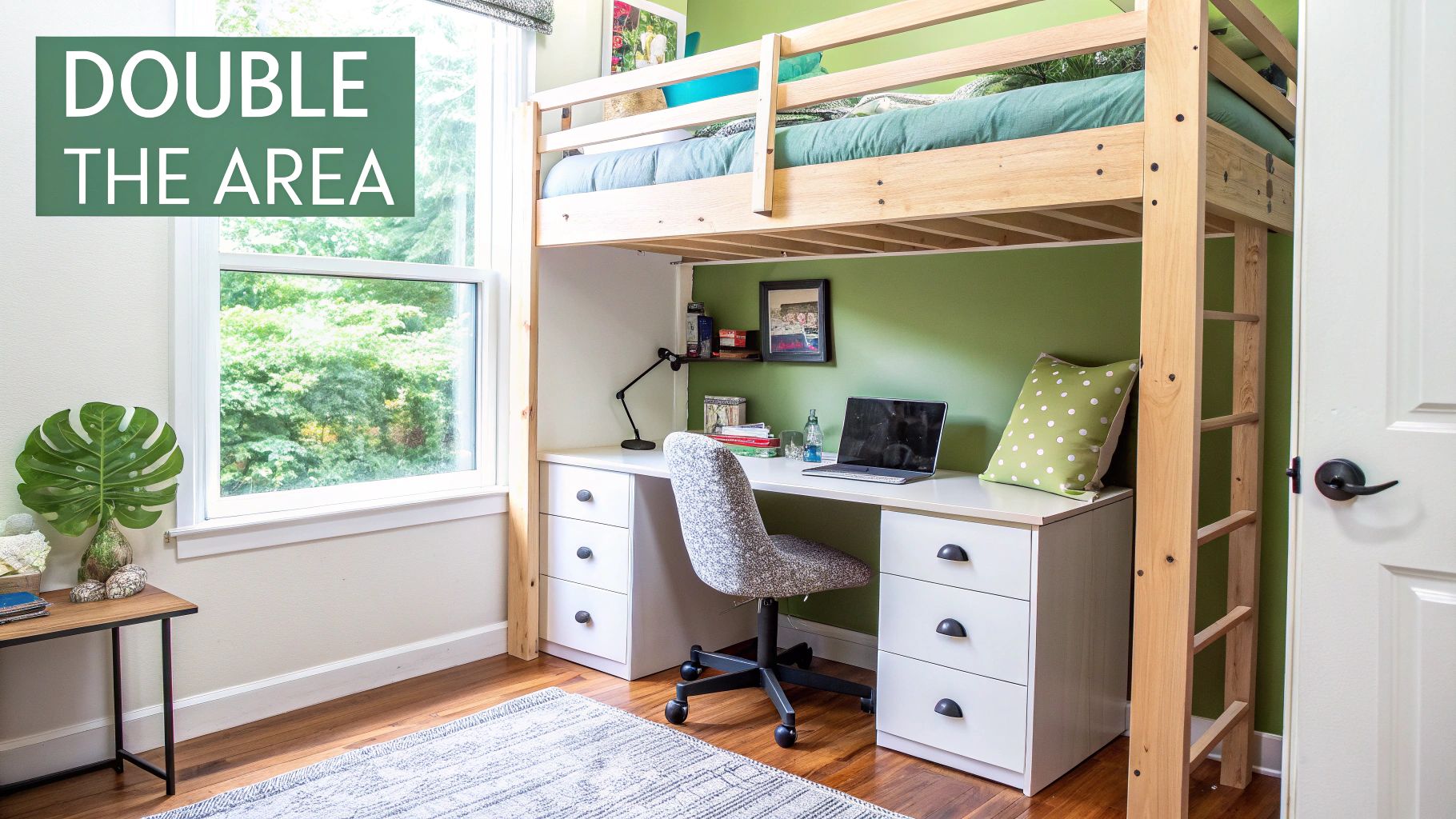
When floor space is the problem, the solution is to go vertical. The loft bed layout is a classic and highly effective strategy for optimising a small bedroom by elevating the bed on a sturdy frame. This frees up the entire footprint of the bed below, creating a new, highly functional zone for a desk, a cosy seating nook, a walk-in wardrobe, or much-needed storage.
This approach is a game-changer for rooms with higher ceilings, transforming them from cramped quarters into multi-purpose living spaces. Popularised by Scandinavian furniture designers and a staple in university dormitories, the loft bed layout is one of the smartest small bedroom layout ideas for children, teenagers, and adults living in compact urban apartments.
How to Implement This Layout
Success with a loft bed layout hinges on thoughtful integration and prioritising safety. The space created underneath must be practical and well-lit to feel like a deliberate and inviting part of the room.
- Measure for Headroom: Before committing, ensure you have adequate ceiling height. You need at least 75-90 cm of space between the top of the mattress and the ceiling to sit up comfortably without hitting your head.
- Define the "Ground Zone": Decide the primary function of the area below the bed. If it's a study area, select a desk that fits neatly within the frame's dimensions. For a relaxation zone, a small armchair, a beanbag, or a compact futon can create a space reminiscent of a mini living room. Explore our guide on small living room layouts for more inspiration on creating a functional seating area.
- Integrate Lighting and Safety: The area under the loft can be dark, so plan for dedicated lighting. LED strip lights attached to the underside of the bed frame are a sleek and effective solution. Crucially, ensure the loft bed has a secure ladder and robust safety railings to prevent falls.
Key Insight: Treat the lofted bed and the space below as two distinct but connected "micro-rooms." Define each area with its own function, lighting, and accessories, but use a consistent colour palette and style to ensure the entire room feels cohesive and thoughtfully designed.
3. Platform Bed with Storage Layout
Blending sleek, modern aesthetics with powerful functionality, the platform bed with storage layout is a game-changer for compact bedrooms. This design features a low-profile bed frame that sits on a raised base, which ingeniously incorporates built-in drawers, cubbies, or even a hydraulic lift mechanism to reveal a large storage cavity underneath. It's a minimalist solution that declutters by design.
This layout is ideal for those who want to eliminate the need for a bulky, separate dresser or chest of drawers, freeing up valuable floor space for a clearer, more open feel. Inspired by the efficiency of Japanese interior design and the clean lines of Scandinavian minimalism, it's one of the most effective small bedroom layout ideas for maintaining a tidy, organised, and serene environment.
How to Implement This Layout
Success with this layout lies in choosing a bed that maximises storage without overwhelming the room's proportions. The bed becomes both a relaxation zone and a primary storage hub.
- Choose Your Storage Style: Decide between platform beds with pull-out drawers, open shelving, or a hydraulic lift system. Drawers are great for frequently accessed items, while a lift-up base is perfect for stowing away seasonal bedding, luggage, or bulky items. Brands like West Elm and MUJI offer excellent ready-made options.
- Organise Strategically: Maximise the integrated storage by using drawer dividers and vacuum-sealed bags. Store everyday essentials in the most accessible drawers and less-used items deeper within the base. This keeps your room functional and clutter-free.
- Enhance with Lighting: Add a touch of sophistication by installing LED strip lighting under the edge of the platform. This creates a soft, ambient glow that makes the bed appear to float, enhancing the sense of space and adding a high-end, modern feel.
- Coordinate Bedside Furniture: Since the platform bed is low-profile, pair it with equally sleek bedside tables. A lower, simpler design will complement the bed's aesthetic without creating visual clutter. For more tips on selecting the right furniture, you can explore options for a modern bedside table in NZ.
Key Insight: The true advantage of a platform storage bed is its ability to centralise storage. By consolidating your belongings within the bed's footprint, you reclaim wall and floor space, allowing for a more minimalist and intentional room design.
4. The Cosy Corner: Corner Bed Layout
Embracing the corner bed layout is a strategic move that turns a potential design challenge into a cosy, intentional feature. This approach involves tucking the bed neatly against two intersecting walls, a simple placement that has a profound impact on a room’s sense of space and flow. It’s a favourite among tiny house designers and those navigating the unique constraints of studio apartments.
This layout is one of the most effective small bedroom layout ideas for maximising the available floor area in square or irregularly shaped rooms. By consolidating the largest piece of furniture into a single corner, you create a larger, more versatile open space for activities, storage, or simply moving around freely. It fosters a feeling of a secure, nest-like sanctuary, perfect for winding down.
How to Implement This Layout
Successfully executing a corner bed layout is about enhancing the cosiness without creating a feeling of being cramped. It’s a balance between comfort and clever use of vertical space.
- Maximise Vertical Storage: With the bed positioned in the corner, the walls above become prime real estate. Install floating shelves for books and decor, or a small, wall-mounted cabinet for essentials. This keeps surfaces clear and draws the eye upward.
- Rethink Your Lighting: Free up bedside table space by opting for wall-mounted lighting. A pair of stylish sconces on either side of the bed provides ample light for reading and adds a touch of sophisticated, built-in design.
- Keep it Light and Bright: To counteract the enclosed feeling of a corner, use lighter-coloured bedding and textiles. Crisp whites, soft greys, and pale pastels can make the sleeping nook feel airy and open rather than claustrophobic. For more inspiration on using colour and texture, you can explore a range of home decor tips.
Key Insight: A corner bed layout feels most deliberate when it’s treated as a distinct "zone." Use a small rug partially tucked under the bed to anchor the space and visually separate the sleeping area from the rest of the room. This simple addition makes the placement look thoughtful and well-planned.
5. The Gravity-Defier: Floating Bed Layout
For a touch of modern luxury that cleverly manipulates visual space, the floating bed layout is a sophisticated choice. This design centres on a bed frame that appears to hover above the floor, creating an illusion of weightlessness and openness. This effect is typically achieved with a recessed platform base that hides the supports, often enhanced with under-bed LED lighting that casts a soft, ambient glow.
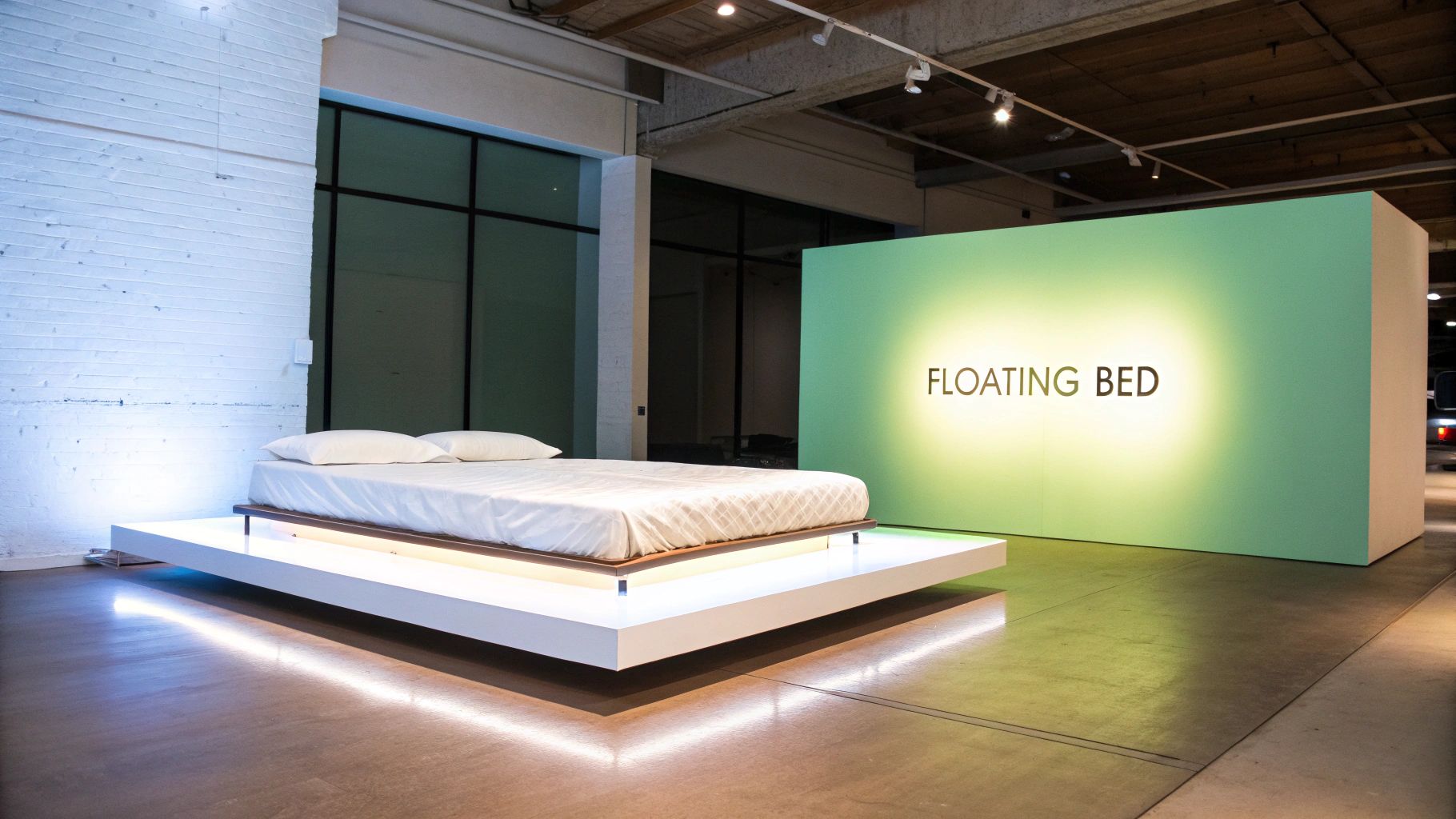
Popularised by high-end boutique hotels and contemporary interior designers, this is one of the more visually striking small bedroom layout ideas. By lifting the bed's visual mass off the ground, the layout makes the floor seem more expansive, which is a powerful psychological trick in a compact room. It transforms the bed from a bulky necessity into a sleek, architectural centrepiece.
How to Implement This Layout
Successfully creating a floating bed layout is about balancing aesthetics with practicality. The magic is in the construction of the bed and the strategic use of light to enhance the illusion.
- Select the Right Frame: Choose a platform bed where the support base is significantly smaller than the mattress platform and set back from the edges. This design, like those offered by high-end furniture makers, is crucial for creating the floating effect. Ensure the frame is made from high-quality, durable materials.
- Integrate Smart Lighting: The key to maximising the effect is under-bed lighting. Install warm white LED strips along the underside of the frame for a cosy, inviting ambiance. Connecting them to a dimmer switch allows you to control the mood, from a soft nightlight to a brighter, atmospheric glow.
- Keep Surrounding Furniture Minimalist: To maintain the illusion of space, pair the floating bed with low-profile, minimalist furniture. Think leggy nightstands and slimline dressers. This prevents other pieces from visually cluttering the floor and detracting from the bed's airy feel.
Key Insight: The success of this layout lies in its subtlety. The goal is to create an understated "wow" factor. Use soft, diffused lighting and maintain clear floor space around the bed to ensure the floating effect is the undisputed star of the room, making the space feel larger and more curated.
6. The Parisian Lounger: Daybed Layout
For a small bedroom that needs to feel more like a chic living space than just a place to sleep, the daybed layout is an elegant and highly functional solution. This approach centres around a daybed, a versatile piece of furniture that serves as a sofa by day and a bed by night. Often seen in stylish Parisian studio apartments and bohemian-inspired interiors, this layout creates a relaxed, inviting atmosphere perfect for lounging, working, or hosting friends.
This design is a fantastic choice for guest rooms that double as home offices, teenage bedrooms needing a social zone, or any small room where a traditional bed would dominate the space. By blurring the lines between a bedroom and a living area, you craft a sophisticated, multi-purpose environment that feels both cosy and spacious.
How to Implement This Layout
The success of a daybed layout hinges on styling it to look intentional and chic, rather than like a temporary sleeping arrangement. The daybed should be treated as a feature piece of furniture.
- Position for Dual Functionality: Place the daybed lengthwise against a wall, similar to how you would position a sofa. This immediately opens up the floor and defines the room as a living space first. Adding a slim console table behind it can create a sense of separation and provide a surface for lamps or decor.
- Layer with Textiles: The key to making a daybed look like a high-end sofa is layering. Use a mix of large, comfortable sleeping pillows (which can be stored away at night) and smaller, decorative cushions. A stylish throw or a beautifully textured quilt completes the look. You can find inspiration for creating a cohesive look by using a work of art to set a bedding theme.
- Add Complementary Pieces: A small C-shaped side table that can tuck over the mattress is perfect for a laptop or a cup of tea. A low-profile coffee table or a pair of ottomans in front of the daybed reinforces the living room feel. For extra guest capacity, choose a daybed model with a pull-out trundle.
Key Insight: Select a daybed with a distinct frame, such as one made of wood, rattan, or upholstered fabric. A strong silhouette helps to anchor the piece and solidifies its role as a stylish sofa, preventing the room from feeling like a makeshift bedroom.
7. Vertical Storage Wall Layout
When floor space is scarce, the only way to go is up. The Vertical Storage Wall Layout is a strategic design that dedicates one entire wall to a floor-to-ceiling storage and sleeping solution. This approach integrates the bed into a comprehensive system of cabinets, shelves, and drawers, creating a highly organised and seamless feature wall that tackles clutter head-on.
This layout is a game-changer for narrow bedrooms, children's rooms, or any space where traditional, freestanding furniture would feel bulky and restrictive. By consolidating storage vertically, you free up valuable floor area for movement and other activities, making the room feel more spacious and intentionally designed. It's one of the most effective small bedroom layout ideas for maximising utility.
How to Implement This Layout
Success with this layout hinges on thoughtful planning and customisation. The goal is to create a multi-functional wall that serves all your storage needs while framing the bed as the room’s centrepiece.
- Plan Your Zones: Before building, take inventory of what you need to store. Designate specific zones for clothing, books, electronics, and personal items. Incorporate a mix of open shelving for display and closed cabinets to hide clutter. Custom solutions from specialists like California Closets or Scandinavian-inspired systems often offer this modularity.
- Integrate the Bed: The bed nook should feel purposeful. Consider positioning the bed within an alcove created by the storage units. This not only saves space but also creates a cosy, sheltered sleeping area. You can add a built-in headboard or recessed lighting for an elevated touch.
- Light It Up: Floor-to-ceiling units can make a room feel darker. Counteract this by integrating LED strip lighting under shelves or inside cabinets. This illuminates your belongings, adds depth, and provides functional ambient light, removing the need for bulky bedside lamps.
- Ensure Flexibility: Your needs may change over time. Opt for adjustable shelving where possible. This allows you to reconfigure the space for different sized items, ensuring the storage wall remains functional for years to come.
Key Insight: The most impactful vertical storage walls look like a deliberate architectural feature, not just a collection of cupboards. Achieve this by using a consistent material and colour palette that complements the room’s existing decor, creating a unified, high-end aesthetic.
By treating a wall as a single, cohesive unit, you can combine storage, display, and your sleeping area into one elegant solution. For more inspiration on how to incorporate personal touches, you can explore creative wall art display ideas that can be integrated into your open shelving.
Small Bedroom Layouts: 7-Option Comparison Guide
| Layout | Implementation Complexity | Resource Requirements | Expected Outcomes | Ideal Use Cases | Key Advantages |
|---|---|---|---|---|---|
| Murphy Bed Layout | High – professional installation needed | Moderate to high – quality wall/bed mechanism | Saves up to 75% floor space, multi-functional use | Studio apartments, micro-living, urban spaces | Maximises floor area, modern look, built-in storage |
| Loft Bed Layout | Moderate – requires adequate ceiling height | Moderate – elevated frame, ladder/stairs | Doubles usable floor space, defined zones | Student housing, rooms with high ceilings | Creates zones, doubles floor space, playful design |
| Platform Bed with Storage | Low to moderate – carpentry or assembly required | Moderate – integrated drawers/compartments | Streamlined look, maximises under-bed storage | Minimalist rooms, space-conscious bedrooms | Eliminates extra furniture, cost-effective storage |
| Corner Bed Layout | Low – simple placement strategy | Low – no special furniture needed | Maximises central space, cozy nook | Small, irregular-shaped rooms, studios | Cost-effective, maximises floor space, cozy design |
| Floating Bed Layout | High – electrical and structural work | High – recessed lighting, quality materials | Illusion of spaciousness, modern luxury aesthetic | Luxury apartments, boutique hotels | Visual space expansion, ease of cleaning, dramatic |
| Daybed Layout | Low – basic furniture placement | Low – standard daybed with accessories | Multi-functional seating and sleeping area | Guest rooms, small multi-use rooms | Versatile, easy to style, natural guest accommodation |
| Vertical Storage Wall Layout | Very high – custom built-in, professional needed | High – floor-to-ceiling units, custom cabinetry | Maximum storage, hides bedroom essentials | Custom apartments, high storage needs | Maximises vertical space, custom appearance, storage |
Your Blueprint for a Better Bedroom
Maximising a small bedroom is less about magic and more about making smart, intentional choices. As we have explored through a variety of practical examples, the right layout can fundamentally change how you experience your personal space. It is the key to transforming a room that feels cramped and compromised into a sanctuary that is both highly functional and deeply restful. The journey from a cluttered floor to a clear mind begins with a solid plan.
The diverse range of small bedroom layout ideas we've detailed, from the space-saving genius of a Murphy bed to the vertical efficiency of a loft bed, serves as your strategic blueprint. Each layout offers a unique solution to a common problem, whether it's a lack of storage, an awkward room shape, or the need for a multi-purpose environment. The core principle remains consistent: every piece of furniture must earn its place, and every square metre must be utilised with purpose.
Core Takeaways for Your Space
To truly master your small bedroom, remember these foundational concepts:
- Embrace Multi-Functionality: Pieces like daybeds, platform beds with integrated drawers, and Murphy beds that tuck away to reveal a desk are your greatest allies. They reduce furniture clutter by serving multiple needs within a single footprint.
- Think Vertically: When floor space is at a premium, the only way to go is up. Loft beds create an entire new functional zone underneath, while floor-to-ceiling shelving and vertical storage walls draw the eye upward, making the room feel taller and more organised.
- Create Negative Space: A well-designed layout isn't just about what you put in; it's also about what you leave out. Floating beds and minimalist corner layouts help to preserve open floor space, which is crucial for creating a sense of calm and making the room feel larger than it is.
Your Actionable Next Steps
Before you start shifting furniture, take a moment to strategise. Begin by measuring your room meticulously, noting the locations of windows, doors, and power outlets. Next, consider your daily routine. Do you need a dedicated space to work from home? Do you prioritise floor space for yoga or exercise? Your lifestyle should be the primary driver of your layout choice.
Use the floor-plan sketches provided in this guide as a starting point. Adapt them to your specific dimensions and needs. Don't be afraid to experiment with painter's tape on the floor to map out potential furniture placements before committing. This simple step can prevent costly mistakes and help you visualise the flow of the room more effectively.
Ultimately, crafting the perfect small bedroom is an empowering act of creativity and problem-solving. It’s about recognising that limitations can inspire innovation. By applying these strategic small bedroom layout ideas, you're not just organising a room; you're designing a more efficient, serene, and personalised environment that supports your wellbeing every single day.
Ready to bring your vision to life? Explore the curated collections at Folders for high-quality, space-saving furniture and clever storage solutions designed for Kiwi homes. Find the perfect pieces to implement your new layout and create a bedroom you'll love for years to come at Folders.