

8 Smart Small Kitchen Countertop Ideas for NZ Homes (2025)
In many New Zealand homes, from bustling Auckland apartments to charming Wellington villas, the kitchen is the heart of daily life. But when space is at a premium, a cluttered or poorly chosen benchtop can make the entire room feel cramped and inefficient. The right countertop is more than just a surface for preparing kai; it's a critical design element that can transform a small kitchen, making it feel more spacious, functional, and stylish. A well-chosen surface maximises utility without sacrificing aesthetic appeal.
This guide moves beyond generic advice to explore eight specific small kitchen countertop ideas, providing the practical insights you need to make an informed decision. Choosing the perfect material involves balancing looks, durability, maintenance requirements, and your budget. We'll delve into everything from the rustic warmth of butcher block to the sleek, modern appeal of engineered stone, helping you find a solution that not only fits your space but also enhances your home's unique character. Our goal is to equip you with actionable information to create a kitchen that's small in size but mighty in function and style.
1. Butcher Block Countertops
Butcher block offers a fantastic solution for small kitchen countertop ideas, bringing warmth, character, and functionality to compact spaces. Unlike cold stone or laminate, wood countertops create an inviting, natural atmosphere. They are constructed from thick strips of hardwood, such as maple, oak, or walnut, glued together to form a durable and beautiful surface.
This style is particularly effective in smaller kitchens as it can be easily customised to fit unconventional layouts or tight corners. From the popular IKEA Karlby countertops seen in many studio apartments to reclaimed wood in rustic tiny homes, butcher block adapts to various aesthetics, including modern minimalist designs where a rich maple block can add a touch of organic warmth.
Why Choose Butcher Block for a Small Kitchen?
The appeal of butcher block extends beyond its appearance. It's a relatively cost-effective option compared to granite or quartz, making it accessible for budget-conscious renovators. Moreover, its forgiving nature is a significant advantage; unlike stone, which can chip permanently, a butcher block surface can be sanded down to remove stains, scratches, or burns, restoring it to a near-new condition. This renewability gives it incredible longevity in a high-traffic kitchen.
If you appreciate the natural aesthetic and versatility of wood, consider how a beautiful butcher block countertop could be complemented by accessories like Acacia Cheese Knife Set to create a cohesive, nature-inspired look.
For a quick reference, here are the key specifications for butcher block countertops.
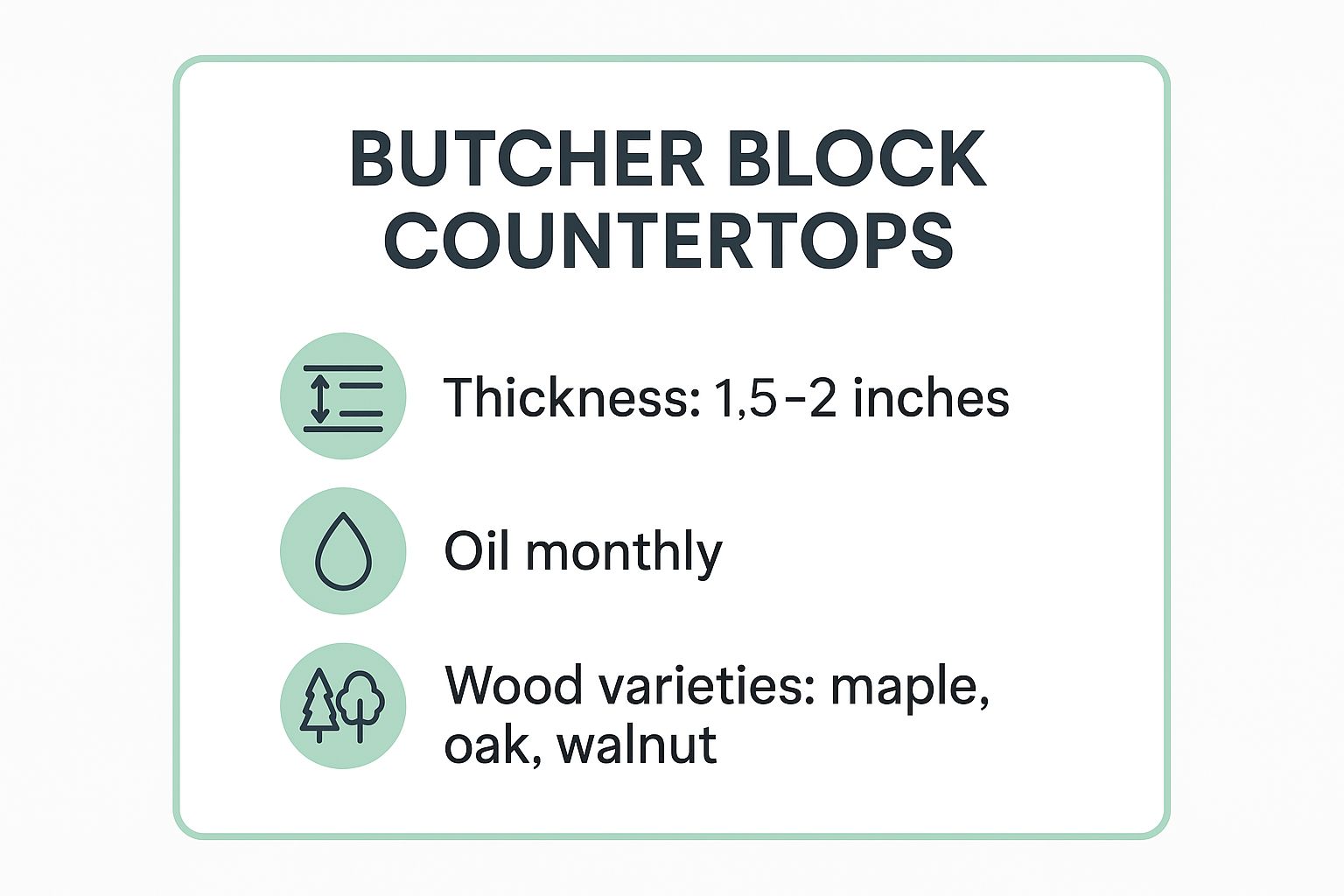
As the summary highlights, maintaining your countertop with a monthly oiling schedule and choosing a durable wood like maple are crucial for its longevity.
Practical Tips for Maintenance
To ensure your butcher block countertops remain in top condition, follow a simple maintenance routine:
- Regular Oiling: Apply a food-safe mineral oil or a specialised butcher block conditioner monthly. This prevents the wood from drying out, cracking, or absorbing stains.
- Avoid Standing Water: Wipe up spills promptly, especially around the sink area, to prevent water damage and discolouration.
- Use Cutting Boards: While you can technically cut directly on some butcher blocks, using a separate cutting board, especially for raw meat, preserves the surface and maintains food hygiene.
Pairing these beautiful countertops with smart organisation is key to maximising your space. You can explore more kitchen storage ideas to complement your new countertops and keep your small kitchen functional and clutter-free.
2. Quartz Engineered Stone
Quartz engineered stone is an exceptional choice for small kitchen countertop ideas, combining sophisticated aesthetics with unparalleled durability. Composed of approximately 90-95% ground natural quartz mixed with polymers, resins, and pigments, this material offers the beauty of stone without its inherent vulnerabilities. The result is a non-porous, highly resilient surface that stands up to the demands of a busy kitchen.
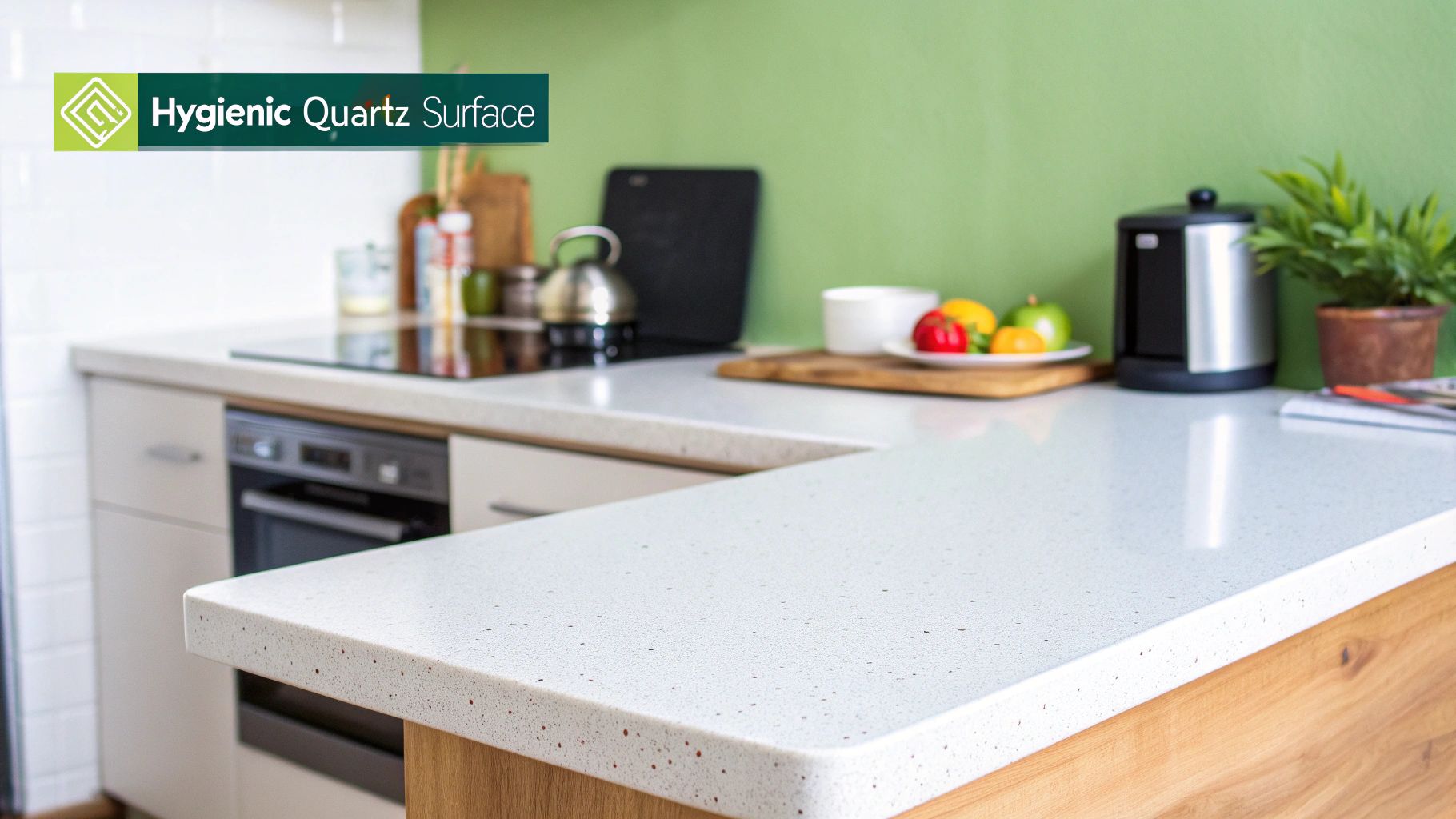
For compact kitchens, the consistency of quartz is a major advantage. Unlike natural stone with unpredictable veining, engineered quartz provides uniform colours and patterns. This predictability helps create a clean, seamless look that can make a small area feel larger and more organised. Leading brands like Caesarstone and Silestone are frequently specified in modern apartments and contemporary homes for their sleek, polished finish.
Why Choose Quartz for a Small Kitchen?
The primary benefit of quartz in a small kitchen is its low-maintenance nature. Because it is non-porous, it resists staining from common culprits like wine, coffee, and oil without needing to be sealed. This hygienic surface also prevents bacteria from penetrating, making it a safe and practical choice for food preparation.
Lighter colours like soft whites, light greys, or subtle creams can significantly brighten a small, dimly lit kitchen by reflecting light. This creates an illusion of spaciousness, turning a cramped room into an airy, inviting hub. While the initial investment may be higher than laminate, its longevity and minimal upkeep offer excellent long-term value, making it a wise and stylish upgrade.
Practical Tips for Maintenance
Keeping your quartz countertops looking pristine is remarkably simple. Follow these straightforward guidelines to maintain their beauty:
- Gentle Cleaning: For daily spills, use a soft cloth with mild soap and warm water. This is usually all that is needed to keep the surface clean.
- Avoid Abrasives: Steer clear of harsh scrubbing pads or abrasive cleaners, as they can dull the polished finish over time.
- Protect from Heat: Although quartz is heat-resistant, extreme temperature changes can cause damage. Always use trivets or hot pads for pans and pots directly from the stove or oven.
- Professional Installation: Due to its weight and the need for precise cuts, professional installation is highly recommended to ensure a perfect fit and finish.
3. Stainless Steel Countertops
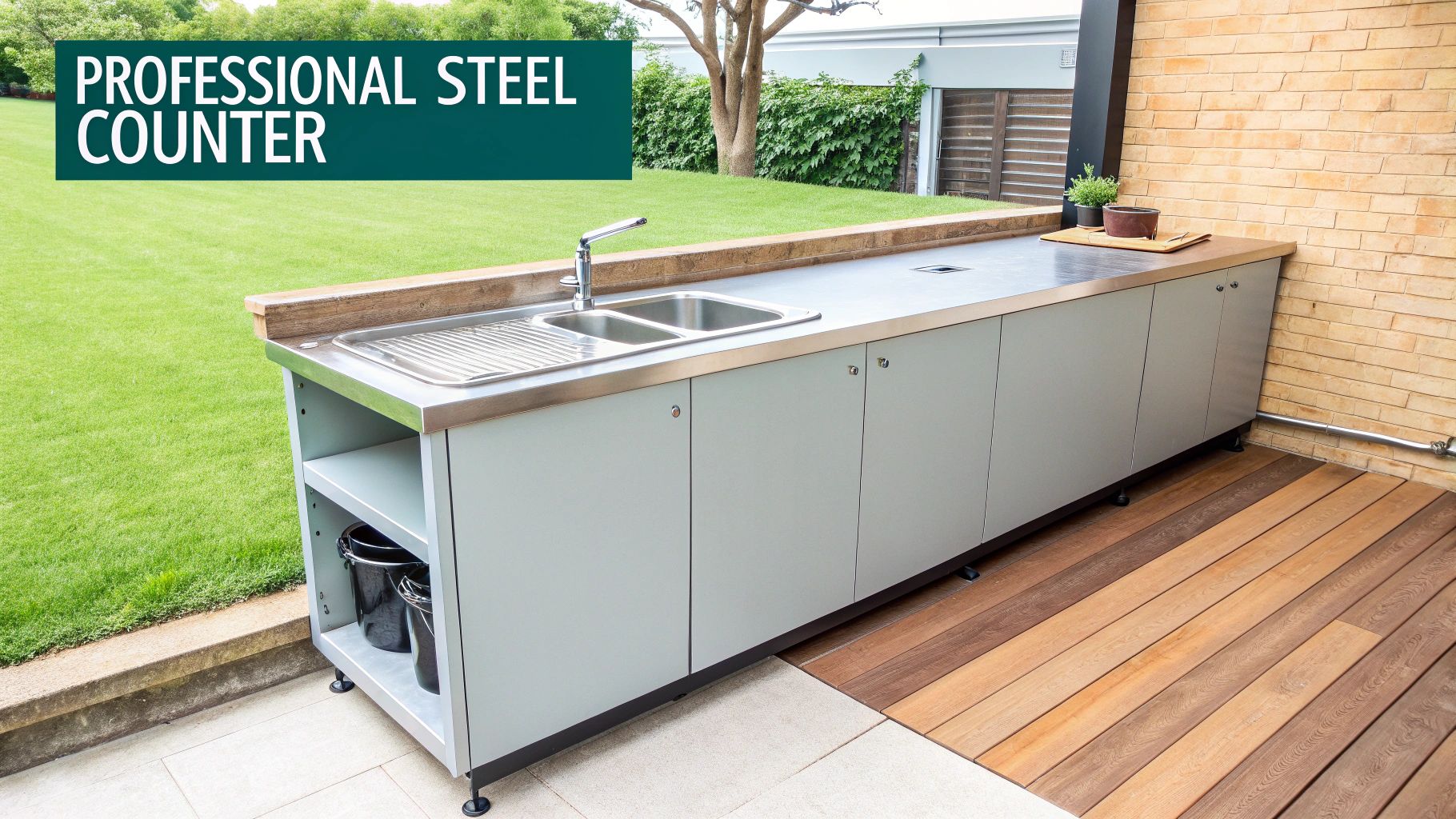
Stainless steel offers a sleek, professional-grade solution for small kitchen countertop ideas, bringing the high-functionality of a commercial kitchen into the home. These non-porous and hygienic surfaces are celebrated for their durability and seamless appearance. Formed from a sheet of steel wrapped around a particleboard or wood substrate, they provide a clean, modern aesthetic that reflects light, helping to make a compact space feel larger and brighter.
This style is particularly effective in small kitchens where efficiency and cleanliness are paramount. From industrial-chic loft apartments to the hardworking kitchens of serious home bakers, stainless steel delivers a high-performance surface. Its ability to be custom-fabricated with integrated sinks and backsplashes creates a continuous, easy-to-clean workspace, eliminating grime-collecting seams and making it ideal for compact layouts.
Why Choose Stainless Steel for a Small Kitchen?
The appeal of stainless steel extends beyond its professional look. It is exceptionally heat-resistant, meaning you can place hot pans directly on the surface without causing damage, a significant advantage when cooking in a confined area. It is also completely non-porous, so it won't harbour bacteria, odours, or stains from spills like wine or oil, making it one of the most hygienic options available.
While fingerprints and scratches can be a concern for some, choosing a brushed or satin finish helps to camouflage minor imperfections. For those interested in the broader world of metal fabrication and its applications, including potential uses in kitchen design, you can explore metal applications in home design to gain more insight. Stainless steel’s resilience and industrial charm make it a powerful choice for a modern, functional small kitchen.
Practical Tips for Maintenance
Keeping your stainless steel countertops looking pristine is straightforward with the right approach:
- Clean with the Grain: Always wipe and polish in the direction of the steel's grain to avoid creating micro-scratches and to achieve a streak-free shine.
- Use Proper Cleaners: A simple solution of mild dish soap and warm water is often sufficient for daily cleaning. For a deeper clean and to remove fingerprints, there are specialised methods and cleaners.
- Avoid Abrasives: Steer clear of steel wool, abrasive sponges, or harsh scouring powders that can permanently scratch the surface.
- Protect the Surface: While durable, stainless steel can be scratched by knives. Always use a cutting board for chopping and food preparation to preserve the countertop's finish.
Maintaining the sleek look of these surfaces is key to their appeal. You can learn more about the best practices with this guide on how to clean stainless steel appliances to keep your kitchen looking sharp.
4. Concrete Countertops
Concrete countertops provide a uniquely customisable and industrial-chic solution for small kitchen countertop ideas, offering a durable and modern surface. These countertops are poured and cast, either on-site or as precast slabs, allowing them to be tailored precisely to any kitchen footprint. Far from being a simple grey slab, concrete can be pigmented, polished, textured, and embedded with decorative aggregates like recycled glass or stone to create a one-of-a-kind finish.
This high degree of customisation makes concrete exceptionally effective in small or awkward kitchens. It can be formed to include integral sinks, drainboards, or even built-in trivets, which helps consolidate functions and save precious counter space. This bespoke nature is perfect for artistic loft renovations where an edgy aesthetic is desired, or in sustainable home projects where its thermal mass and potential for recycled content are valued.
Why Choose Concrete for a Small Kitchen?
The appeal of concrete is its ability to be both a functional workhorse and a statement piece. It is incredibly durable and heat-resistant, standing up well to the demands of a busy kitchen. While it has a higher initial cost than laminate, its longevity and unique visual texture can justify the investment. Moreover, concrete develops a natural patina over time, a living finish that adds character and tells the story of your home, something not found in mass-produced materials.
The ability to create a seamless surface that flows from the counter into a sink is a major advantage in compact layouts, as it eliminates rims and joints where dirt can accumulate. This streamlined look enhances the feeling of spaciousness, making concrete a powerful tool for designing a functional and stylish small kitchen.
Practical Tips for Maintenance
To protect your investment and keep your concrete countertops looking their best, a consistent maintenance schedule is essential:
- Seal a Seam-less Surface: Sealing is non-negotiable. Apply a high-quality, food-safe concrete sealer upon installation and re-seal every 1-2 years to protect against stains, scratches, and acid etching.
- Clean with Care: Use pH-neutral cleaners. Avoid abrasive scrubbers or harsh chemicals like ammonia and bleach, which can damage the sealer and the concrete itself.
- Embrace the Character: Be aware that concrete is a porous material. While sealing helps, hairline cracks or slight colour variations can occur over time, which are generally considered part of its unique, evolving charm.
- Work with Professionals: Due to the material's weight and the skill required for a flawless finish, it is highly recommended to work with experienced concrete artisans who understand proper reinforcement and finishing techniques.
5. Tile Countertops
Tile countertops are a superb choice for small kitchen countertop ideas, offering unparalleled customisation and affordability. This method involves laying ceramic, porcelain, or natural stone tiles onto a substrate to create a durable work surface. Long gone are the days of chunky, hard-to-clean grout lines; modern tile countertops can look sleek, seamless, and stylish.
This approach is highly effective in small kitchens because it allows for immense creativity. You can introduce vibrant colours, intricate patterns, or unique textures that might be overwhelming in a larger space. From the classic charm of subway tiles in a vintage-inspired kitchen to bold Moroccan patterns that create a stunning focal point, tile offers endless design possibilities. Large-format porcelain tiles can even mimic the look of solid stone slabs for a modern, minimalist aesthetic.
Why Choose Tile for a Small Kitchen?
The appeal of tile countertops lies in their creative flexibility and budget-friendly nature. Tiles are significantly less expensive than solid surface materials like granite or quartz, making them an accessible option for DIY renovators and those on a tight budget. A major advantage is repairability; if a single tile chips or cracks, you can replace it individually without needing to overhaul the entire countertop.
This customisable and practical approach allows you to invest your savings into other areas of your kitchen organisation. For instance, a well-organised fridge can make a small kitchen feel much more functional, and you can explore great tips on how to organise your fridge effectively to complement your new countertops.
For a visual guide on installing tile countertops, this video provides a helpful overview.
As the video illustrates, careful planning and the right materials are key to a professional-looking result.
Practical Tips for Installation and Maintenance
To get the most out of your tile countertops and ensure they last, consider these practical tips:
- Choose Large-Format Tiles: Using larger tiles minimises the number of grout lines, creating a smoother, more modern look that is easier to clean.
- Use Epoxy Grout: Opt for epoxy grout instead of traditional cement-based grout. It is highly resistant to stains, water, and cracking, making it ideal for a high-use kitchen surface.
- Seal Grout Lines: If you use cement-based grout, be sure to seal it annually to protect it from moisture and discolouration.
- Plan Your Layout: Before you begin, lay out your tiles to plan the arrangement and minimise awkward cuts, ensuring a polished, professional finish.
6. Laminate Countertops
Laminate countertops are a superb choice for small kitchen countertop ideas, especially when budget and style are top priorities. These surfaces, made from layers of plastic bonded to particleboard, have evolved dramatically from the designs of the past. Modern high-pressure laminates, popularised by brands like Formica and Wilsonart, now offer incredibly realistic patterns that convincingly mimic expensive materials like marble, granite, or wood.
This makes them an ideal solution for achieving a high-end look without the associated cost. They are particularly effective in settings like apartment kitchen renovations, rental property upgrades, or for anyone needing a stylish yet temporary kitchen solution. The sheer variety of available colours and textures means laminate can fit into any design scheme, from sleek and modern to warm and traditional.
Why Choose Laminate for a Small Kitchen?
Laminate’s primary advantage is its affordability, offering the most cost-effective way to get a fresh, new look. For a small kitchen, where every dollar counts, this allows you to allocate more of your budget to other features like appliances or cabinetry. Beyond the price, modern laminates come with improved durability, featuring better resistance to scratches and stains than older versions.
The lightweight nature of laminate also makes it easier and cheaper to install, a significant benefit for DIY renovators. Its non-porous surface is hygienic and simple to clean, requiring only a wipe-down with mild soap and water. This low-maintenance quality is a huge plus in a busy, compact kitchen where ease of use is paramount. You can explore more ways to enhance your cooking space with these small kitchen ideas that pair perfectly with a fresh countertop upgrade.
Practical Tips for Maintenance
To maximise the life and appearance of your laminate countertops, follow these simple guidelines:
- Always Use Cutting Boards: The primary weakness of laminate is its susceptibility to scratches from knives. Never cut directly on the surface to keep it looking pristine.
- Avoid Direct Heat: Laminate can be damaged or scorched by hot pots and pans. Always use trivets or heat pads to protect the surface from thermal shock.
- Choose Textured Finishes: A matte or lightly textured finish is more effective at hiding minor scratches and fingerprints compared to a high-gloss surface.
- Clean Up Spills Quickly: While water-resistant, allowing liquids, especially staining agents like red wine or coffee, to sit for prolonged periods can lead to discolouration.
7. Marble Countertops
Marble countertops introduce an undeniable touch of luxury and timeless elegance, making them a stunning choice for small kitchen countertop ideas. This natural stone, famed for its unique veining and luminous surface, can make a compact kitchen feel more expensive and visually expansive. While often associated with grand kitchens, a carefully selected slab of marble can serve as a magnificent focal point in a smaller space, elevating the entire design.
This style is particularly effective at reflecting light, which helps to brighten a small or dimly lit kitchen. From classic white Carrara marble that pairs beautifully with almost any cabinet colour to the more dramatic Calacatta with its bold veining, marble adapts to both traditional and modern minimalist aesthetics. Its cool-to-the-touch surface is also a practical bonus for home bakers, as it provides an ideal surface for working with pastry and dough.
Why Choose Marble for a Small Kitchen?
The appeal of marble lies in its sophisticated beauty and its ability to add significant aesthetic and real estate value to a home. Each slab is one-of-a-kind, offering a unique piece of natural art for your kitchen. Unlike synthetic materials, marble develops a patina over time, a characteristic that many homeowners cherish as it adds to the stone's story and character.
Choosing a lighter-coloured marble like Carrara can create an illusion of space, making it a strategic design choice. A beautiful marble breakfast bar not only provides a high-end finish but also a functional dining spot. To complete this look, you can learn more about choosing the right bar stools to complement your new countertop to create a cohesive and inviting space.
Practical Tips for Maintenance
Marble is a porous stone and requires more care than granite or quartz, but with the right routine, its beauty can be preserved for decades.
- Seal Regularly: Protect the stone from stains by applying a high-quality, food-safe marble sealer at least once or twice a year, or as recommended by your installer.
- Clean Spills Immediately: Wipe up acidic substances like lemon juice, wine, or coffee straight away to prevent etching, which dulls the surface. Use a pH-neutral cleaner for daily wiping.
- Use Trivets and Cutting Boards: Always place hot pans on trivets and use cutting boards for food preparation to protect the marble from heat damage and scratches.
- Consider a Honed Finish: A honed or matte finish can make etching less noticeable than a polished one, making it a more forgiving option for a busy kitchen.
8. Solid Surface Countertops
Solid surface countertops are a stellar choice for small kitchen countertop ideas, prized for their seamless and modern aesthetic. These non-porous surfaces are synthetically engineered from a blend of acrylic or polyester resins and natural minerals, creating a uniform and highly customisable material. Because they can be fabricated without visible seams, they provide a continuous, clean look that visually expands a compact kitchen.
This seamless quality is especially beneficial in small or awkwardly shaped kitchens. Imagine a sleek Corian countertop with an integrated sink, eliminating grout lines and edges where grime can collect. This creates an unbroken visual flow that makes the area feel larger and more organised. From a curved breakfast bar made of Avonite to contemporary Staron surfaces in a minimalist studio, solid surfaces offer unparalleled design flexibility.
Why Choose a Solid Surface for a Small Kitchen?
The primary advantage of solid surface materials is their ability to create a monolithic, seamless appearance. Unlike stone or laminate, which have visible joints, solid surface sections can be chemically bonded together and then sanded smooth, making the seam completely invisible. This is ideal for small spaces where visual clutter can make a room feel cramped.
Another significant benefit is their reparability. Minor scratches, stains, or even burns can often be buffed or sanded out, restoring the countertop to its original pristine condition. This renewability, combined with its non-porous nature that resists bacteria and mould, makes it a durable and hygienic option for busy kitchens. While professional fabrication is recommended for the best results, the longevity and clean look are well worth the investment.
Practical Tips for Maintenance
Keeping your solid surface countertops looking new is straightforward with a few simple habits:
- Protect from Heat: Always use trivets or hot pads for pots and pans. While resistant to heat, sudden or extreme temperature changes can cause damage.
- Sand Out Scratches: For fine scratches, you can gently sand the area with a very fine-grit abrasive pad and clean with a mild abrasive cleaner to restore the finish.
- Use Gentle Cleaners: Clean spills with soapy water or an ammonia-based cleaner. Avoid harsh chemical cleaners or scouring pads, which can dull the surface.
- Embrace Cutting Boards: To prevent scratches and cuts, always use a cutting board rather than slicing directly on the countertop.
Top 8 Small Kitchen Countertop Ideas Comparison
| Countertop Type | Implementation Complexity | Resource Requirements | Expected Outcomes | Ideal Use Cases | Key Advantages |
|---|---|---|---|---|---|
| Butcher Block Countertops | Medium – requires regular maintenance, refinishing possible | Moderate – hardwood material, monthly oiling | Warm, natural look; can be sanded/refinished; gentle on knives | Small kitchens needing warmth and character | Budget-friendly, customizable, sustainable |
| Quartz Engineered Stone | Low – professional installation recommended | High – requires strong cabinet support | Durable, non-porous, consistent appearance, hygienic | Modern small kitchens needing low maintenance | Extremely low maintenance, stain resistant |
| Stainless Steel Countertops | Medium – professional fabrication, integrated sinks available | High – specialised materials and fabrication | Highly hygienic, heat resistant, professional look | Serious home cooks, compact kitchens | Seamless design, heat resistant, easy to clean |
| Concrete Countertops | High – custom pouring, curing time, sealing needed | Moderate to High – heavy material, sealing tools | Unique, artistic, highly customisable | Unique/industrial small spaces, custom designs | Customisable, seamless, affordable |
| Tile Countertops | Medium – DIY possible but grout maintenance required | Low – affordable materials | Heat resistant, customisable patterns, grout lines present | Budget-conscious, creative DIY small kitchens | Affordable, easy repairs, DIY-friendly |
| Laminate Countertops | Low – quick installation, lightweight | Low – affordable material | Realistic patterns, lightweight, quick install | Budget renovations, rental upgrades | Very budget-friendly, easy maintenance |
| Marble Countertops | High – requires expert installation and maintenance | High – natural stone, regular sealing | Luxurious appearance, cool surface, stains easily | Luxury small kitchens, baking enthusiasts | Elegant, increases home value |
| Solid Surface Countertops | Medium – professional fabrication needed | Moderate – synthetic resins | Seamless look, repairable, non-porous | Small spaces needing seamless continuous surfaces | Seamless, hygienic, repairable |
Choosing the Right Benchtop for Your Kiwi Kitchen
Navigating the world of small kitchen countertop ideas can feel like a significant undertaking, but it's a decision that fundamentally shapes the heart of your home. As we've explored, the ideal surface for your compact Kiwi kitchen is a careful balance of aesthetics, practicality, and budget. Your journey doesn't end with choosing a material; it begins with understanding how that choice will integrate into your daily life and elevate your space from merely functional to truly inspiring.
Reflecting on the options presented, from the warm, organic appeal of butcher block to the sleek, modern resilience of quartz, it's clear there's no single "best" answer. The right choice is deeply personal. It's about visualising your morning routine, your weekend meal prep, and how your whānau will gather in the space. Will the industrious, professional vibe of stainless steel suit your culinary ambitions, or does the customisable, budget-friendly nature of laminate align better with your current renovation goals?
Key Takeaways for Your Compact Kitchen
To synthesise these ideas into actionable steps, consider these core principles as you finalise your decision:
- Material and Lifestyle Alignment: Match your countertop's maintenance needs with your lifestyle. An enthusiastic home chef might appreciate the character a butcher block develops, while a busy family may prioritise the non-porous, low-maintenance surface of an engineered stone like quartz.
- Visual Expansion is Key: Remember the power of colour and finish. Lighter colours, reflective surfaces, and thin profiles can make a small kitchen feel significantly larger and more open. A gleaming solid surface or a polished concrete can bounce light around the room, creating an illusion of spaciousness.
- Think Beyond the Surface: Your countertop is a workspace. The ideas we've covered, such as integrating chopping boards or selecting heat-resistant materials like stainless steel, are about optimising every square centimetre for maximum efficiency. A smart benchtop choice turns a limitation into an asset.
Making Your Vision a Reality
Ultimately, creating a kitchen you love is about making informed, confident choices. By weighing the unique benefits of each material, from the timeless elegance of marble to the creative potential of tile, you are equipping yourself with the knowledge to select a surface that will not only endure but also bring you joy for years to come. A thoughtfully designed countertop is the foundation of a highly functional and beautiful small kitchen, proving that limited space never has to mean limited style or utility. The perfect surface awaits, ready to transform your compact kitchen into the efficient, welcoming hub your home deserves.
Now that you've selected the perfect foundation with your new benchtop, it's time to equip it with the best. Explore the curated collection of premium kitchenware and appliances at Folders to find everything you need to bring your culinary space to life. From high-performance blenders to stylish kettles, we help you make the most of your new countertop.