

Small Kitchen Design Ideas: 8 Clever Ways to Maximize Space
Unlocking the Potential of Your Small Kitchen
A small kitchen presents unique design challenges, but it doesn't have to feel cramped or impractical. This curated list of small kitchen design ideas offers practical solutions to maximise space, enhance functionality, and create a stylish heart of your home. We'll explore innovative layout hacks, clever storage solutions, impactful color palettes, and strategic appliance choices to transform your compact kitchen. Whether renovating or simply refreshing, these ideas offer tangible improvements for any small kitchen in NZ. If you're looking to visualise your small kitchen design ideas, consider exploring options for kitchen virtual home staging as discussed in this article about virtual staging options from Pedra.
This listicle covers key design elements including:
- Optimising layouts for improved workflow
- Maximising storage with vertical solutions and hidden compartments
- Integrating compact appliances seamlessly
- Creating an illusion of spaciousness with strategic colour choices
Learn how to make the most of limited square footage, turning your small kitchen into a highly functional and aesthetically pleasing space. Discover how small kitchen design ideas can create a kitchen you'll love.
1. Galley Kitchen Layout
The galley kitchen layout, a hallmark of efficiency in compact spaces, is characterised by two parallel countertops separated by a walkway. This linear design, reminiscent of ship and yacht kitchens or those found in sleek New York City apartments and even renovated historic brownstones, optimises limited square footage by maximising wall usage for storage and appliances. Its inherent structure also promotes an efficient work triangle, streamlining cooking processes. Just like choosing the right ingredients is crucial in cooking, understanding kitchen layouts helps in maximising space. You can find guides to olive oil and other pantry staples just as readily as advice on kitchen design. This similarity highlights the importance of informed decisions in both culinary and spatial planning.
Maximising the Galley Layout
The success of a galley kitchen hinges on smart design choices. A key consideration is the walkway width. A minimum of 42 inches is crucial for comfortable movement, especially when two people are working in the kitchen. Light colors on walls and cabinets create an illusion of spaciousness, a vital element in small kitchen design ideas. Under-cabinet lighting not only brightens the workspace but also adds to the perceived volume of the room.
For those seeking a more open feel, removing one wall of the galley to create a peninsula kitchen can be a transformative solution. This maintains the efficiency of the galley layout while integrating the kitchen with adjacent living areas. Another effective strategy is the use of mirrors or glossy surfaces to reflect light and amplify the sense of space.
Key Takeaways for Galley Kitchens
The following infographic summarises three crucial aspects of galley kitchen design: recommended walkway width, the defining feature of two parallel countertops, and the emphasis on maximising wall storage utilisation.
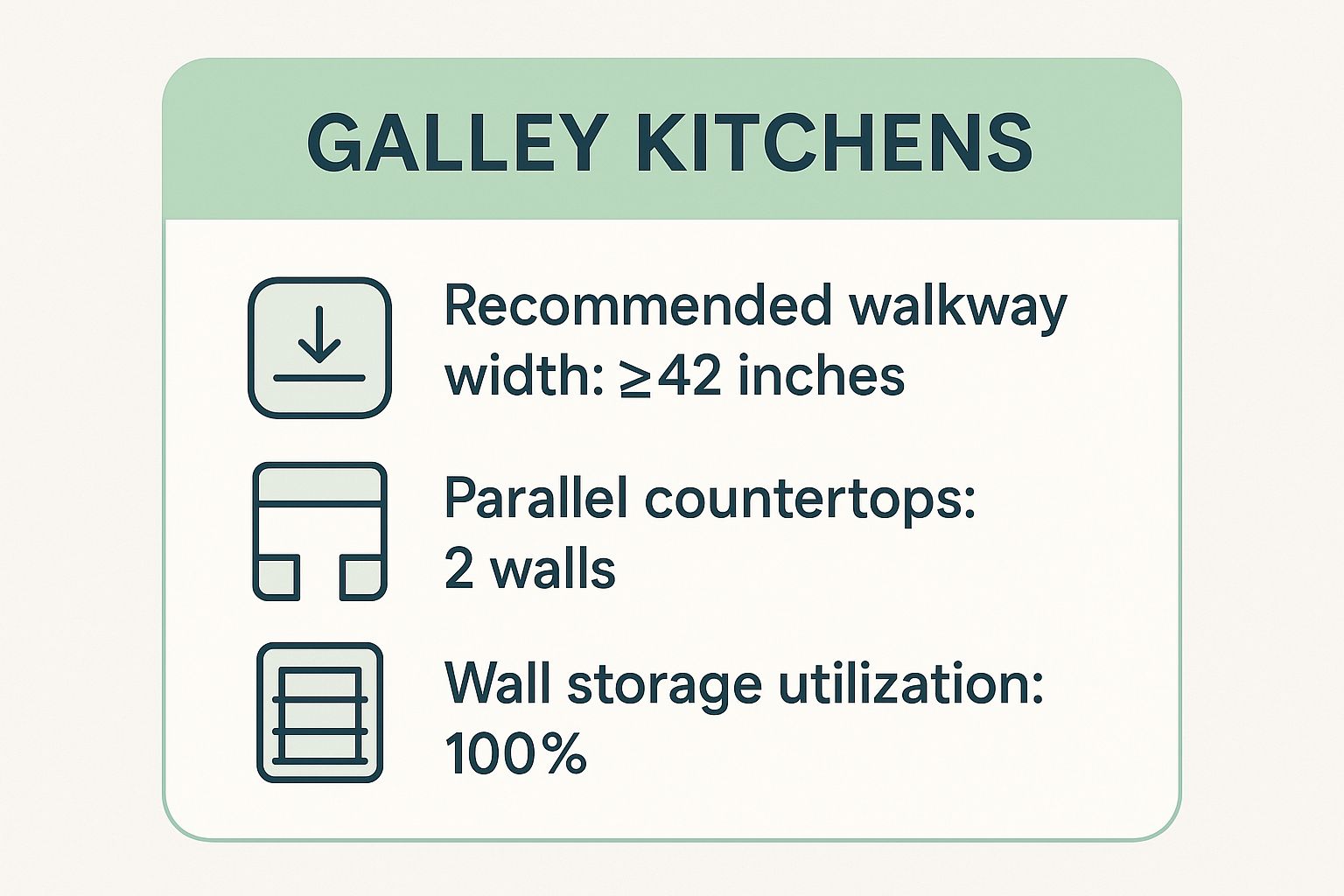
As the infographic highlights, maintaining adequate walkway space, utilising both walls for countertops, and maximising storage are fundamental to a functional and stylish galley kitchen. These principles ensure the layout remains efficient and comfortable, maximising the use of limited space.
When to Choose a Galley Layout
The galley kitchen is an ideal small kitchen design idea for narrow spaces where maximising every inch is paramount. It’s particularly well-suited for apartments, smaller homes, or even as a secondary prep kitchen in larger homes. This layout shines in its ability to create a compact and efficient workspace without sacrificing functionality. Learn more about Galley Kitchen Layouts and how they can transform your small kitchen. Its popularity, originating with naval architects and yacht designers before being embraced by mid-century modern architects and urban apartment developers, underscores its timeless practicality and adaptability.
2. One-Wall Kitchen Design
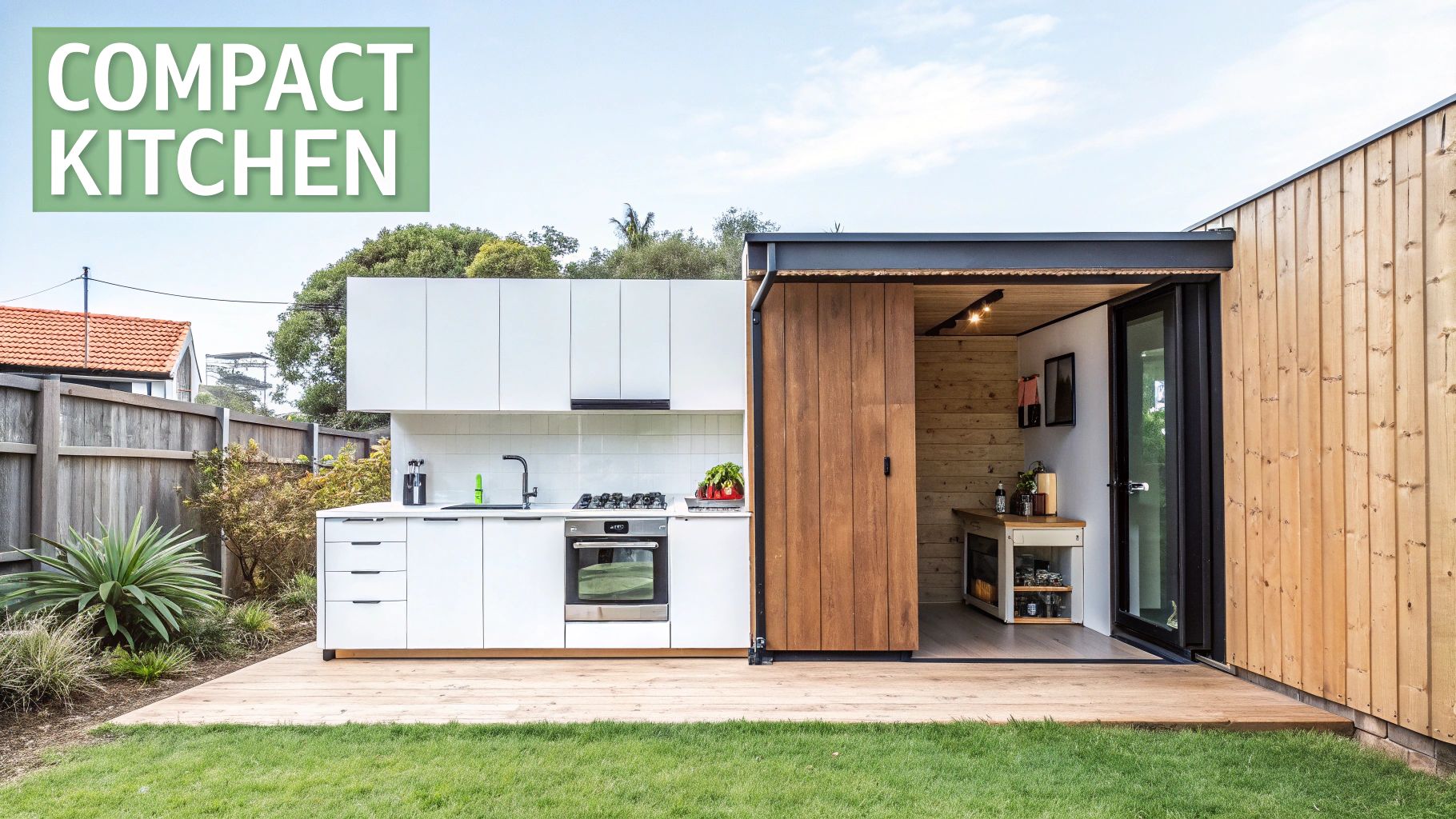
The one-wall kitchen design, a marvel of minimalist efficiency, positions all appliances, cabinets, and countertop space along a single wall. This creates the most compact kitchen layout possible, ideal for small spaces where maximising every square inch is essential. Similar to how choosing the right spice can elevate a dish, selecting the right kitchen layout can transform a small space. Just as a dash of cumin can add depth to a recipe, the one-wall design adds functionality and style to a compact kitchen. This design seamlessly integrates the kitchen with adjacent living areas, making it a popular choice for studio apartments, tiny homes, and open-plan layouts.
Maximising the One-Wall Layout
Success with a one-wall kitchen depends on strategic space utilisation. Wall-mounted storage maximises vertical space, keeping countertops clutter-free. Fold-down counters provide extra prep space when needed and disappear when not in use. Compact, multi-functional appliances, like combination microwave-convection ovens, save valuable counter space.
Consider utilising the often-overlooked space above cabinets for additional storage. Open shelving can display attractive dishware while closed cabinets conceal less visually appealing items. A kitchen island on wheels adds flexibility, providing extra counter space and storage while easily moving out of the way when not needed.
Key Takeaways for One-Wall Kitchens
Prioritise vertical space by using wall-mounted storage and consider the wall above the cabinets for additional storage options. Compact appliances and fold-down features are crucial for maximising functionality in limited space. Flexible elements like a rolling kitchen island can significantly enhance usability.
When to Choose a One-Wall Layout
The one-wall kitchen is a perfect small kitchen design idea for studio apartments, tiny homes, or any space where a compact footprint is required. This layout excels in its ability to provide a functional kitchen in the smallest possible area. Its increasing popularity in modern loft conversions, accessory dwelling units (ADUs), and even as secondary kitchenettes in larger homes showcases its adaptability and efficiency. Embraced by minimalist design advocates and popularised by European apartment designers, the one-wall kitchen proves that small can indeed be both stylish and functional.
3. L-Shaped Kitchen Layout
The L-shaped kitchen layout, a popular choice for small kitchen design ideas, efficiently utilises two perpendicular walls, creating a corner configuration. This design maximises both counter space and storage opportunities while maintaining an open and airy feel. Unlike a galley kitchen’s linear design, the L-shape creates a natural work triangle, streamlining movement between the refrigerator, sink, and stove. This layout adapts well to both small and medium-sized kitchens, making it a versatile option for a variety of homes, from compact apartments to larger family residences. Just as a well-chosen spice elevates a dish, a well-planned layout elevates a kitchen's functionality.
Maximising the L-Shaped Layout
Smart design choices are crucial for optimising the L-shaped kitchen. Lazy Susans and corner drawers make the most of often-underutilised corner cabinet space. Positioning the sink in the corner maximises counter space on either side for food preparation. If space allows, a small island can add valuable workspace and storage, further enhancing the layout's functionality. Light colours on walls and cabinets amplify the sense of openness, a crucial element in small kitchen design ideas. Under-cabinet lighting can not only improve task lighting but also contribute to the perception of a larger space.
For smaller L-shaped kitchens, open shelving above the countertops provides a visually appealing storage solution without making the space feel closed in. Consider incorporating glass-fronted cabinets to display attractive dishware while maintaining a sense of airiness. Integrating the kitchen with adjacent dining or living areas by creating a pass-through or bar counter further enhances the open feel.
Key Takeaways for L-Shaped Kitchens
This layout’s effectiveness hinges on efficient corner utilization, maximizing counter space, and creating a practical work triangle. These principles ensure that the kitchen remains both stylish and functional, even in a limited footprint. By focusing on these aspects, homeowners can achieve a kitchen that caters to their needs and complements their design preferences.
When to Choose an L-Shaped Layout
The L-shaped kitchen excels in small to medium-sised spaces where an open feel and efficient workflow are desired. It’s well-suited for condominium kitchen renovations, ranch-style homes, and even open-concept kitchen designs. This layout’s adaptability makes it a popular choice for homeowners seeking both style and functionality. Its efficient use of corners and natural creation of a work triangle contribute to a kitchen that is both practical and aesthetically pleasing. This layout, embraced by mid-century home builders and continuing to be a favourite with contemporary kitchen designers, demonstrates its enduring appeal and effectiveness in optimising space and functionality.
4. Vertical Storage Solutions
Vertical storage is a cornerstone of small kitchen design ideas, maximising every inch of wall space from floor to ceiling. This approach utilises tall cabinets, open shelving, magnetic strips, and wall-mounted organisers, transforming unused vertical space into valuable storage real estate. In small kitchens where floor area is limited, exploiting vertical space becomes essential for efficient organisation and a clutter-free environment. This strategy mirrors the efficient use of pantry staples like olive oil – just as you'd carefully choose the right type of oil for a dish, you must select the right storage solutions to optimise your kitchen.
Maximising Vertical Space
The success of vertical storage hinges on strategic implementation. Keeping frequently used items at eye level ensures easy access and minimises searching. Using clear containers allows for quick identification of contents, further enhancing efficiency. For high cabinets, installing pull-down shelves brings stored items within reach, eliminating the need for step stools. Grouping similar items together vertically streamlines organisation and creates a visually appealing arrangement.
Consider IKEA's floor-to-ceiling cabinet systems or the Container Store's elfa kitchen solutions for pre-designed systems. Custom pantry wall installations offer bespoke solutions tailored to individual needs. Simple additions like magnetic spice strips on refrigerator sides can also significantly increase vertical storage. Remember to leave some breathing room between shelves and organisers to avoid a cluttered look. This balance ensures the space feels organised and airy, not cramped.
Key Takeaways for Vertical Storage
Focus on these key elements for successful vertical storage: prioritise accessibility by placing frequently used items at eye level, maximise visibility with clear containers, and optimise high cabinet access with pull-down shelves. These strategies ensure that every inch of vertical space contributes to a functional and organised kitchen.
When to Choose Vertical Storage
Vertical storage is an ideal small kitchen design idea for any kitchen where maximising space is a priority, especially those with limited square footage. It’s particularly beneficial in apartments, smaller homes, or even in larger kitchens seeking enhanced organisation. This approach helps maintain a clutter-free environment, crucial in small spaces. Learn more about Vertical Storage Solutions and discover a multitude of clever ideas to enhance your small kitchen design. Its popularity, championed by organisation experts like Marie Kondo and embraced by tiny house enthusiasts, reflects its effectiveness in creating efficient and aesthetically pleasing storage solutions.
5. Multi-Functional Kitchen Islands and Carts
Multi-functional kitchen islands and carts are game-changers in small kitchen design ideas, offering flexible solutions for limited spaces. These mobile units provide extra counter space, storage, and functionality, adaptable to various needs. They can serve as prep areas, dining surfaces, storage cabinets, or even house appliances, maximising efficiency in compact kitchens. Think of them as the Swiss Army knives of kitchen furniture. Their versatility is key, allowing homeowners to reconfigure their kitchen layout as needed.
Maximising Island and Cart Functionality
Choosing the right island or cart is crucial. Look for models with locking wheels for stability and measure clearances carefully to ensure easy maneuverability. Drop-leaf extensions provide extra surface area when needed, while built-in electrical outlets accommodate appliances like slow cookers or stand mixers. In open floor plans, these units can even function as room dividers, delineating the kitchen zone while adding valuable functionality. Choosing the right barstools to complement your new island can also enhance both comfort and style. Learn more about choosing the right barstools.
Examples of popular choices include the IKEA FÖRHÖJA kitchen cart, Catskill Craftsmen butcher block carts, custom-built rolling islands, and even repurposed vintage furniture pieces. Each offers a unique blend of style and practicality, catering to various budgets and aesthetic preferences.
Key Takeaways for Kitchen Islands and Carts
-
Mobility: Locking wheels provide stability and allow for easy movement and reconfiguration.
-
Versatility: Multiple functions such as prep space, dining, storage, and appliance housing.
-
Customisation: Options range from budget-friendly pre-made carts to bespoke custom-built islands.
When to Choose a Kitchen Island or Cart
Kitchen islands and carts are particularly suitable for small kitchens where maximising space and flexibility is paramount. They are a great choice for renters who may not be able to make permanent changes, homeowners seeking adaptable solutions, and anyone looking to enhance the functionality of their limited kitchen space. Their rise in popularity, driven by both professional chefs and small-space design experts, reflects their practical benefits and adaptable nature. They provide a dynamic solution to the challenges of small kitchen design, ensuring that limited space doesn't limit culinary possibilities.
6. Open Shelving Systems
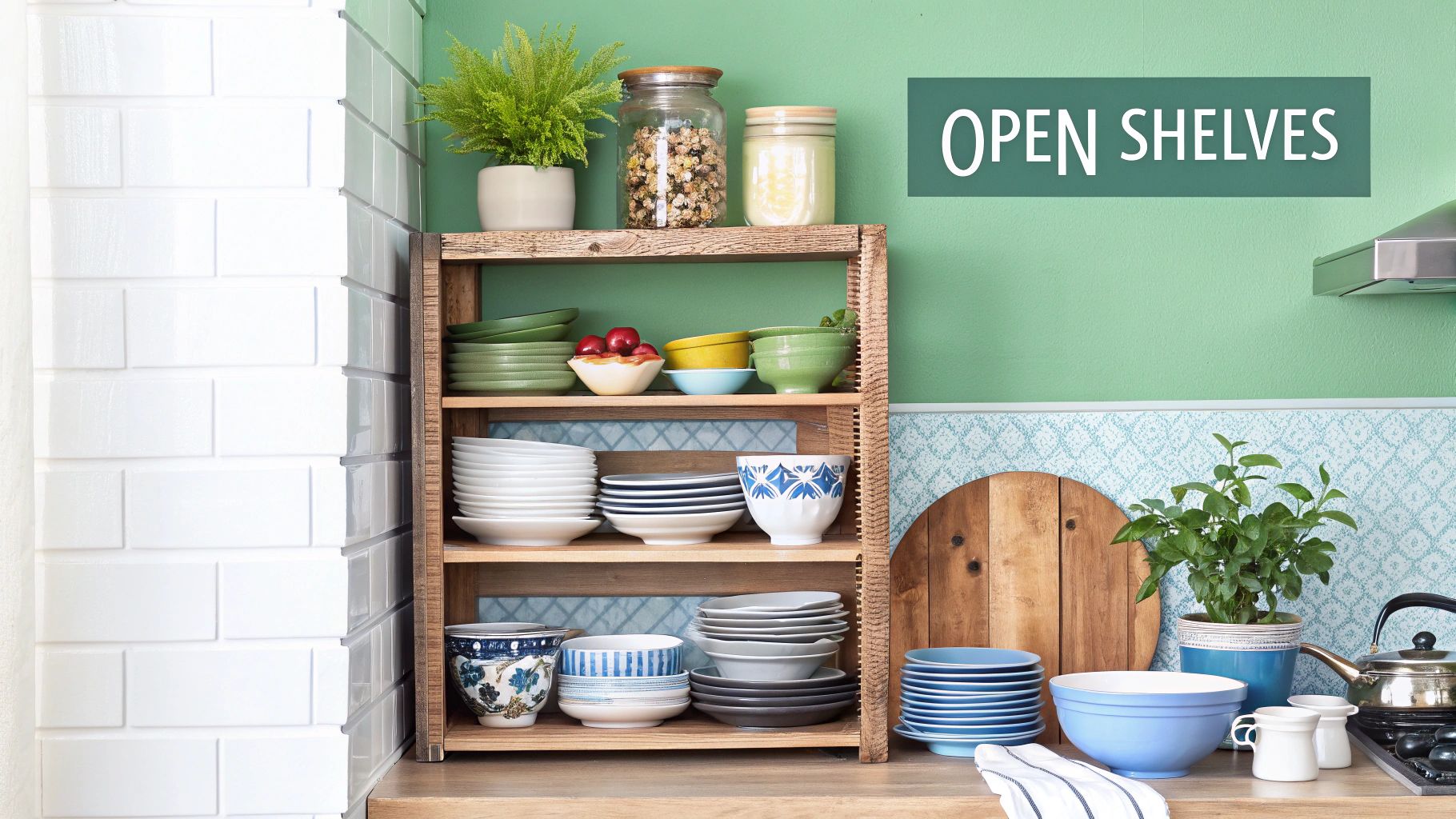
Open shelving systems, a popular small kitchen design idea, replace traditional upper cabinets with exposed shelves. This design choice creates a sense of airiness and spaciousness, a valuable asset in compact kitchens. While offering practical storage for everyday dishes and cookware, open shelves also provide opportunities to display decorative items, adding personality and visual interest to the space. This dual functionality makes them a stylish and effective solution for small kitchen design.
Maximising Open Shelving
The success of open shelving in a small kitchen depends on thoughtful planning and execution. Mixing open shelves with some closed storage allows you to keep frequently used items readily accessible while tucking away clutter. Using uniform dishware or glassware creates a cohesive and visually appealing display, enhancing the sense of order. Strategically installing shelves 15-20 inches above countertops ensures both practicality and visual balance.
Grouping items by height and function further maximises efficiency and visual appeal. Adding decorative elements such as plants, cookbooks, or artwork can personalise the space and prevent the shelves from appearing too utilitarian. This combination of practicality and aesthetics makes open shelving a versatile solution for small kitchens.
Key Takeaways for Open Shelving
Consider these key aspects when incorporating open shelving into your small kitchen design:
- Balance: Mix open shelves with closed storage.
- Visual Cohesion: Use uniform dishware and glassware.
- Practicality: Install shelves 15-20 inches above countertops.
- Organisation: Group items by height and function.
- Style: Incorporate decorative elements.
These considerations ensure your open shelving system contributes to both the functionality and style of your kitchen.
When to Choose Open Shelving
Open shelving is an ideal small kitchen design idea for those looking to enhance the sense of space and create a brighter, more open feel. It's particularly well-suited for kitchens with limited natural light or those wanting to showcase cherished dishware or decorative pieces. Learn more about Open Shelving Systems and how lighting plays a key role in this layout. This system, popularised by Scandinavian and industrial design aesthetics, adds character and a touch of modern style while optimising storage in small kitchens.
7. Compact Appliance Integration
Compact appliance integration involves selecting and installing smaller, space-efficient appliances designed for small kitchens. This includes apartment-sized refrigerators, drawer-style dishwashers, combination microwave-convection ovens, and slimline cooktops. These specialised appliances maximise functionality while minimising their footprint, a crucial factor in small kitchen design ideas. Just as choosing the right sized pan is essential for cooking a single serving, selecting appropriately sized appliances is key for a functional small kitchen.
Maximising Compact Appliances
Successfully integrating compact appliances relies on careful planning and measurement. Before purchasing, meticulously measure the available space, considering not only the appliance's dimensions but also clearances for ventilation and door swing. Prioritise features you actually use. A compact dishwasher with multiple wash cycles may be less practical than a simpler model if you primarily hand wash delicate items. Look for counter-depth refrigerators to maintain a streamlined look and maximise floor space.
Choosing Energy Star certified models ensures efficiency, saving on utility bills and minimising environmental impact. Consider combination units, like microwave-convection ovens or washer-dryer combos, to consolidate functions and free up valuable counter or floor space. This mirrors the efficiency of a chef's knife, performing multiple tasks in one tool. For those renovating, explore built-in options for a seamless and integrated look.
Key Takeaways for Compact Appliances
Careful measurement is paramount before purchasing any compact appliance. Prioritising essential features and opting for Energy Star certified models ensures both functionality and efficiency. Considering combination appliances can significantly save space.
When to Choose Compact Appliance Integration
Compact appliance integration is an ideal small kitchen design idea for apartments, tiny homes, or any kitchen where space is at a premium. It’s also an excellent strategy for secondary kitchens or bar areas in larger homes. Learn more about the best appliances to buy online in NZ and find the perfect compact solutions for your small kitchen. This approach, popularised by European appliance manufacturers and embraced by the tiny house movement, offers a practical solution without compromising on modern conveniences. It allows homeowners to enjoy the full functionality of a well-equipped kitchen even within a limited footprint.
8. Hidden Storage and Space-Saving Features
Hidden storage solutions maximise every available inch in a small kitchen. Clever design features like pull-out drawers, toe-kick storage, appliance garages, and concealed compartments make the most of limited space. These innovative storage solutions keep small kitchens organised and clutter-free. They also maintain clean, streamlined aesthetics, contributing to a sense of spaciousness. Just as a well-organised pantry streamlines cooking, efficient storage optimises a small kitchen's functionality.
Maximising Hidden Storage
The success of hidden storage hinges on thoughtful planning. Before designing your small kitchen, thoroughly assess your storage needs. Measure your pots, pans, appliances, and other kitchen essentials. This will inform the design and dimensions of your hidden storage compartments. Investing in quality hardware, like Rev-A-Shelf pull-out organisers or Blum drawer systems, ensures longevity and smooth operation. Consider professional installation, especially for complex systems like Hafele's corner cabinet solutions or custom toe-kick drawers.
For small kitchen design ideas, incorporating appliance lift mechanisms for heavy mixers keeps countertops clear. Custom toe-kick drawers can house baking sheets or rarely used items. Utilising vertical space with pull-out pantry systems makes even narrow spaces highly efficient. Integrating hidden storage solutions into the initial design maximises space utilisation from the outset.
Key Takeaways for Hidden Storage
Focus on these key aspects when implementing hidden storage: careful planning, quality hardware, and maximising vertical space. These principles ensure that even the smallest kitchens remain organised and functional. Professional expertise can be invaluable, particularly for incorporating more complex storage solutions.
When to Choose Hidden Storage
Hidden storage is a perfect small kitchen design idea when maximising every inch is essential. It is particularly suitable for apartments, compact homes, or any kitchen where storage is at a premium. This approach, popularised by German kitchen manufacturers and luxury kitchen brands, optimises functionality while maintaining a sleek and uncluttered appearance. Hidden storage ensures that even the smallest kitchens can be both stylish and practical.
Small Kitchen Design Ideas Comparison
| Item | Implementation Complexity 🔄 | Resource Requirements ⚡ | Expected Outcomes 📊 | Ideal Use Cases 💡 | Key Advantages ⭐ |
|---|---|---|---|---|---|
| Galley Kitchen Layout | Moderate - straightforward linear design | Moderate - requires cabinetry on two walls | High efficiency in narrow spaces, organised workflow | Narrow spaces, apartments, single cooks | Efficient use of space, cost-effective, easy to organize |
| One-Wall Kitchen Design | Low - simplest layout | Low - minimal cabinetry and appliances | Compact footprint, limited counter/storage | Studio apartments, tiny homes, open floor plans | Maximum space efficiency, cost-effective, easy maintenance |
| L-Shaped Kitchen Layout | Moderate - corner setup | Moderate - cabinetry on two walls | Increased counter space, effective work triangle | Square/rectangular rooms, open floor plans | Efficient corner use, good flow, flexible sizing |
| Vertical Storage Solutions | Moderate to High - tall storage | Moderate - tall cabinets, organisers | Maximised storage, clutter-free counters | Small kitchens needing extra storage | Maximizes vertical space, customizable, visually elongates space |
| Multi-Functional Kitchen Islands and Carts | Moderate - movable units and setup | Low to Moderate - depends on features | Additional counter/storage, flexible layout | Small kitchens needing flexible workspace | Flexible, portable, adds counter and storage space |
| Open Shelving Systems | Low - simple installation | Low - fewer materials than cabinets | Open, airy feel, easy access to items | Small kitchens, decorative display | Makes space appear larger, easy access, cost-effective |
| Compact Appliance Integration | Moderate - appliance selection/installation | Moderate - specialised appliances | Space-saving, energy efficient kitchen | Small homes, apartments, tiny houses | Space efficient, energy saving, easier maintenance |
| Hidden Storage and Space-Saving Features | High - complex cabinetry and mechanisms | High - specialised hardware and installation | Maximised storage, clutter-free, clean look | Kitchens needing high organisation and sleek design | Maximizes every inch, organized, increases property value |
Creating Your Dream Small Kitchen
Designing a small kitchen presents unique challenges, but it also offers a fantastic opportunity for creativity and innovation. By embracing strategic layout choices like the galley, one-wall, or L-shaped configurations, you can maximise every square inch of your space. This article has explored eight key small kitchen design ideas to transform your compact kitchen into a highly functional and stylish hub. From vertical storage solutions and multi-functional islands to compact appliances and clever hidden storage, these ideas empower you to make the most of your limited space.
Key Takeaways for Small Kitchen Success
Recapping the crucial elements discussed, remember these core principles for small kitchen design:
- Maximise Vertical Space: Utilise wall-mounted cabinets, open shelving, and hanging racks to free up valuable counter space.
- Embrace Multi-Functionality: Choose furniture and appliances that serve multiple purposes, like kitchen islands with built-in storage or combination microwave-oven units.
- Prioritise Clever Storage: Integrate hidden storage solutions, drawer organisers, and pull-out pantry systems to keep your kitchen clutter-free and organised.
- Consider Compact Appliances: Opt for smaller-scale appliances designed for compact spaces without compromising on functionality.
Implementing Your Small Kitchen Vision
Transforming your small kitchen starts with careful planning. Begin by assessing your current layout and identifying areas for improvement. Measure your space accurately and create a detailed plan incorporating the design ideas that best suit your needs and lifestyle. When designing a small kitchen, choosing the right fixtures is essential. Consider a faucet like the Gliano 3 Way Faucet Chrome Sp303 for its space-saving design and multi-functionality. Prioritise quality materials and finishes that can withstand daily use and enhance the overall aesthetic of your kitchen.
The Impact of a Well-Designed Small Kitchen
A well-designed small kitchen can significantly improve your daily life. By optimising your layout and incorporating smart storage solutions, you can create a space that's both functional and enjoyable to use. A clutter-free and efficiently organised kitchen can also contribute to a more relaxed and stress-free cooking experience. Remember, a small kitchen doesn't have to feel cramped or limiting. With thoughtful design choices and clever space-saving solutions, you can create a small kitchen that's big on style and functionality.
Ready to transform your small kitchen into a stylish and efficient space? Visit Folders to discover a wide range of appliances, storage solutions, and kitchen essentials perfect for small kitchens. From compact refrigerators to innovative storage organisers, Folders offers everything you need to bring your small kitchen design ideas to life.