

Save Energy Today: Top 10 Tips for Modern Appliances
In an era of rising energy costs and a growing awareness of our environmental footprint, making smart choices at home has never been more crucial. Modern appliances, packed with innovative technology, offer a powerful opportunity to significantly reduce your household's energy consumption. However, simply owning a new machine isn't enough; unlocking its full potential requires a bit of know-how. Many Kiwi households find their power bills creeping up, unaware that their daily appliance usage habits could be the main culprit. From the refrigerator humming in the kitchen to the washing machine spinning in the laundry, every device plays a role in your overall energy profile.
This guide moves beyond the obvious advice. We'll provide the top 10 tips for saving energy with modern appliances, offering actionable strategies, specific settings, and expert insights to help you make a real difference. Whether you're considering an upgrade or want to get the most out of your current setup, these tips are designed to deliver tangible savings and promote a more sustainable lifestyle. We'll explore everything from leveraging smart technology and understanding energy labels to optimising cycle settings you might not even realise you have. Let's get started on the path to a more energy-efficient home, with practical advice you can implement today.
1. Upgrade to ENERGY STAR Certified Appliances for Guaranteed Efficiency
The single most impactful step you can take to save energy is choosing appliances with the ENERGY STAR certification. This isn't just a sticker; it's a government-backed guarantee of superior efficiency. Products earning this blue label have been independently verified to meet strict energy performance standards set by government agencies, ensuring they use significantly less energy than their non-certified counterparts without sacrificing performance.
How It Works
ENERGY STAR certified appliances incorporate advanced technologies designed specifically to reduce consumption. This includes features like superior insulation in refrigerators and freezers, high-efficiency motors in washing machines, and intelligent sensors in dishwashers that optimise water and energy use. While they may have a slightly higher upfront cost, this investment is quickly returned through consistently lower power bills.
For example, a modern Beko ENERGY STAR washing machine can use up to 25% less energy and 30% less water than a standard model. Similarly, LG ENERGY STAR refrigerators can save a Kiwi household a significant amount on its annual power costs.
Making the Smart Choice
When you're ready to upgrade, prioritise your oldest and most power-hungry appliances first, like that second fridge running in the garage. This targeted approach maximises your savings from day one.
Key Insight: The ENERGY STAR label transforms a simple purchase into a long-term financial strategy. It provides a clear, reliable indicator of an appliance’s ability to lower your household running costs for years to come.
This infographic highlights the primary benefits of choosing ENERGY STAR certified products.
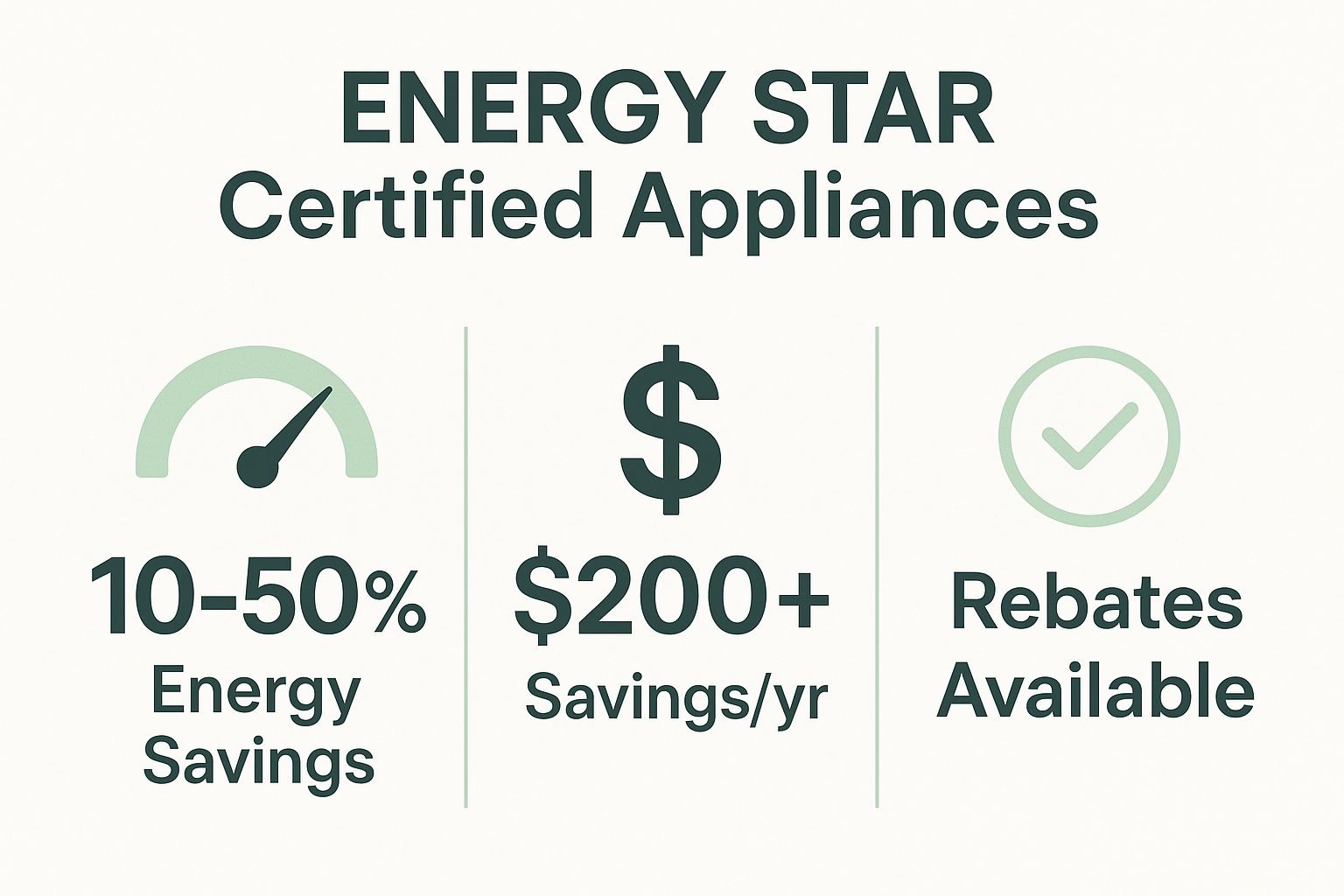
The data clearly shows that the combination of direct energy savings and potential rebates makes certified appliances a financially sound and eco-friendly choice.
Actionable Tips:
- Look for the Label: Always seek out the blue ENERGY STAR mark when shopping for new appliances.
- Check for Rebates: Before buying, check with your local council or energy provider for available rebates on certified models.
- Compare Ratings: Use the yellow Energy Rating Label alongside the ENERGY STAR certification for a direct efficiency comparison between specific models.
2. Optimise Refrigerator and Freezer Settings
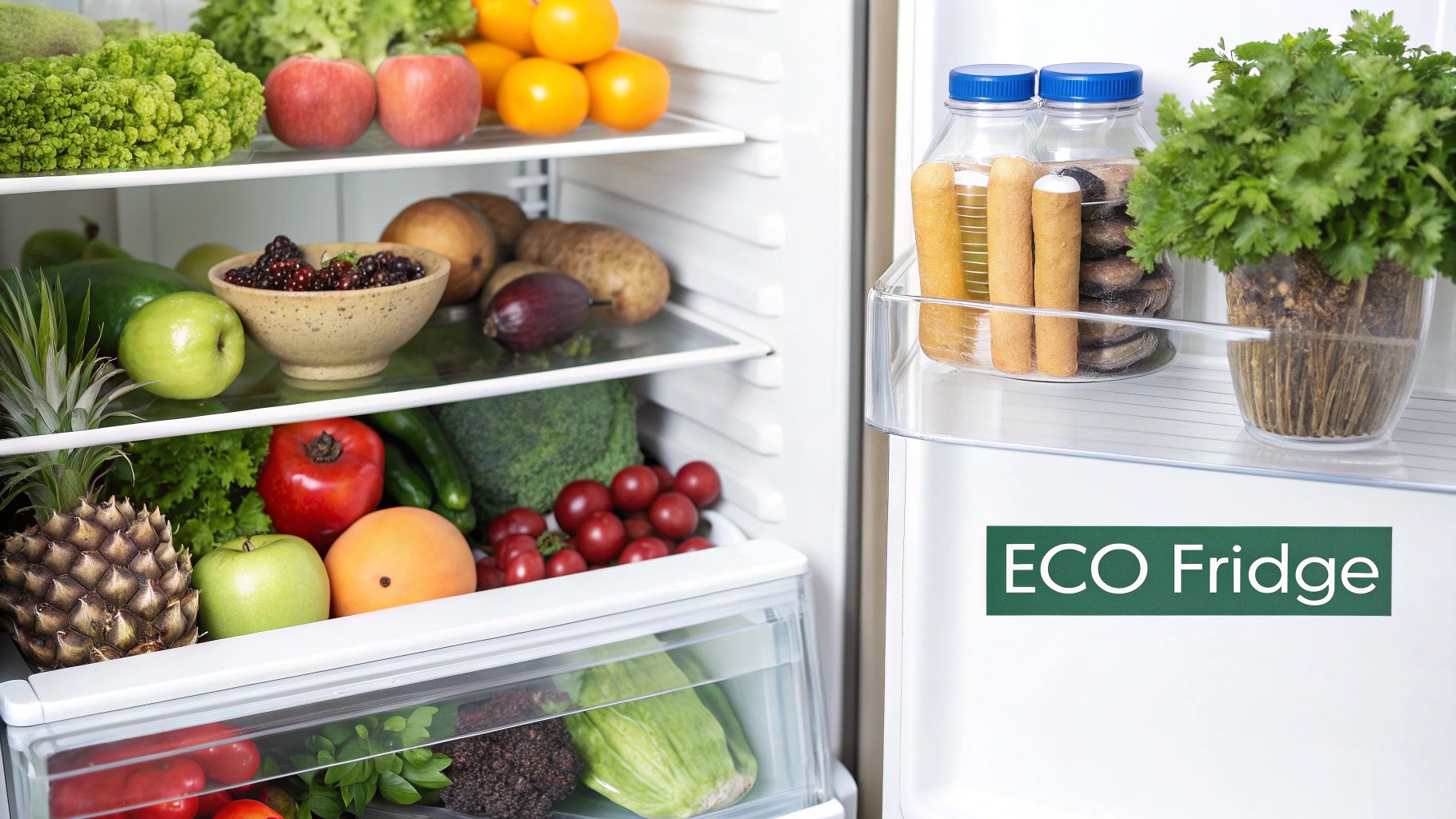
Your refrigerator is one of the hardest-working appliances in your home, running 24/7 to keep your food fresh. Given that refrigeration can account for around 14% of a household's energy use, properly setting its temperature is one of the simplest yet most effective ways to reduce your power consumption without compromising food safety.
How It Works
Modern refrigerators and freezers are designed to maintain a stable internal climate, but setting the temperature colder than necessary forces the compressor to work harder and more frequently. This extra work translates directly into higher energy bills. By finding the optimal balance, you ensure the appliance runs efficiently, using only the energy it needs.
For example, setting your refrigerator to 4°C (38°F) instead of 2°C (35°F) can save between 5-8% on its running costs. Similarly, setting your freezer to -18°C (0°F) instead of a much colder -20°C (-5°F) can reduce its energy use by over 10%. These small adjustments make a tangible difference over the course of a year.
Making the Smart Choice
Check your appliance's built-in thermostat or use an inexpensive appliance thermometer to verify the internal temperatures are accurate. A well-organised fridge also improves airflow, helping it maintain a consistent temperature more easily. For more information, discover how to organise your fridge for maximum efficiency.
Key Insight: Precision is power. A few degrees of adjustment on your refrigerator and freezer settings can unlock significant, continuous energy savings, turning a simple dial turn into a strategic cost-cutting measure.
This simple change requires no investment but offers immediate returns, making it a crucial part of any energy-saving strategy.
Actionable Tips:
- Set the Right Temperature: Aim for a refrigerator temperature between 3°C and 4°C (37-40°F) and a freezer temperature of -18°C (0°F).
- Use an Appliance Thermometer: Don't rely solely on the built-in dial; use a separate thermometer to confirm the true internal temperature.
- Enable Eco-Mode: If your appliance has an "eco" or "vacation" mode, use it to reduce energy consumption when you're away or the fridge is less full.
- Adjust Seasonally: You may need to slightly adjust settings in summer versus winter to compensate for changes in the ambient room temperature.
3. Use Cold Water for Washing Clothes
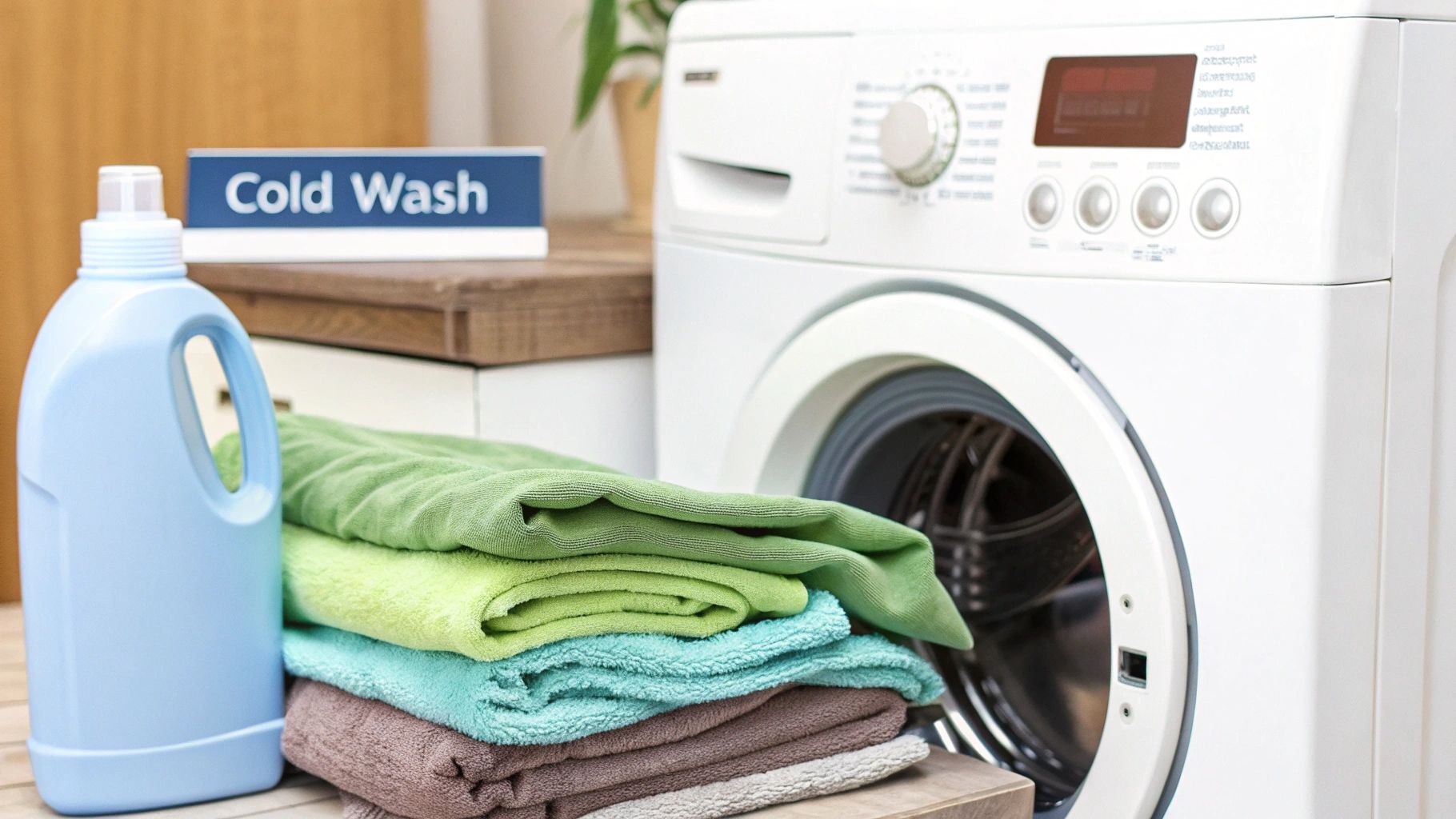
One of the easiest and most effective ways to lower your energy bills is to switch your washing machine setting from hot to cold. The vast majority of the energy consumed by a washing machine, typically 80-90%, is used simply to heat the water. By eliminating this step, you can achieve dramatic energy savings with virtually no effort.
How It Works
Modern washing machines and specialised detergents are engineered to deliver a powerful clean using only cold water. Advanced appliance technology, like the ColdWash™ feature in LG machines, uses enhanced washing motions to penetrate deep into fabrics, while cold-water detergents use enzymes that are specifically activated at lower temperatures to break down stains and dirt.
This approach not only slashes your power consumption but also helps your clothes last longer. Cold water is gentler on fabrics, reducing the risk of colours fading, textiles shrinking, and delicate fibres getting damaged. For instance, brands like Patagonia actively recommend cold washing to preserve the life of their high-performance garments.
Making the Smart Choice
Switching to cold washes is a simple change that pays immediate dividends. For heavily soiled loads, such as sports gear or work clothes, pre-treating stains or using a slightly longer wash cycle can ensure a perfect clean without resorting to hot water. This method aligns perfectly with our other top 10 tips for saving energy with modern appliances, creating a cumulative effect on your household savings.
Key Insight: The true energy villain in your laundry routine isn't the machine itself, but the energy required to heat the water. Switching to cold water neutralises this major energy cost, making it a powerful, zero-cost strategy for efficiency.
Making this small adjustment to your laundry routine can lead to significant savings and better clothing care.
Actionable Tips:
- Choose the Right Detergent: Look for detergents specifically labelled for "cold water" to ensure optimal cleaning performance.
- Pre-Treat Tough Stains: Apply a stain remover directly to any heavy spots before starting the wash cycle.
- Sort Clothes Properly: Continue to separate colours and whites to prevent bleeding, which can be more noticeable in any wash temperature. For more advice, read these laundry tips to make clothes look good and last longer.
4. Utilise Smart Power Strips and Standby Mode Management
Many modern appliances continue to draw power even when turned off, creating what is known as a "phantom load" or "vampire power." This standby consumption can account for 5-10% of a household's total electricity use. Smart power strips provide an automated solution, cutting power to devices in standby mode and eliminating this unnecessary energy drain.
How It Works
Smart power strips are designed to detect when a primary, or "master," device is turned off or goes into standby. Once this happens, the strip automatically cuts power to the "switched" outlets where peripheral devices are connected. This is perfect for home entertainment centres or computer setups, where turning off the TV or PC also powers down speakers, gaming consoles, and printers.
For instance, a TrickleStar smart power strip can save a home office setup over $100 annually by simply managing these peripheral loads. Similarly, individual smart plugs can be scheduled to turn off at certain times, giving you precise control over your energy usage. You can learn more about how WiFi-controlled smart plugs work on folders.co.nz.
Making the Smart Choice
Implementing smart power management is an easy win for energy efficiency. Identify clusters of electronics that are used together, such as your television and its associated sound system or your desktop computer and its accessories. These are the ideal locations for a master-controlled smart strip, providing maximum impact with minimal effort.
Key Insight: Tackling phantom loads with smart power strips is a set-and-forget strategy. It automates energy savings by targeting the hidden power consumption that inflates your bills without you even realising it.
This approach transforms idle electronics from constant energy drains into completely powered-off devices, directly reducing your base energy consumption.
Actionable Tips:
- Identify Clusters: Group electronics like your TV, soundbar, and game console onto one master-controlled smart strip.
- Use the Right Outlets: Plug your main device (e.g., computer) into the "master" outlet and peripherals (e.g., printer, speakers) into the "switched" outlets.
- Programme Schedules: For standalone appliances on smart plugs, set schedules to turn them off completely during a workday or overnight.
5. Implement Smart Thermostat Programming
Your heating and cooling system is one of the largest energy consumers in your home, and managing it efficiently offers substantial savings. Smart thermostats revolutionise this process by learning your household's patterns and automatically adjusting the temperature for optimal energy use without sacrificing comfort. These intelligent devices can reduce your HVAC energy consumption by a remarkable 10-23% through advanced features like intelligent scheduling, geofencing, and learning algorithms.
How It Works
A smart thermostat moves beyond simple timers. It connects to your Wi-Fi and learns your daily routines, automatically lowering the temperature when you're away and raising it just before you arrive home. This eliminates the energy wasted on heating or cooling an empty house. Many models also integrate with other smart home systems, allowing for even more sophisticated energy-saving automations.
For example, a Nest Learning Thermostat can save an average household between $131 and $145 annually on their power bills. Similarly, an Ecobee SmartThermostat is proven to reduce heating and cooling costs by up to 15% through its advanced sensor technology and data-driven insights.
Making the Smart Choice
Implementing a smart thermostat is ideal for any household with a consistent routine, as well as for those with unpredictable schedules, thanks to geofencing technology. This is a key part of our top 10 tips for saving energy with modern appliances because it automates efficiency, ensuring you’re not paying for energy you don’t need.
Key Insight: A smart thermostat acts as your home's energy manager, making hundreds of micro-adjustments daily to prevent waste. It transforms climate control from a manual task into an automated, highly efficient system that pays for itself over time.
This proactive approach ensures consistent comfort and delivers significant, measurable savings on your energy bills year after year.
Actionable Tips:
- Allow for Learning: Give your new thermostat one to two weeks to learn your household's patterns accurately.
- Use Geofencing: Activate the geofencing feature so the thermostat uses your phone's location to automatically switch to an energy-saving mode when no one is home.
- Review Energy Reports: Check the monthly energy reports provided by the thermostat's app to identify new opportunities for savings.
- Integrate Systems: Connect your thermostat to other smart devices, like blinds or fans, for a fully integrated home energy management system.
6. Optimise Dishwasher Loading and Cycle Selection
How you use your dishwasher is just as important as the model you own. Modern dishwashers are engineered for peak efficiency, but unlocking their full energy-saving potential depends on proper loading and cycle selection. By leveraging built-in features, you can significantly reduce both energy and water consumption without compromising on sparkling clean dishes.
How It Works
Many contemporary dishwashers are equipped with advanced sensors and specialised cycles designed to minimise resource use. Features like eco-modes, soil sensors, and half-load options tailor the wash intensity and duration to the specific contents, preventing unnecessary energy and water waste. Strategic loading also plays a crucial role, ensuring water jets can reach every surface effectively for a single, efficient cycle.
For instance, a Bosch dishwasher with an eco-cycle can use up to 30% less energy than its standard cycle. Similarly, Miele’s AutoSense and KitchenAid’s sensor wash technologies automatically adjust settings based on how dirty the dishes are, optimising performance and delivering one of the top energy-saving benefits in modern appliances.
Making the Smart Choice
Before starting a cycle, always ask if the load is truly full. Running a half-empty dishwasher wastes a significant amount of energy and water. It's far more efficient to wait until it's fully loaded. Furthermore, skipping the pre-rinse saves litres of hot water; modern detergents and dishwashers are designed to handle food particles effectively.
Key Insight: Treating your dishwasher like a high-performance tool, rather than a simple on/off machine, unlocks its designed efficiency. Smart loading and cycle selection can cut your dishwasher’s energy and water use by up to 50%.
The video below offers a great visual guide to loading your dishwasher for maximum efficiency.
By following these simple steps, you can ensure your appliance operates at its most economical level.
Actionable Tips:
- Scrape, Don't Rinse: Scrape food scraps into the compost or bin instead of pre-rinsing dishes under the tap.
- Run Full Loads Only: Maximise efficiency by waiting until the dishwasher is completely full before running a cycle.
- Select Eco/Auto Cycles: Always opt for the 'eco', 'energy-saver', or 'auto' setting to let the machine optimise resource use.
- Utilise Air Dry: If your model has an air-dry feature, use it. This skips the energy-intensive heated drying phase. If you're looking for other ways to get better results, explore these tips to achieve drier dishes from your dishwasher.
7. Use Convection and Air Fryer Features
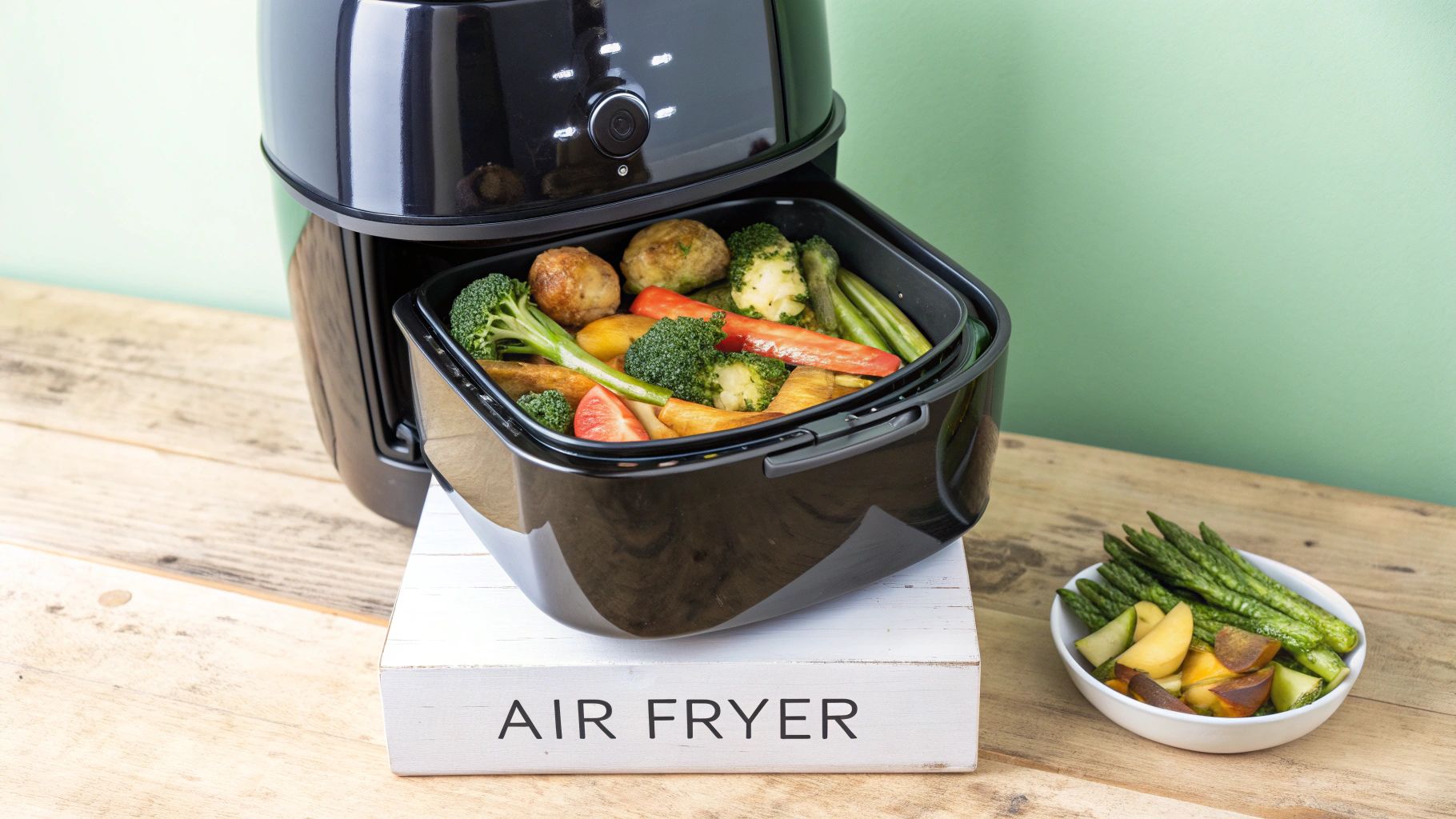
Leveraging the convection and air fryer functions on modern ovens and countertop appliances is a powerful strategy for saving energy. Unlike conventional ovens that rely on static heating elements, these technologies use an internal fan to circulate hot air, creating an even, intense heat that cooks food faster and more efficiently. This significant reduction in cooking time directly translates into lower energy consumption.
How It Works
The constant circulation of hot air eliminates cool spots inside the oven, ensuring food is cooked uniformly from all sides. This process can reduce cooking times by up to 25% and energy use by 20-30% compared to traditional baking methods. The intense, dry heat is also perfect for achieving crispy textures without deep frying.
For instance, a Breville Smart Oven can use up to 50% less energy for a task than a full-sized conventional oven. Many popular models, such as those from Ninja and Sunbeam, are designed specifically for this high-efficiency cooking, making them a smart addition to any kitchen. If you're curious about how these devices work, you can explore the benefits of Sunbeam air fryers to see how they make healthy meals effortlessly.
Making the Smart Choice
Use these features for roasting vegetables, baking, and reheating leftovers to get faster results and save power. For many everyday meals, a countertop convection or air fryer oven can completely replace your larger, less efficient main oven, delivering significant energy savings over time.
Key Insight: Convection and air frying aren't just for trendy recipes; they are core energy-saving technologies. By cooking food faster and at lower temperatures, they fundamentally reduce the amount of electricity required for your daily meals.
Actionable Tips:
- Adjust Your Recipes: When using convection, lower the recommended temperature by about 10-15°C and reduce the cooking time by 25%.
- Don't Overcrowd: Ensure there is space around your food for air to circulate freely. Use shallow pans to maximise heat exposure.
- Skip the Preheat: For foods that cook for longer than 20 minutes, you can often skip the preheating stage entirely, saving even more energy.
8. Leverage Load Sensing and Auto-Adjust Features
Gone are the days of guessing the right cycle for your laundry or dishes. Modern appliances increasingly feature intelligent sensors that do the thinking for you, optimising resource use on a case-by-case basis. Leveraging load sensing and auto-adjust features is one of the easiest ways to ensure you’re not wasting water, energy, or time.
How It Works
These advanced systems use sophisticated sensors to weigh your laundry, detect the soil level of your dishes, or measure the moisture in your clothes. Based on this real-time data, the appliance automatically adjusts key parameters like water levels, cycle duration, and heat settings. This prevents the wasteful practice of running a full, high-energy cycle for a small or lightly soiled load.
For example, a Samsung AddWash washing machine can detect the weight of a partial load and reduce water and energy consumption accordingly. Likewise, LG’s TurboWash technology uses sensors to determine how dirty the clothes are, tailoring the wash cycle for maximum efficiency without compromising cleaning performance.
Making the Smart Choice
To get the most out of these features, you simply need to trust them. Select the "Auto" or "Sensor" cycle and let the appliance manage the process. This approach is particularly effective for households with varied load sizes, ensuring you achieve optimal efficiency whether you're washing a few items or a full basket.
Key Insight: Auto-adjust and load-sensing technologies transform your appliances from static tools into dynamic partners in energy conservation. By allowing them to make data-driven decisions, you eliminate guesswork and guarantee no resource is ever wasted.
Actionable Tips:
- Trust the Auto Cycle: Make the "Auto" setting your default choice for laundry and dishwashing to maximise energy savings.
- Keep Sensors Clean: Periodically wipe down sensors inside your dishwasher or washing machine as recommended in the manual to ensure accurate readings.
- Don't Manually Override: Avoid the temptation to manually select a longer or hotter cycle unless a load is exceptionally soiled. Let the machine do its job.
9. Schedule Appliance Use During Off-Peak Hours
One of the most effective strategies for saving energy with modern appliances involves not just how you use them, but when. Many energy providers in New Zealand offer time-of-use pricing plans, where electricity costs significantly less during off-peak hours. By shifting your high-consumption tasks to these periods, you can slash your power bill without reducing your appliance usage.
How It Works
Time-of-use tariffs are designed to ease demand on the electricity grid during peak times, typically early mornings and evenings. Running your dishwasher, washing machine, or dryer overnight or in the middle of the day could cut the cost of that cycle by 50% or more. Modern smart appliances make this effortless, allowing you to programme them to run automatically during the cheapest windows, reducing both your expenses and the strain on the national grid.
For example, many new dishwashers and washing machines feature a "delay start" function. Smart hot water heaters can be programmed to heat water only during off-peak times, which can save a household over $200 annually. Advanced systems like the Tesla Powerwall can even automate this process, storing cheap off-peak power to be used during expensive peak hours.
Making the Smart Choice
Contact your energy provider to see if they offer a time-of-use plan and what the specific peak and off-peak hours are. This knowledge empowers you to align your household routine with the cheapest electricity rates, turning your daily chores into a powerful cost-saving activity.
Key Insight: Aligning your appliance use with off-peak electricity rates is a powerful financial lever. It allows you to achieve significant savings by simply changing the timing of your energy consumption, a key element in mastering how to save energy with modern appliances.
Actionable Tips:
- Check Your Plan: Contact your power company to inquire about their time-of-use rates and off-peak hours.
- Use Delay Start: Set your dishwasher, washing machine, and dryer to run overnight or during midday lulls.
- Charge Strategically: Charge your electric vehicles, laptops, and other devices during off-peak periods.
- Consider Battery Storage: For ultimate optimisation, a home battery system can store cheap energy to power your home during peak times.
Energy-Saving Tips Comparison Matrix
| Item | Implementation Complexity | Resource Requirements | Expected Outcomes | Ideal Use Cases | Key Advantages |
|---|---|---|---|---|---|
| Upgrade to ENERGY STAR Certified Appliances | Medium (upfront cost & selection) | High (cost, smart tech) | 10-50% energy savings, lower bills | When replacing old appliances | High savings, rebates, superior performance |
| Optimize Refrigerator and Freezer Settings | Low (simple settings) | None | 5-10% energy savings | Quick, no-cost improvements | Immediate savings, extends freshness |
| Use Cold Water for Washing Clothes | Low (change detergent & cycle) | Low (cold-water detergents) | Up to 90% energy reduction | Laundry with modern detergents | Saves energy, preserves fabrics |
| Utilise Smart Power Strips and Standby Mode Management | Medium (setup and placement) | Medium (cost, tech setup) | 5-10% electricity savings | Managing multiple electronics | Automates phantom load elimination |
| Implement Smart Thermostat Programming | High (installation & setup) | High (device & WiFi needed) | 10-23% HVAC energy savings | HVAC optimisation in smart homes | Automated control, detailed reporting |
| Optimise Dishwasher Loading and Cycle Selection | Low-Medium (learning & habits) | Low | 30-50% energy and water reduction | Dishwashing routine improvements | Saves resources, better cleaning |
| Use Convection and Air Fryer Features | Low-Medium (tech use, recipe adapt) | Medium (appliance cost) | 20-30% faster and energy efficient cooking | Cooking efficiency improvements | Faster, energy-saving, versatile |
| Leverage Load Sensing and Auto-Adjust Features | Medium-High (appliance quality) | High (smart appliances) | Up to 40% water and energy reduction | Smart washing and dishwashing | Customised use, no manual input |
| Schedule Appliance Use During Off-Peak Hours | Medium (planning and programming) | Low-Medium (timing & smart tech) | 50-70% cost reduction on electricity | Cost-saving with time-of-use pricing | Automated scheduling, cost & grid benefits |
Your Blueprint for a Smarter, More Efficient Home
Navigating the landscape of home energy consumption can feel complex, but as we've explored, mastering your modern appliances is the key to unlocking significant savings and efficiency. These top 10 tips for saving energy with modern appliances are not just isolated tricks; they represent a comprehensive blueprint for transforming your relationship with energy. It's about shifting from passive consumption to active, intelligent management of the devices that power your daily life.
The journey towards a more energy-efficient household is built on two fundamental pillars: making smarter choices when you purchase new appliances and optimising the ones you already own. Upgrading to an ENERGY STAR certified refrigerator or washing machine establishes a powerful, low-energy foundation. However, the true mastery lies in the small, consistent actions you take every day. It's in choosing the cold wash cycle, leveraging your dishwasher's eco-setting, and programming your smart thermostat to align with your family’s actual schedule, not just a factory default.
Key Takeaways for Lasting Impact
The most empowering realisation is that you don't need to implement all ten strategies overnight. The path to substantial savings is incremental. Consider these core principles as your starting point:
- Awareness is Your Greatest Tool: Simply paying attention to how and when you use energy is the first step. Use the insights from this article to look at your appliances through a new lens. Is your fridge too cold? Are you running the dishwasher half-empty?
- Technology is Your Ally: Modern appliances are packed with features designed to reduce waste. From load-sensing washing machines to the convection function on your oven, these innovations are there to be used. Take a few moments to understand their purpose and integrate them into your routine.
- Consistency Trumps Intensity: Running a single cold wash will save a little energy. Consistently choosing the cold cycle for the majority of your laundry loads over a year will save a significant amount on your power bill. The cumulative effect of these small, habitual changes is where the real power lies.
Your Actionable Next Steps
Begin by selecting one or two tips that feel the most manageable for your household. Perhaps this week, you focus on optimising your refrigerator and freezer temperatures. Next week, you could experiment with scheduling your dishwasher to run during off-peak hours. By building these habits one at a time, you create a sustainable framework for efficiency that feels effortless.
Ultimately, embracing these principles does more than just lower your expenses. It contributes to a reduced carbon footprint, supports a more stable energy grid, and empowers you with a greater sense of control over your home environment. With the right knowledge and today’s incredible appliance technology, creating a smarter, more efficient, and more affordable home is well within your reach.
Ready to put these principles into practice with an upgrade? Explore the extensive range of energy-efficient appliances at Folders. From the latest ENERGY STAR certified refrigerators to smart washing machines, Folders provides the technology you need to build a truly efficient modern home.