

Fisher & Paykel Clothes Dryer Guide | Find the Best NZ Model
When it comes to outfitting a Kiwi home, a Fisher & Paykel clothes dryer often tops the list. They've built a solid reputation for focusing on what really matters: looking after your clothes while keeping an eye on your power bill. Their secret lies in smart technologies like heat pump and condenser systems, which are designed for top-notch drying performance without being harsh on your favourite fabrics.
Your Guide to Finding the Right Fisher and Paykel Dryer
Picking a new appliance can feel a bit overwhelming, but narrowing down the perfect Fisher & Paykel dryer for your home is actually quite straightforward. It all comes down to understanding what makes their machines special and then lining that up with what your family truly needs.
It's no secret that Fisher & Paykel is a dominant force in New Zealand. They hold the lion's share of the country's NZD 1.4 billion household appliance market for a reason. That kind of trust from Kiwis is earned through years of delivering quality and genuine innovation that just works for our homes.
Starting With the Basics
Before getting lost in model numbers and specific features, let's get the fundamentals right. You’ll want to have a look at our general clothes dryer buying guide for NZ for some great all-around tips.
When you're looking specifically at Fisher & Paykel, you'll mainly be choosing between two core technologies: heat pump and condenser.
To give you a quick overview, here's how they stack up against each other.
Fisher & Paykel Dryer Technologies at a Glance
This table breaks down the main drying technologies from Fisher & Paykel, helping you see the fundamental choices at a glance.
| Technology Type | Key Benefit | Best For |
|---|---|---|
| Heat Pump | Maximum energy efficiency and gentler on fabrics | Eco-conscious households, those with delicate clothes, and anyone wanting to lower their long-term power bills. |
| Condenser | Installation flexibility (no venting needed) and straightforward operation | Apartments, laundries without external wall access, or anyone needing a simple plug-and-play solution. |
Each technology has its clear advantages, so the "right" one really depends on your unique situation.
The best way forward is to think about your laundry habits. How big are your loads? Where will the dryer go? What's your budget, not just for the machine itself but for running it week after week? Answering these simple questions will give you a solid foundation and point you directly towards the model that makes the most sense for you.
Heat Pump vs Condenser Dryers Explained
When you’re in the market for a Fisher & Paykel clothes dryer, one of the first and most important decisions you'll face is whether to go with a heat pump or a condenser model. Think of it as choosing an engine for your car; both get the job done, but the technology under the bonnet is worlds apart. This choice directly affects your power bill, how gently your clothes are treated, and your upfront spending.
A condenser dryer is what many of us would consider the traditional, reliable choice. It works by pulling in air, heating it up, and tumbling it through your damp laundry. This hot, moisture-filled air then passes through a condenser, which rapidly cools it down, turning the vapour back into water. This water is collected in a tank you empty or, in some models, sent directly down the drain. Simple, effective, and dependable.
The Gentle Efficiency of Heat Pump Technology
Now, a heat pump dryer is the clever, modern alternative. Instead of constantly heating fresh air from the room, it works like a super-efficient dehumidifier in a closed circuit. It warms the air just enough to gently coax moisture from your clothes, then cools that same air to condense the water out.
The real magic happens next. The heat captured during that cooling and condensing process isn't just wasted—it’s recycled and used to warm the air for the next cycle. It’s a brilliant energy-saving loop.
This recycling system means heat pump dryers use dramatically less electricity and operate at much lower temperatures. That’s a massive win for your clothes, as the gentle heat is kinder to delicate fabrics, which means less shrinkage and wear and tear over the long haul.
Because they reuse heat instead of venting it into your laundry, heat pump dryers are not only gentler on your wardrobe but also make a much smaller dent in your power bill. It's a real step forward in laundry appliance efficiency.
Key Differences at a Glance
So, what's the catch? It really boils down to cost versus running expenses. Condenser dryers usually have a lower price tag and can sometimes dry a load a little bit faster. But their higher energy use means they cost you more on every power bill.
On the flip side, heat pump dryers have a higher initial purchase price, but their incredible energy efficiency can deliver significant savings over the life of the machine, making them a very smart long-term investment. If you're keen to get into the nitty-gritty, our guide on heat pump dryers for Kiwi homes breaks it down even further.
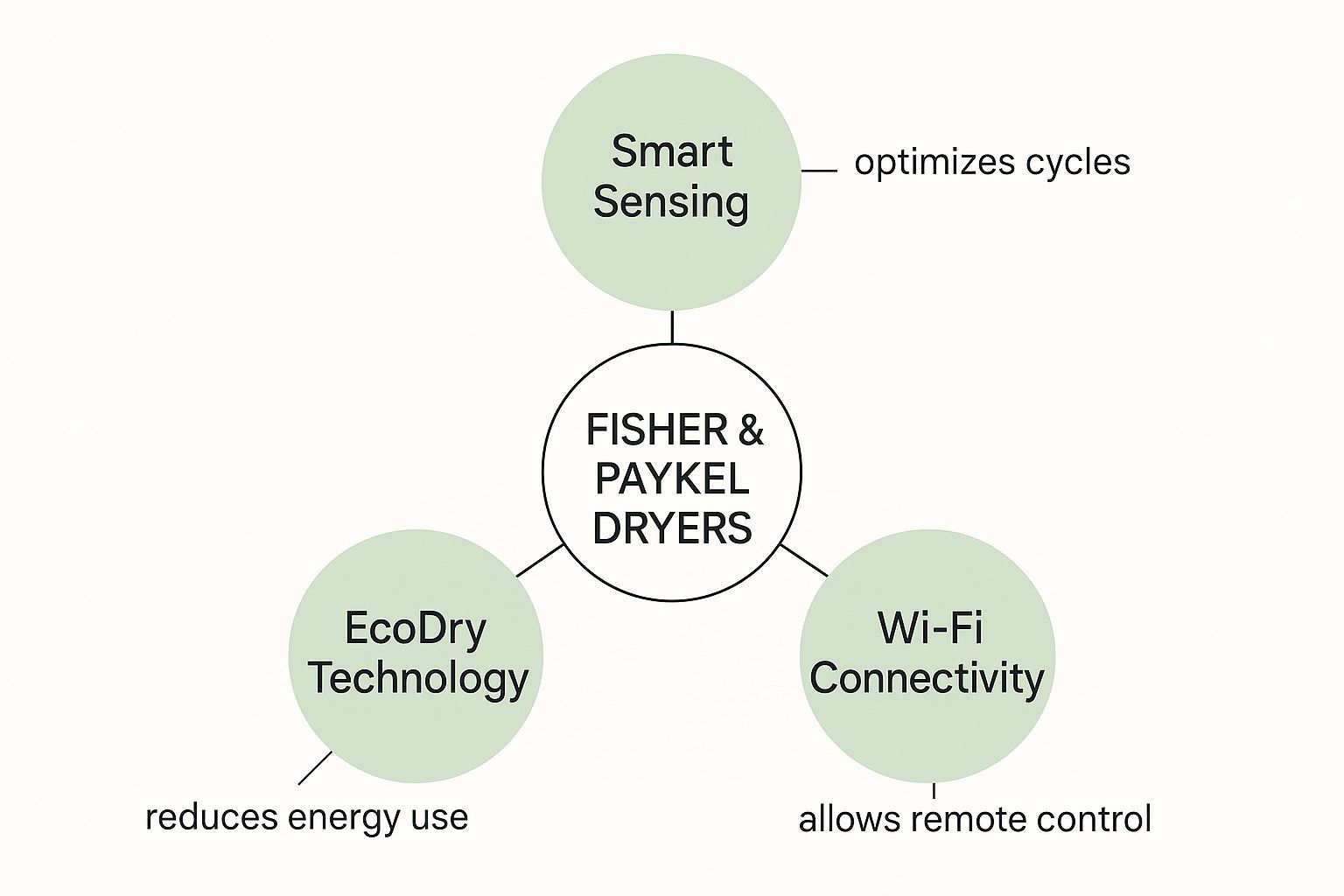
As you can see, Fisher & Paykel's design philosophy is all about making smart technology work for you—from energy-saving features to the convenience of connectivity. In the end, picking the right dryer is about finding the perfect balance between your budget today and your goals for energy savings and fabric care tomorrow.
Exploring Standout Features and Innovations

Once you've decided between a heat pump or condenser model, you can get into the really interesting stuff. What truly sets a Fisher & Paykel dryer apart are the thoughtful details—the clever features that make laundry feel less like a chore and more like a simple task. These aren't just gimmicks; they're practical innovations designed to protect your clothes, save you time, and make your life just that little bit easier.
One of the most valuable features you’ll find is Auto-sensing technology. Forget guessing how long a cycle needs. Instead, think of it as an expert co-pilot for your laundry. Sensors inside the drum constantly monitor the moisture level of your clothes.
As soon as everything is perfectly dry, the machine shuts off automatically. This is brilliant because it prevents over-drying—a common mistake that can shrink fabrics, cause unnecessary wear and tear, and waste a surprising amount of power. It's a simple idea that makes a huge difference to both your wardrobe and your energy bill.
Everyday Convenience and Smart Design
Fisher & Paykel’s focus on smart, user-friendly design runs deep. It's been part of their DNA since the company started right here in New Zealand back in 1934. To give you an idea of their commitment to innovation, by the mid-2000s, they held over 420 patents. This long history of designing for Kiwi homes is something you can feel in their products. If you're interested, you can read more about Fisher & Paykel's legacy of innovation and their local roots.
This dedication to practical design shows up in features you'll actually use every day.
- Specialised Drying Cycles: You get far more than just 'cottons' or 'synthetics'. Many models come with cycles specifically for bulky items like duvets, delicate woollens that need gentle care, and even high-tech sports gear.
- Practical Drum Features: A simple internal drum light is a life-saver, making sure no stray sock ever gets left behind. The reversible door is another fantastic touch, giving you the freedom to set it up for a left or right-hand opening—a must-have for tricky laundry spaces.
- Steam Refresh Cycle: This is a real game-changer. It's perfect for those lightly worn clothes that aren't dirty but just need a quick freshen-up. The steam cycle de-wrinkles and revitalises items in about 20 minutes, meaning you can skip the full wash and spend less time ironing.
These features show a real understanding of what people actually need. It’s not just tech for the sake of it; it's about solving real-world problems, like finding that lost sock or avoiding the ironing board on a busy morning.
When you put it all together, these innovations create an appliance that’s intuitive, helpful, and genuinely a pleasure to use. By tackling the everyday frustrations of laundry, a Fisher & Paykel dryer proves its worth load after load.
Comparing Popular Fisher & Paykel Dryer Models
Alright, we've covered the tech behind the scenes. Now, let's get practical and see how that technology shows up in the actual appliances you can bring home. Choosing the right Fisher & Paykel clothes dryer really boils down to finding the model that fits your family's laundry routine like a glove. Whether you're dealing with mountains of washing for a big family or just need something for a cosy apartment, there's a dryer built for the job.
Let's put a couple of their most popular models side-by-side. The goal here isn't to drown in technical specs, but to get a feel for the different personalities of these machines so you can spot the one that’s right for you.
The High-Efficiency Champion: The Heat Pump Dryer
First up, we have the premium heat pump dryer. Honestly, this is the top of the line in the Fisher & Paykel range and for good reason. These models are the perfect match for anyone who prioritises long-term energy savings and wants the absolute best care for their clothes.
- Capacity: You’ll typically find these in generous 8kg or 9kg sizes. That’s more than enough room for a big family's daily load, bulky duvets, and a whole stack of towels.
- Energy Rating: This is where they leave everything else in the dust, often boasting incredible energy ratings of 9 or even 10 stars. That efficiency translates directly into smaller power bills, month after month.
- Key Features: It's not just about saving power. These dryers come loaded with clever cycles like Steam Care, which is a lifesaver for de-wrinkling shirts or just freshening up a jacket. Many also have Wi-Fi, so you can control them from your phone.
Think of the 9kg heat pump dryer as the ultimate investment for a busy household. It's got the space, the gentle low-temperature drying to protect your favourite clothes, and it delivers unbeatable energy savings.
The Versatile Workhorse: The Condenser Dryer
Next, let's look at the condenser dryer. These models are fantastic all-rounders, offering great performance and flexibility that make them a superb fit for countless Kiwi homes. They are the go-to solution when you can't install a vent to the outside.
A condenser model is a true workhorse—reliable, straightforward, and effective. It's perfect for anyone who needs a solid drying solution without the higher upfront cost of a heat pump model.
The real beauty of a condenser dryer is its 'plug and play' simplicity. Because it either collects water in a removable tank or drains it away through a hose, you can put it almost anywhere you have a power socket—a dedicated laundry, a garage, or even a cupboard.
To make the choice a bit clearer, here’s a quick comparison of the two main types.
Fisher & Paykel Dryer Model Comparison
This table gives you a snapshot of how the different Fisher & Paykel dryer models stack up, helping you weigh up capacity, running costs, and standout features.
| Model Series | Capacity (kg) | Energy Rating | Key Feature Highlight |
|---|---|---|---|
| Heat Pump | 8kg - 9kg | 9-10 Stars | Unmatched energy efficiency and advanced fabric care cycles like Steam Refresh. |
| Condenser | 7kg - 8kg | 2-4 Stars | Excellent installation flexibility and a lower upfront cost. |
As you can see, choosing the right model is all about finding your personal sweet spot.
In the end, picking your perfect Fisher & Paykel clothes dryer is a balancing act between capacity, efficiency, and special features on one side, and your budget on the other. For a more detailed look at the wider market, check out our comprehensive guide to find your best dryer in 2025 for even more comparisons.
Installation and Maintenance Best Practices
To get the very best performance out of your Fisher & Paykel clothes dryer, it all comes down to a solid setup and a bit of routine care. Proper installation is more than just getting it to fit in the laundry; it’s about setting it up to run efficiently and safely from the first load.
One of the biggest things to get right is giving your dryer enough room to breathe. Think of it like a marathon runner—it needs plenty of air to perform at its best. Since all dryers generate heat, making sure there’s good clearance around the sides and back prevents overheating. This is especially true for heat pump models, which pull in ambient air to work their magic.
Key Installation Checks
Whether you’ve chosen a condenser or a heat pump model, where you put it really matters. It absolutely must sit on a level, stable surface to stop it from vibrating and making a racket while it’s running. While these dryers don’t need to be vented outside, they still need clear airflow, so resist the urge to shove them right up against the wall.
Giving your dryer just a few extra centimetres of space for ventilation can have a noticeable impact on drying times and energy consumption. It’s a small detail that pays off with every load.
If you’re planning to stack your dryer on top of your washing machine, always use the proper stacking kit from the manufacturer. It’s designed to lock the two appliances together safely and securely. Getting these first steps right is crucial, and you can find more handy tips in our guide on what you need to know when buying appliances.
Simple Maintenance For A Long Lifespan
The good news is that keeping your Fisher & Paykel dryer in top nick doesn't require a special toolkit or any technical skills. It's all about forming a few simple habits that will protect your investment and keep everything running just as it should.
Think of this routine maintenance as your first line of defence against common problems. It’s the key to making sure your dryer works at its best, every time.
Your Essential Checklist:
-
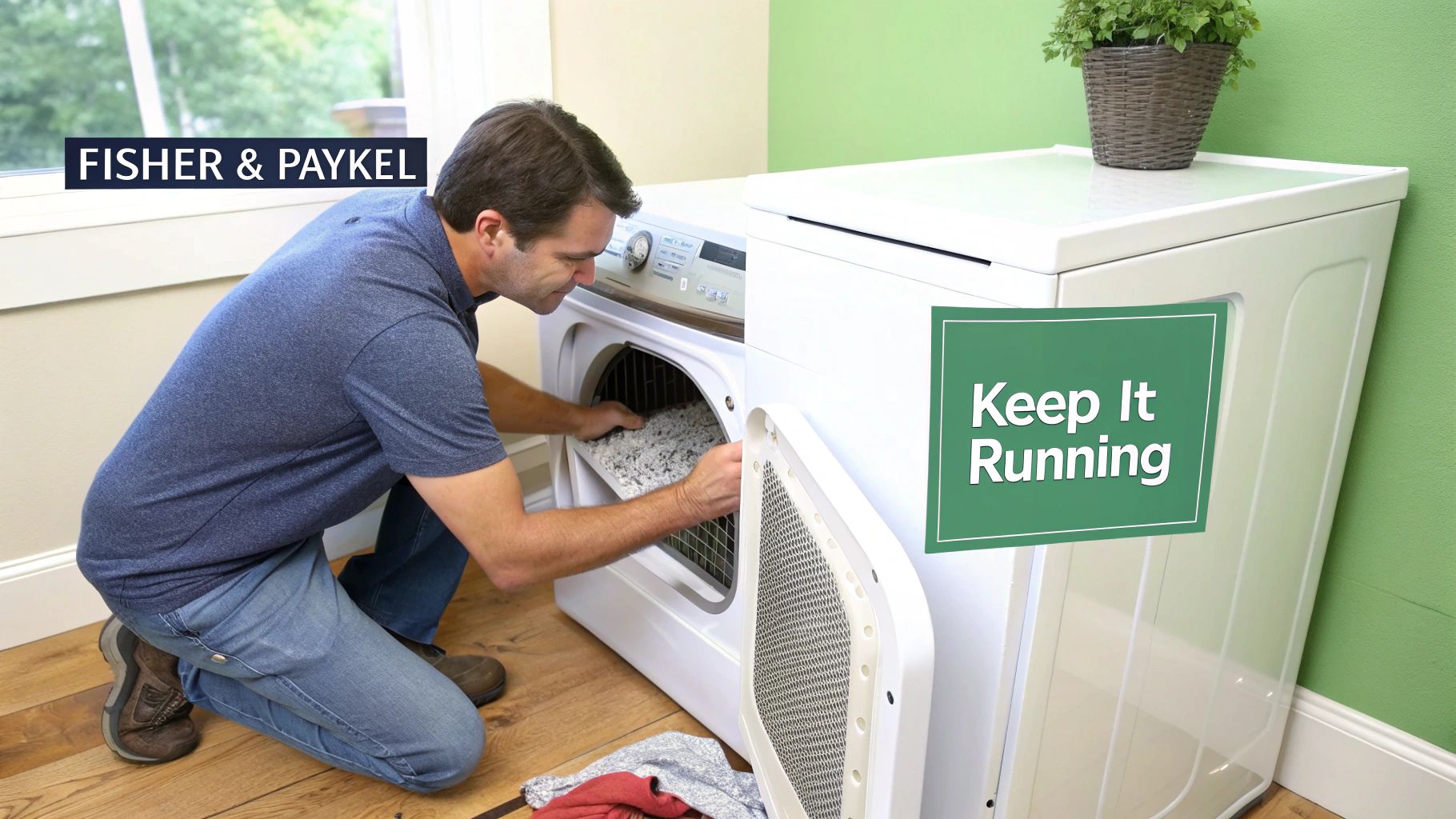
Clean the Lint Filter After Every Single Use: This is, without a doubt, the most important thing you can do. A clogged filter chokes the airflow, making the dryer work harder and run longer. This not only wastes energy but can also become a serious fire hazard. Just pull the filter out and wipe it clean—it literally takes seconds.
-
Empty the Water Tank Regularly: For condenser and heat pump models, all that moisture extracted from your clothes collects in a tank. You’ll want to empty this after each cycle, or at least when the indicator tells you it’s full. If you don't, the machine will simply stop mid-cycle until you do.
-
Check the Heat Exchanger: Heat pump dryers have a secondary filter, often called the heat exchanger, that also needs a bit of attention. Your user manual will have the specifics, but a quick, gentle vacuum every few months is usually all it takes to keep it clear of any sneaky lint and dust.
These small actions really do add up, making a huge difference in how reliably your dryer performs for years to come.
Troubleshooting Common Dryer Problems
Even a top-notch Fisher & Paykel dryer can have an off day. When it does, don't immediately reach for the phone to book a technician. Many of the most common hiccups are surprisingly easy to sort out yourself, which can save you a bit of time and money.
The classic issue we hear about all the time is this: the dryer tumbles, but there's no heat. Before you start thinking about expensive repairs, let's cover the basics. I know it sounds obvious, but you’d be amazed how often the problem is as simple as the plug being slightly loose or accidentally selecting an ‘Air Fluff’ cycle. Always check the simple stuff first.
Simple Fixes for Common Headaches
Your next port of call should always be the lint filter. Honestly, if you do one thing for your dryer, make it this. Cleaning it out after every single load is the most important piece of maintenance you can perform.
Think of it like a blocked nose—if air can't get through, nothing works properly. A clogged filter severely restricts airflow, making your dryer work overtime. This not only wastes power but is also the number one reason clothes come out damp after a full cycle.
Your dryer's performance is directly tied to its airflow. A clear lint filter and unobstructed ventilation are non-negotiable for efficient, effective drying. It’s the foundation of a healthy, long-lasting appliance.
If you find your clothes just aren't smelling quite right, the issue might be part of your broader laundry routine. You can find some excellent general laundry tips for fresh-smelling clothes that work hand-in-hand with good drying habits.
When to Call a Professional
So, you’ve checked the settings and the lint filter is spotless, but your clothes are still damp or the machine won't heat up. At this point, it’s probably time to call in a professional. Issues with internal components like heating elements, thermostats, or sensors are jobs best left to a qualified technician who knows what they're doing.
It’s worth noting that Fisher & Paykel appliances are built to last, which is why they're such a staple in Kiwi homes. In fact, the company recently saw a 2.9% increase in sales revenue in New Zealand over a ten-month period, which really speaks to their reputation for reliability. For more great advice on keeping your whole wardrobe in top shape, have a look at our guide on https://folders.co.nz/blogs/folders-home-learning-centre/a-few-laundry-tips-to-make-clothes-look-good-and-last-longer.
Your Questions Answered
Choosing a new appliance is a big decision, so it's completely normal to have a few questions floating around. To help you feel confident in your choice, we've gathered answers to some of the most common queries we hear from Kiwis about Fisher & Paykel dryers.
Can I Put My Fisher & Paykel Dryer on Top of Any Washing Machine?
This is one of the most practical questions we get. While stacking is a brilliant space-saver, you can only safely stack your Fisher & Paykel dryer on top of a compatible Fisher & Paykel front-loading washer.
You absolutely must use the official stacking kit made for your models. Think of it less like a shelf and more like a safety harness. It’s specially engineered to lock the two machines together, preventing any dangerous movement, especially when your washer hits a high-speed spin.
How Often Do I Need to Clean the Heat Exchanger?
This one’s for the heat pump dryer owners. Your main lint filter needs a quick clean after every single load, but the heat exchanger is a different story and needs much less frequent attention.
As a rule of thumb, it’s a good idea to check and clean the heat exchanger, usually found at the bottom of the dryer, every few months. A gentle once-over with your vacuum’s soft brush attachment is perfect for clearing out any fine lint.
Keeping this part clean is the secret to making sure your dryer continues to run at peak energy efficiency.
What’s the Deal With the ‘Wool’ Cycle?
That special Woolmark-certified cycle is your secret weapon for looking after delicate, hand-wash-only woollen garments. It’s a game-changer.
This cycle uses incredibly low temperatures and a very gentle tumbling motion. This means it can safely dry those precious items without the risk of shrinking or damage. It’s a fantastic feature that finally lets you machine-dry clothes you’d otherwise never dream of putting in a dryer.
Ready to find the perfect drying solution for your laundry? Check out the full range of innovative and efficient appliances at Folders. Find your ideal Fisher & Paykel clothes dryer today!