

Your Guide to the Agile Standing Desk in NZ
So, what exactly is an agile standing desk? It’s a height-adjustable workspace, but it's much more than just a desk that goes up and down. Think of it as a tool designed for a dynamic and flexible way of working, encouraging you to change your posture often, sit less, and adapt to different tasks throughout your day. The end result? A big boost to both your well-being and your productivity.
The Modern Workspace Shift in New Zealand
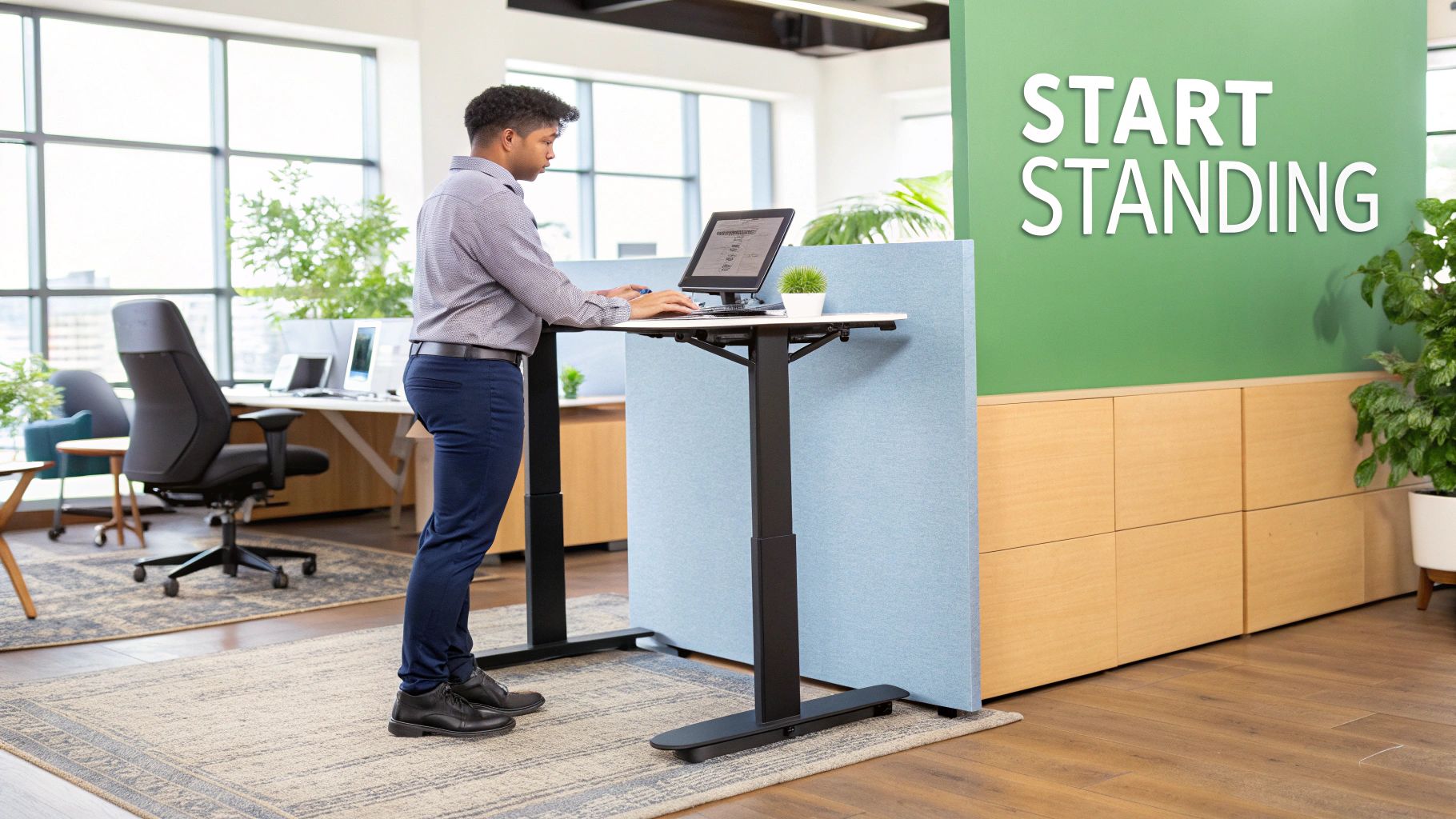
The classic nine-to-five, chained to a desk and chair, is quietly becoming a thing of the past here in New Zealand. Across the country, from bustling corporate offices to quiet home studies, workspaces are being completely re-imagined. They're shifting from rigid, static stations into dynamic environments that put health first.
This change is happening because we’re finally realising just how closely our physical health is tied to our professional focus and overall output.
From Static to Agile
A traditional desk is a bit like a stationary bike; it has one job and you do it in one fixed position. It works, sure, but it doesn't exactly encourage movement or variety.
An agile standing desk, on the other hand, is more like a versatile cross-trainer. It lets you switch effortlessly between sitting, standing, and any height in between. You can adjust it to match your energy levels and whatever task you’re tackling at that moment.
This very adaptability is what makes a desk truly ‘agile’. It’s not just about the mechanics of changing height; it's about building a workflow around activity. It’s about creating a space where movement feels natural and easy, helping you stay energised and engaged.
Why This Guide Matters
Kiwis are embracing these ergonomic solutions in droves, and it’s a clear sign of this new mindset. In fact, the standing desk market in the Asia-Pacific region, which includes NZ, is expected to grow by around 7.3% each year between 2025 and 2035. You can dig deeper into this trend by checking out the full research on standing desk demand.
The goal is no longer just to get tasks done. It's about getting them done in a way that supports our health and focus for the long haul. An agile workspace turns a simple piece of furniture into a powerful tool for finding that balance.
In this guide, we'll walk you through everything you need to know to understand, choose, and get the most out of an agile standing desk. We’ll show you how to turn your workspace from a place of passive work into an active hub for professional success and personal well-being.
Unlocking Health and Productivity Benefits
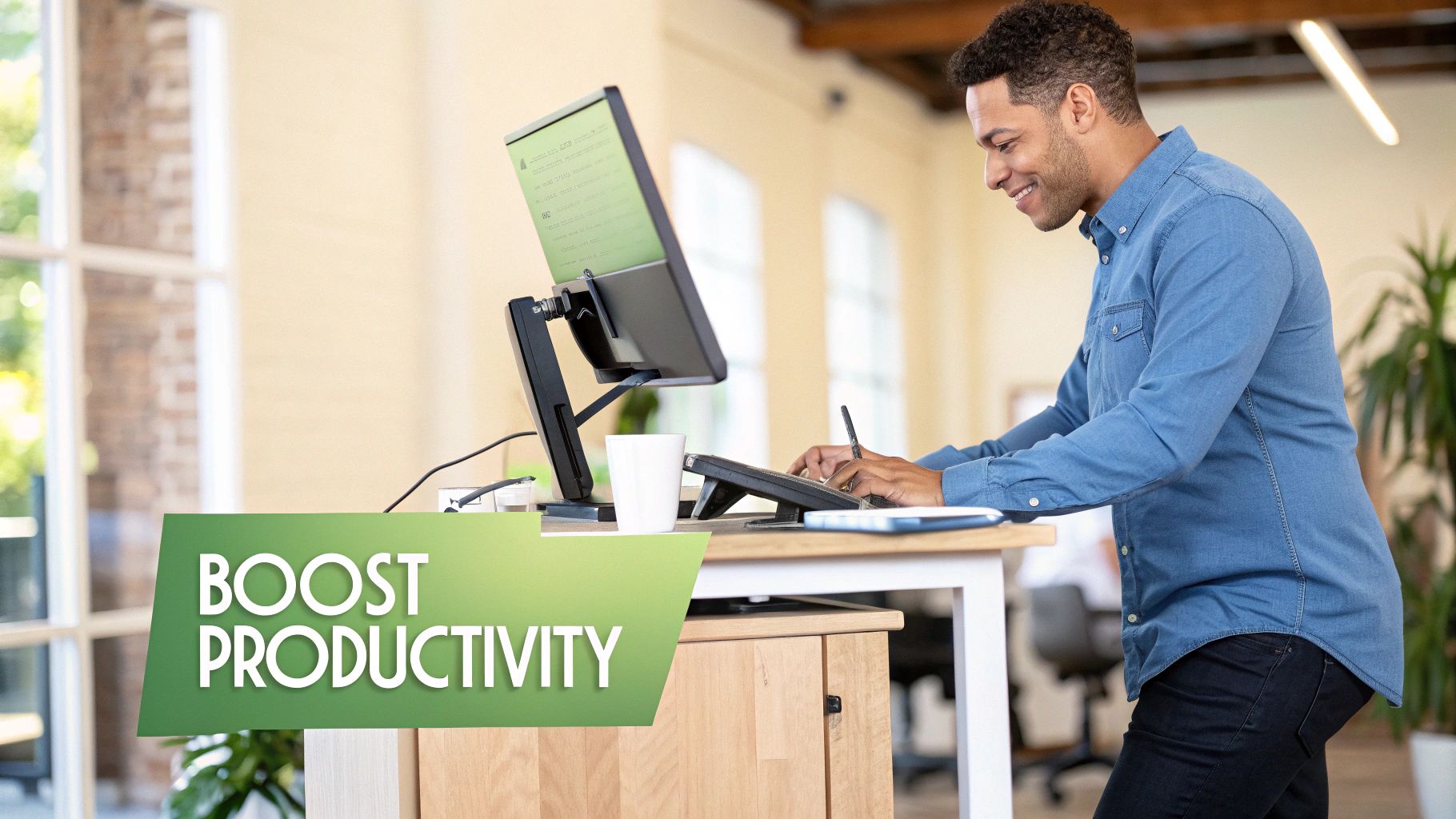
The biggest and most immediate win you get from an agile standing desk is breaking free from the trap of a completely sedentary workday. Let’s be honest, our bodies aren’t designed to be locked into a single, static position for eight hours straight. Introducing gentle, consistent movement is what they crave.
Simply alternating between sitting and standing engages different muscle groups, gets your blood flowing, and takes a huge amount of strain off your lower back and neck. Think of it as a bit of cross-training for your workday. You stop overworking the same old slouching muscles by giving them regular breaks and waking up others. This variety is the secret sauce for better posture and genuine, long-term comfort.
The Ergonomic Advantage
An agile standing desk lets you fine-tune your setup to perfection, whether you're sitting or standing. This level of customisation is your best defence against the aches and pains that come from a workstation that just doesn't fit you right. Instead of forcing your body to conform to a one-size-fits-all desk, you’re tailoring the environment to fit you.
This personalised approach makes a real difference. In fact, New Zealand occupational health studies have found that bringing in standing desks can cut employee discomfort by up to 54% and boost productivity by around 15%. Even better, NZ workplaces that have adopted agile setups have reported a 23% decrease in sick leave tied to back and neck problems. That’s a pretty clear return on investment.
An agile standing desk does more than just lift your monitor; it lifts the physical burden of a static workday, freeing up your body and mind to focus on what truly matters.
A Boost for Your Brain and Workflow
The benefits go well beyond just your spine. Breaking up long stretches of sitting with short periods of standing can do wonders for your energy levels and mental focus. It’s amazing how many people say they feel more alert and switched-on after standing up, helping them power through that classic mid-afternoon slump.
This physical change can also be a catalyst for fresh thinking. A designer might crack a tricky layout just by changing their physical perspective, or a manager might feel more dynamic leading a team meeting on their feet. To get the most out of this, it's about actively combating sedentary office behavior and making movement a natural part of your day. As you can see, https://folders.co.nz/blogs/folders-home-learning-centre/the-benefits-of-height-adjustable-desks are well-proven. By building movement into your routine, you’re not just working healthier; you're working smarter.
How to Choose the Right Agile Standing Desk
With so many options on the market, picking the perfect agile standing desk can feel a little overwhelming. But it doesn't have to be. The trick is to start with what really matters: your workflow, your space, and your budget. Thinking through these things first makes the whole process easier and helps you find a desk that will actually make your workday better.
The first big choice you'll likely face is between an electric model and a manual one. Electric desks are fantastic for their smooth, one-touch adjustments, making it completely effortless to move between sitting and standing throughout the day. That convenience really is key to building a good habit of regular movement.
If you're working with a tighter budget, a manual crank desk or a desktop converter are both excellent alternatives. Converters are especially handy if you already have a desk you like; they just sit on top and add that height-adjustability without needing to replace your whole setup.
Core Features to Evaluate
Once you've got a type in mind, it’s time to dig into the details. Not all standing desks are built the same, and a few key specs can make a huge difference to your daily experience.
- Motor System (Single vs. Dual): For electric desks, you’ll see single and dual-motor options. Dual-motor systems are generally faster, quieter, and can lift more weight, making them a much more durable choice if you have a heavy-duty setup.
- Height Adjustment Range: Always check the minimum and maximum height. You need to be sure it accommodates your body comfortably, both when you’re sitting and standing. This is particularly important if you're taller or shorter than average.
- Weight Capacity: Add up the weight of everything you plan to put on your desk—monitors, laptop, speakers, you name it. Make sure the desk's lift capacity can handle your gear without putting any strain on the motor.
- Desktop Material and Size: The surface itself is a big part of the desk. Think about what fits your space and your style. You’ll find everything from tough laminates to beautiful solid wood, each with its own look and feel.
Recent analysis of New Zealand’s office furniture market shows that height-adjustable desks are becoming more and more popular. The average price for a quality electric standing desk in New Zealand is typically between NZD 600 and NZD 1,200. This shows people are increasingly willing to invest in good ergonomics for their long-term health. You can find more details on height-adjustable desk market trends to see how the market is evolving.
Smart Features You Won't Want to Miss
Beyond the core mechanics, there are a few "quality of life" features that can take a standing desk from good to great. These are the little details that make the desk feel like a natural part of your workflow, not just another piece of furniture.
A truly agile desk should adapt to you, not the other way around. Look for features that remove friction from your daily routine, encouraging you to move more frequently.
To help you decide, here’s a quick comparison of the main desk types.
Comparing Agile Standing Desk Types
This table breaks down the key features of each desk type to help you figure out which one is the best fit for your workspace and budget.
| Feature | Full Electric Desk | Manual Crank Desk | Desktop Converter |
|---|---|---|---|
| Adjustment Method | Push-button electric motor | Hand crank | Manual lift (spring/gas-assisted) |
| Ease of Use | Effortless, one-touch | Requires physical effort | Quick, but can be clunky |
| Speed | Fast (3-5 cm per second) | Slow, depends on user | Instant, but limited range |
| Best For | Frequent sit-stand transitions | Budget-conscious users | Existing desks, small spaces |
| Price Point | Higher | Lower | Lowest |
Ultimately, an electric desk offers the most convenience, while converters are a brilliant entry-level option. Making a thoughtful choice now.
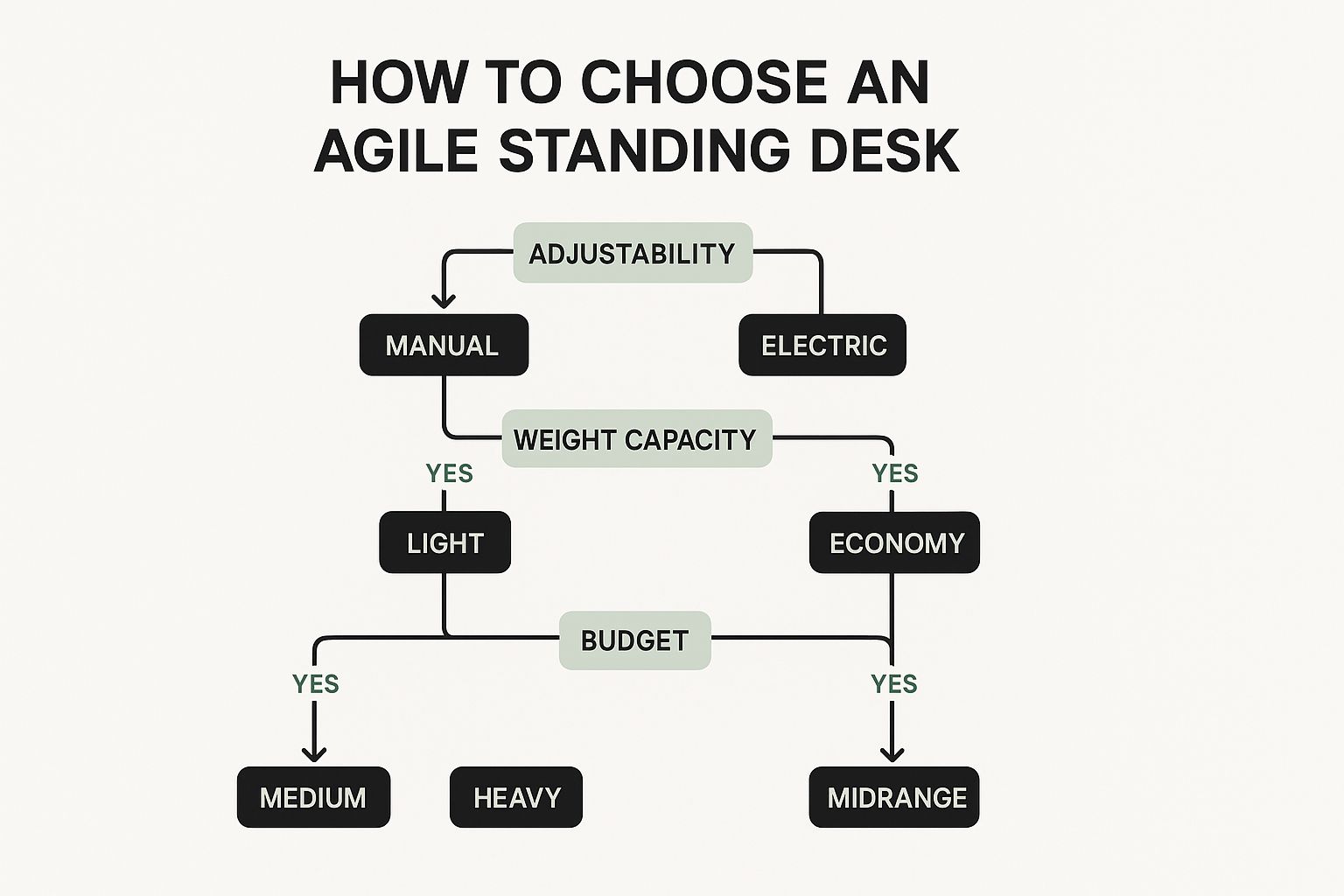
Finally, keep an eye out for these valuable extras that really enhance the experience:
- Memory Presets: These are a game-changer. You can save your perfect sitting and standing heights and get to them with a single button press.
- Anti-Collision Sensors: A great safety feature. They detect if the desk hits something while moving and automatically stop it to prevent damage or injury.
- Cable Management: Look for built-in trays, ports, or hooks. Keeping your cables tidy makes for a much cleaner and more organised workspace.
Setting Up Your Ergonomic Workstation
So, you've got a fantastic agile standing desk. Think of it like having the best ingredients for a gourmet meal – the real magic is in how you bring it all together. The setup is what turns a simple piece of furniture into a genuine tool for your well-being, and getting it right from the start is the key to unlocking all those ergonomic benefits.
First things first, let's nail down your ideal heights for both sitting and standing. A lot of people just guess at this, but a little bit of precision here makes a world of difference. The aim is to find a comfortable, natural posture that your body can sustain all day without strain.
Finding Your Perfect Heights
The secret to a great setup, whether you're sitting or standing, is the 90-degree elbow rule.
Stand or sit with your shoulders relaxed, letting your upper arms hang naturally by your sides. Now, adjust the desk height so your forearms are parallel to the floor. This should leave your wrists straight and in a neutral position when you type.
If your desk has memory presets, save these two heights immediately. This simple step makes switching between sitting and standing completely seamless, which will encourage you to do it more often. Think of these presets as your personalised ergonomic starting points for the day.
A correctly adjusted desk shouldn't force you into an unnatural posture. Instead, it should rise to meet you, supporting a natural alignment of your spine, shoulders, and wrists, whether you're sitting or standing.
This proactive approach stops that slow, creeping strain that eventually leads to aches and pains. When your workspace feels good, you're more likely to move, which is exactly what an agile setup is all about.
Creating a Complete Ergonomic Zone
Your desk is the centrepiece, but a truly ergonomic workstation is about the whole environment. A well-organised space reduces physical strain and helps you stay focused, in the same way a thoughtfully designed kitchen makes cooking a pleasure. For some inspiration on creating a functional and pleasant space, check out our guide on 10 inspiring kitchen colour ideas for a stylish makeover.
To round out your setup, pay attention to these crucial elements:
- Monitor Placement: Your screen should sit about an arm's length away, directly in front of you. The top of the monitor should be at or just slightly below eye level. This lets you gaze slightly downwards without having to crane your neck.
- Keyboard and Mouse Position: Keep your keyboard and mouse close to each other on the same level. This simple trick stops you from over-reaching and putting extra stress on your shoulder.
- Invest in an Anti-Fatigue Mat: If you plan on standing for any real length of time, a good anti-fatigue mat is non-negotiable. It provides just enough cushioning to encourage tiny movements in your leg muscles, which boosts circulation and eases soreness in your feet, back, and legs.
By taking a few minutes to fine-tune each of these components, you create a cohesive, health-first environment. This is how your agile standing desk truly delivers on its promise for a more comfortable, energetic, and productive day at work.
Building an Agile Workflow for Your Day
Having an agile standing desk is a great first step, but the real magic happens when you build an agile workflow around it. The goal isn't just to switch between sitting and standing every so often. It’s about completely rethinking your workday as a dynamic, movement-focused routine.
Your desk is more than just furniture; it's a tool that helps you manage your energy. This means getting intentional about your movement, creating a rhythm that keeps your body and mind sharp and stops you from feeling drained by staying in one position for hours.
Marrying Movement with Productivity Methods
One of the best ways to get started is to pair your desk's adjustability with a time management system you already know, like the Pomodoro Technique. This popular method breaks your work down into focused 25-minute bursts, with short breaks in between.
This structure is a perfect match for a sit-stand routine. Use your 25-minute work "sprints" for standing—it’s brilliant for keeping you alert and on-task. Then, when the timer signals your five-minute break, lower the desk and take a seat to rest. It creates a simple, effective cycle of activity and recovery.
By linking physical posture changes to specific work intervals, you stop relying on guesswork. Your desk becomes a tool that actively cues you to move, breaking the hold of a sedentary routine and keeping your energy levels stable throughout the day.
Designing Your Agile Day
So, how does this look in practice? Start by mapping out a simple schedule that weaves in different postures throughout your day. The key is to find a routine that feels natural and you can stick with. A good approach is to match your posture to the task at hand.
Here’s a sample schedule to give you some ideas:
-
Morning (9:00 AM - 12:00 PM):
- Stand for deep focus work like writing or coding, using Pomodoro sprints.
- Sit for team video calls or clearing out your inbox.
- Take a short walk during your mid-morning break to stretch your legs.
-
Afternoon (1:00 PM - 5:00 PM):
- Sit for the first hour after lunch to ease back into your work.
- Stand for creative tasks like brainstorming or collaborative sessions.
- Alternate between sitting and standing every 30 minutes for the last couple of hours to beat the afternoon slump.
Expanding Your Agile Toolkit
To really take your setup to the next level, think about adding other tools that encourage movement. A balance board is a fantastic addition for engaging your core muscles while you stand, and an ergonomic chair that promotes "active sitting" is a must for your seated periods.
If you’re working with a smaller space or need a more minimalist setup, exploring foldable standing desk options can give you the same benefits without the bulk.
And if you want to dig deeper into the philosophy behind this flexible approach, understanding the principles of agile transformation for enterprises offers some great insights. When you combine your standing desk with smart techniques and the right tools, you’re not just changing how you work—you’re building a powerful system for better health, focus, and productivity.
Common Questions About Standing Desks
Dipping your toes into the world of standing desks can definitely spark a few questions. Getting straight answers is the best way to feel good about investing in your health and work habits, so let's clear up some of the common ones.
One of the first things people wonder is how long they should actually be standing. The key here is balance, not some kind of marathon. A great rule of thumb to start with is a 1:1 sit-to-stand ratio. Think 30 minutes of standing for every 30 minutes you spend sitting down.
Is an Expensive Desk Really Worth It?
Honestly, it all comes down to your daily routine. Electric desks with memory presets are brilliant because they make switching positions effortless, which is a massive help when you're trying to build a new habit. If that convenience means you’ll actually move more, then yes, it's a solid investment.
But if you're on a tighter budget or just want to test the waters, a desktop converter is a fantastic, cost-effective option. The best desk is always the one you'll use consistently.
An agile standing desk isn't really a weight-loss tool. It's about breaking free from a sedentary lifestyle. The real wins are better posture, less back pain, and improved metabolic health.
How Much Standing Is Ideal?
When you're just starting, aim for 30-60 minutes of standing, broken up throughout your day. The golden rule is to listen to your body and just keep moving. An agile workflow is all about avoiding being stuck in one position for too long, whether you're sitting or standing.
Finding your perfect sit-stand rhythm takes a bit of trial and error, much like researching the right appliance for your home. Our washing machine buying guide for NZ shares that same spirit of helping you make an informed choice that fits your life.