

How to Measure Your Space for Appliances & Furniture Easily
Before you even think about buying that new fridge or falling in love with a sofa, you need to grab a tape measure. It sounds simple, but getting your measurements right is the single most important step. You’ll need to measure three things: the spot where your new item will live, the entire journey from your front door to that spot, and, of course, the item's own dimensions.
A good rule of thumb? Always add a bit of breathing room. For appliances, you'll want at least 5-10 cm of clearance for ventilation. For furniture, make sure there's enough space to actually use it without feeling cramped. Trust me, getting this right from the start saves a world of headaches later.
Why Accurate Measurements Are Your First Step
It’s easy to get caught up in the excitement of browsing online or wandering through a showroom. But before you do, taking the time to measure properly is what separates a smooth, successful delivery from a logistical nightmare. We've all pictured it: the perfect appliance, stuck helplessly in a doorway.
Don’t think of measuring as a chore. See it as the blueprint for a successful project. Good measurements aren't just about making sure things fit—they're about smart planning. An item that doesn’t fit is more than just an inconvenience; it’s a waste of your time, money, and energy.
The True Cost of Guessing
Everyone has a horror story about a delivery gone wrong. The good news is, these situations are almost always preventable with a tape measure and a little planning. It's all about making sure your investment actually improves your home, rather than creating a massive problem you have to solve. This is true whether you're fitting a couch into a small apartment or mastering commercial kitchen design layout, where every single centimetre is critical.
Here in New Zealand, this precision is more important than ever. With our population projected to grow by 1.2% annually between 2025 and 2030, homes are being designed to make the most of every square metre. The golden rule is to measure the width, height, and depth of the space, then add at least 10 cm for airflow and manoeuvrability. For specific NZ building standards, the official Standards New Zealand website is your best resource.
The old saying, "measure twice, cut once," couldn't be more fitting here. Those extra five minutes you spend double-checking your numbers can save you hours of stress and hundreds of dollars down the track.
Getting this first step right sets the tone for everything else. When you move from guesswork to a guarantee, you’re well on your way to creating a space that not only looks fantastic but also functions perfectly for you and your family.
Before you start, it’s always a good idea to gather your tools and get organised. A little preparation makes the whole process smoother and more accurate.
Your Pre-Measurement Checklist
| Item | Why You Need It |
|---|---|
| Tape Measure | A retractable metal one is best for accuracy and rigidity over long spans. |
| Pen & Paper/Notepad App | To jot down every single measurement. Don’t rely on memory! |
| A Helper | An extra pair of hands is invaluable for holding the tape measure steady. |
| Camera/Smartphone | Snap photos of tight corners, doorways, and stairs for reference. |
Having these items ready ensures you won't have to stop halfway through, losing your train of thought and potentially missing a crucial measurement.
Getting Your Measurement Kit Together
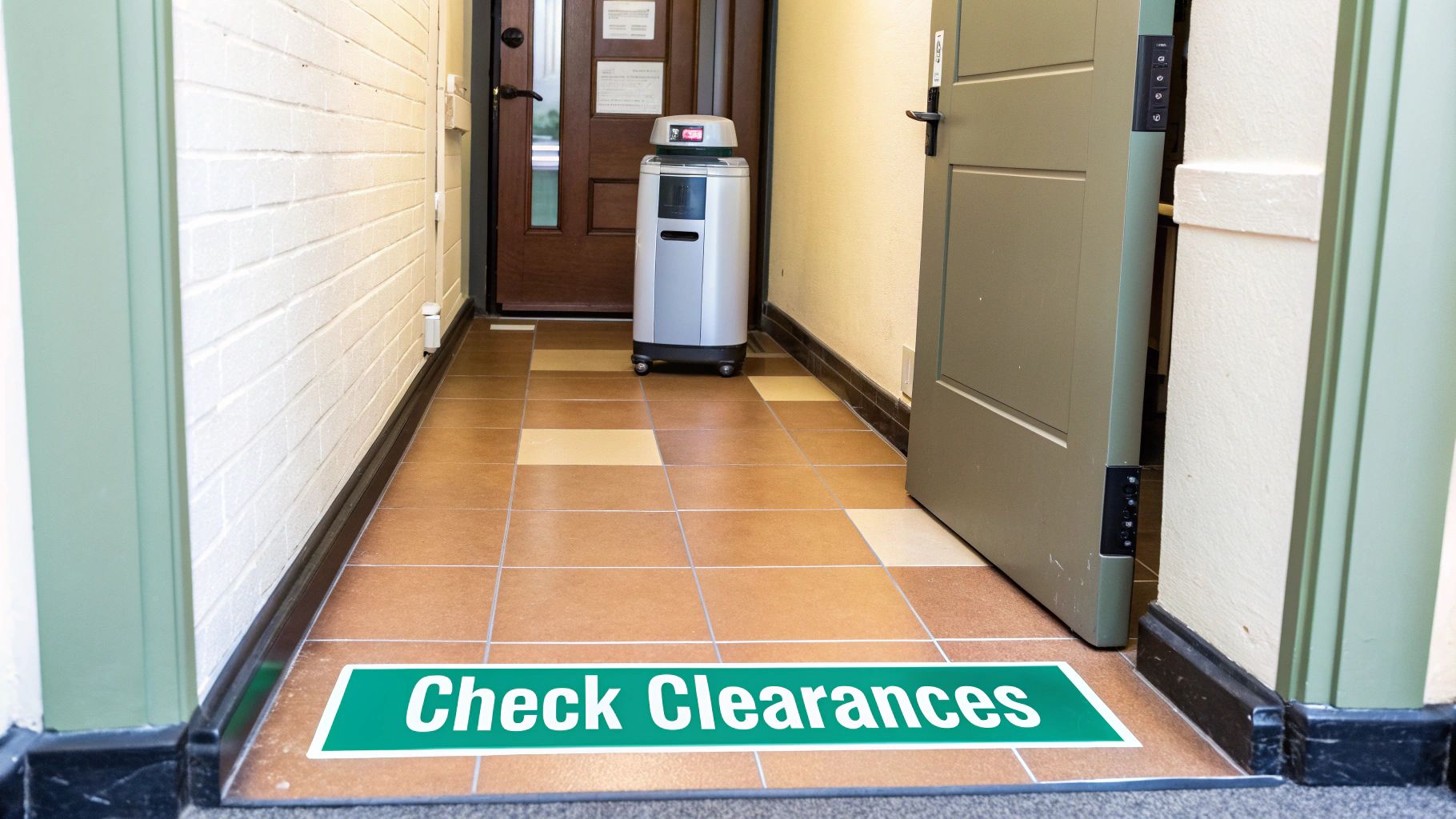
Before you can get those all-important numbers, you need to have the right gear on hand. A good old metal tape measure is non-negotiable, but a couple of other tools can turn a tricky job into a quick and precise one.
I've found a laser measure is an absolute game-changer for big rooms or long, awkward hallways. You get an exact reading in a split second. And don't forget a simple spirit level – it might seem basic, but it can save you the headache of discovering your new bookcase will wobble because the floor isn't perfectly flat.
Your Must-Have Measuring Tools
To make sure you've got all angles covered, it's a good idea to gather these bits and pieces before you start pulling out the tape.
- Metal Tape Measure: Your go-to for getting the detailed dimensions of furniture and checking tight corners.
- Laser Measure: Perfect for quickly getting the overall width, length, and height of a room.
- Spirit Level: Essential for finding out if your floors and surfaces are truly level.
- Painter's Tape: An incredibly useful trick for mapping out where a new piece will sit on the floor.
- Notepad & Pen (or a phone app): You need somewhere to jot down every measurement as you take it. Don’t rely on memory!
A trick I swear by is using painter's tape to mark out the exact footprint of a new sofa or cabinet on the floor. It gives you a much better sense of how the piece will actually fit and affect the flow of the room – something you just can't get from numbers on a page.
Having these tools ready to go makes the whole process smoother. It’s all about being organised from the get-go, especially when you're dealing with big items like a new fridge. On that note, for more advice on getting your kitchen sorted, take a look at our guide on how to organise your fridge to make the most of its space.
Don't Forget the Delivery Path
I’ve seen it happen more times than I can count: the perfect fridge arrives, only to get stuck in the hallway. It’s a classic mistake. We get so focused on whether the new piece will fit in the final spot that we completely forget about how it's going to get there.
You have to think like a delivery driver and walk the entire path, from the kerb all the way to its destination. This simple step can save you a world of frustration on delivery day.
Start outside. Is your driveway narrow? What about that garden gate or the path leading up to your front door? Take a good look at any steps, porch railings, or awkward corners. A tight turn in an old villa's hallway or a narrow apartment corridor can bring the whole operation to a screeching halt.
Charting the Interior Journey
Once you’ve cleared the outside, the real fun begins inside. You need to be methodical here. Measure every single doorway, hallway, and staircase that the item will have to navigate.
When it comes to stairs, width is only half the story. You also need to measure the ceiling height, especially at its lowest point over the steps. And don't forget to consider the turning space on any landings – can a long sofa or a tall fridge-freezer actually pivot around that corner?
It’s the little things that often become the biggest roadblocks:
- Low-hanging light fittings that are just waiting to be knocked.
- Handrails on stairs that eat into the usable width.
- Tight corners that make pivoting a bulky item impossible.
- Random support columns or other architectural quirks.
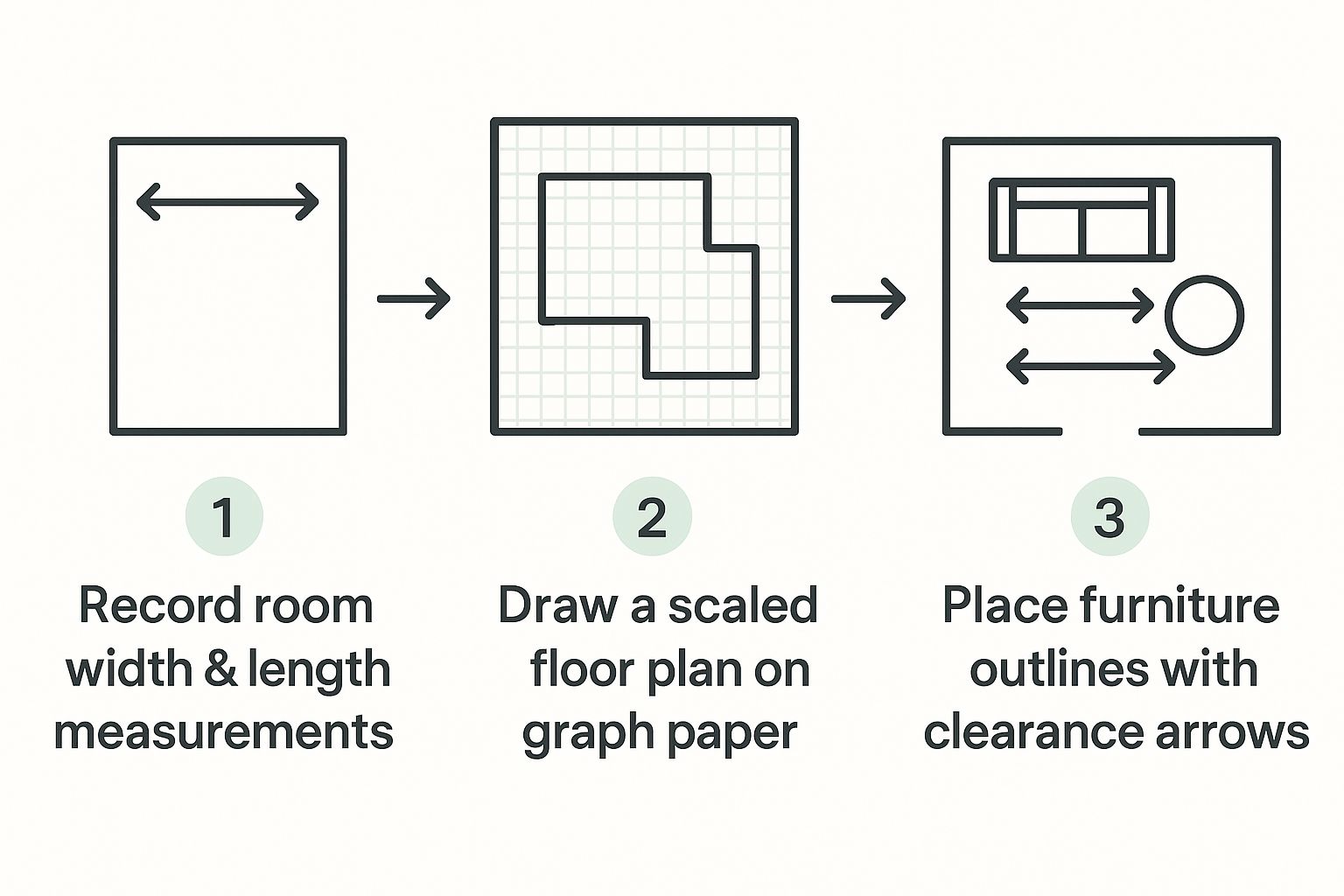
Mapping it all out like this helps turn your list of numbers into a practical plan, showing you exactly how much clearance you really have.
The goal is to find the single narrowest point along the entire delivery path. Your new purchase absolutely must be smaller than this one critical measurement.
Taking the time to do this properly means a smooth, stress-free delivery. For more advice tailored to specific items, take a look at these tips you need to know when buying appliances. A little planning goes a long way in making sure your new piece arrives without a single scratch.
Measuring The Final Placement Spot Correctly
Alright, you’ve confirmed the path from the front door is clear. Now for the moment of truth: the final spot. Measuring where your new item will live is about more than just the basic height, width, and depth. It’s about getting a feel for the space in three dimensions and spotting the little quirks that can trip you up.
Start with your core measurements, but then get on your hands and knees and look closer. Those chunky skirting boards can easily eat up a centimetre or two. A badly placed power point might stop a washing machine from sitting flush against the wall. Don't forget to look for things like window sills, light switches, and even thermostats. They all matter.
The Importance Of Breathing Room
One of the most common mistakes I see is buying something that fits the space exactly. You have to leave what I call ‘breathing room’, both for function and for looks. How much you need really depends on the item.
- Appliance Ventilation: A fridge needs good airflow to stop its compressor from working overtime and burning out. As a rule of thumb, leave at least 5-10 cm behind it for ventilation and 2-3 cm on the sides and top.
- Functional Space: With furniture, clearance is all about usability. You’ll want about 75 cm for a comfortable walkway around a dining table, allowing people to get in and out of their chairs without a squeeze.
- Door Swing: This is a big one. Always measure how far cabinet, fridge, or oven doors swing out. You don't want your brand new fridge door clashing with the island bench every time you open it.
Forgetting these buffer zones is a classic rookie error. An appliance crammed into a tight space will run inefficiently and likely have a shorter lifespan. Furniture without enough room around it just makes a space feel cluttered and awkward.
Accounting For Kiwi Homes
It also helps to have a rough idea of typical furniture dimensions. Research from the University of Canterbury looking into furniture safety in New Zealand homes found that a standard armchair is usually between 80-100 cm wide and deep. This gives you a realistic starting point when visualising the footprint for new seating.
For built-in items that require total precision, like a new kitchen worktop, you might need to go a step further. To make sure your new oven fits perfectly, it can be useful to understand techniques like learning how to template countertops for a perfect fit, which ensures there are no nasty surprises on installation day.
And as you get ready for the big arrival, our ultimate NZ checklist for appliances setup will help make sure you haven't missed a thing.
Common Measurement Mistakes and How to Avoid Them
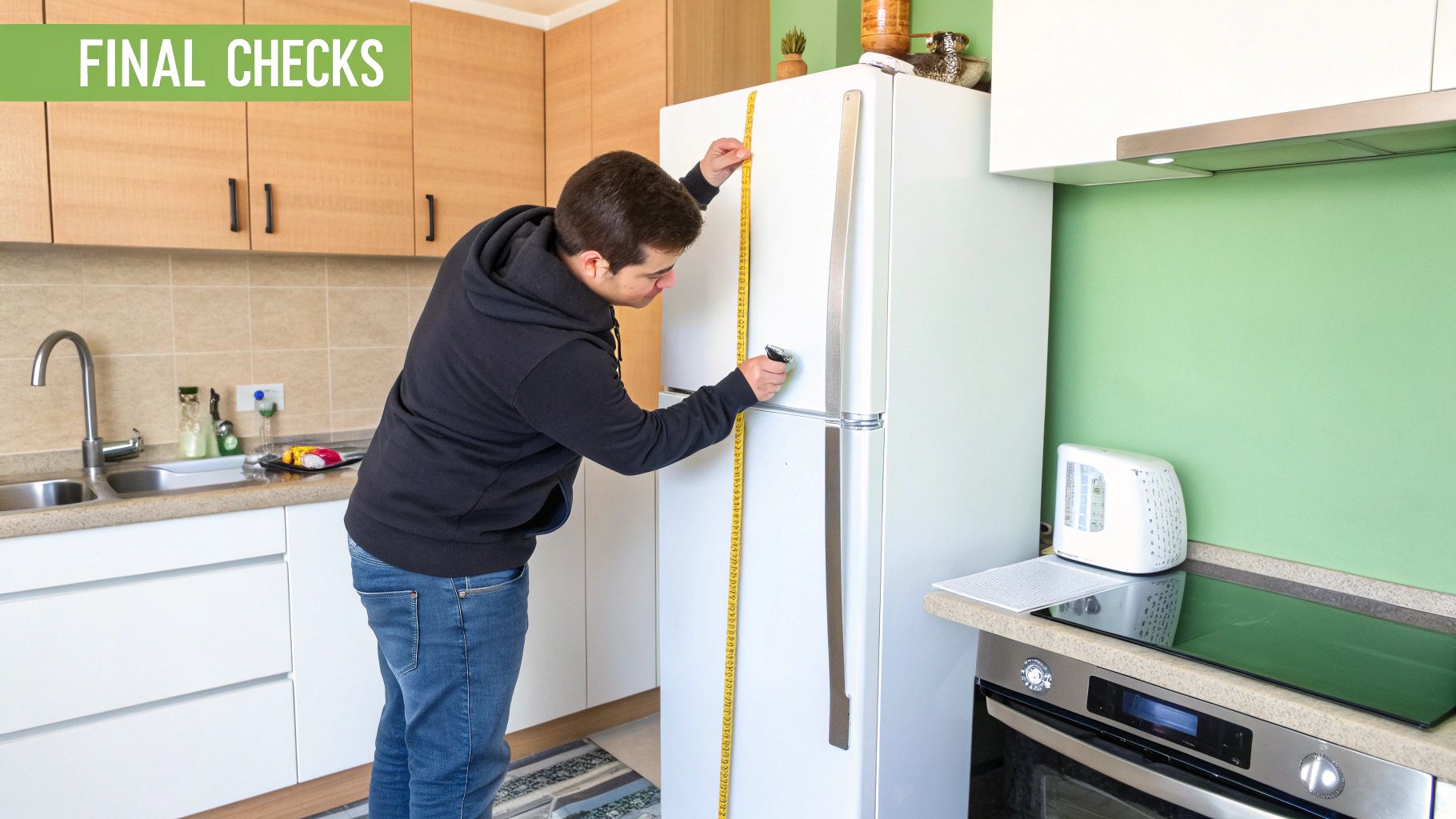
Learning how to measure your space is a skill, and I’ve seen a few common hurdles trip people up over the years. A classic oversight is forgetting about all the bits and pieces that live behind an appliance. Those bulky plugs, water lines, and cables can easily add 3-5 cm to the depth you need, pushing your new machine further into the room than you bargained for.
Another frequent slip-up is assuming your home is perfectly square. Many older Kiwi homes, especially, have their own charming quirks, which can mean sloping floors and walls that aren't quite true. If you only measure the width at one height, you could be in for a nasty surprise.
Uneven Surfaces and Hidden Obstacles
To get a truly accurate picture, you need to be a bit of a detective and account for these imperfections. It’s a simple step, but one that many people unfortunately skip.
- Measure at multiple points: When checking the width, take a measurement at the top, middle, and bottom of the space. For height, do the same at the front and back. The golden rule? Always work with the smallest measurement you get.
- Check your levels: Pop a spirit level on the floor. If it’s on a lean, that new bookcase or cabinet might not sit securely, which can be a real pain.
- Don't forget skirting boards: These will stop furniture from sitting flush against the wall. Make sure you’re measuring from the skirting board out, not from the wall itself.
Always remember the functional space your item needs. It's not just about fitting it in; it's about being able to use it properly. This includes everything from the full swing of a fridge door to the space needed for dishwasher plumbing.
Forgetting these small but critical details can turn an exciting new purchase into a major headache. Taking a moment to consider all the variables, including some you may have picked up from our guide on what to consider when buying a dishwasher, will ensure a perfect fit. With these tips in your back pocket, you can avoid the common pitfalls and buy with total confidence.
Got Questions About Measuring? We’ve Got Answers
Even with the best plan, you’ll inevitably run into a few tricky spots when you’ve got the tape measure out. Let's tackle some of the common questions and measurement puzzles that pop up all the time.
One of the biggest culprits? Fridge doors. For a fridge to work properly, you need the doors to open all the way—often past a 90-degree angle—so you can actually pull out the crisper drawers. As a rule of thumb, I always recommend leaving at least 5 cm of clearance on the hinge side if it’s sitting next to a wall. If you're eyeing a French door model, you'll need to be doubly sure both doors have enough room to swing wide open without smacking into your cabinetry or that new island bench.
Solving Common Measurement Puzzles
Large corner sofas are another classic challenge. The best way I’ve found to measure for one is to grab some painter's tape and literally map out its footprint on the floor. Measure the length of each section from the corner outwards, right where it would sit. This gives you a brilliant visual guide to see exactly how much floor space it’ll eat up and, more importantly, if it’s going to block a high-traffic walkway.
People often ask when they should measure if they're also getting new floors. My answer is always the same: measure after the new flooring is down. It might not seem like much, but switching from old vinyl to a plusher carpet or thicker floating floors can easily change the height enough to cause a headache, especially for under-bench appliances like dishwashers.
What do you do when your dream sofa is just a few centimetres too big for the space? Before you give up, triple-check your delivery path. Sometimes, just taking a door off its hinges is all you need to get it through. But if it's the final spot that’s the issue, it might be time to look for a slightly more compact model.
Getting these little details right makes all the difference. For more appliance-specific tips, our Dishwashers Buying Guide for NZ has plenty of expert advice.
At Folders, we're here to help you find the perfect fit for your home, combining great advice with an extensive range of appliances and furniture. https://folders.co.nz