

What Is Energy Star Rating? Your Complete NZ Guide

Let's break down the Energy Star rating and what it means for New Zealand households. Essentially, Energy Star is an internationally recognised certification. It signifies that a product uses less energy compared to standard models. This translates to lower electricity bills and a reduced carbon footprint for consumers who choose these appliances.
However, the Energy Star program holds a unique position in New Zealand. It works alongside our mandatory energy performance standards (MEPS). These MEPS establish a baseline for energy efficiency.
Energy Star goes a step further, providing a voluntary benchmark for superior energy efficiency that goes above and beyond these basic requirements. It's a way to recognise products that truly excel in energy savings. This system helps consumers navigate a market often filled with various labels and claims.
For example, you might encounter multiple certifications on a single appliance. The Energy Star logo provides assurance that the product meets a globally recognised efficiency standard.
How Energy Star Works in NZ
The Energy Efficiency and Conservation Authority (EECA) manages the Energy Star program in New Zealand. While Energy Star enjoys international recognition, its adoption in New Zealand has been focused on certain product categories. It's proven particularly effective for products perceived as having high energy consumption, like heating systems and large appliances.
Discover more insights about Energy Star's impact in NZ. This targeted approach acknowledges that Kiwis are particularly mindful of energy consumption in areas with significant costs, such as heating during cold South Island winters.
The star rating system provides a clear indication of a product's efficiency. A higher number of stars means greater energy savings. This visual cue simplifies comparisons between different models, empowering consumers to make informed decisions.
It's crucial to remember that energy requirements differ across product categories. A five-star refrigerator, for instance, won't consume the same amount of energy as a five-star television.
The Benefits Extend Beyond Savings
While cost savings are a key advantage, Energy Star products offer a range of additional benefits. These appliances often incorporate enhanced features, such as quieter operation and improved temperature control. See how some businesses are attempting to tackle climate change.
Furthermore, their higher efficiency contributes to a smaller environmental footprint, supporting New Zealand's commitment to sustainability. Choosing Energy Star products isn't just financially beneficial; it's a positive step towards environmental responsibility.
By understanding what the Energy Star rating truly signifies, you can make purchasing choices that benefit both your household budget and the environment.
How Energy Star Fits Into New Zealand's Unique Market
New Zealand takes a practical approach to the Energy Star program. Instead of replacing our Equipment Energy Efficiency (E3) Programme, Energy Star complements it. This creates a beneficial market for informed consumers. Energy Star serves as an additional benchmark for superior efficiency, not a basic requirement.
This system offers a significant advantage for New Zealand shoppers. You might be interested in: Advantages of buying appliances online. It allows you to find appliances meeting both the mandatory Minimum Energy Performance Standards (MEPS) and the voluntary, higher Energy Star standards, giving you the best of both worlds.
Energy Star and New Zealand's Climate
The benefits of Energy Star are particularly relevant given New Zealand's varied climate. Imagine those cold Wellington winters, where a highly efficient heat pump can be essential. This makes the Energy Star rating especially important for products like heat pumps and hot water systems.
Similarly, during Auckland's humid summers, an Energy Star rated dehumidifier becomes extremely valuable. This emphasises the importance of considering both your local climate and the Energy Star rating when making purchase decisions. Energy efficiency labelling, including Energy Star, has significantly impacted New Zealand's appliance market since its implementation. Research shows that Energy Star is applied to numerous products, from whitegoods and heating systems to water heaters and windows, supplementing the mandatory MEPS. Explore this topic further.
Decoding the Market
Why do some products have the Energy Star label and others don't? The program is voluntary, meaning manufacturers decide whether to seek certification. This creates an advantage for brands that embrace Energy Star.
Some international companies import Energy Star models specifically for the New Zealand market, recognising the value Kiwis place on efficiency. Other brands, however, might only meet the minimum MEPS requirements. This difference allows discerning shoppers to identify the most efficient products.
Making Informed Decisions
Understanding how Energy Star integrates into New Zealand's market empowers you to make informed decisions. It lets you look beyond basic compliance and find products that truly prioritise energy savings. Choosing appliances that benefit your budget and contribute to a more sustainable New Zealand is the goal.
Energy Star Product Categories That Matter Most
Not all Energy Star certified products offer the same savings. Some offer significant reductions in energy consumption, while others provide more marginal benefits. This article breaks down the most impactful product categories for New Zealand households, focusing on areas like heat pumps, major appliances, and even building components. We'll explore which products offer the most substantial energy savings, how to verify Energy Star certification, and which categories may not be worth the premium.
Heat Pumps and Hot Water Systems
For many New Zealand homes, heat pumps are the primary heating source. An Energy Star rated heat pump can drastically reduce your power consumption, which is especially important during the colder months. Hot water systems also account for a significant portion of household energy use. An Energy Star certified system can make a noticeable difference in your power bill. You might be interested in: Things to consider when buying a fridge.
Major Appliances
Refrigerators and washing machines run constantly, making their energy efficiency vital. Choosing Energy Star models in these categories can result in significant long-term savings. A high-efficiency refrigerator, for example, can save you hundreds of dollars over its lifetime. Similarly, washing machines with the Energy Star label use less water and electricity, reducing both your power and water bills.
Electronics and Lighting
While individual electronics might not use as much energy as major appliances, their combined impact adds up. Choosing Energy Star certified televisions, computers, and LED lighting can lead to substantial savings over time. 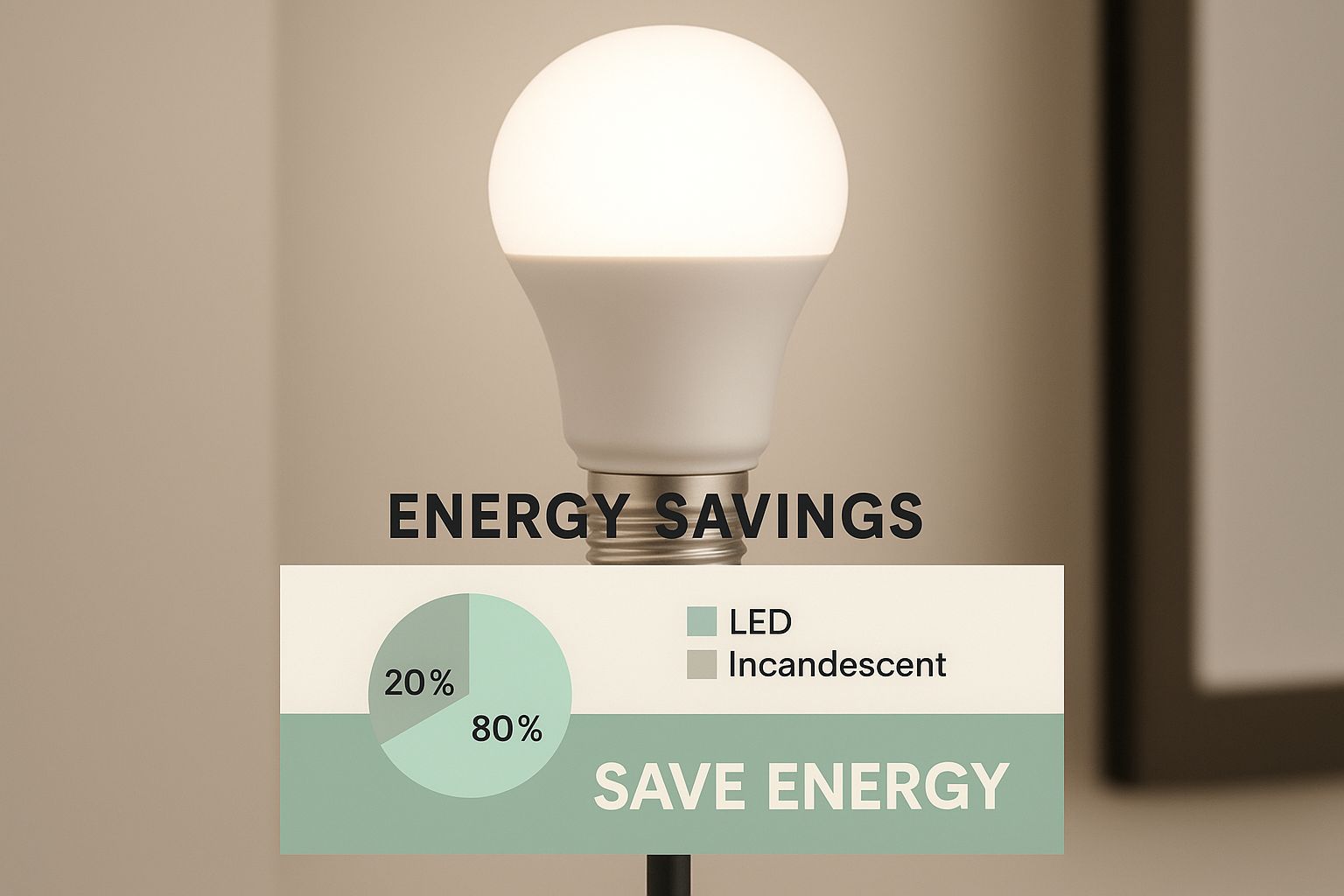 The infographic showcases how much energy can be saved with LED lighting. Simple changes, like switching to LEDs, make a big difference in creating a more energy-efficient home.
Building Components
Windows play a vital role in a home’s energy efficiency. Energy Star certified windows help regulate temperature, reducing the need for both heating and cooling. This can be particularly beneficial given New Zealand's diverse climate. Other building components like insulation contribute to overall energy performance as well, though they may not always have the Energy Star label.
To help you prioritise upgrades, let's take a closer look at some key Energy Star product categories and their potential impact on your household budget.
To understand these benefits more clearly, the table below provides a comparison of different Energy Star product categories, their typical efficiency improvements, and how relevant they are to New Zealand households:
|
Product Category |
Efficiency Improvement |
Annual Savings Potential |
NZ Market Relevance |
|---|---|---|---|
|
Heat Pumps |
Up to 40% compared to older models |
$300 - $500 |
Very High |
|
Refrigerators |
15-20% compared to standard models |
$50 - $100 |
High |
|
Washing Machines |
20-50% less water and energy |
$30 - $75 |
High |
|
LED Lighting |
75-80% less energy than incandescent bulbs |
$20 - $50 per bulb |
High |
|
Windows |
10-20% improvement in thermal performance |
$100 - $250 annually |
Medium |
As this table illustrates, upgrading to Energy Star certified products can result in considerable savings on your energy bills. Heat pumps, in particular, offer significant savings potential, while everyday appliances like refrigerators and washing machines can also make a noticeable difference.
By understanding the relative benefits of different Energy Star product categories, you can prioritize your purchases and make smart choices that maximise your savings. This helps you create a more energy-efficient home and reduce your environmental impact.
Real Results: What Energy Star Actually Delivers
Beyond the marketing hype, what tangible benefits does an Energy Star rating offer New Zealanders? This section explores the real-world impact of Energy Star certified products in NZ, from documented supplier improvements to actual consumer savings. We'll examine performance data, market trends, and personal experiences to demonstrate how Energy Star translates into a more efficient and cost-effective home.
Documented Improvements and Market Shifts
The Energy Star rating has prompted a noticeable shift in the New Zealand market. Suppliers, recognising the growing demand for energy-efficient products, are now importing superior models, especially in key areas like heat pumps and appliances. This increased availability gives Kiwis more efficient options than ever, thanks partly to the influence of Energy Star. For instance, in the competitive heat pump market, the presence of Energy Star models has encouraged other brands to enhance their efficiency standards.
This movement toward efficiency isn't just anecdotal. Government agencies like the Energy Efficiency and Conservation Authority (EECA) have focused on monitoring the effectiveness of Energy Star and other energy efficiency programs in New Zealand, conducting various studies since 1993. EECA reports that Energy Star labeled products have gained significant market share, sometimes by as much as 20% over non-labeled products in popular categories like heat pumps and LED lighting during promotional periods. Find more detailed statistics here. This data highlights the real impact Energy Star has on consumer choices and market trends.
Performance Data and Dollar Savings
Energy Star products typically deliver 10-30% better efficiency than standard models. This improved efficiency directly results in lower power bills. For example, a family switching to an Energy Star refrigerator could save between $50 and $100 each year. These savings accumulate significantly over the appliance's lifespan. You might be interested in learning more about efficient appliances: Why choose a Beko appliance.
Furthermore, many households using Energy Star certified heat pumps report substantial savings, especially during the colder months. These real-world results clearly show that Energy Star is more than just a label – it’s a guarantee of tangible energy and cost savings, freeing up household budgets for other important expenses and contributing to greater financial well-being.
Payback Periods and Long-Term Value
While Energy Star appliances may sometimes have a slightly higher initial price, the energy savings they provide often offset this difference within a reasonable timeframe. The payback period – the time it takes for energy savings to equal the extra upfront cost – varies depending on the product and how it’s used. However, many Energy Star appliances have payback periods of only a few years.
After the initial investment is recouped through reduced power bills, the remaining years of the appliance's life offer pure savings. This long-term value makes Energy Star products a wise investment, especially for frequently used appliances like refrigerators, washing machines, and heat pumps. Choosing Energy Star not only saves money but also reflects a conscious decision to reduce your household's environmental impact.
Why Energy Star Products Are Worth Your Investment
Choosing Energy Star rated appliances offers a range of advantages that go beyond simply reducing your power bills. While lower energy costs are a significant benefit, often offsetting the initial purchase price, there's more to the story. Let's explore the benefits of Energy Star in New Zealand, considering current electricity prices and typical Kiwi appliance usage.
Quantifying the Savings
One of the most compelling reasons to choose Energy Star appliances is their potential for significant cost savings. We'll examine the financial benefits, both immediate and long-term. For instance, switching to a high-efficiency heat pump can dramatically reduce your winter heating expenses compared to an older, inefficient model.
The long-term value is also key. An Energy Star product might have a slightly higher upfront cost, but the cumulative savings on electricity bills over time often make it the more economical choice. This makes it a worthwhile investment for your home and your wallet.
Environmental Benefits: It's Not Just About the Money
Energy Star products contribute to a healthier planet. They generate significantly fewer greenhouse gas emissions, supporting New Zealand's sustainability goals. These appliances also lessen the strain on the national power grid, especially during peak demand. This helps ensure a more reliable energy supply for everyone in New Zealand.
This commitment to environmental responsibility is crucial for New Zealand's future. Choosing Energy Star allows you to contribute to a cleaner, greener Aotearoa for generations to come. For more tips on efficiency, check out this article: How to organise your fridge for maximum efficiency.
Performance Perks: The Hidden Advantages
Beyond the financial and environmental advantages, Energy Star appliances frequently offer improved features that enhance daily life. These can include quieter operation, precise temperature control, and enhanced reliability. An Energy Star washing machine, for example, might feature a gentler spin cycle, extending the life of your clothes.
These added benefits contribute to a better user experience, making Energy Star products not only efficient but also more convenient and enjoyable to use. They often boast features that boost performance and provide overall satisfaction. For example, Energy Star refrigerators often excel at temperature regulation, ensuring food stays fresher longer. Similarly, Energy Star washing machines often offer advanced settings tailored to different fabric types.
Choosing Energy Star means investing in appliances that deliver both energy savings and tangible improvements in performance and comfort. It's a holistic approach to creating a more efficient, comfortable, and environmentally friendly home.
Making Smart Energy Star Purchase Decisions
Making informed decisions about energy-efficient appliances is key to saving money and reducing your environmental impact. This section offers practical advice on navigating Energy Star purchases in New Zealand, balancing efficiency with your budget and individual needs.
Evaluating Energy Star Alongside Other Factors
When comparing appliances, the total cost of ownership is a crucial factor. While an Energy Star product may have a higher upfront cost, the long-term savings on your electricity bills often outweigh the initial investment. For more information on appliance purchases, check out our article on tips you need to know when buying appliances.
Remember to consider factors beyond the Energy Star rating. Appliance size is important; a large refrigerator may boast a high Energy Star rating, but if it's too big for your needs, you'll end up wasting energy and money. Features also play a role – make sure the appliance has the functions you actually need and use.
Brand reliability and warranty are equally important considerations. A longer warranty offers protection for your investment, especially for major appliances. Thorough research on brands and models is crucial before making a purchase. A reputable brand with a history of reliability might be a better choice in the long run, even if it comes with a slightly higher price tag.
Comparing Energy Star With Non-Certified Options
To determine if the Energy Star premium is worthwhile, compare the yearly operating cost of an Energy Star model with a comparable non-certified appliance. The difference in energy consumption, multiplied by your local electricity cost, reveals the potential savings. Keep in mind that the initial price difference between Energy Star and non-certified models can vary.
While focusing on energy efficiency at home is important, there are situations where renting equipment can be more cost-effective and flexible. For example, for certain events, you might consider renting stage equipment for better value.
Verifying Authentic Energy Star Labels in NZ
Ensure the Energy Star label is legitimate by looking for the official logo and verifying the model number on the EECA website. This confirms the product meets the required energy efficiency standards. Be aware that some retailers might offer discounts on older models, which may not be the most efficient options currently available.
Researching and Timing Your Purchases
Use online resources and retailer information to research Energy Star products. Reading independent reviews and comparing specifications before visiting a store helps narrow down your choices. This allows you to identify the models that best meet your needs.
Timing your purchase strategically can also lead to significant savings. Retailers often have sales throughout the year, offering opportunities to maximise your budget. By considering these factors, you can make informed Energy Star purchase decisions that benefit both your wallet and the environment.
To assist you further, we've compiled a helpful decision matrix:
The following table provides a framework for evaluating Energy Star products considering various factors. It helps you weigh the importance of purchase price, operating costs, payback period, and overall value.
Energy Star Purchase Decision Matrix
|
Evaluation Factor |
Energy Star Advantage |
Consideration Weight |
Decision Impact |
|---|---|---|---|
|
Purchase Price |
Potentially higher upfront cost |
High |
Can be offset by long-term savings |
|
Operating Costs |
Significantly lower energy bills |
High |
Major contributor to total value |
|
Payback Period |
Time to recoup initial investment through energy savings |
Medium |
Varies depending on energy usage and local electricity rates |
|
Total Value |
Overall cost savings over the product's lifespan |
High |
Key factor for long-term financial benefit |
This matrix highlights the importance of looking beyond the initial purchase price. While Energy Star products may sometimes have a higher upfront cost, the lower operating costs and resulting total value often make them a worthwhile investment.

The Future Of Energy Star In New Zealand
Energy Star isn't a stagnant program. It's constantly adapting to new technologies and New Zealand's evolving energy landscape. Keeping up with these changes is essential for making wise, future-proof appliance purchases. This section explores emerging trends, from new product categories to smart home integration, helping you stay informed and ahead of the curve.
Aligning With NZ's Carbon Reduction Targets
New Zealand has set ambitious carbon reduction targets. Energy Star plays a vital role in reaching these goals by promoting the use of energy-efficient appliances. This means the Energy Star program in New Zealand is likely to become even more important. As the nation works to reduce its carbon footprint, expect a greater emphasis on Energy Star certified products across various sectors.
This increased focus will likely shape the program's development, leading to more demanding efficiency standards for current product categories and pushing innovation in energy-saving technologies. This continuous improvement cycle encourages manufacturers to develop even more efficient appliances to meet New Zealand’s environmental goals.
Expanding Into New Product Areas
Energy Star currently focuses on familiar household appliances and electronics. However, there's room for expansion into other areas. Building materials and smart home technologies are potential future candidates for Energy Star certification. This broader approach could encompass not just individual appliances, but the total energy performance of a home.
The growing Internet of Things (IoT) and the rising popularity of smart homes will also play a role. We can expect to see Energy Star criteria incorporate smart features. These might include automated energy-saving modes, performance optimisation based on usage, and remote control capabilities to minimise energy waste.
Smart Home Technology Integration
The increasing presence of smart home technology influences Energy Star criteria. As more appliances become connected, Energy Star is adapting to evaluate how smart features impact overall energy efficiency. Future Energy Star ratings will likely consider how well appliances integrate with smart home systems and how these integrations contribute to energy savings.
For instance, a smart refrigerator that adjusts its cooling cycle based on usage or a washing machine that automatically chooses the most energy-efficient settings could achieve a higher Energy Star rating.
By understanding these trends and their potential impact on Energy Star requirements, you can make smarter purchasing choices. Selecting appliances that align with these evolving technologies and efficiency standards will ensure your investments remain valuable for years to come.
Ready to make your home more energy-efficient and contribute to a sustainable future? Visit Folders and discover a wide selection of Energy Star certified products tailored to New Zealand’s needs.