

7 Easy Induction Cooktop Recipes for Delicious Meals
Discover 7 easy induction cooktop recipes designed to elevate your cooking. This list provides simple yet delicious meals perfect for the home cook, from searing the perfect steak and creating creamy risottos to mastering authentic stir-fries and even tempering chocolate. Learn how to use your induction cooktop's precise temperature control to achieve incredible results with dishes like poached eggs, French onion soup, and even sous vide. These induction cooktop recipes will showcase the versatility of your appliance and inspire weeknight meals and weekend feasts.
1. Perfect Induction Pan-Seared Steak
Achieving a restaurant-quality steak at home is easier than you think, especially with the precision of an induction cooktop. This method leverages the rapid heating and precise temperature control of induction cooking to create the perfect sear and a beautifully cooked interior. This technique results in a steak with a delicious crust and a tender, juicy centre, all without the smoky kitchen associated with traditional stovetop methods. This recipe is perfect for anyone looking to elevate their steak game using their induction cooktop and easily ranks among the best induction cooktop recipes.
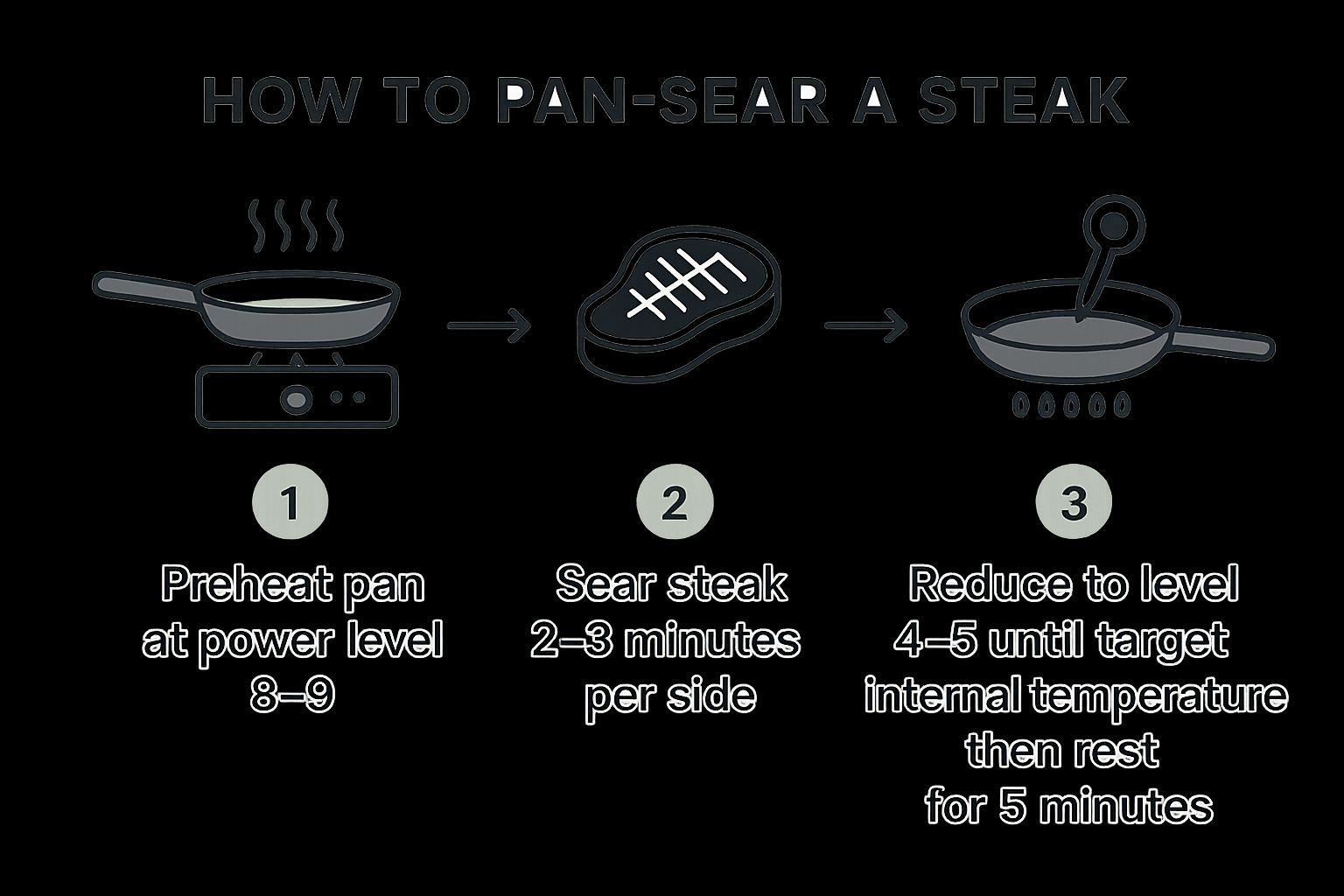
The following infographic details the process of creating a perfect pan-seared steak on your induction cooktop.
The infographic clearly outlines the steak preparation process, from bringing the steak to room temperature, to the searing and resting stages. Following this visualised workflow ensures consistent, delicious results.
This method takes advantage of induction's rapid heat response and even cooking surface. Think of adapting techniques from culinary giants like Gordon Ramsay or Alton Brown, specifically modified for the precision of induction. Imagine achieving their results in your own kitchen, with no smoky haze and perfect control over doneness.
Tips for Perfect Induction Steak:
- Pan Choice: Use a compatible ferromagnetic pan like cast iron or carbon steel for optimal performance. These materials distribute heat evenly and retain high temperatures, crucial for a good sear.
- Preheating: Preheat your pan at a high power level (8-9) before adding oil. This ensures the steak sears quickly and evenly.
- Searing: For a 1-inch steak, sear for 2-3 minutes per side at high heat, then reduce to level 4-5 to finish cooking to your desired internal temperature.
- Resting: Let the steak rest at room temperature for 30-45 minutes before cooking. This allows for even cooking throughout.
- Temperature Check: Use an instant-read thermometer for perfect doneness. Don't rely on visual cues alone.
Pros:
- Perfect control over doneness
- Consistent results
- No smoky kitchen
- Energy efficient
Cons:
- Requires a compatible ferromagnetic pan
- Timing differs from gas/electric methods
- Less visual feedback than flame cooking
This method deserves a top spot on any list of induction cooktop recipes because it showcases the technology's strengths. The precise temperature control and rapid heating allow home cooks to achieve professional-level results. Chefs like J. Kenji López-Alt and institutions like America's Test Kitchen, along with smart cooking systems like the Hestan Cue, have demonstrated the effectiveness of adapting traditional techniques for induction cooking.
Learn more about Perfect Induction Pan-Seared Steak (This link appears to be a general appliances link; a more specific steak or induction cooking link would be ideal if available.) This technique is particularly relevant for Kiwi cooks, as more and more homes in NZ are embracing the efficiency and sleek design of induction cooktops.
2. Induction Risotto
Risotto, that creamy, comforting Italian rice dish, often feels like a labour of love due to the constant stirring it traditionally requires. However, with an induction cooktop, you can achieve perfect risotto with significantly less effort. Induction risotto leverages the precise temperature control of induction technology to maintain a consistent, gentle simmer, eliminating the need for constant stirring while still developing the signature creaminess. This method is a game-changer for anyone looking to simplify the risotto-making process without compromising on flavour or texture.
This approach works by utilising the induction cooktop's ability to deliver even heat distribution and maintain a precise temperature. The consistent low temperature ensures the rice cooks evenly and absorbs the stock gradually, releasing its starches to create that beautiful, creamy consistency. This precision also minimises the risk of scorching, a common issue with traditional stovetop methods. Induction cooking is also remarkably energy-efficient, making it an environmentally friendly choice for your culinary adventures.
For example, imagine adapting Jamie Oliver's classic mushroom risotto for induction cooking. The precise temperature control allows you to perfectly sauté the mushrooms and then maintain the ideal simmer for the rice, resulting in a richer, more flavourful dish. Similarly, applying Thomas Keller's meticulous parmesan risotto technique to an induction cooktop simplifies the process while retaining the dish's luxurious texture and taste.
Tips for Perfect Induction Risotto:
- Use induction-compatible cookware: A wide, heavy-bottomed pan with good ferromagnetic properties is crucial for even heat distribution.
- Maintain a gentle simmer: A power level of 4-5 on your induction cooktop is typically ideal for maintaining the perfect simmering temperature.
- Warm your stock: Use a separate induction-compatible pot to warm your stock at a low setting (level 2-3) before adding it to the rice. This helps maintain the consistent temperature needed for optimal risotto creation.
- Periodic stirring: Instead of constant stirring, stir the risotto every 2-3 minutes to ensure even cooking and stock absorption.
- Aim for 'all'onda': The final texture should be flowing but not runny, a consistency Italians refer to as "all'onda" – like a wave.
Pros:
- Reduced stirring time compared to traditional methods
- More consistent results
- Less chance of scorching
- Better temperature precision for proper rice cooking
- Energy-efficient cooking
Cons:
- Still requires periodic attention
- Slight learning curve for optimal temperature settings
- Needs induction-compatible cookware
Modernist Italian chefs like Massimo Bottura and culinary icons like Marcella Hazan have embraced and popularised adapting classic Italian techniques, including risotto making, for the precision of induction cooking. This method deserves a spot on this list because it exemplifies how induction technology can elevate a classic dish by simplifying the process and enhancing the results. It's a testament to how induction cooktops can transform your cooking experience. Learn more about Induction Risotto (While this link focuses on cleaning, it highlights the importance of maintaining your induction cooktop for optimal performance, which is crucial for achieving perfect risotto). This method is particularly beneficial for New Zealand home cooks seeking to enjoy restaurant-quality risotto without the fuss. This recipe offers a practical, convenient and delicious culinary experience, perfect for busy households or gourmet chefs looking for efficiency. It resonates with a target audience of home cooks and kitchen enthusiasts, particularly those investing in quality appliances like induction cooktops. It's also a fantastic option for budget-conscious shoppers as the energy efficiency of induction cooking can lead to long-term savings.
3. Induction Wok Stir-Fry
Achieving that smoky, nuanced wok hei (breath of the wok) flavour, traditionally associated with roaring gas flames licking the sides of a round-bottomed wok, might seem impossible on an induction cooktop. However, with the right techniques and equipment, you can create delicious and authentic stir-fries using induction, making it a worthy addition to our list of top induction cooktop recipes. This method focuses on harnessing the power and precision of induction cooking to replicate the high-heat, rapid cooking process essential for a great stir-fry.
This approach leverages the unique advantages of induction cooking: high-power output, rapid temperature adjustments, and focused heat delivery. Unlike gas, induction heats the wok directly and instantaneously, allowing for precise control over the cooking phases. This means you can quickly sear meat and vegetables, preserving their texture and flavour, while still achieving some of that elusive wok hei.
Looking for inspiration? Adapting classic recipes for induction is a great starting point. Try modifying Martin Yan's vegetable stir-fry or Grace Young's chicken and vegetable stir-fry for your induction wok. These recipes highlight the adaptability of stir-frying to the induction method.
Learn more about Induction Wok Stir-Fry
Tips for Induction Wok Stir-Fry Success:
- Invest in the right wok: Use a carbon steel flat-bottom wok specifically designed for induction cooking. This ensures efficient heat transfer and optimal performance.
- Preheat like a pro: Crank up the heat to maximum power (level 9-10) and allow the wok to get smoking hot before adding any oil. This mimics the high heat of a traditional wok burner.
- Cook in small batches: Overcrowding the wok lowers the temperature, leading to steaming instead of searing. Smaller batches ensure everything cooks evenly and quickly.
- Keep it moving: Constant stirring and tossing are crucial for even cooking and preventing burning. Embrace the "stir" in stir-fry!
- Mise en place is key: Because induction cooking is so fast, it's essential to have all your ingredients prepped and ready to go before you start cooking.
- Consider higher wattage: A portable induction unit with 1800W or more will provide the best results, offering the high heat necessary for authentic stir-fry.
Pros of Induction Wok Stir-Fry:
- Cleaner cooking environment: Say goodbye to greasy stovetops and lingering cooking smells. Induction cooking is remarkably clean.
- More energy efficient: Induction transfers heat directly to the wok, minimizing energy waste.
- Precise control: Fine-tune the temperature instantly for perfect results in every cooking phase.
- Less kitchen heat generation: Induction cooktops generate less ambient heat, keeping your kitchen cooler and more comfortable, especially in the warmer NZ months.
Cons of Induction Wok Stir-Fry:
- Specialized equipment: Requires a specific flat-bottom induction wok.
- Wok hei limitations: While you can achieve some wok hei, it won't be identical to the intense flavour imparted by a traditional gas flame.
- Limited cooking area: Flat-bottom woks have a smaller cooking surface than traditional round-bottom woks.
Despite the limitations, induction wok stir-fry earns its place in this list due to the convenience, speed, and control it offers. It's a modern approach to a classic cooking technique, ideal for home cooks in NZ looking to enjoy delicious stir-fries with the added benefits of induction technology. The efficiency and clean cooking experience make it a particularly attractive option for modern kitchens and apartments.
4. Induction Poached Eggs
Elevate your breakfast game with perfectly poached eggs, courtesy of your induction cooktop. This method leverages the precise temperature control of induction cooking to achieve consistent results, eliminating the guesswork and common pitfalls of traditional poaching. Forget wispy egg whites and overcooked yolks – induction poaching delivers set whites and gloriously runny yolks every time. This technique relies on maintaining a steady, low temperature, eliminating the temperature fluctuations that often plague other stovetop methods.
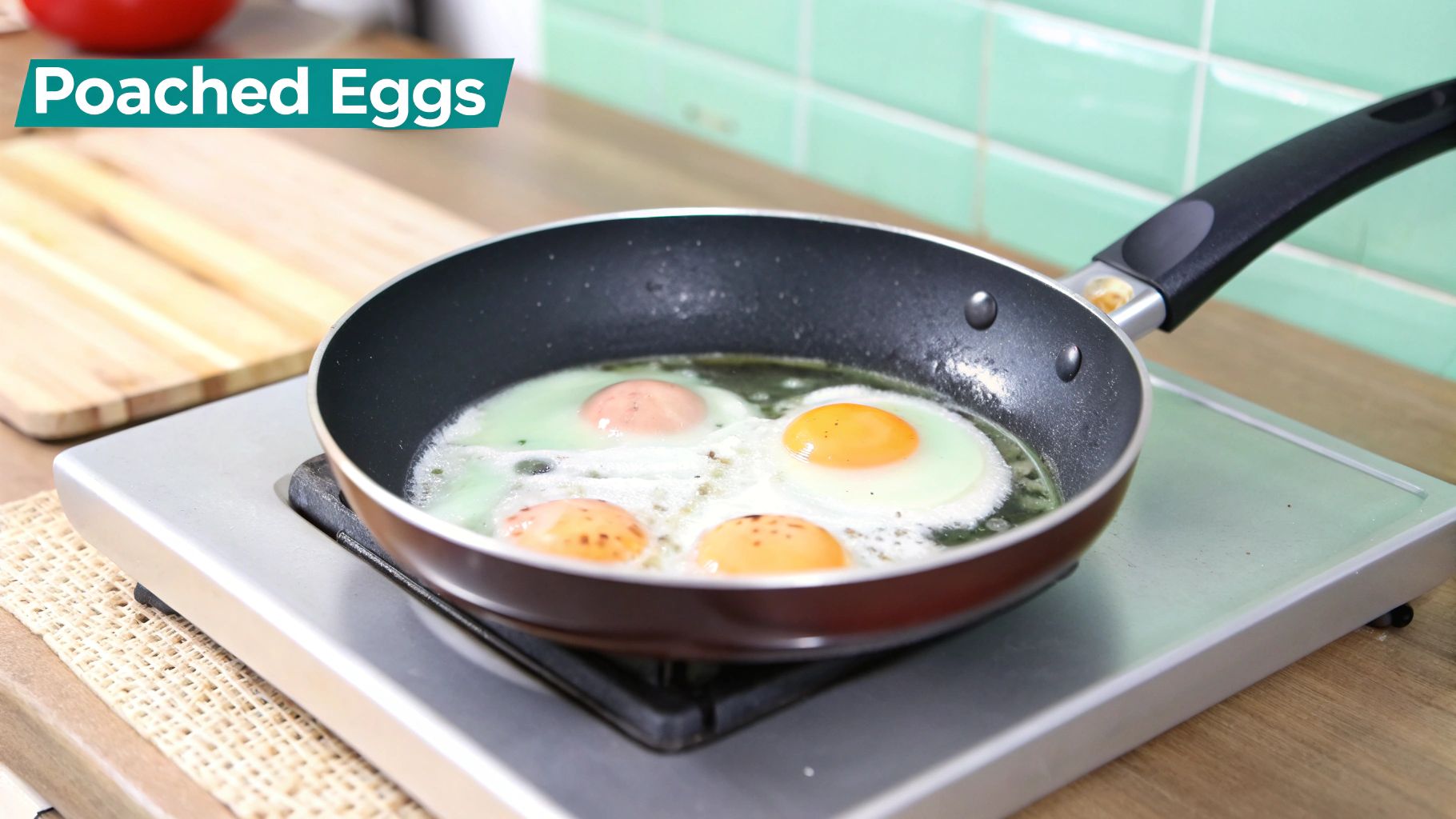
Induction poaching works by gently cooking the eggs in a precise temperature-controlled water bath. The consistent heat ensures even cooking, resulting in perfectly set egg whites and a molten yolk. This method is a prime example of how induction cooktop recipes can improve classic dishes. The even heat distribution inherent in induction cooking means no more hot spots and no more swirling the water frantically trying to create a vortex. You achieve perfect egg texture control without needing vinegar or other additives. Plus, even when poaching multiple batches, the quality remains consistent thanks to the precise temperature maintenance offered by induction.
Inspired by the techniques of culinary giants, consider adaptations of Jacques Pépin's foolproof method or Heston Blumenthal's precision technique, modified for home induction cooktops. These approaches highlight the power of induction in achieving restaurant-quality results in your own kitchen.
Tips for Induction Poaching Success:
- Temperature is Key: Use a thermometer to maintain the water at precisely 180°F (82°C). This is crucial for achieving the perfect texture. You'll likely find a power level between 2 and 3 on your induction cooktop is ideal, but this may vary.
- Gentle Vortex: Create a gentle swirl in the water just before adding the eggs. This helps the whites wrap neatly around the yolks.
- Fresh is Best: Fresh eggs hold their shape better than older eggs, leading to more aesthetically pleasing poached eggs.
- Prep for Success: Crack each egg into a small cup before gently sliding it into the water. This allows for a more controlled transfer and prevents the yolk from breaking.
- Multiple Batches: If poaching multiple eggs, keep the temperature at a low simmer (around level 2) between batches to ensure consistent results.
- Pan Choice: Use a wide, shallow pan for easier egg management and retrieval. Perhaps you've recently seasoned your stainless steel frying pan? This would be a great choice. Learn more about Induction Poached Eggs (This link provides information on pan seasoning, a useful skill for any home cook, even though it's not directly about poached eggs).
Pros:
- More consistent results than traditional stovetop methods.
- Perfect egg texture control – set whites and runny yolks.
- Reduces the need for additives like vinegar.
- Maintains consistent quality across multiple batches.
- Energy efficient due to the precise and responsive nature of induction heating.
Cons:
- Requires a thermometer for ideal results.
- May involve a slight learning curve to find the perfect power setting for your specific cooktop.
This method deserves its place in any induction cooktop recipe list because it showcases the technology's unique ability to deliver precise, consistent results. Whether you’re a seasoned cook or a novice, induction poaching empowers you to create café-quality poached eggs in the comfort of your NZ home.
5. Induction French Onion Soup
French onion soup, with its deeply caramelised onions swimming in rich broth under a crust of toasted bread and melted cheese, is a classic comfort food. However, achieving that perfect caramelisation traditionally requires a significant time investment and constant attention to prevent burning. This is where the precision and even heating of an induction cooktop truly shines, making it a perfect match for induction cooktop recipes like this one. This method allows for faster, more consistent caramelisation and reduces the risk of scorching, making it an ideal approach for busy home cooks in NZ looking for a weeknight-friendly version of this beloved dish.
This approach leverages the induction cooktop's ability to maintain a precise temperature over an extended period. Unlike gas or electric cooktops, which can have hot spots, induction provides even heat distribution across the bottom of the pot, ensuring all the onions caramelize uniformly. This consistent heat also reduces the need for constant stirring, freeing you up to tackle other kitchen tasks while your soup base develops its rich flavour.
The secret to this method lies in harnessing the induction cooktop's precise temperature control. Starting at a medium-high power level (6-7) allows you to quickly sweat the onions, releasing their moisture. Once softened, reducing the power level to 3-4 maintains a steady temperature of 275-300°F (135-150°C), the sweet spot for caramelisation without burning. This lower, controlled heat ensures even browning and deepens the flavour over time.
Examples of successful implementation:
- Julia Child's Classic Adapted: Imagine Julia Child's masterful French onion soup, but with the efficiency of induction cooking. This adaptation utilises the precise temperature control to streamline the caramelisation process without sacrificing the rich, traditional flavour.
- Anthony Bourdain's Modernised Technique: Anthony Bourdain, known for his appreciation of authentic French cuisine, would likely approve of this modern approach. By leveraging induction technology, we can achieve the deep caramelisation he championed with greater efficiency.
Tips for Induction French Onion Soup:
- Invest in a quality Dutch oven: A wide, heavy, enamelled cast iron Dutch oven is ideal for induction cooking and provides excellent heat retention.
- Power level control is key: Start high to sweat the onions, then lower the heat for slow and steady caramelisation.
- Maintain optimal temperature: Aim for 275-300°F (135-150°C) for perfect browning without burning.
- Deglaze strategically: When the onions begin to stick, deglaze the pot with wine to lift up those flavourful brown bits.
- Use wooden utensils: Protect your cookware by using wooden spoons or spatulas for stirring.
- Baking soda boost (optional): A pinch of baking soda can help speed up the caramelisation process.
Pros:
- More consistent caramelization compared to gas or electric cooktops.
- Reduced risk of scorching.
- Shorter cooking time than traditional methods.
- Better energy efficiency for long cooking processes.
Cons:
- Still requires a significant time investment, although less than traditional methods.
- Requires an induction-compatible, wide, heavy pot.
Popularised By:
Chefs like Thomas Keller, known for their refined French techniques, and publications like Cook's Illustrated, with their scientific approach to traditional recipes, have helped showcase the benefits of using induction for achieving perfect caramelisation in dishes like French onion soup.
This method earns its place in our list of induction cooktop recipes because it showcases how the technology can elevate a classic dish. The precise temperature control and even heating of induction simplify the caramelisation process, making French onion soup more accessible for the home cook while delivering exceptional results. This makes it a compelling option for anyone in NZ looking to upgrade their cooking experience and create restaurant-quality meals at home.
6. Induction Chocolate Tempering
Achieving perfectly tempered chocolate at home, with its signature snap and glossy sheen, used to require specialised equipment and a fair amount of skill. Now, with the precision of an induction cooktop, creating professional-quality tempered chocolate for your favourite confections is within everyone’s reach. This technique harnesses the induction cooktop's exceptional temperature control capabilities, allowing for gradual heating and responsive adjustments, eliminating the need for a double boiler and the risk of water contamination. This precise method makes tempering chocolate for dipping, coating, or moulding significantly easier and more consistent.
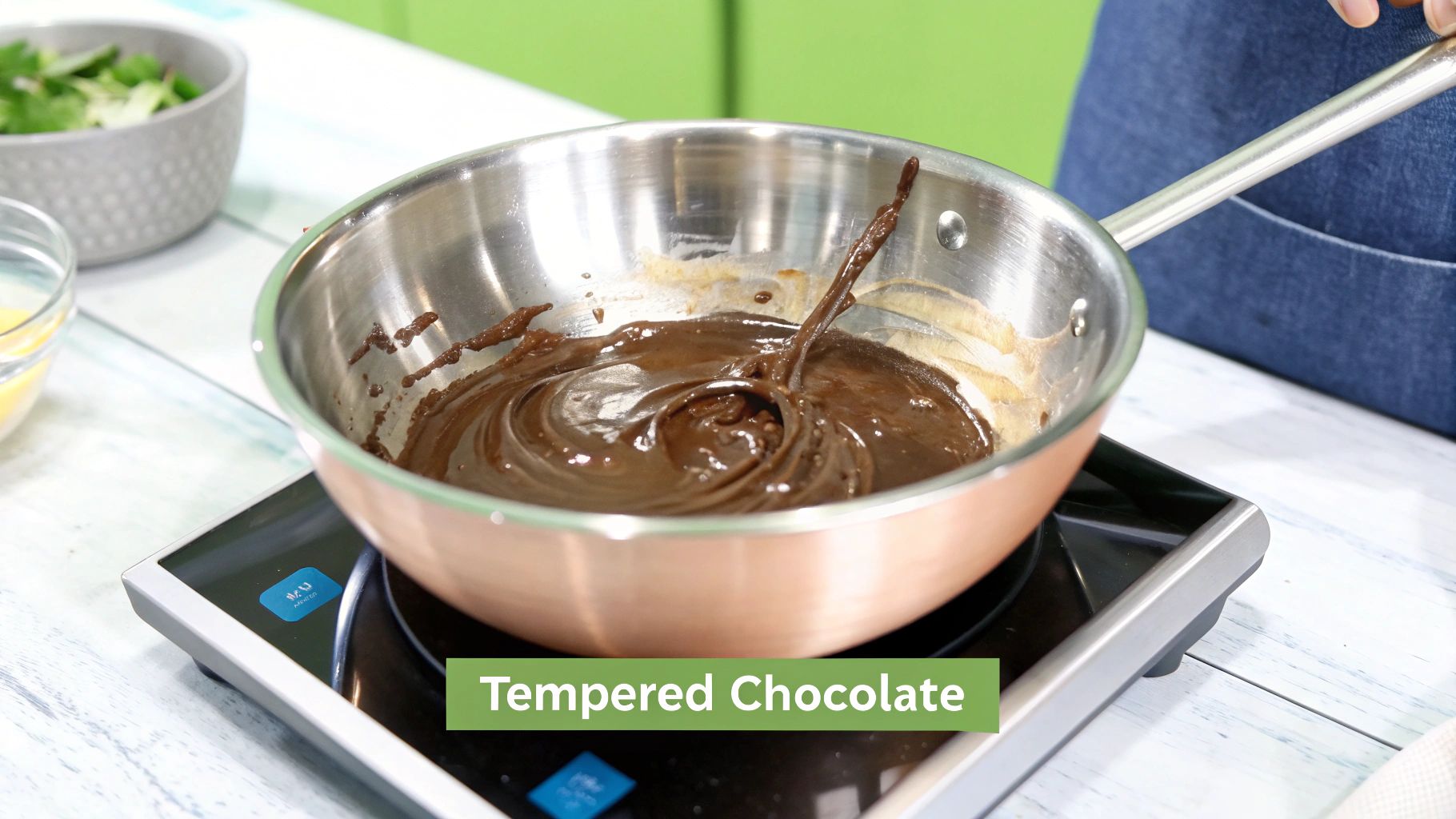
Tempering chocolate involves carefully manipulating the chocolate's crystal structure through controlled heating and cooling. Induction cooktops are ideally suited to this process due to their ultra-precise temperature control and responsive temperature adjustments. They maintain exact temperatures for extended periods, which is crucial for successful tempering. This method offers more consistent results compared to traditional double-boiler methods, and it’s significantly faster. This makes induction chocolate tempering a great addition to our list of induction cooktop recipes, offering a unique and valuable application beyond traditional cooking.
Examples of successful implementation include adaptations of Jacques Torres' professional tempering technique and Amaury Guichon's simplified method, both modified for home induction cooktops. These techniques, readily available online, provide step-by-step guidance for utilising the precise temperature control of induction for perfect chocolate every time.
Tips for Induction Chocolate Tempering:
- Use an induction-compatible bowl: A stainless steel bowl specifically designed for induction cooking is essential.
- Initial melting: Start with a medium power level (3-4) to melt the chocolate, then reduce to the lowest setting (1-2) for maintaining the working temperature.
- Maintain working temperature: For dark chocolate, maintain a temperature of 88-90°F (31-32°C) during the working phase. For milk chocolate, maintain 86-88°F (30-31°C).
- Monitor temperature: Use an infrared thermometer for accurate surface temperature monitoring. This precision is key for achieving the correct temper.
- Prevent hot spots: Keep the bowl slightly moving during the heating phase to ensure even temperature distribution and prevent scorching.
- Test the temper: Dip the tip of a knife into the melted chocolate. It should set within 3-5 minutes with a glossy shine, indicating successful tempering.
Pros:
- More consistent results than double-boiler methods
- Eliminates water contact risk
- Faster than traditional methods
- Less equipment needed
Cons:
- Requires an accurate thermometer (an infrared thermometer is recommended)
- Small margin of error for temperature ranges
- Need for an induction-compatible chocolate melting bowl
Popularised by brands like Callebaut and Valrhona, along with resources like Serious Eats, induction chocolate tempering brings professional techniques to the home cook. While there is a small learning curve and a need for accurate temperature monitoring, the consistent, high-quality results make it a worthwhile technique for any serious chocolate enthusiast in NZ. This approach significantly elevates your dessert game, offering a convenient and reliable way to create stunning chocolate creations in your own kitchen.
7. Induction Cooktop Sous Vide
Looking to achieve restaurant-quality results without investing in a dedicated sous vide machine? If you own an induction cooktop, you already have the equipment for perfect low-temperature cooking! Induction cooktop sous vide leverages the precise temperature control of your cooktop to create a consistent water bath, mimicking the functionality of a sous vide machine. This method allows for even cooking of proteins and vegetables, resulting in incredibly tender and flavourful dishes.
This technique works by using the induction cooktop's precise temperature settings to maintain a constant water temperature. The induction element heats the pot directly and efficiently, providing a more stable temperature compared to traditional stovetop methods. By carefully monitoring and adjusting the cooktop's power level, you can maintain the ideal temperature for your chosen recipe.
For example, you can adapt modernist cuisine techniques like Modernist Cuisine's salmon sous vide, or achieve tender steak with ChefSteps' techniques, modifying them for your induction water bath. Imagine perfectly cooked salmon with flaky, moist flesh or a steak cooked to your exact desired doneness, all without specialised equipment!
Here's how to get started with induction cooktop sous vide:
- Use a large, wide pot: Maximise the water surface area for more even heating.
- Constant temperature monitoring: Clip a food thermometer to the side of the pot for accurate readings.
- Find your cooktop's sweet spot: Experiment to find the power level (usually 2-3) that maintains a steady temperature.
- DIY sous vide bags: Use ziplock freezer bags with the air removed (the water displacement method works well). Clip the bags to the side of the pot to prevent them from touching the bottom.
- Speed up the process: Add hot water from a kettle to reach your target temperature faster.
- Minimize evaporation: For long cooks, cover the pot with plastic wrap.
Pros:
- No special equipment needed: Utilize your existing induction cooktop.
- Precise doneness control: Achieve perfectly cooked results every time.
- Versatile applications: Suitable for a wide range of ingredients and recipes.
- Improved precision: More accurate than attempting sous vide on a traditional stovetop.
Cons:
- Requires monitoring: You'll need to keep an eye on the water temperature.
- Less precise than dedicated devices: While effective, it's not as precise as a dedicated sous vide machine.
- Cooktop availability: This method ties up your cooktop for extended periods.
- Minimum power limitations: Your cooktop's minimum power setting might be higher than ideal for some sous vide applications.
This method deserves a place on this list because it offers an accessible and affordable way to experience the benefits of sous vide cooking. It's a perfect solution for home cooks in NZ who are curious about sous vide but aren't ready to invest in a separate appliance. Learn more about Induction Cooktop Sous Vide. This innovative technique exemplifies how induction cooktop recipes can be both creative and practical, allowing you to maximise the use of your appliance. Pioneered by figures like Dave Arnold (Cooking Issues), Kenji López-Alt (with his improvised sous vide techniques), and Sansaire (adapting professional techniques for home use), induction cooktop sous vide is a testament to the versatility of this technology. So, unlock the potential of your induction cooktop and explore the world of sous vide cooking today!
7 Induction Cooktop Recipe Comparison
| Recipe | Implementation Complexity 🔄 | Resource Requirements ⚡ | Expected Outcomes 📊 | Ideal Use Cases 💡 | Key Advantages ⭐ |
|---|---|---|---|---|---|
| Perfect Induction Pan-Seared Steak | Intermediate | Compatible ferromagnetic pan | Precise doneness, consistent restaurant-quality steak | Steak cooking with fast searing and resting | Precise temp control, energy efficient, no smoke |
| Induction Risotto | Intermediate | Induction-compatible heavy pan | Creamy, evenly cooked risotto with less stirring | Creamy risottos needing steady low heat | Reduced stirring, consistent results, less scorching |
| Induction Wok Stir-Fry | Advanced | Flat-bottom induction wok | Authentic stir-fry with good heat control (not full wok hei) | High-heat stir-frying with quick cooking | Cleaner, energy efficient, precise phase control |
| Induction Poached Eggs | Beginner to Intermediate | Wide, shallow pan + thermometer | Perfectly set whites, runny yolks, consistent texture | Poaching eggs with precision | Consistent results, reduces additives, repeatable |
| Induction French Onion Soup | Intermediate | Heavy, induction-compatible pot | Deeply caramelised onions, rich soup flavour | Slow caramelisation & long-duration cooking | Even caramelisation, less scorching, shorter time |
| Induction Chocolate Tempering | Advanced | Induction-compatible bowl + thermo | Professionally tempered chocolate with smooth finish | Chocolate tempering at home | Ultra-precise, faster, no water risk, minimal gear |
| Induction Cooktop Sous Vide | Intermediate | Large pot + thermometer | Sous vide quality low-temp cooking without special gear | Sous vide style cooking with induction | Precise temp control, no additional equipment needed |
Embrace the Future of Cooking with Induction
From perfectly pan-seared steaks and creamy risottos to vibrant stir-fries and delicate poached eggs, these 7 induction cooktop recipes demonstrate the incredible versatility and precision that induction cooking offers. Mastering these techniques, from precise temperature control for chocolate tempering to the even heating essential for sous vide, unlocks a new level of culinary control. The benefits extend beyond just delicious meals. Induction cooking is also remarkably energy-efficient, contributing to a more sustainable kitchen. Once you've mastered these recipes, you'll be well-equipped to explore even more complex dishes and techniques. Proper food storage is also crucial for any kitchen enthusiast. If you're looking for ways to store leftovers or meal prep efficiently, particularly after a busy cooking session, consider checking out this guide on disposable food containers for practical and sustainable options.
Ready to experience the future of cooking? Folders offers a wide range of leading brand induction cooktops perfectly suited for these recipes and more. Visit Folders today and discover the perfect induction cooktop and cookware to transform your kitchen and elevate your cooking.