

Discover Accurate Kitchen Renovation Cost NZ Today
So, you're thinking about renovating your kitchen? It's one of the most rewarding home improvement projects you can tackle, but the first question on everyone's mind is always the same: "What's this actually going to cost me?"
In New Zealand, the answer isn't a single number. A kitchen renovation is a bit like buying a car—you can get a reliable runabout or a luxury European model, and the price will reflect that. Your final spend is shaped by your ambitions, the size of your space, and your taste in materials and appliances.
Let's break down what you can realistically expect to invest.
Your Kitchen Renovation Budget: What To Expect In New Zealand
The single biggest factor driving your kitchen renovation cost is scope. Are you planning a simple cosmetic refresh, or are you tearing everything out and starting from scratch? A cosmetic update involving new paint, handles, and maybe a new tap might only set you back a few thousand dollars.
However, a full-scale renovation is a much bigger undertaking. We're talking new cabinetry, benchtops, appliances, plumbing, and electrical work. This is where the numbers start to climb. On average, most Kiwi homeowners will spend somewhere in the ballpark of $25,000 to $30,000 for a complete, professional kitchen renovation.
Of course, this is just a middle-of-the-road figure. Your project's final cost will hinge on every choice you make, from the finish on your cabinet doors to the brand of your oven. Even your kitchen's footprint plays a huge role; getting the flow right is crucial. Before you get too deep into planning, it’s worth reading up on choosing the perfect kitchen layout to ensure your design is both beautiful and functional.
To give you a clearer picture, let's look at the typical budget ranges.
We've put together a simple table to outline what you might expect to spend based on common renovation tiers. This will help you see where your project might land.
Typical Kitchen Renovation Costs In New Zealand
This table outlines the estimated budget ranges for basic, mid-range, and high-end kitchen renovations, helping you quickly gauge your potential investment.
| Renovation Tier | Typical Cost Range (NZD) | Best Suited For |
|---|---|---|
| Basic (Cosmetic) | $15,000 – $25,000 | Small updates, rental properties, or homeowners keeping the existing layout and using standard, off-the-shelf materials. |
| Mid-Range (Standard) | $25,000 – $45,000 | The most common tier. It includes quality materials like engineered stone, new appliances, and potentially minor layout adjustments. |
| High-End (Premium) | $45,000+ | Custom-designed kitchens featuring premium materials, high-end European appliances, custom joinery, and significant structural changes. |
As you can see, there’s a bracket for almost every budget. The key is to be realistic about what you can achieve within your financial comfort zone and to plan accordingly. Knowing these ranges upfront empowers you to make smarter decisions from day one.
Where Does The Money Go In A Renovation?
Ever looked at a kitchen renovation quote and wondered how the numbers add up so fast? It's a common feeling. The key is to realise you're not buying one single item; you're orchestrating a complex project with many moving parts, each with its own price tag.
Think of it less like buying a new fridge and more like building a custom car from the ground up. You have the engine (your appliances), the custom bodywork (the cabinetry), and the high-end paint job (your benchtops). Each component contributes to the final cost, and understanding this breakdown is the first step to getting a handle on your budget.
This visual shows you exactly where the money typically goes in a Kiwi kitchen renovation.
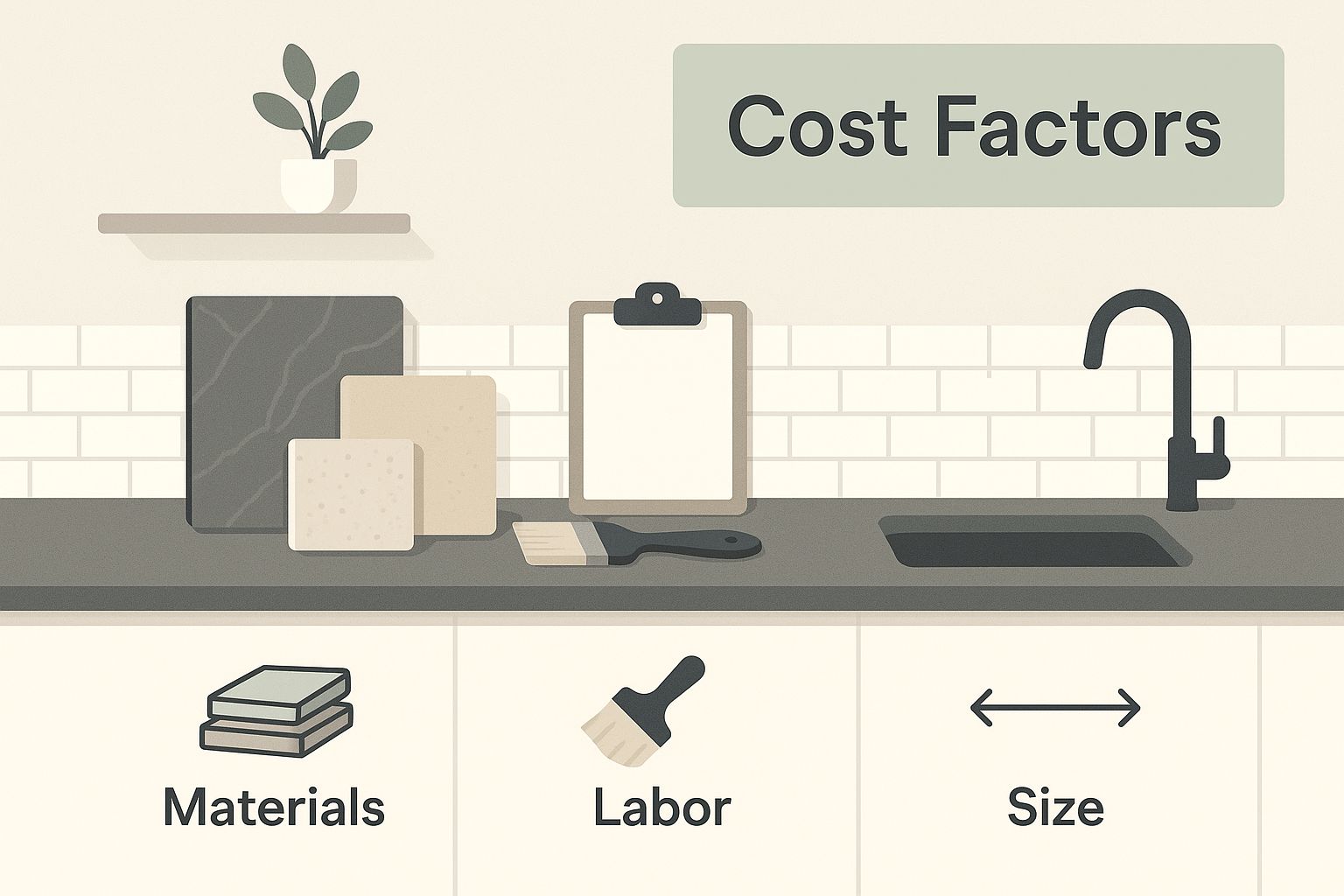
As you can see, there’s a clear hierarchy. Cabinetry, benchtops, and appliances are the 'big three' – they almost always take the biggest slice of the pie.
The Big-Ticket Items
When you start getting quotes, you'll quickly notice a few key areas that demand the largest part of your investment. These are the workhorses of your kitchen, defining its style, durability, and how you use it every day.
-
Cabinetry and Hardware (30-40%): This is usually the single biggest line item. The cost here can swing wildly depending on your choices. Are you going for standard flat-pack cabinets or bespoke, custom-made joinery? The materials, the finish (like a high-gloss lacquer versus a simple melamine), and the internal hardware you choose all have a major impact. Think soft-close drawers, clever corner units, and pull-out pantries – they're brilliant, but they add up.
-
Benchtops and Splashbacks (15-25%): Your benchtop material is a huge cost driver. Laminate is the go-to for a tight budget, but if you're looking at engineered stone, granite, or stainless steel, the price climbs considerably. Your splashback, whether it’s simple tiles, sleek coloured glass, or a seamless extension of the benchtop, is factored in here too.
-
Appliances (15-20%): The heart of the kitchen! The cost for your oven, cooktop, rangehood, dishwasher, and fridge can start from a few thousand for reliable, standard models. Or, you could easily spend $20,000 or more on high-end European brands with all the bells and whistles. What you need really depends on how you cook and what features you'll genuinely use.
The Essential Services
Beyond the things you can see and touch, a huge chunk of your budget goes to the skilled tradies who put it all together. This is where people often get caught out. Forgetting to properly budget for labour is one of the most common mistakes we see.
A beautiful kitchen is more than just quality materials; it's the result of precise installation and compliant workmanship. The cost of labour isn't just for installation—it's for the expertise to ensure everything fits perfectly and works safely for years to come.
These services are absolutely non-negotiable for a safe, functional, and legal renovation.
- Installation and Labour: This covers the builder or installer's time for demolition, assembly, and perfectly fitting every cabinet and panel.
- Plumbing: Moving a sink, connecting a dishwasher, or adding an insinkerator all require a licensed plumber. If your new layout involves shifting pipework in the walls, the cost will be higher.
- Electrical Work: New pendant lights, extra power points for appliances, or running new cables for an induction cooktop all require a registered electrician. This is a critical health and safety cost.
Don't forget other potential costs like new flooring, a fresh coat of paint, or even council consent fees if you’re making structural changes.
By understanding this breakdown, you can see how a small upgrade in one area—like splurging on that stone benchtop—can have a ripple effect on the total kitchen renovation cost in NZ. This knowledge gives you the power to make smart trade-offs and put your money where it matters most to you.
What Different Budgets Will Actually Get You
Seeing the average cost is helpful, but what does that money really buy you here in New Zealand? It's one thing to know the numbers, but it’s another to picture what a $20,000 kitchen looks and feels like compared to a $50,000 one. The difference isn't just about the price tag; it's a completely different world of materials, scope, and customisation.
Let's walk through three common renovation scenarios. Each one breaks down a typical budget bracket, showing you the kind of choices homeowners make at each level. This should give you a much clearer idea of what your investment can truly achieve.
The First-Home Refresh Budget: $16,000 – $25,000
This budget is all about smart, high-impact upgrades without tearing down walls. It’s the perfect approach for first-home buyers looking to put their stamp on a dated space or for landlords wanting to modernise a rental property. The goal here is simple: maximise visual appeal and day-to-day function while keeping the existing layout.
Think of it as a strategic cosmetic facelift. You’re working with the kitchen's existing bones and putting your money into the surfaces and fixtures that give you the most bang for your buck.
- Cabinetry: You'll almost certainly keep the existing cabinet carcasses. The magic comes from replacing the doors and handles for a fresh new look. Alternatively, you might go for affordable, standard-sized flat-pack cabinets from places like Mitre 10 or Bunnings.
- Benchtops: Laminate is the undisputed champion at this price point. Modern laminates are fantastic these days, offering a huge range of convincing timber and stone looks. They’re durable, stylish, and don't break the bank.
- Appliances: The focus is on reliable, entry-level to mid-range brands. You might replace a tired old oven or update the cooktop, but you’re probably not swapping out every single appliance.
- Splashback: A simple tiled splashback with affordable ceramic tiles is a popular choice. A painted glass panel is another cost-effective way to add a pop of colour and modernise the space.
- Labour: You keep costs down because you’re not moving any plumbing or electrical points. The work is mostly about assembly and installation rather than complex and expensive trade services.
This approach is all about making clever choices. For more ideas on getting a fantastic result without a huge spend, check out our guide on top kitchen renovation ideas on a budget for 2025.
The Family Hub Upgrade Budget: $25,000 – $45,000
This is the sweet spot for many Kiwi families and the most common renovation bracket we see. At this level, you’ve got more freedom to improve not just the aesthetics but the entire flow and function of your kitchen. It opens the door to better quality materials, more durable finishes, and even some small but significant layout tweaks.
This is where the kitchen really transforms from just a place to cook into the true heart of the home. You can start introducing more personal touches and higher-grade materials that will stand up to the daily chaos of family life.
A mid-range kitchen renovation is where functionality and style truly meet. It allows for durable, family-friendly materials like engineered stone and the flexibility to add features like a kitchen island, which can completely change how you use the space.
What you can expect in this range:
- Cabinetry: You’ll likely be looking at better quality, moisture-resistant cabinetry. You might even have some semi-custom elements to really maximise storage. Soft-close drawers and doors become a standard expectation here.
- Benchtops: This is where engineered stone becomes a very popular and achievable option. It offers incredible durability and gives the whole kitchen a more premium feel.
- Appliances: You can afford a full suite of new, mid-range appliances from reputable brands like Fisher & Paykel, Bosch, or Westinghouse, often with more advanced features and better energy efficiency.
- Layout Changes: Small structural changes are now on the table. This could mean removing a non-load-bearing nib wall to open up the space or adding a kitchen island with its own power supply.
- Lighting and Tiling: The budget can accommodate a more thoughtful lighting plan, like installing new LED downlights or feature pendant lights over an island, as well as new floor tiling.
The Gourmet Dream Kitchen Budget: $45,000+
Welcome to the high end. In this budget bracket, your kitchen renovation cost allows for a complete, top-to-bottom transformation with premium materials, bespoke solutions, and high-performance appliances. This is for homeowners who are truly passionate about cooking and entertaining, and for whom the kitchen is a real statement piece.
Here, the focus shifts to total customisation and luxury. While a basic kitchen refresh can start from $16,000, this premium tier kicks off at $45,000 and can easily sail past $90,000 depending on the scale and your specific tastes.
Key features of a gourmet kitchen often include:
- Custom Joinery: Fully bespoke cabinetry designed to your exact specifications, using premium materials and unique finishes that you won't find anywhere else.
- Premium Benchtops: Think high-end engineered stone, natural marble, solid granite, or even durable stainless steel for a commercial-grade feel.
- High-End Appliances: You can expect top-tier European brands like Miele or Gaggenau. This often includes integrated appliances for a seamless look, steam ovens, or powerful induction cooktops.
- Specialty Features: It's common to see luxurious extras like a butler's pantry for hidden prep space, a dedicated wine fridge, or a handy pot filler tap mounted over the cooktop.
- Major Structural Work: This budget can handle significant layout changes, like removing load-bearing walls (which requires engineering sign-off) to create a vast, open-plan living and dining area.
Why Auckland Kitchen Renovations Cost More
If you're planning to renovate your kitchen in New Zealand's biggest city, you might have noticed something—the numbers just don't seem to line up with the rest of the country. While national averages are a decent starting point, the economic realities of the Super City mean Auckland homeowners often face a much steeper bill for the very same project.
This isn't just a hunch. It's a reality rooted in real-world factors that affect every single quote you'll receive, from the plumber's hourly rate to the delivery fee for your new benchtops. Getting your head around why these differences exist is the first crucial step to building a realistic budget and avoiding any nasty surprises down the track.
The Key Drivers Behind Auckland Prices
So, what’s really behind this "Auckland premium"? It all comes down to a few core pressures that are simply more intense here than anywhere else in New Zealand.
- Higher Labour Rates: The demand for skilled, reliable tradies—your builders, plumbers, sparkies, and joiners—is through the roof in Auckland. With so much construction and renovation happening, there’s fierce competition for good people, which naturally pushes up their rates. You can expect to pay 10-20% more for labour compared to cities like Wellington or Christchurch.
- Logistical and Material Costs: While a cabinet or tap might have a national price tag, getting it to your doorstep in Auckland adds extra costs. Think about it: warehouse storage fees are higher, transport has to navigate congested city traffic, and tradies often have to factor in paid parking. These little things add up.
- Greater Compliance and Council Costs: Navigating council consents and compliance can sometimes feel more complex in Auckland. This can add extra time and professional fees to your project, especially if it involves structural changes or complex plumbing work.
These factors create a noticeable price gap. A kitchen that might be considered a standard mid-range reno in Hamilton could easily tip into the premium category in Auckland. Even if you're working with a tiny footprint, you're not immune; our guide on small kitchen ideas has some great tips for making every dollar count, no matter your location.
To put this into perspective, let's compare the costs side-by-side.
Auckland vs National Average Cost Comparison
The table below shows how the Auckland premium plays out across different project tiers. You can see a clear and consistent difference in what you can expect to pay.
| Renovation Tier | Auckland Cost Range (NZD) | Rest of NZ Cost Range (NZD) |
|---|---|---|
| Basic | $25,000 - $40,000 | $20,000 - $35,000 |
| Mid-Range | $40,000 - $80,000 | $35,000 - $70,000 |
| Premium | $80,000+ | $70,000+ |
As you can see, the starting point for any renovation is higher in Auckland, and that gap often widens as the project becomes more complex. It's a crucial difference to factor into your initial planning.
By understanding and accepting these regional differences right from the start, you can plan with your eyes wide open. Knowing that your budget needs to account for the "Auckland premium" empowers you to have clearer, more informed conversations with suppliers and contractors, ensuring your dream kitchen doesn’t become a financial nightmare.
Smart Ways to Reduce Your Renovation Costs
Watching the budget for a kitchen reno creep up is a common fear, but getting a stunning, functional kitchen doesn't have to mean emptying your savings account. With a bit of smart planning and a few savvy decisions, you can keep those costs in check and get the most out of every dollar.
The trick is to think like a project manager. Your goal isn't just to cut costs; it's to find clever savings without compromising on the quality or the final look you're dreaming of. It’s all about being resourceful.
Strategic Planning and Timing
Honestly, one of the best ways to save money happens long before any walls come down. Meticulous, upfront planning is your single greatest weapon against budget blowouts. So many expensive, last-minute changes happen simply because the initial plan wasn't thought through properly.
It's also worth thinking about when you do the work. Good tradies are always in high demand, especially in the spring and the mad rush before Christmas. If you can be flexible, scheduling your renovation for a quieter period, like late winter, might mean better availability and potentially more competitive quotes.
Source Your Own Materials and Appliances
While letting a renovation company handle all the purchasing is easy, you can find some serious savings by sourcing some of the big-ticket items yourself. This gives you total control over the price tag and lets you hunt for the best deals.
- Appliances: Keep a sharp eye out for seasonal sales and floor models. Retailers often have huge sales around public holidays where you can save hundreds, sometimes thousands, on a complete kitchen appliance package.
- Tiles and Flooring: Check out the clearance sections at tile and flooring shops. You can often score high-end, quality products for a fraction of the cost if you aren't locked into one specific design.
- Handles and Tapware: These small details have a huge impact. Sourcing your own cabinet handles, tapware, and sinks from online or specialty stores is almost always cheaper than picking from a builder's limited—and marked-up—range.
For more ideas on keeping costs down, exploring affordable kitchen remodeling options can show you how small choices can add up to big savings.
The Great Debate: Flat-Pack vs. Custom
Cabinetry is, without a doubt, the biggest line item in most kitchen renovations. The choice you make here will have a massive effect on your final bill.
Flat-pack kitchens from places like Bunnings, Mitre 10, or PlaceMakers have improved dramatically over the years. They offer a stylish and affordable alternative to custom-made joinery, often saving you 40-50% on cabinetry. And with a good installer, they can look surprisingly bespoke.
The main advantage of custom cabinetry, however, is that it lets you use every single centimetre of your space—a huge bonus in small or awkwardly shaped kitchens. Smart storage is everything, and our guide on the top kitchen storage ideas to maximise space easily is packed with ideas to help you design the perfect layout, whether you choose flat-pack or custom.
Know When to DIY and When to Call the Pros
Rolling up your sleeves and doing some of the work yourself is a classic Kiwi way to trim renovation costs. But you have to be brutally honest about your skills and how much time you can realistically give to the project.
A botched DIY job can easily cost more to fix than it would have to just hire a professional from the start. Be realistic about what you can handle, and focus your efforts where they’ll make a difference without risking safety or a quality finish.
Jobs a confident DIYer can usually tackle:
- Careful demolition (turn off the water and power first!)
- Painting the walls and ceiling
- Assembling flat-pack cabinets
- Tiling a simple splashback
Jobs you MUST leave to licensed professionals:
- All electrical work (it's the law)
- All plumbing and gasfitting (also the law)
- Plastering for that perfect, seamless finish
- Installing heavy stone or solid surface benchtops
By thinking ahead, sourcing smart, and knowing when to call in the experts, you can steer your renovation to a brilliant result that doesn't blow the budget.
Is A Kitchen Renovation A Smart Investment?
After looking at all those numbers, it's completely normal to wonder: is the kitchen renovation cost in NZ actually worth it? The short answer is a definite yes, but the real payoff isn't just about the money. A new kitchen is what I like to call a dual investment—it boosts your property's value while making a huge difference to your everyday life.
From a purely financial standpoint, there's no denying that the kitchen is the heart of the home for most potential buyers. A modern, well-designed, and inviting kitchen can be the one thing that makes your property stand out, often resulting in a better sale price and a quicker sale. You might not get back every single dollar you put in, but a smart renovation almost always adds serious value to your home.
In fact, many professional property investors who use fix-and-flip financing strategies will tell you that a targeted kitchen upgrade is one of the most reliable ways to lift a home's market appeal and secure a solid return.
The Return On Lifestyle
Money aside, the intangible benefits are where a kitchen renovation truly pays you back. Think of it less as an expense and more as an investment in your family's happiness and well-being. This is a return you get to cash in on every single day, long before you even think about putting a "For Sale" sign out front.
The real return on a kitchen renovation isn't just what it adds to your house price; it's what it adds to your life. It’s the joy of cooking in a space that works for you, the improved family connection, and the ease it brings to your daily routine.
This "lifestyle ROI" really comes down to a few key things:
- Enhanced Functionality: A thoughtfully designed kitchen gets rid of all those little daily frustrations. Say goodbye to cluttered benchtops and awkward cupboards. When everything has a home, cooking and cleaning become less of a chore and more of a pleasure.
- Improved Family Connection: A new kitchen, particularly an open-plan one, often becomes the new hub of the home. It’s where the kids do their homework, where you catch up on the day, and where memories are made over a good meal.
- Daily Pleasure and Pride: There’s a simple, undeniable satisfaction that comes from starting your day or preparing a meal in a space you genuinely love. That sense of pride in your home is a huge contributor to your overall quality of life.
Of course, picking the right features and appliances is key to getting this lifestyle upgrade right. As you plan your layout, every detail matters. That's why we put together a guide on where you should buy your appliances to help you find gear that fits your vision and your budget.
At the end of the day, a kitchen renovation is one of the few home improvements that delivers twice: first in daily happiness, and again when it’s time to sell.
Common Kitchen Renovation Questions
Taking on a kitchen project always sparks a lot of questions. It's completely normal! To help you feel confident as you finalise your kitchen renovation costs and plans, we’ve put together answers to the queries we hear most often from Kiwi homeowners.
How Long Does a Typical Kitchen Renovation Take in NZ?
Honestly, the timeline for a kitchen renovation in New Zealand really comes down to the scale of the job.
If you're doing a simple cosmetic refresh—think flat-pack cabinets with no changes to the layout—you could be looking at just one to three weeks from start to finish.
A more standard, mid-range renovation that includes some custom cabinetry, new plumbing, and electrical work usually takes around four to eight weeks. For the big, high-end projects involving structural changes, bespoke materials, and council consents, you should plan for eight to twelve weeks or more. This longer timeframe accounts for everything from design and approvals to waiting on specific materials to arrive.
Do I Need Building Consent for My Kitchen Renovation?
This is a big one, and it all depends on what you're planning to change. For the most part, you won’t need building consent for purely cosmetic updates. Replacing your cabinetry, putting in a new benchtop, or swapping out appliances in the same spot is usually fine.
You will almost certainly need building consent if your renovation involves moving or adding walls, significantly altering the plumbing system (like relocating a sink), or carrying out major electrical work. Always check with your local council or renovation specialist before starting.
Don't skip this step. Making sure your renovation is legal and safe from the get-go will save you from major headaches, especially when it comes time to sell your home.
What Are My Financing Options?
There are a few well-trodden paths for financing a kitchen renovation here in New Zealand. A popular choice for many homeowners is to add the cost to their existing mortgage, as this often secures the best interest rates.
Other common financing routes include:
- A separate personal loan from a bank or other financial institution.
- Using a revolving credit facility if you prefer more flexible borrowing.
- Saving up and paying with cash to avoid interest altogether.
- Supplier financing deals, which sometimes come with handy interest-free periods.
It’s well worth taking the time to compare all your options. Remember, a key part of your investment is choosing the right appliances, like your cooking ventilation. You can learn more about how to choose your rangehood in our detailed guide to ensure you find the perfect fit for your new kitchen and budget.
At Folders, we believe in making your dream home a reality with quality products at great prices. From high-performance ovens and cooktops to the perfect finishing touches, we have everything you need to create a kitchen you'll love for years to come. Explore our extensive range of home and kitchen appliances today. Shop now at Folders.co.nz.