

9 Clever Open Plan Living Ideas for a Kiwi Home in 2025
Welcome to the future of Kiwi homes, where walls come down and connections are made. Open plan living is more than just an architectural trend; it's a lifestyle that embraces light, space, and family togetherness. But how do you create distinct, functional zones without the traditional walls to guide you? It’s a common challenge for homeowners and renovators aiming for that perfect balance between airy spaciousness and cosy intimacy. Successfully transitioning to this layout often requires careful consideration, especially if you're removing existing structures. A crucial aspect of maximising your home's potential and embracing this style is thorough full internal wall renovation planning, which addresses both structural integrity and the desired flow of your new space.
In this comprehensive guide, we move beyond generic advice to explore nine actionable open plan living ideas. These strategies are designed to help you define your kitchen, dining, and living areas with both style and purpose. From clever furniture arrangements to strategic lighting and zoning techniques, we’ll provide practical solutions to transform your home into a harmonious, multi-functional haven that truly works for your whānau. Let's explore how to make your open-concept space both beautiful and brilliantly organised.
1. The Anchor Point: Kitchen Islands and Peninsulas
A central kitchen island or peninsula is one of the most effective and popular open plan living ideas because it serves multiple functions simultaneously. It acts as a natural, low-profile divider that separates the kitchen from the living or dining area without closing off the space. This architectural feature provides valuable extra benchtop space for meal preparation, casual dining, and even a home office hub, all while maintaining a crucial sense of connection and flow.
Whether freestanding (an island) or attached to a wall (a peninsula), this element becomes the social and functional heart of the home. It’s where guests gather with a drink, kids do their homework, and busy mornings begin. From sleek waterfall quartz islands in modern homes to rustic butcher block designs popularised by designers like Joanna Gaines, the style can be tailored to any aesthetic.
Implementation Tips
To integrate an island or peninsula successfully, consider these practical points:
- Mind the Gap: Ensure at least 90-105 cm of clear walkway space around all sides of the island. This allows for comfortable movement, safe passage when oven doors are open, and easy traffic flow.
- Create Visual Definition: Use a cluster of statement pendant lights from our Folders lighting range above the island. This not only provides essential task lighting but also visually anchors the island as a distinct zone within the larger open plan area.
- Maximise Functionality: Incorporate a mix of storage solutions. Use closed cupboards for hiding away clutter and open shelving for displaying cookbooks or decorative items. Power outlets are a non-negotiable for charging devices and using small appliances.
- Choose the Right Seating: Bar stools are essential for turning your island into a social hub. At Folders, we offer a wide range of styles to match your decor and provide comfortable seating for everything from quick breakfasts to long conversations.
By carefully planning its placement and features, an island becomes more than just a benchtop; it’s a hardworking centrepiece that enhances the very nature of open plan living. For a deeper dive into optimising your kitchen's configuration, you can explore our guide to the top kitchen layouts.
2. Area Rugs for Zone Definition
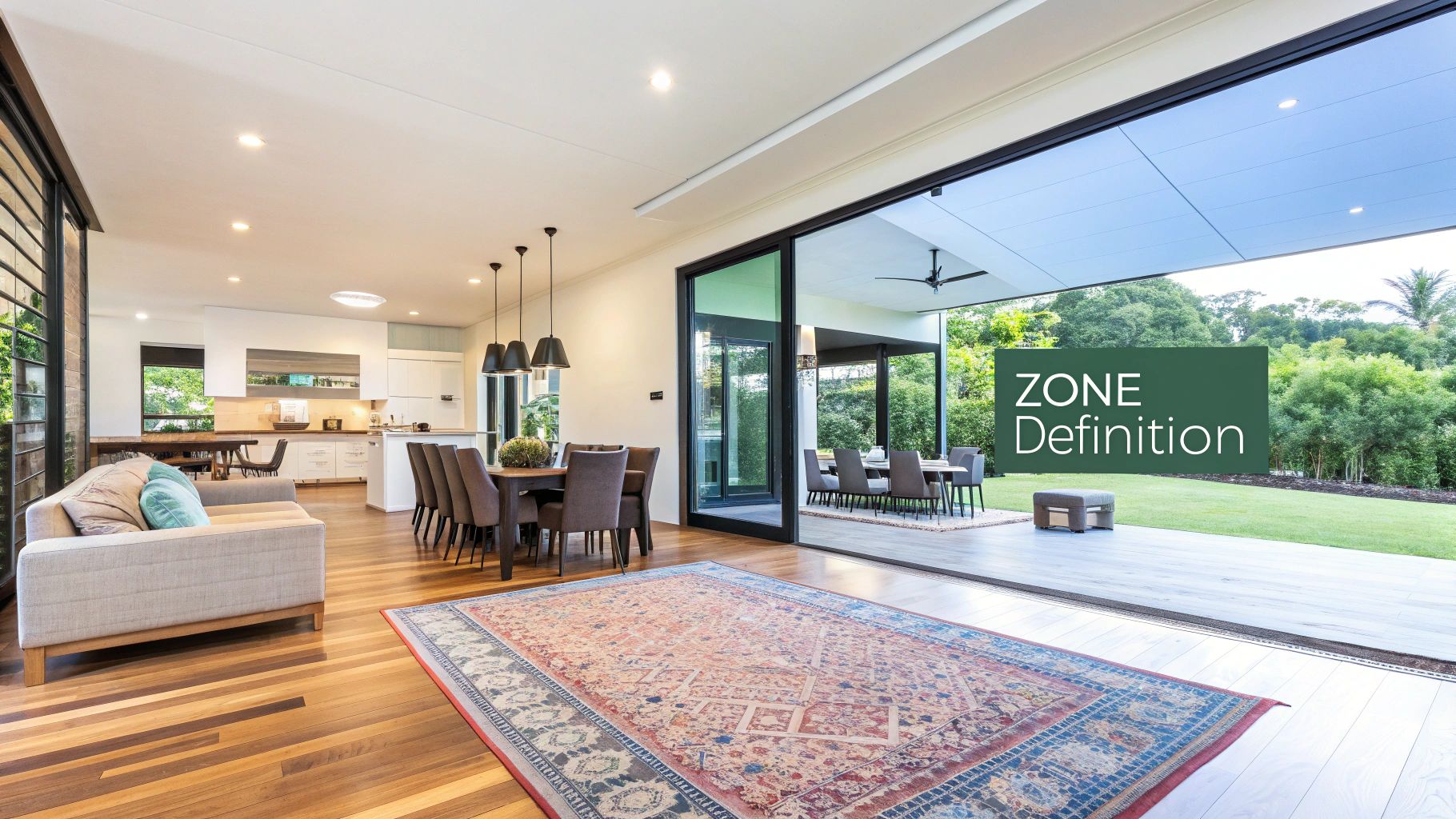
One of the most effective and visually appealing open plan living ideas is the strategic use of area rugs to define distinct functional zones. Without installing a single wall, a well-placed rug can create the illusion of separate rooms, anchoring furniture and visually separating the living area from the dining space or a home office nook. This technique relies on colour, pattern, and texture to establish boundaries while preserving the light, airy feel that makes open plan living so desirable.
This method, popularised by design blogs like Emily Henderson's and seen in West Elm and Pottery Barn catalogues, offers incredible flexibility. You can use a large, plush rug to ground your sofa and armchairs, a durable round rug under a dining table, or even layer different textures for a more eclectic look. It’s a powerful tool for adding warmth, dampening sound, and injecting personality into a large, open space.
Implementation Tips
To use rugs for successful zone definition, consider these practical points:
- Size Matters: The rug should be large enough that at least the front legs of all main furniture pieces in a zone (like your sofa and armchairs) can sit on it. This creates a cohesive and anchored look.
- Create Clear Pathways: Leave a gap of about 45-60 cm of bare floor between rugs in adjacent zones. This creates a natural walkway and reinforces the sense of separation between the spaces.
- Coordinate, Don’t Match: Choose rugs with a complementary colour palette to ensure a harmonious flow throughout the open plan area. They don't need to be identical, but they should share a common colour story.
- Prioritise Safety and Comfort: Always use a quality rug pad underneath. This prevents slipping, which is crucial in high-traffic open areas, and adds an extra layer of cushioning underfoot. For busy family homes, consider washable rugs for easy maintenance.
3. Multi-Level Ceilings and Soffits
Using architectural elements like varying ceiling heights and soffits is one of the most sophisticated open plan living ideas for creating subtle, effective zones. This technique uses the vertical space of a room to establish visual boundaries without physical walls. By dropping a section of the ceiling or raising another, you can define functional areas like the kitchen or dining space, adding architectural depth and interest while preserving the expansive feel of the open layout.
This design strategy, famously employed by architects like Frank Lloyd Wright and seen in modern luxury homes, creates a custom, high-end feel. A dropped soffit over a kitchen island can house recessed lighting and extractor fans, while a raised tray ceiling can add a sense of grandeur to a dining area. Exposed timber beams are another popular method, particularly in modern farmhouse designs, to delineate the transition from a living room to a kitchen, adding rustic character and a clear visual stop.
Implementation Tips
To incorporate multi-level ceilings effectively, consider these architectural points:
- Maintain Headroom: Ensure any dropped sections or soffits maintain a minimum ceiling height of at least 2.4 metres (8 feet) to avoid feeling cramped. This ensures the space still feels open and comfortable.
- Integrate Lighting: Plan your lighting design from the beginning. Dropped soffits are perfect for installing recessed downlights for task lighting, while cove lighting in a tray ceiling can provide beautiful ambient light.
- Consider Proportions: The size of the dropped or raised area should be proportional to the zone it defines and the overall room size. A feature that is too small will look accidental, while one that is too large can overwhelm the space.
- Coordinate with Trades: Work closely with your builder and HVAC contractor. Soffits are often a practical way to hide necessary ductwork, wiring, and plumbing, so early coordination is crucial for a seamless result.
4. Furniture Arrangement and Floating Layouts
One of the most powerful yet underutilised open plan living ideas involves moving furniture away from the walls. This technique, known as a "floating" layout, uses strategic furniture placement to create distinct functional zones and clear traffic pathways without physical barriers. By grouping pieces like sofas and armchairs together in the centre of a room, you can establish an intimate conversation area that feels separate from the dining or kitchen space, all while preserving the open, airy atmosphere.
This approach is championed by renowned designers like Nate Berkus and is frequently demonstrated on HGTV design shows because of its effectiveness. A classic example is placing a console table directly behind a floating sofa to create an elegant boundary, or arranging two sofas to face each other with a coffee table in between. To better visualise various furniture arrangements and how they define zones, exploring real-world examples can spark inspiration.
Implementation Tips
To execute a floating layout successfully, focus on flow and cohesion:
- Establish Clear Pathways: Ensure there are at least 75-90 cm of clear walking space around your main furniture groupings. This prevents the layout from feeling cramped and allows for easy movement between zones.
- Use Area Rugs to Define Zones: An area rug is your best friend in a floating layout. Place your main seating arrangement, like a sofa and chairs from our Folders living room collection, entirely on the rug to visually anchor the space and define it as the "living room" zone.
- Consider Scale and Proportion: In a large open area, small furniture can look lost. Choose substantial pieces like an L-shaped sectional to create a strong boundary or opt for larger-scale armchairs to balance the space.
- Create Cohesion: While defining separate zones, maintain a unified look. Use a consistent colour palette or repeat materials and textures throughout the entire open plan area to ensure the different zones feel connected.
By thoughtfully arranging your furniture, you can craft a sophisticated and highly functional open plan environment. For more guidance on arranging furniture in constrained spaces, explore our tips for small living room layout ideas.
5. Open Shelving and Display Storage
One of the smartest open plan living ideas involves trading heavy, solid cabinetry for open shelving and display storage. This approach maintains a sense of spaciousness and light by avoiding the visual bulk of traditional closed cupboards. It allows you to store essentials and display personal treasures without erecting barriers, keeping the sightlines clear and the atmosphere airy. This technique is key to creating a space that feels both organised and expansive.
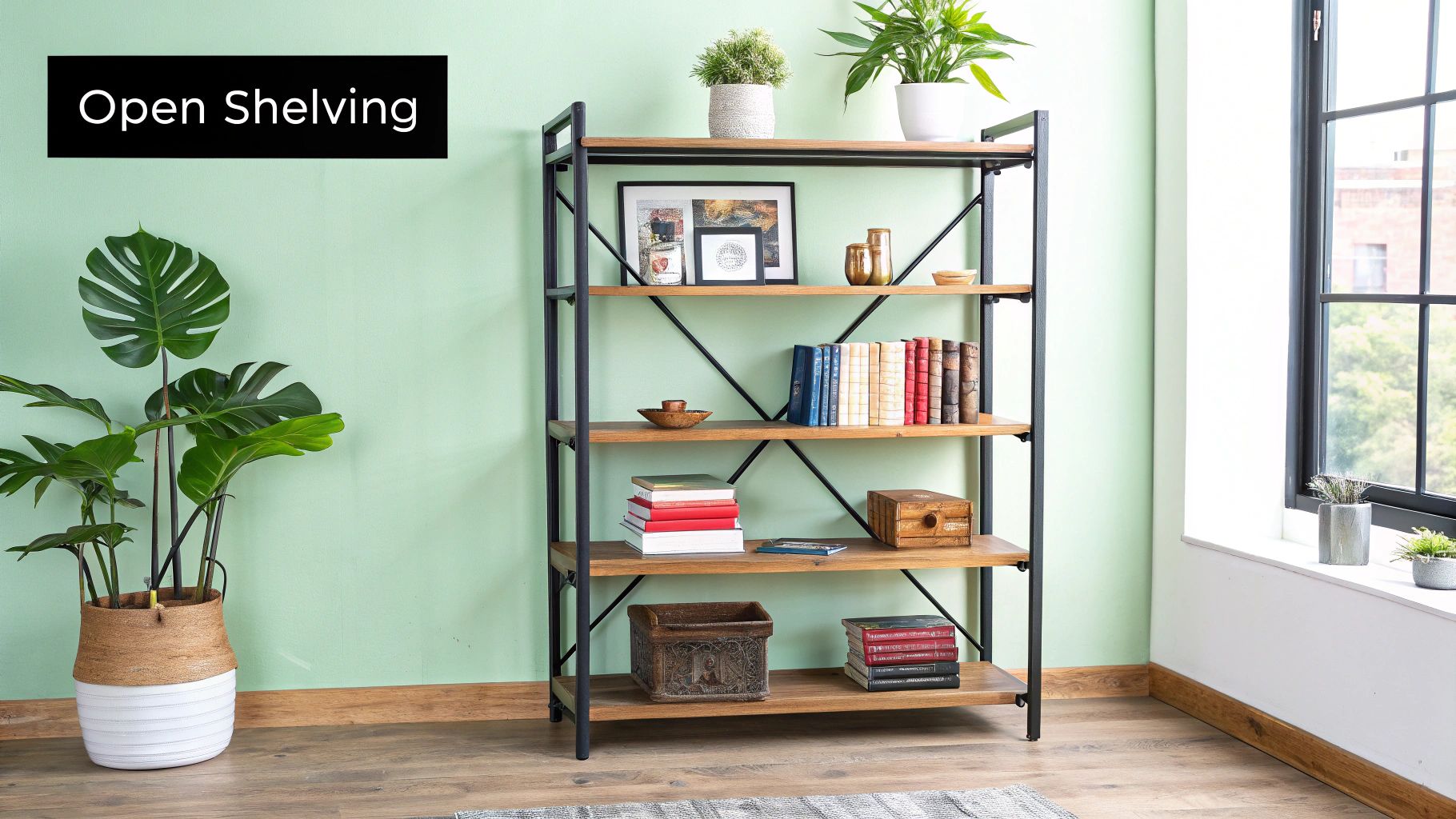
Popularised by the minimalist principles of Scandinavian design and Marie Kondo’s organisational philosophy, open shelving turns everyday items into part of the decor. Think of kitchen shelves neatly displaying glassware, living room built-ins showcasing books and art, or industrial pipe shelving adding character to a modern loft. This strategy is not about hiding things away; it’s about curating your belongings to enhance your home’s aesthetic while keeping them accessible.
Implementation Tips
To make open shelving work beautifully in your open plan space, consider these tips:
- Curate with Care: Avoid a cluttered look by styling your shelves thoughtfully. Mix functional items like books with decorative objects, plants, and framed photos. Leave some empty space to give your items room to breathe.
- Create Cohesion: Use matching baskets, bins, or canisters to group smaller, less attractive items. This creates a uniform look and makes it easier to keep things tidy. At Folders, our range of stylish storage containers is perfect for this.
- Ensure Safety and Stability: Always use the correct wall anchors and fixings for your wall type, especially when storing heavy items like plates or books. Ensure freestanding units are stable or secured to the wall to prevent tipping.
- Highlight Your Display: Consider integrating subtle LED strip lighting under your shelves. This not only highlights your displayed items, turning them into a feature, but also adds a layer of warm, ambient light to the room.
By carefully balancing storage and display, open shelving enhances the flow and personality of your home. For more clever ways to organise your space, explore our guide to the top kitchen storage ideas to maximise space.
6. Colour and Material Transitions
One of the most artistic and effective open plan living ideas involves using different colours and materials to create distinct zones without physical barriers. This technique relies on visual cues to signal a shift in function, from a cooking area to a dining space, for instance. By thoughtfully applying different paint colours, wall treatments, or flooring, you can establish clear boundaries while preserving the expansive, airy feel that defines open plan living.
This method, popularised by designers like Studio McGee, allows for immense creativity. A deep navy feature wall can anchor a dining nook, a bold tile backsplash extending to the ceiling can designate the kitchen, or a change in flooring from durable vinyl in the kitchen to plush carpet in the living area can create a cosy, defined lounge. The key is to create contrast that is harmonious, not jarring, ensuring a seamless flow between each space.
Implementation Tips
To master the art of colour and material transitions, consider these practical points:
- Follow the 60-30-10 Rule: For a balanced look, apply a dominant colour (60%), a secondary colour (30%), and an accent colour (10%) across the entire open plan space. This ensures a cohesive palette even with varied tones in different zones.
- Coordinate Undertones: Whether you choose warm or cool tones, ensure the undertones of your paints, flooring, and textiles are consistent. This prevents colours from clashing and creates a polished, intentional look.
- Create Smooth Flooring Transitions: When changing flooring materials, use a clean, low-profile transition strip. This provides a safe and visually appealing bridge between different surfaces like tiles and timber.
- Test Your Colours: Always test paint samples on your walls and observe them at different times of the day. The natural light in an open plan area can dramatically alter how a colour appears from morning to night.
By cleverly layering colours and textures, you can add depth, character, and functional definition to your home. For more inspiration on creating a cohesive aesthetic, you can find more guidance in our guide to home decor in NZ.
7. Lighting Zones and Layered Illumination
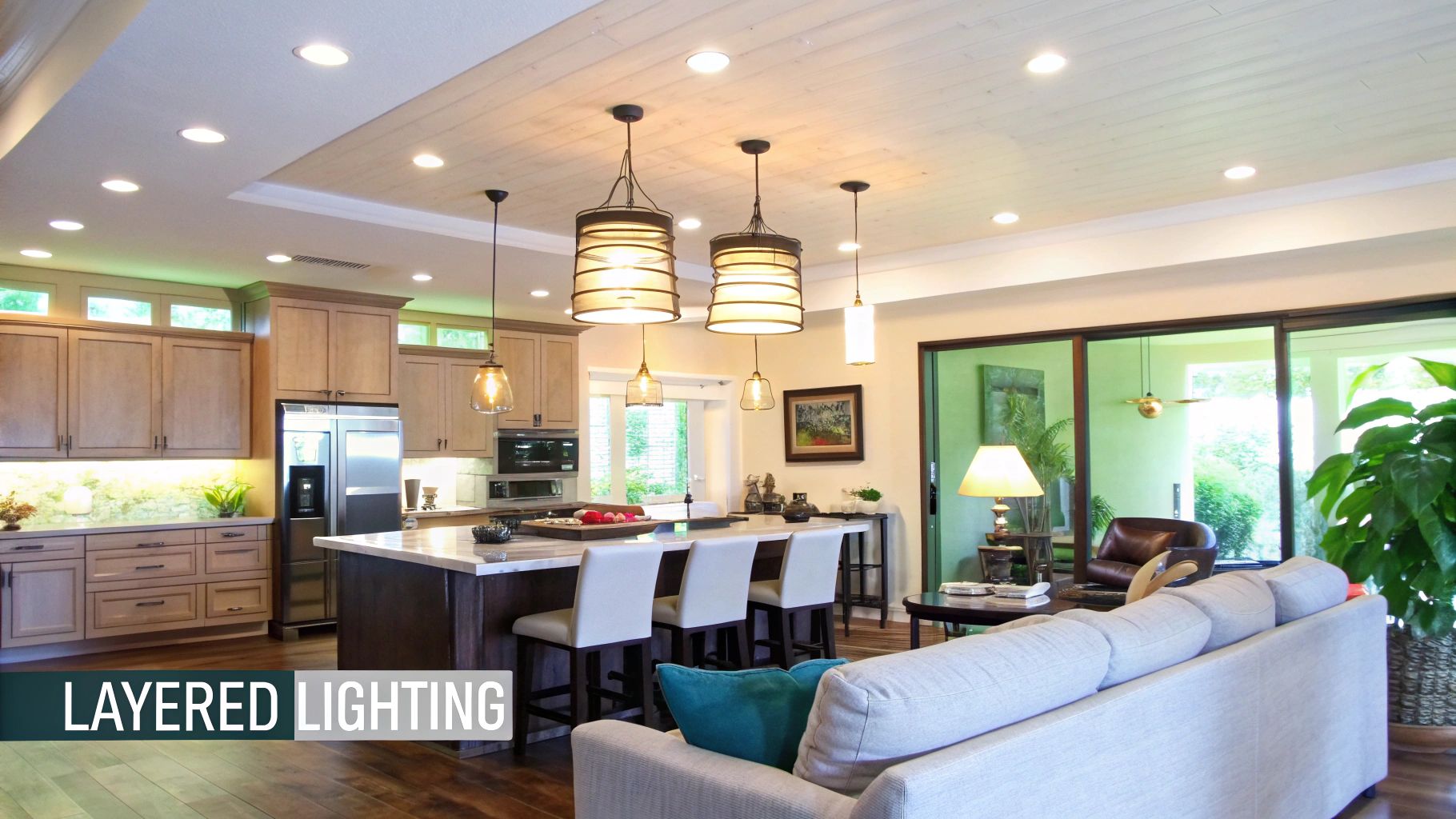
Effective lighting is one of the most transformative open plan living ideas because it carves out distinct functional areas without adding physical barriers. By layering different types of light, you can create zones for cooking, dining, and relaxing, all within one cohesive space. This strategy involves combining ambient (overall), task (focused), and accent (highlighting) lighting to build atmosphere, improve functionality, and guide the eye through the room.
This layered approach is a hallmark of professional interior design, popularised by brands like Restoration Hardware and seen in countless HGTV design shows. A dramatic chandelier can define a formal dining spot, a series of pendants can illuminate a kitchen island, and a soft floor lamp can create a cosy reading nook by the sofa. The result is a dynamic, inviting environment where the lighting adapts to the activity, enhancing the versatility of open plan living.
Implementation Tips
To successfully layer your lighting, consider these practical points:
- Layer the Three Types: In each zone, aim for a mix of ambient, task, and accent lighting. For example, in the living area, recessed downlights provide ambient light, a floor lamp offers task light for reading, and track lighting highlights a piece of art.
- Maintain Colour Consistency: Use bulbs with a consistent colour temperature (measured in Kelvins) throughout the open plan space. This prevents jarring shifts from warm to cool light, creating a more unified and harmonious feel.
- Install Dimmer Switches: Dimmers are essential for flexibility. They allow you to dial up the brightness for tasks like meal prep and then dim the lights for a relaxed evening atmosphere, giving you complete control over the mood.
- Highlight Architectural Features: Use accent lighting, like uplighters or wall sconces from the Folders lighting range, to draw attention to interesting details like a textured feature wall, exposed beams, or built-in shelving.
By strategically planning your lighting, you add depth, character, and immense practicality to your open plan layout. For more inspiration, you can delve into our guide to the top 10 kitchen lighting ideas in NZ.
8. Built-in Storage and Banquettes
Custom-built joinery is one of the smartest open plan living ideas because it seamlessly integrates storage and seating into the architecture of your home. Instead of freestanding furniture that can clutter sightlines, built-ins like banquette seating or wall-to-wall entertainment units define zones while maintaining a cohesive, uncluttered aesthetic. They offer a high-end, bespoke solution that maximises every square centimetre of your space.
This approach is perfect for creating functional nooks within a larger area. Imagine a cosy window seat with integrated bookshelves for a reading corner, or a dining banquette with hidden storage drawers below, neatly separating the dining zone from the main living space. Popularised by home renovation shows and custom millwork specialists, these features add immense value and personality, making a home feel truly custom-designed.
Implementation Tips
To incorporate built-in solutions effectively, consider these key details:
- Plan for Longevity: Think about both your current and future storage needs. Design flexible solutions, like adjustable shelving in an entertainment unit, to accommodate changing technology or decor.
- Match Your Finishes: Ensure the materials and colours of your built-ins complement the existing finishes in your open plan area. This creates a harmonious look, making the new feature feel like an original part of the home's design.
- Integrate Power and Lighting: Plan for electrical needs from the outset. Incorporate power outlets for charging devices, task lighting for a reading nook, or backlighting for display shelves to enhance both function and ambiance.
- Proportion is Key: Design the built-ins to be proportional to the room's size. An oversized unit can overwhelm a space, while an undersized one may look out of place. A well-proportioned piece will anchor the zone without dominating it.
9. Sliding Doors and Moveable Partitions
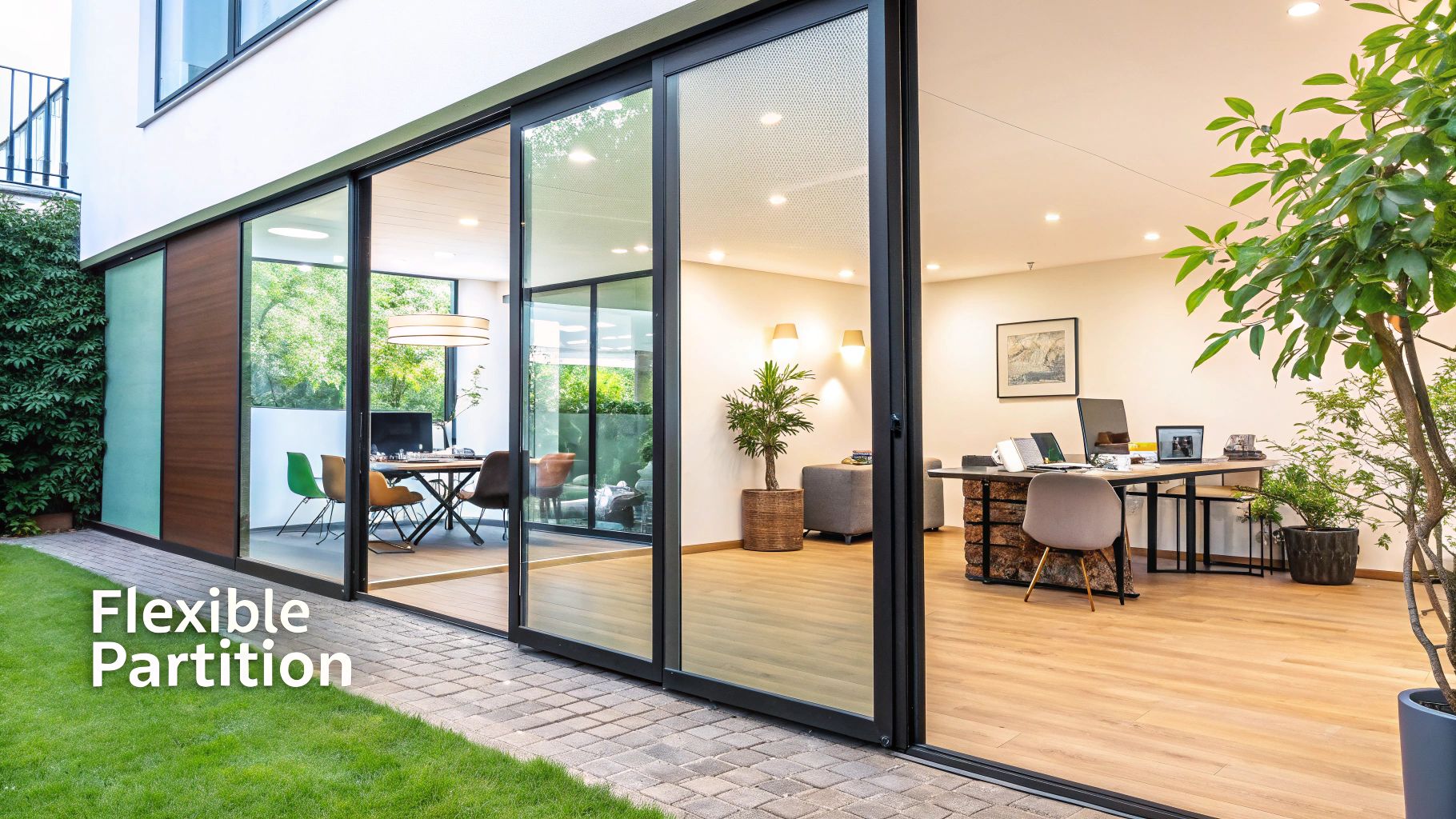
For those who crave both connection and seclusion, sliding doors and moveable partitions offer the ultimate flexibility in open plan living ideas. These architectural elements provide a dynamic solution, allowing you to instantly transform a wide-open space into distinct, private zones when needed. This approach masterfully blends the airy, social benefits of an open layout with the functional privacy of a traditional floor plan.
Imagine a rustic sliding barn door that closes off a home office from the lively family room, or sleek pocket doors that conceal a laundry nook. Folding glass doors can separate a dining area for a formal dinner, then retract to merge it with the kitchen for casual entertaining. Popularised by home renovation shows and brands like NanaWall, these partitions are both a practical and a stylish statement piece.
Implementation Tips
To successfully add moveable partitions to your home, consider these key points:
- Plan for Wall Space: Ensure you have enough adjacent, unobstructed wall space for the door to slide open completely. For a seamless look, pocket doors that disappear into the wall are an excellent, though more complex, option.
- Prioritise Quality Hardware: The track and hardware are critical for smooth, quiet, and reliable operation. Invest in a high-quality system that can easily support the weight of your chosen door material, whether it's solid timber, glass, or composite.
- Balance Light and Privacy: Frosted or reeded glass panels are a brilliant choice for partitions as they maintain privacy without blocking natural light, keeping the space feeling bright and open even when divided.
- Manage Light Control: For homes featuring large expanses of glass, such as sliding doors that connect indoor and outdoor spaces, selecting the right window treatments is essential for managing light and privacy. You can explore options like blinds for sliding glass doors to find a solution that complements your aesthetic.
Open Plan Living Ideas Comparison
| Item | Implementation Complexity | Resource Requirements | Expected Outcomes | Ideal Use Cases | Key Advantages |
|---|---|---|---|---|---|
| Kitchen Islands and Peninsulas | High – plumbing and electrical needed | High – materials, labor, space | High functionality and increased home value | Large kitchens with open floor plans | Multi-function workspace, natural gathering |
| Area Rugs for Zone Definition | Low – simple placement | Low – cost of rugs and pads | Effective visual zoning, added comfort | Renters, budget-friendly zone definition | Inexpensive, flexible, adds warmth |
| Multi-Level Ceilings and Soffits | High – construction and design work | High – architectural modifications | Dramatic space definition and architectural interest | Homes seeking upscale visual zone separation | Adds value, hides utilities, zone lighting |
| Furniture Arrangement and Floating Layouts | Medium – planning required | Medium – furniture and space | Flexible and intimate zone creation | Both small and large open plan living spaces | Enhances flow, easy reconfiguration |
| Open Shelving and Display Storage | Medium – installation and organization | Medium – shelving materials | Functional storage with visual openness | Spaces needing display and easy access | Storage without bulk, easy access |
| Color and Material Transitions | Low to Medium – painting and flooring | Low to Medium – materials and labor | Subtle space definition with style | Cost-conscious designs, frequent updates | Cost-effective, mood enhancer |
| Lighting Zones and Layered Illumination | Medium to High – electrical planning | Medium to High – fixtures and wiring | Defined zones with appropriate ambiance | Homes needing tailored lighting schemes | Space definition without walls, energy efficiency |
| Built-in Storage and Banquettes | High – custom carpentry needed | High – skilled labor and materials | Maximize storage, create architectural interest | Spaces with specific storage needs | Efficient storage, custom solutions |
| Sliding Doors and Moveable Partitions | Medium to High – hardware and installation | Medium to High – quality materials | Flexible space use, privacy on demand | Homes needing flexible open/closed spaces | Privacy, light flow, noise reduction |
Crafting Your Perfect Open Plan Space with Folders
Creating a truly successful open plan home is an art that goes far beyond simply removing walls. It's about crafting a unified environment that supports your daily life while feeling both expansive and welcoming. Throughout this guide, we've explored a wealth of actionable open plan living ideas, demonstrating that the most inviting spaces are born from thoughtful design and strategic choices. The key is to build a cohesive home where distinct zones for cooking, dining, working, and relaxing flow into one another with seamless grace.
Synthesising Your Vision
As we've seen, achieving this delicate balance involves a multi-faceted approach. It’s not about choosing just one idea, but about layering several concepts to build a rich, functional, and visually harmonious space.
- Structural Anchors: Start with foundational elements like a multi-functional kitchen island or a clever peninsula. These don't just add counter space; they create a natural gathering point and a clear boundary for your culinary zone.
- Defining with Decor: Use area rugs, furniture groupings, and intentional colour palettes to carve out "rooms without walls." A well-placed rug can anchor a living area, while a shift in wall colour or material can signal the transition from lounge to dining space.
- The Power of Light and Height: Don't underestimate the impact of vertical design. Layered lighting schemes with ambient, task, and accent lights allow you to customise the mood for each zone. Similarly, architectural details like soffits or multi-level ceilings can create a sense of intimacy within a larger area.
- Flexible and Smart Storage: From open shelving that doubles as a curated display to built-in banquettes that maximise seating and storage, clever solutions are paramount. Moveable partitions and sliding doors offer the ultimate flexibility, allowing you to close off or open up areas as your needs change throughout the day.
Your Next Steps to an Inspired Home
The journey to your ideal open plan layout begins with a clear understanding of how you want to live in your space. Think about your daily routines, your entertaining style, and the activities that matter most to your family. The most effective open plan living ideas are those that are customised to solve your specific challenges and enhance your lifestyle. Begin by identifying the primary functions your space needs to serve, then select a combination of the strategies we've discussed to bring that vision to life. Remember, the goal is to create a dynamic environment that is organised, connected, and a true reflection of you.
Ready to transform your home with these open plan living ideas? Folders is your proudly Kiwi-owned partner in creating beautifully organised and functional living spaces. Explore our curated collections of stylish furniture, smart storage solutions, and essential home appliances online at Folders to find everything you need to begin your project today.