

Finding the Best Cake Mixer NZ
Welcome to our ultimate guide to finding the perfect cake mixer in New Zealand. Whether you're a casual weekend baker whipping up treats for the family or a dedicated enthusiast tackling tricky pastries, the right mixer is an absolute game-changer. It’s not just another appliance; it’s the heart of a baker's kitchen.
Finding Your Perfect Baking Partner
This guide is designed to help you navigate the New Zealand market with real confidence. We’ll cut through the jargon, compare the powerhouse stand mixers against their nimble hand-held cousins, and get to the bottom of which features actually matter for creating flawless cakes, airy meringues, and perfectly kneaded dough. Our goal is simple: to give you the practical knowledge you need to invest wisely.
This passion for baking at home isn't just a local trend; it's part of a much bigger picture. The Asia-Pacific kitchen stand mixer market is growing steadily, with experts predicting a compound annual growth rate of around 4.9% through to 2033. This growth is fuelled by a rising interest in artisanal home cooking, and it's fantastic to see Kiwis as part of that movement.
What This Guide Covers
We want to help you find a machine that suits your baking style, your kitchen, and your budget. To get a feel for what's out there, you could start by exploring retailers that stock a wide range of kitchenware.
Throughout this guide, we'll dive into:
- Types of Mixers: We'll unpack the core differences between stand and hand models so you can decide which is right for you.
- Key Features: What do specs like motor power and planetary action really mean for your baking? We'll explain.
- Top Brands: A look at the most trusted names available to Kiwi bakers today.
- Buying Tips: Practical advice on how to match a mixer to your specific needs and kitchen space.
A great mixer doesn't just combine ingredients; it elevates them. It transforms simple flour, sugar, and eggs into something truly special by incorporating air and creating the perfect texture—doing the hard work so you can focus on the creativity.
Getting the whole family involved is one of the best ways to use your new appliance. For some great ideas on how to get started, check out our guide on baking with kids using a stand mixer. It's packed with tips to make it fun and safe for your little helpers.
Stand Mixers vs Hand Mixers
Alright, let's get down to the first big decision you'll make when buying a cake mixer: are you a stand mixer person or a hand mixer person? This isn't just a small choice; it really defines how you bake, what you can tackle, and how much precious bench space you're willing to give up.
Think of a stand mixer as your ultimate baking apprentice. It's the heavy-duty, hands-free workhorse that takes on the tough jobs without complaining. Kneading a dense bread dough? Whipping up a pavlova for the whole family? The stand mixer's powerful motor handles it all while you get on with other things.
On the other hand, a hand mixer is like a trusty kitchen sidekick. It's nimble, lightweight, and perfect for those quick, everyday tasks. Need to cream some butter and sugar for a quick batch of biscuits or whip a bit of cream for dessert? A hand mixer gets the job done fast, and it tucks away neatly in a drawer afterwards.
The Power and Performance Trade-Off
At its heart, the difference comes down to power and purpose. A stand mixer is a serious commitment to your baking. Its solid build and stationary design mean it can plough through thick, heavy mixtures that would make a hand mixer smoke. If you're a frequent or ambitious baker, it's the clear winner.
A hand mixer offers pure convenience. You can grab it for any job, use it with any bowl you own, and pop it away when you're done. But for those longer mixing jobs or tough doughs, you’re the one providing the muscle, and your arm will definitely feel it.
"The right mixer isn't just about power; it's about matching the tool to your ambition. A hand mixer is perfect for starting your journey, but a stand mixer is what you get when baking becomes a true passion."
This infographic gives you a quick visual rundown of the main differences in power, weight, and what you can expect to pay for a cake mixer here in NZ.
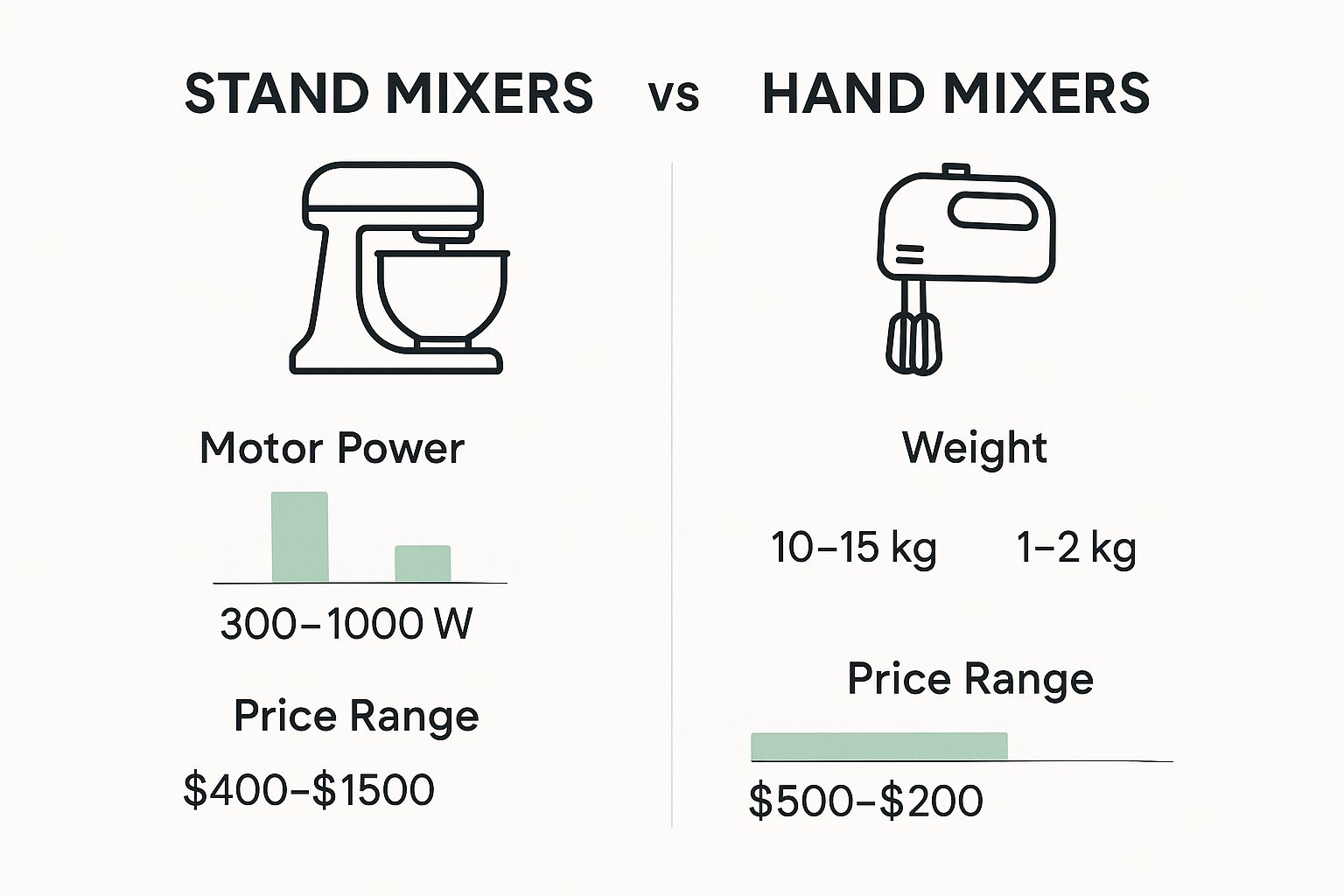
As you can see, the higher price tag on a stand mixer directly relates to its brawnier motor and sturdier, heavier construction. You're paying for power and durability.
To help you weigh it all up, here’s a simple table breaking down the key differences.
Stand Mixer vs Hand Mixer: A Quick Comparison
| Feature | Stand Mixer | Hand Mixer |
|---|---|---|
| Best For | Heavy-duty tasks like bread dough, large batches, and frequent baking. | Quick jobs like whipping cream, beating eggs, and light cake batters. |
| Operation | Hands-free, allowing you to multitask in the kitchen. | Requires you to hold and guide it throughout the mixing process. |
| Power | High (300-1000W+), built for tough ingredients. | Lower (150-400W), suited for lighter mixtures. |
| Size & Storage | Bulky and heavy, needs a permanent spot on the benchtop. | Compact and lightweight, easily stored in a drawer or cupboard. |
| Cost | A significant investment, typically starting from $300 and up. | Very affordable, often available for under $100. |
| Versatility | Can be expanded with attachments for pasta making, grinding, etc. | Limited to its core function of mixing with beaters or dough hooks. |
Ultimately, the table shows there's no single "best" option—just the best one for your kitchen and your baking style.
Key Pros and Cons
Still on the fence? Let's break it down into a simple list of pros for each.
Why You'll Love a Stand Mixer:
- Hands-Free Operation: This is the big one. Set it and forget it while you measure out your next ingredients. It's a game-changer for workflow.
- Sheer Power: It chews through heavy doughs and thick batters that would kill a hand mixer. No job is too tough.
- Endless Versatility: Many models can become pasta makers, meat grinders, or even ice cream machines with the right attachments.
Why a Hand Mixer Might Be for You:
- Compact and Portable: Perfect for smaller Kiwi kitchens. It won’t hog your bench space and stores away in a flash.
- Easy on the Wallet: It’s a fantastic, low-cost way to get into baking without a huge upfront investment.
- Super Easy to Clean: Just pop off the two beaters and you’re pretty much done. Cleanup is a breeze.
Decoding the Features That Really Matter
When you’re on the hunt for the best cake mixer NZ has to offer, it's easy to be distracted by a sleek design or a familiar brand name. But what truly separates a good mixer from a great one are the workhorse features under the hood. Getting to know these details is the secret to finding a machine that will be your trusted kitchen companion for years.
Let's start with the engine: the motor. It’s tempting to think a higher wattage automatically means more power, but that’s not the full story. Think of it like a car – a massive engine isn't worth much if it’s inefficient. A cleverly engineered motor can do more with less.
This is where you'll see the difference between AC (alternating current) and DC (direct current) motors. The top-tier mixers often feature DC motors. They're quieter, more energy-efficient, and maintain a steady, powerful torque even when you throw a dense bread dough at them. An AC motor might boast a higher wattage on the box, but it can often strain and overheat under the same pressure.
Bowl Size and Machine Build
The size of the bowl dictates how much you can create in one go. Be honest about your baking habits. Are you usually whipping up a dozen cupcakes for the kids, or are you tackling a three-tiered wedding cake?
For most Kiwi home bakers, a 4.5 to 5-litre bowl is the perfect sweet spot. It’s got plenty of room for a standard cake mix, a decent-sized batch of biscuits, or a loaf of sourdough. If you’re often baking for a crowd or diving into bigger projects, then upsizing to a 6-litre model (or larger) is probably a smart move.
Just as important is the machine's overall construction.
- Full Metal Body: Keep an eye out for mixers with a die-cast metal body. That heft provides crucial stability, stopping your mixer from dancing across the benchtop when it’s kneading a heavy dough.
- Durable Gears: The best mixers use all-metal gears. They are vastly more reliable and will outlast the cheaper plastic gears that are common in entry-level models.
A solid build doesn't just promise a longer life; it also makes for a quieter, more enjoyable baking session. Many of these sturdy machines come in a beautiful stainless steel finish. To keep them looking brand new, check out our guide on how to clean stainless steel appliances.
Essential Attachments and Mixing Action
Almost any stand mixer you buy will come with a standard trio of attachments. A quality set will be made from robust stainless steel or coated metal—avoid flimsy plastic at all costs.
- The Flat Beater: This will be your everyday workhorse for creaming butter and sugar, mixing batters, and making biscuit dough.
- The Wire Whisk (or Balloon Whisk): Its job is to incorporate air. This is what you'll grab for whipping egg whites into stiff peaks for meringues, pavlovas, or light, airy cream.
- The Dough Hook: An absolute must-have for bread bakers. It does all the hard work of kneading, saving your arms from a serious workout.
But if there’s one feature that’s a complete game-changer, it’s planetary mixing action. This is where the beater not only spins on its own axis but also travels in a wide orbit around the bowl. This action ensures every last speck of flour from the bottom and sides gets mixed in perfectly. Honestly, it’s a non-negotiable feature for anyone serious about baking.
Top Cake Mixer Brands Available in NZ
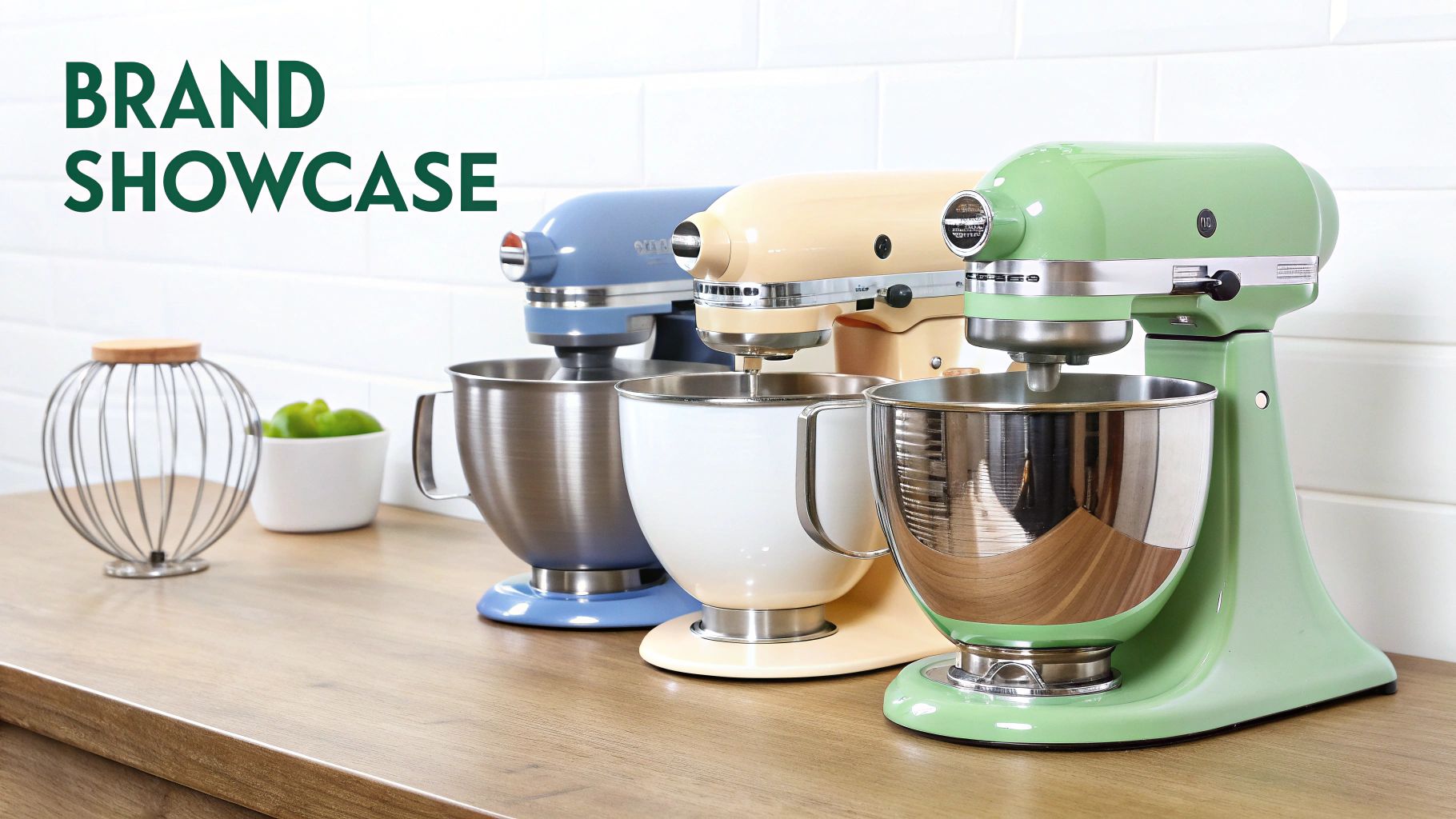
Walking into an appliance store to look at cake mixers can feel a bit overwhelming, but you’ll quickly notice a few key names pop up again and again on Kiwi kitchen benchtops. Getting to know what each brand does best is the key to finding a machine that perfectly suits your baking ambitions.
Most of these top-tier brands have built their reputation on high-performance planetary mixers—the kind serious home bakers dream of. It’s a huge market, valued globally at around USD 596 million in 2025 and set to keep growing. You can read more about the global trends over at Future Market Insights.
This boom really just reflects what we already know: more and more home cooks want pro-level gear in their own kitchens. Let's break down the brands that are delivering the goods right here in NZ.
KitchenAid: The Design Icon
Picture a stand mixer. Chances are, a colourful KitchenAid is what comes to mind. This iconic American brand is famous for its classic, all-metal construction and a stunning spectrum of colours that can easily become the star of your kitchen.
But they’re not just a pretty face. KitchenAid mixers are workhorses, known for their reliability and powerful direct-drive motors that deliver steady torque, even when you’re kneading a tough dough. Their secret weapon is a massive range of optional attachments that can turn your mixer into a pasta roller, a sausage stuffer, or even a spiralizer.
- Best For: Passionate home bakers who see their mixer as both a tool and a statement piece, and who love the idea of all-in-one versatility.
- Price Range: Definitely a premium investment, but their incredible durability means they often last for decades.
Kenwood: The Engineering Powerhouse
For many Kiwis, Kenwood is the name you trust when pure, unadulterated power is what you need. These mixers are built like absolute tanks, often boasting higher-wattage motors that can plough through the heaviest fruit cake batters and sourdoughs without even flinching.
Their design is more functional than flashy, but what they lack in flair, they more than make up for in performance. A Kenwood is a workhorse, built for frequent, heavy-duty tasks. Like KitchenAid, they also offer a fantastic suite of attachments. A great example of their reliable power is the Kenwood Chef Mixer KVC3100W.
Kenwood's whole philosophy is built around a powerful motor and bulletproof construction. It's the machine you buy when you need to know it can handle absolutely anything you throw at it, day in and day out.
Breville and Sunbeam: Smart and Accessible Choices
Looking for that sweet spot between features, performance, and price? Australian brands Breville and Sunbeam are brilliant contenders and have a huge presence here in New Zealand.
Breville really shines with its clever, thoughtful design. Think built-in timers, scrapers that hug the bowl, and load-sensing technology that automatically adjusts the power to maintain speed. Sunbeam, on the other hand, is a trusted household name that has spent decades making reliable, no-fuss appliances that are perfect for everyday family baking.
- Breville: Perfect for the baker who loves smart tech and user-friendly features that make life a little easier.
- Sunbeam: The go-to choice for those on a budget or anyone just starting their stand mixer journey.
Ultimately, the right brand comes down to what you value most. Are you after iconic style, raw power, or clever features? Each of these offers a brilliant cake mixer NZ bakers can count on for years to come.
How to Choose the Right Mixer for You
Alright, we've covered the different types, key features, and the big brands. Now comes the fun part: pulling it all together to find the mixer that’s just right for you.
Choosing the perfect cake mixer nz bakers will love is less about specs and more about you. It's a blend of your baking ambitions, the reality of your kitchen space, and what your wallet is happy with. The first step is to be really honest about what kind of baker you are.
Are you the type who whips up a casual batch of cupcakes on a rainy Sunday? Or are you dreaming of conquering artisan sourdoughs and towering celebration cakes? Your answer here is the key to narrowing down the choices.
It's no secret Kiwis love their baking. In fact, New Zealand's bakery product manufacturing industry is tipped to hit NZ$1.1 billion in revenue by 2025. This growing passion for home baking, which you can read more about on IBISWorld, is exactly why having a reliable mixer has become so important for many of us.
Matching a Mixer to Your Baking Style
Let's break it down with a few common scenarios. See which one sounds the most like you.
The Apartment Baker or Casual Cook
You find yourself baking a few times a month, sticking to the classics like cookies, muffins, and the occasional birthday cake. Your bench space is prime real estate, so you need something that gets the job done without dominating the kitchen.
- My Recommendation: A top-notch hand mixer is going to be your best mate. It's compact, easy on the budget, and powers through all the basics beautifully. Just make sure to get one with sturdy beaters and a good range of speeds.
The Passionate Hobbyist
You're in the kitchen every week, trying your hand at everything from delicate pavlovas to rustic breads. You're ready to invest in a machine that will save you some elbow grease and let you tackle more ambitious projects.
- My Recommendation: It's time to upgrade to a stand mixer with a 4.5 to 5-litre bowl. This is the sweet spot. Look for a model with that all-important planetary mixing action and solid metal construction. This is a true kitchen workhorse that will grow with your skills.
Considering Budget and Space
Ultimately, your budget will have the final say. You can pick up a really reliable hand mixer for under $100. A quality stand mixer, on the other hand, is a bigger investment, usually starting around the $300-$400 mark and climbing from there. It's always a good idea to check out guides on how to buy appliances online in NZ to learn how to spot the best deals.
And please, don't forget to get the measuring tape out! A stand mixer needs a permanent spot on the bench, so make sure you have enough clearance, both in height and depth, under your cabinets before you click 'buy'.
The best mixer isn't the most expensive one; it's the one you'll actually use. Investing in a machine that fits your lifestyle ensures it will become a valued partner in your kitchen rather than a dust-collecting ornament.
By thinking through how often you bake, the complexity of your recipes, and the practicalities of your kitchen, you can confidently choose a cake mixer that will be part of your baking adventures for many years.
Common Questions About Cake Mixers
As you get closer to choosing the right cake mixer, a few practical questions almost always come up. To help you feel completely confident in your purchase, we’ve put together answers to the most common queries we hear from Kiwi bakers.
Think of this as the final check-in before you commit. We'll demystify some of the jargon and give you practical advice that will make all the difference.
What Is Planetary Mixing Action?
Ever watched a planet orbit the sun while also spinning on its own axis? That’s pretty much what’s happening inside your mixer bowl with planetary mixing action. The beater spins on its own axis, but at the same time, it travels in a wide circle around the edge of the bowl.
This clever dual motion ensures the attachment reaches every last bit of the bowl—from the bottom to the sides. It means no more stopping to scrape down rogue bits of flour or butter. This is the secret sauce for achieving a perfectly consistent batter or dough and is a must-have feature in any decent stand mixer.
Planetary action is what separates a good mix from a great one. It guarantees every ingredient is fully incorporated, which is crucial for light, airy cakes, stable meringues, and perfectly developed bread dough.
How Many Watts Does a Good Cake Mixer Need?
Wattage can be a bit misleading. It's easy to think that more watts automatically means more power, but that’s not the full story. How efficiently the motor uses that power is far more important than the number on the box.
A well-built, high-efficiency DC motor with 300 watts can easily outperform a clunkier AC motor with 500 watts, especially when you're working with a heavy dough. So, instead of getting hung up on wattage, pay attention to the mixer's overall build quality and the type of motor it has. For most home baking—cakes, biscuits, and lighter doughs—a quality mixer in the 300-500 watt range will have all the muscle you need.
Are Mixer Attachments Dishwasher Safe?
This is a big one, and the answer completely depends on what the attachment is made of. Getting this wrong can quickly ruin your tools.
- Stainless Steel: Anything made from solid stainless steel, like many wire whisks or some dough hooks, is usually fine for the dishwasher. They're tough and can handle the high heat and detergents.
- Coated Aluminium: Be very careful here. The standard flat beater is often made from cast aluminium with a special coating. Harsh dishwasher detergents can cause this coating to oxidise and peel off, leaving a gross grey residue on your food. These must be washed by hand.
When in doubt, always check the manufacturer’s manual for your specific model. It’s the only way to be 100% sure you're doing the right thing. A couple of minutes of hand washing is a small price to pay to keep your attachments in perfect nick.
Where Can I Buy Cake Mixers in New Zealand?
Luckily, Kiwi bakers are spoiled for choice. You can find a fantastic selection of cake mixers at all the major New Zealand appliance retailers. For easy price comparisons and the convenience of shopping from your couch, the folders website has best market prices. And once you've got your new machine, why not give it a whirl with a true Kiwi classic? Our classic pavlova recipe is the perfect test run.