

Your Guide to Front Load Washing Machines
Front-load washing machines have pretty much become the standard in modern Kiwi homes, and for good reason. They stand out for their incredible efficiency and gentler touch on clothes. Unlike the old-school top loaders, these machines feature a horizontal drum that tumbles your laundry, which is a game-changer for saving water and energy.
Why Kiwis Are Choosing Front Loaders
Wander through any appliance store in New Zealand, and you'll see front loaders everywhere. This isn't just some passing trend. It's a clear sign that Kiwi households are looking for long-term value, efficiency, and a better wash. The reasons they've become so popular go well beyond just how they look.
At the heart of it, the appeal of a front loader is all down to its smart design. Think about the difference between gently washing clothes by hand versus scrubbing them on a washboard. A front loader is more like the hand wash; it lifts clothes up and tumbles them through a small amount of soapy water. This tumbling action uses gravity and the clothes rubbing against each other to get them clean, avoiding the rough treatment from a central agitator you find in many older top loaders.
This simple mechanical difference unlocks some major benefits that just make sense for life in New Zealand today:
- Big Savings on Bills: They use a whole lot less water for each wash. That not only brings down your water bill but also means less energy is needed to heat that water in the first place.
- Better Care for Your Clothes: The gentle tumbling is far less harsh on fabrics, which means less stretching, tangling, and general wear and tear. Your favourite jumpers and delicate items will thank you by lasting much longer.
- Dries Faster: Front loaders can spin incredibly fast, wringing much more water out of the load before it even hits the dryer. This means shorter drying times, which saves even more power.
A Smart Investment for Modern Homes
Choosing a front loader is really an investment. Yes, the upfront cost might be a bit higher than some top-load models, but the savings on your water and power bills quickly add up, making it a smart financial move over the life of the machine. Their space-saving potential is another huge plus. Many models can be stacked with a dryer, which is a perfect fix for those tight laundries common in Kiwi homes. If you're looking for ways to make the most of your space, you can check out our guide on 8 small laundry room ideas to maximise space in 2025.
A front load washing machine isn't just an appliance; it's a practical tool for reducing household running costs, conserving resources, and preserving the quality of your clothing.
Market Trends in New Zealand
You can see this preference in the numbers. Across New Zealand, the demand for energy and water-efficient appliances has really pushed the front loader to the top of the list. These machines typically use 40-50% less water and 30-40% less energy than their older top-loading cousins.
This has made them a go-to choice for anyone who's both environmentally conscious and budget-savvy. This shift in what people want has shaped the whole market, with the big brands now offering incredibly advanced models packed with features that deliver better wash quality and long-term savings. It’s a move that fits perfectly with the classic Kiwi focus on sustainability and running a smart, efficient home.
How Front Loaders Actually Get Clothes Clean
You might think the only real difference is where you pop the clothes in, but the true genius of a front load washing machine is what happens inside the drum. Their superior cleaning power doesn't come from brute force. Instead, it’s a clever combination of gravity and friction that feels a lot like a gentle, but very effective, hand wash.
Think of a rock tumbler slowly polishing stones. A front loader works in a surprisingly similar way. Its drum is mounted horizontally, so as it spins, it lifts your clothes up and then drops them back into a small, concentrated pool of water and detergent at the bottom. This repeated lifting and dropping action creates friction between the fabrics, which is what scrubs them clean. It’s a world away from the harsh twisting and pulling you get from the central agitator in many top-loaders.
The Science Of The Tumble
The entire wash cycle is a masterclass in efficiency. It's carefully designed to get your clothes cleaner while using far less water and energy. Every step in the process has a specific job to do, all working together to give you fresh, well-cared-for laundry.
This gentle tumbling is precisely why front loaders are so much kinder on your clothes. Your delicate fabrics, woollens, and even everyday t-shirts are put under much less stress. That means less stretching, fading, and general wear and tear over time. This approach not only cleans brilliantly but also helps your favourite clothes last longer—for more ideas on this, check out these great laundry tips to make clothes look good.
Breaking Down The Wash Cycle
If you look closely, you can see the front loader's cleaning process happens in four distinct stages:
- Minimal Water Intake: The machine starts by adding just enough water to create a sudsy solution at the bottom of the drum. Right from the get-go, it's saving energy because there's less water to heat.
- Signature Tumbling Action: As the drum turns, your clothes are continuously lifted out of the water and then dropped back in. This motion forces the water and detergent deep into the fabric fibres, pushing out dirt and stains with surprising efficiency.
- Efficient Rinsing Spins: Instead of filling the whole tub again to rinse, the machine cleverly sprays clean water onto the clothes while it spins. Gravity and centrifugal force team up to pull the soapy water out, using a fraction of the water of a traditional rinse.
- Final High-Speed Spin: This is where a front loader really shines. Modern machines can hit incredibly high RPMs (revolutions per minute), wringing a huge amount of water out of your laundry. Your clothes come out much drier, which means less time and energy spent in the clothes dryer.
The infographic below really brings to life how these mechanical advantages lead to real-world savings and better care for your clothes.
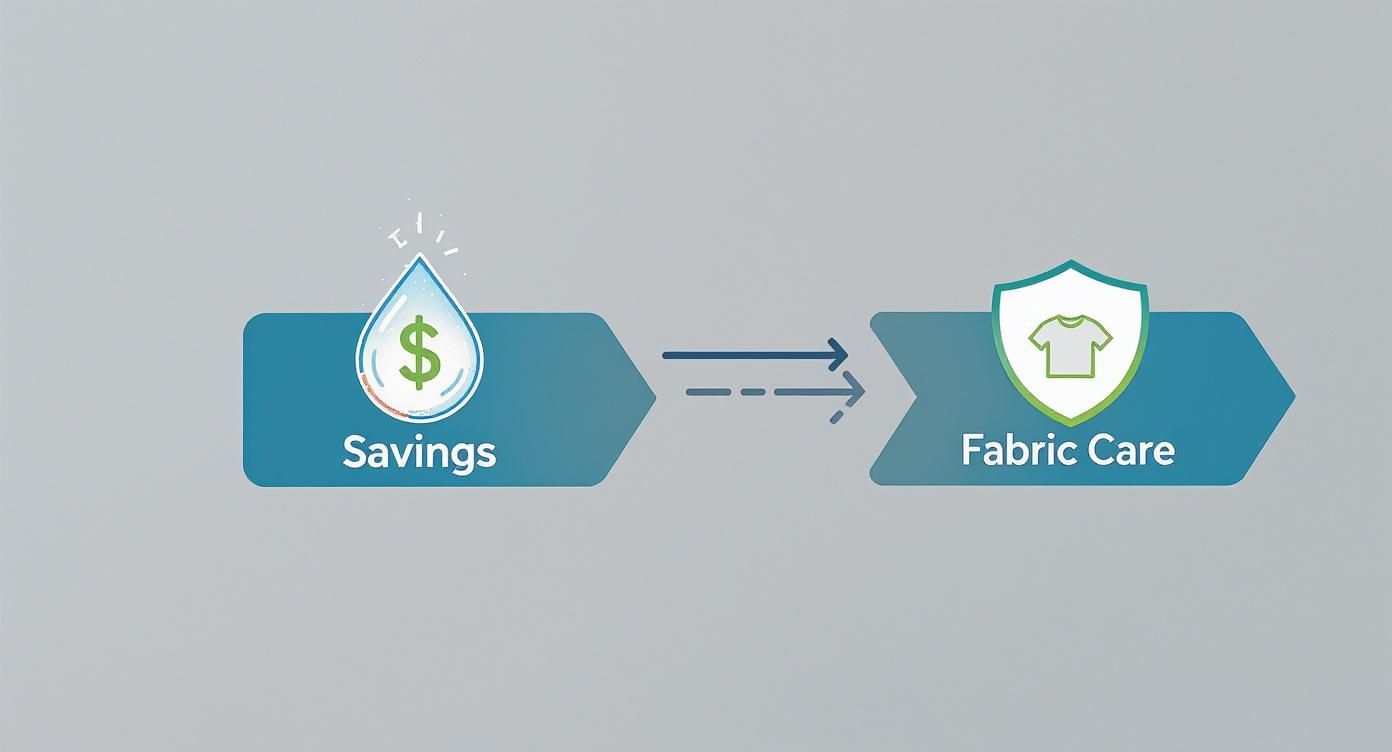
This whole process perfectly illustrates the core benefits of the front loader design. You can draw a straight line from the way it works to the money you save and the longer life of your clothing.
Because there is no central agitator taking up space, a front load washing machine provides more room for laundry and is much better suited for bulky items like bedding and jackets.
This extra room makes washing big things so much easier. In fact, front loaders are fantastic for bulky items like duvets precisely because of this design. If you're wondering how to properly wash a duvet and keep it fluffy, the unobstructed drum is key. It allows big items to tumble freely, ensuring they get washed and rinsed thoroughly without getting tangled or compressed.
It's this blend of gentle action, smart water use, and a powerful final spin that makes the front loader not just a different kind of washer, but a more effective one.
Weighing The Pros And Cons For Your Home
Picking a new washing machine is a big deal for any household. A front load washing machine brings some pretty compelling advantages that really suit modern Kiwi lifestyles, but it’s always wise to look at the whole picture. Getting a handle on both the good and the not-so-good will help you figure out if it's the right fit for your laundry room.
The biggest drawcard is efficiency. It’s a simple equation: by using less water in each cycle, the machine also uses less power to heat that water. Over time, this really shows up in your utility bills. This one-two punch of lower water and power use makes them a smart choice for both the environment and your wallet in the long run.
The Clear Advantages Of A Front Loader
The most talked-about benefits of a front loader have a direct impact on your money, your clothes, and your time. These aren't just small tweaks; they represent a completely different way of getting the laundry done.
- Gentler on Fabrics: Instead of a central agitator twisting and pulling clothes, a front loader gently tumbles them. This is far less abrasive, meaning less wear and tear. Your clothes keep their shape and colour for longer. Simple as that.
- Superior Water and Energy Efficiency: This is where they really shine. A front loader can use up to 50% less water than some older top-load models. That’s a huge reduction, leading to lower water bills and a lot less energy needed for hot washes.
- Higher Spin Speeds: These machines can spin incredibly fast, wringing much more water out of your clothes. This dramatically slashes drying time, whether you’re tossing them in a dryer or hanging them on the line on a cloudy day.
- Space-Saving Design: For many Kiwi homes where space is at a premium, this is a game-changer. You can stack a compatible dryer right on top. If you need some ideas, check out our guide on stacking washing machine and dryer units to really make the most of your floor space.
When you add it all up, it’s a strong case for the front loader. It starts to look less like an appliance purchase and more like a smart investment. For many families, the long-term savings and better care for their clothes easily justify the initial price tag.
Potential Downsides To Consider
Of course, no appliance is perfect for every single person. It's just as important to be honest about the potential cons to make sure a front loader actually suits your laundry habits. Knowing these things upfront can save you a lot of hassle later.
One of the most common grumbles is about mould or mildew building up in the rubber door seal (the gasket). Because the door has to seal tightly to stop water from leaking out, moisture can get trapped. If you don't stay on top of it, this can lead to some funky, musty smells.
Another thing to get used to is the cycle time. Front loader cycles often take longer than their top-loading cousins. This is actually part of their design—the extended, gentle tumbling is what allows them to clean so well with less water. For a busy family, this might mean a slight shift in how you schedule your laundry day.
While the upfront cost of a front load washing machine can be higher than some top-load alternatives, it's crucial to factor in the total cost of ownership, including long-term savings on water and energy.
Finally, there's the initial cost. They are generally more expensive to buy. While the savings on your bills will help pay it back over the machine’s life, that upfront figure is a key factor for anyone on a tight budget. You’re essentially paying for more sophisticated engineering and those impressive efficiency features.
Front Load vs Top Load: A Quick Comparison
To really make the best choice, sometimes it helps to see things side-by-side. This table breaks down the main differences between a modern front load washing machine and a classic top loader with an agitator, clarifying the trade-offs you'll be making.
| Feature | Front Load Washing Machine | Top Load Washing Machine (with Agitator) |
|---|---|---|
| Water Usage | Low; typically uses 40-60 litres per load. | High; can use over 120 litres per load. |
| Energy Efficiency | High, especially on hot washes due to less water to heat. | Lower, as more water needs to be heated. |
| Fabric Care | Very gentle tumbling action preserves clothes. | Harsher agitator action can cause stretching and wear. |
| Cycle Time | Longer (60-120 minutes is common for standard cycles). | Shorter (often 30-60 minutes). |
| Upfront Cost | Generally higher. | Often more affordable initially. |
| Installation | Can be stacked with a dryer to save space. | Cannot be stacked. |
| Maintenance | Requires wiping the door seal to prevent mould. | Lower maintenance regarding seals and odours. |
Ultimately, the right machine for you comes down to what you value most. If long-term savings, looking after your clothes, and smart use of space are at the top of your list, then the benefits of a front loader are pretty hard to ignore.
Making Sense of Features on the New Zealand Market
Walking into an appliance store can be overwhelming. The technical jargon and endless lists of features on a modern front load washing machine can make your head spin. Let's cut through the noise and translate those specifications into real-world benefits, so you can figure out what actually matters for your family.
First up is capacity, measured in kilograms (kg). This simply refers to the dry weight of laundry the machine can wash properly in one go. Getting this right is a big deal for efficiency – go too small and you’ll be running loads all day, but go too big and you’ll waste water and power on half-empty cycles.
Choosing The Right Capacity
Matching the drum size to your household is the first step. It's really just a question of how many people live in your house and how often the laundry basket fills up.
As a general guide:
- 1-2 People: A smaller 5-6.5kg machine is usually perfect for a single person or a couple.
- 3-4 People: A 7-8.5kg washer is the sweet spot for the average family, easily handling daily wear and school uniforms.
- 5+ People: For larger families, or if you regularly wash bulky items like duvets and blankets, a machine with a 9kg or larger capacity is the way to go.
Remember, consistently underloading a big machine is just as inefficient as cramming too much into a small one. It’s all about finding that happy medium for your household's routine.
Understanding Efficiency Labels
When you're comparing machines in-store, the Energy and Water Rating Labels are your best friends for figuring out long-term running costs. These stickers are required by law in New Zealand and give you a clear, at-a-glance summary of how thirsty a machine is for power and water.
It's a simple system: more stars mean better efficiency. The energy label will tell you the kilowatt-hours (kWh) it uses per year (based on one wash a day), while the water label shows you the litres it consumes per wash. Comparing these labels can uncover huge savings over the life of the machine, often justifying a slightly higher price tag upfront.
Advanced Features That Genuinely Help
Modern front loaders are packed with clever features that go beyond a simple wash. The trick is to separate the genuinely useful functions from the marketing fluff.
Many machines now have highly specialised cycles. A dedicated woollens cycle, for instance, uses gentle tumbling and cool water to stop your favourite jumpers from shrinking. A sports gear cycle is designed to tackle sweat and odours in modern synthetic fabrics. Steam functions are another great addition, using hot vapour to sanitise clothes, reduce allergens, and relax wrinkles – which means less time standing over the ironing board. For a closer look at a brand that packs in these kinds of features, you might find our Haier washing machine guide helpful.
The next frontier is smart, Wi-Fi-connected models. These machines let you start or pause a wash from your phone, get a notification when it's done, and even download new wash programs for specific stains or fabrics.
This move towards smarter, more efficient appliances is a clear trend. In fact, market forecasts show that the demand for advanced front load models in New Zealand is growing steadily. As of 2025, the total washing machine market revenue in New Zealand was projected to reach approximately NZD 93 million, with a significant portion driven by the appeal of smart features and eco-friendly performance. You can discover more insights about the growth of the smart appliance market in New Zealand. This shows that Kiwi households are increasingly willing to invest in machines that offer more convenience and better long-term value. By understanding what these key features do, you'll be in a much better position to choose a machine that fits your life perfectly.
Keeping Your Machine Clean And Efficient
A front load washing machine is a fantastic bit of kit, but like any hard-working appliance, it needs a little TLC to stay at the top of its game. A few simple habits are all it takes to head off the most common problems, like those musty odours and mould, keeping your machine running hygienically and efficiently for years to come.
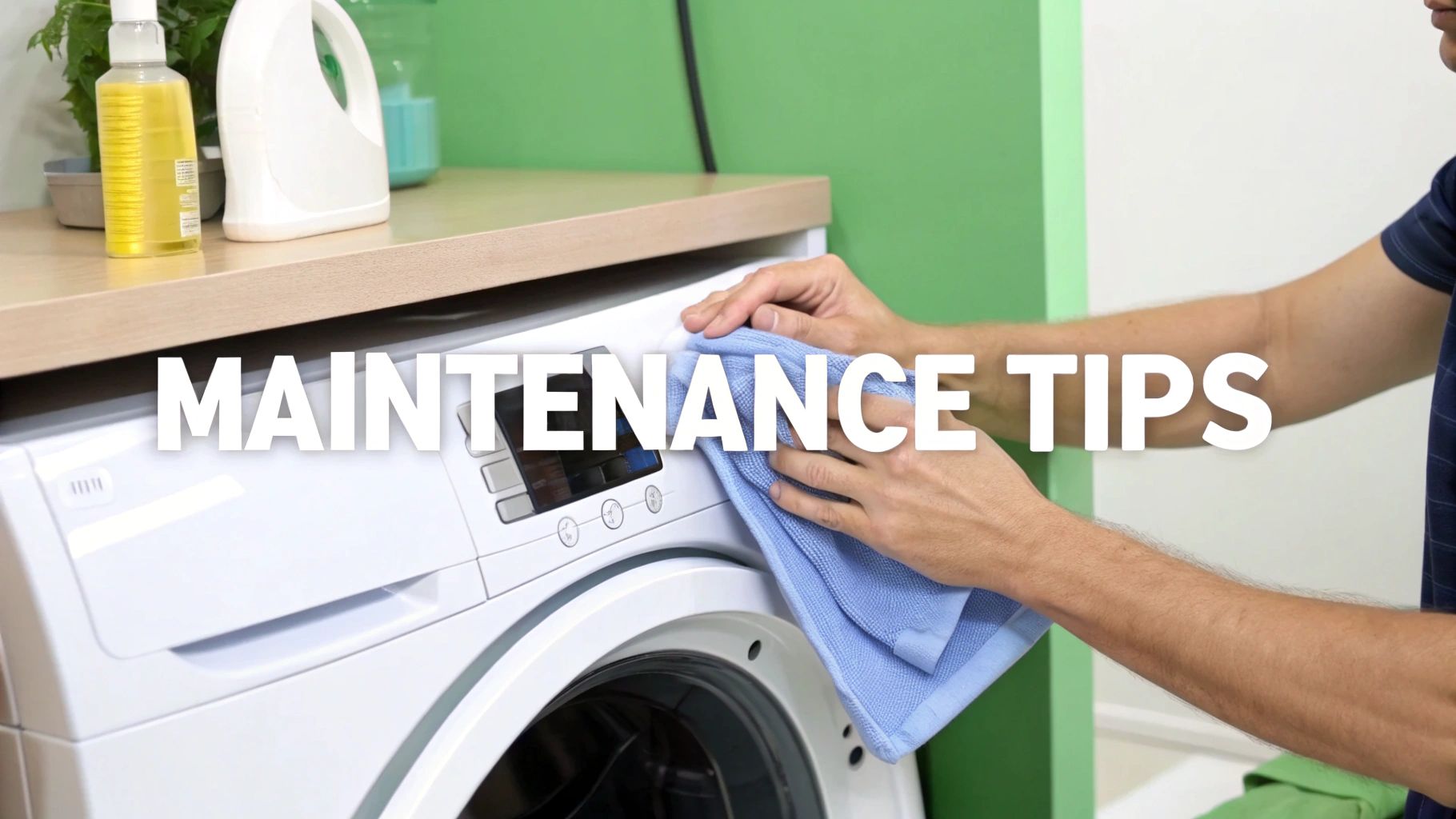
The number one spot to keep an eye on is the rubber door seal, or gasket. That tight seal is what stops water from ending up on your floor, but it’s also a magnet for moisture. This creates the perfect breeding ground for mould and mildew. Honestly, just getting into the habit of giving it a quick wipe-down after your last load of the day makes a world of difference.
Your Simple Maintenance Checklist
Think of these as a quick tune-up for your washer. Spending just a few minutes on them each month will save you from bigger headaches down the track. It's a tiny bit of effort that helps your machine perform at its best and can even help with your power bills.
- Wipe the Door Seal (Gasket): After you're done with the laundry, grab a dry cloth and wipe the inside of the rubber seal. Pay special attention to the folds where water loves to hide.
- Leave the Door Ajar: When you're not using the machine, crack the door and the detergent drawer open a bit. This lets air circulate, drying everything out and stopping those stale smells from developing.
- Clean the Detergent Drawer: Every so often, slide the drawer all the way out and give it a good wash in the sink with warm, soapy water. An old toothbrush is perfect for scrubbing away any gunk or residue.
The top cause of bad smells in a front loader is moisture trapped in the door seal. A quick wipe and leaving the door open are the easiest, most effective ways to stop mould in its tracks.
Deep Cleaning Your Machine
Beyond the daily wipe-down, there are a couple of deeper cleaning jobs that are essential for keeping your machine in prime condition. These steps get into the hidden nooks and crannies where lint, grime, and detergent residue can build up and cause problems.
1. Clean the Drain Pump Filter:
This small but crucial part is usually hiding behind a little panel at the bottom front of your machine. It’s there to catch lint, coins, and any other bits and bobs that could clog the drain pump. Before you unscrew it, pop a shallow tray and a towel underneath, as a bit of water will always come out. Clean the filter under the tap and then screw it back in tightly. It's a good idea to check your user manual for the specifics, but aim to do this every couple of months.
2. Run a Maintenance Wash:
About once a month, run an empty cycle on the hottest setting your machine has. You can add a special washing machine cleaner or even just a cup of white vinegar directly into the drum. This helps break down soap scum and gives all the internal parts a proper sanitising flush. That hot wash clears out any buildup in the drum and hoses, keeping everything fresh. For other smart ways to get the most out of your appliances, check out these 10 tips for saving energy around your home.
Stick with these simple cleaning habits, and your front load washing machine will continue to be a reliable and efficient workhorse in your home.
Answering Your Top Questions
Even when you're sold on the benefits, switching to a new appliance always brings up a few practical questions. It's one thing to read about water savings, but how does a front load washing machine actually fit into your daily life? Let’s tackle some of the most common queries we hear from Kiwi households.
Can I Add Forgotten Clothes Mid-Cycle?
It’s the classic laundry moment: you’ve just pressed 'start' and spot a stray sock on the floor. Don't worry, you’re not out of luck.
Many modern front loaders have a solution. Keep an eye out for models with a ‘Pause’ button or a small ‘add-wash’ door. These features are designed to let you pop that forgotten t-shirt in during the early stage of the cycle, before the water gets too high or too hot. If you're someone who often finds last-minute additions, this is a feature you'll definitely want to look for.
Are The Long Wash Times A Deal-Breaker?
It's true, a standard cycle on a front loader can take longer than on a top loader. But this isn't a design flaw—it's the secret to their efficiency. That extended, gentle tumbling is precisely what allows them to get clothes incredibly clean using far less water and power.
To get around this, almost every machine now offers a ‘Quick Wash’ cycle, which is perfect for small, lightly soiled loads you need in a hurry. Lots of Kiwis also love using the ‘Delay Start’ function. You can load it up in the morning and set it to finish just as you get home from work, ready for the line.
Why Does My Front Loader Vibrate So Much?
A front loader spinning at top speed can certainly shake things up, but it's nearly always caused by one of two simple things: an unbalanced load or an unlevel machine.
Balance is everything. Because they spin so fast, even a single heavy item like a soggy bath mat can throw the whole drum off-kilter and cause it to shudder. The other common culprit is installation—the machine needs to be perfectly level on all four feet to run smoothly.
Most importantly, you must remove the shipping bolts from the back of the machine before you use it for the first time. They’re there to keep the drum locked in place during transit, and if you leave them in, the machine will vibrate violently and can cause serious damage. Checking these three things solves shaking issues almost every time.
Ready to experience the efficiency and superior clean of a modern washing machine? Explore the full range of front loaders at Folders and find the perfect model for your home. Visit us online at https://folders.co.nz to see our latest deals.