

Your Guide to Gas Stove Tops in New Zealand
Gas stove tops give you instant heat and precise temperature control, which is why they're such a firm favourite for home cooks across New Zealand. Think of it as a perfectly controlled campfire right on your countertop, mixing gas with air to create an immediate, responsive flame for whatever you're cooking.
How Gas Stove Tops Actually Work
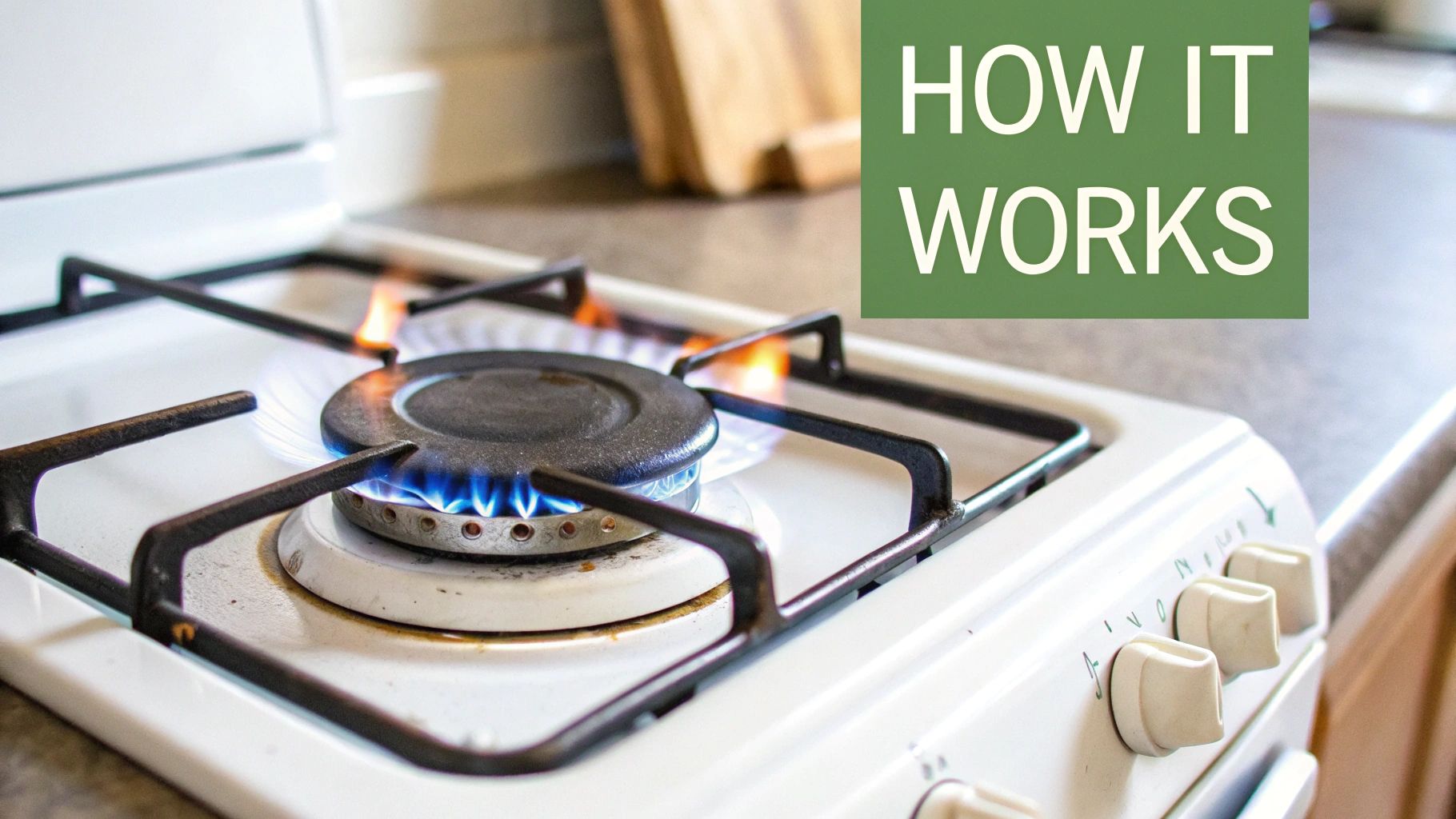
Ever wondered what’s really going on when you twist that knob on your hob? It’s a surprisingly straightforward bit of engineering, designed to be reliable and give you that instant heat you need. It all starts with your gas supply, whether that’s natural gas piped into your home or LPG (Liquefied Petroleum Gas) from a bottle.
When you turn a control knob, you’re essentially opening a valve. This lets a controlled stream of gas flow through a small jet and into a tube known as a venturi. The venturi is the mixing chamber; as gas zips through, it draws in just the right amount of oxygen from the air. Getting this air-gas mixture spot-on is the secret to an efficient, clean-burning blue flame.
From there, this now-combustible mixture travels up to the burner head, which is covered in small holes called ports. These ports spread the gas out evenly, creating that familiar ring of fire you cook on. But how does it actually catch light?
The Spark of Ignition
As you turn the knob, you’ll usually hear a "click-click-click" sound. That’s the electronic ignition system doing its job. A tiny spark plug, called an igniter, sits right next to the burner and fires off a series of quick sparks. These sparks are all it takes to ignite the air-gas mix coming from the ports, giving you an instant, steady flame.
Once it's lit, you're in complete control. Turning the knob further opens the valve more, increasing the flow of the gas-air mixture for a bigger, hotter flame. Turning it back down restricts the flow, dropping you down to a gentle simmer in a second.
This direct, mechanical control is what chefs and keen home cooks absolutely love about gas. Unlike electric hobs that take time to heat up or cool down, gas gives you immediate thermal feedback.
It's a beautiful, simple system where a few key parts work together:
- Burners and Burner Caps: These spread the flame evenly so your food cooks consistently.
- Grates: Usually made from tough cast iron, these are what your pots and pans sit on over the flame.
- Control Knobs and Valves: Your direct interface for precise, instant control over the flame's size and heat.
Getting your head around this simple process makes it much easier to understand what you're looking for when it comes to choosing the right features for your own kitchen.
Choosing Between Different Gas Burner Types
Not all gas flames are created equal. The type of burner on your stove top is one of those details that makes a huge difference to your daily cooking—and cleaning—so it’s a decision worth getting right. The best way to choose is to think honestly about your own cooking style. Are you all about searing steaks on a screaming-hot pan, or do you spend more time gently melting chocolate for a dessert?
You'll mainly come across two designs: sealed burners and open burners. Each comes with its own set of pros and cons, and understanding the core difference between them is the first real step to picking the perfect gas stove top for your kitchen.
Sealed Burners: The Modern Standard
If you walk into a modern appliance store, you’ll see that sealed burners are everywhere. There’s a simple reason for that: cleanup. With a sealed burner, all the components are contained on top of a solid, one-piece cooktop surface. This design is your best friend when a pot inevitably boils over.
Instead of sauce and water dripping down into the guts of the appliance, the mess stays right there on the surface. A quick wipe is usually all it takes to get it looking new again, saving you a heap of time and frustration. While the heat might be a fraction less direct than their open counterparts, the sheer convenience makes them a brilliant, practical choice for most family kitchens.
Think of a sealed burner like a neat and tidy workbench. Everything is contained and easy to manage, so you can focus on the job at hand—in this case, cooking a fantastic meal with minimal fuss.
This practicality is exactly why they've become so popular. For the vast majority of everyday cooking, from boiling spuds to sautéing onions, a sealed burner offers plenty of power and control, with that unbeatable bonus of an easy clean.
Open Burners: The Traditional Powerhouse
Open burners, on the other hand, are the classic choice but rare in nz homes, and you’ll may find them in the kitchens of professional chefs. With this design, the burner head is exposed and sits in a recessed well, which allows the flame to spread out and lick the bottom of your pot or pan directly.
The result is seriously powerful and even heat distribution, which is just fantastic for high-heat cooking. If you live for getting that perfect crust on a steak or love tossing a stir-fry in a traditional round-bottomed wok, the enveloping flame of an open burner is tough to top. The trade-off, however, is cleaning. Spills and crumbs can fall straight into the burner assembly, meaning you'll need to do a bit of disassembly for a proper, thorough clean. To really dig into how different designs and fuel types stack up, it’s worth checking out a complete kitchen cooktops guide for NZ homeowners to see what suits your specific needs.
Speciality Burners for a Customised Experience
Beyond the two main types, many modern gas stove tops now come with specialty burners designed to nail specific cooking tasks. These are the features that can really take your cooking to the next level.
- Wok Burners: These are high-output, often dual-ring burners that blast out an intense, focused heat that’s perfect for getting that authentic ‘wok hei’ in your stir-fries.
- Simmer Burners: At the other end of the scale, these dedicated burners provide a consistent, ultra-low flame that’s ideal for holding delicate sauces without scorching or slowly melting butter.
- Dual-Ring Burners: Offering the best of both worlds, these clever burners have a small inner ring for gentle simmering and a larger outer ring that you can engage for a powerful, rapid boil—all from one knob.
Choosing the right burner ultimately comes down to how you cook. To make the decision a bit easier, here’s a quick look at how the main types stack up against each other.
Gas Burner Type Comparison
This table breaks down the most common gas stove top burner types to help you match a design to your cooking habits.
| Burner Type | Best For | Heat Control | Cleaning Ease |
|---|---|---|---|
| Sealed Burner | Everyday cooking, busy families | Excellent | Very Easy |
| Open Burner | Searing, wok cooking, even heating | Exceptional | More Difficult |
| Wok Burner | High-heat stir-frying | High-Intensity | Moderate |
| Simmer Burner | Delicate sauces, melting, slow cooking | Ultra-Low | Easy |
Whether you prioritise power, precision, or pure convenience, there's a burner configuration out there that will feel like it was made just for your kitchen.
What to Look For in a Modern Gas Cooktop
Gas cooktops have come a long way from being just a few simple flames. Today's models are loaded with clever features designed to make cooking safer, easier, and far more precise. Knowing what these are will help you choose a cooktop that’s a perfect fit for your kitchen and cooking style.
Safety and Convenience First
When it comes to gas, safety is always number one. The single most important innovation to look for is a flame failure safety device. It’s a brilliant piece of engineering that automatically shuts off the gas if a burner's flame is accidentally extinguished by a gust of wind or a boiling-over pot. This feature is non-negotiable, providing essential peace of mind by preventing dangerous gas leaks.
Beyond safety, modern cooktops are all about making life easier. Forget matches or old-school pilot lights; automatic electronic ignition is now the standard. A simple turn of the knob sparks an instant, reliable flame. It’s not just effortless—it also saves energy by getting rid of the constant low burn of a pilot light.
Another simple but significant upgrade is the quality of the grates. Many top-tier cooktops come with heavy-duty cast iron trivets. Not only are they sturdy enough to handle your heaviest cast iron pans, but many are also dishwasher-safe, turning a dreaded cleaning task into a breeze.
Think of these features as the support crew for your cooking. You might not notice them every day, but they are constantly working in the background to make your time in the kitchen safer and more enjoyable.
To figure out the best combination of features for you, start by thinking about your biggest priority in the kitchen. Is it quick cleaning, powerful heat, or something else?
This decision tree can help you narrow it down.
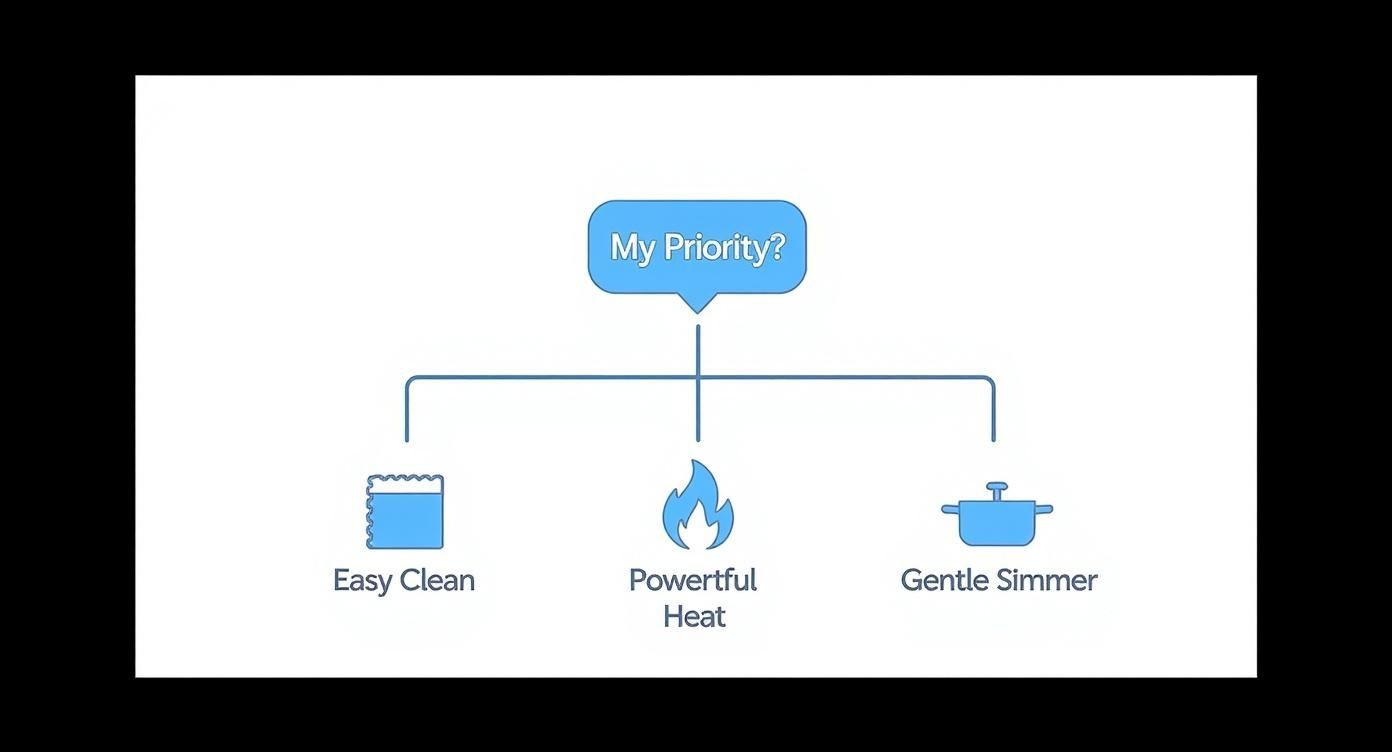
As you can see, different features are geared towards different needs, so identifying what matters most to you will quickly point you toward the right model.
Advanced Burner Technology
If you’re a serious home chef, the real magic is in the burner design. This is where you get next-level control.
Dual-ring burners, for instance, are incredibly versatile. They give you two flames in one: a tiny, gentle inner ring for delicately simmering a sauce, and a powerful outer ring that delivers a roaring heat perfect for searing steak or boiling a big pot of water in a flash.
Also, keep an eye out for cooktops with continuous grates. These create a single, level surface across the whole cooktop. It's a game-changer. You can effortlessly slide heavy pots from one burner to another without any awkward, risky lifting. It's a small design detail that makes a huge difference when you're juggling multiple pans.
To see how these features work together in practice, checking out a detailed Fisher & Paykel cooktop review can give you a great sense of what to expect from a high-quality appliance. Investing in the right features from the start ensures your cooktop will be a joy to use for many years.
Navigating Installation and Ventilation Rules in NZ
Thinking about installing your new gas stove top? This isn't a weekend DIY job. Here in New Zealand, anything involving gas lines is serious business and comes with strict safety rules.
Because of the risks, any gas appliance installation must be done by a licensed gasfitter. This is non-negotiable—it's the law. A certified pro will make sure every connection is leak-proof, the appliance is set up correctly for NZ conditions, and your home is safe. Once they’re finished, you’ll get a Gas Certificate of Compliance, which is your official proof that everything is up to code.
Why Kitchen Ventilation is So Important
Getting the installation right is only half the battle; proper ventilation is just as critical. When you cook with gas, the flame releases combustion by-products like nitrogen dioxide (NO₂) and carbon monoxide straight into your kitchen air. Without a good way to get rid of them, these pollutants can build up and seriously affect your indoor air quality.
Recent studies have really brought home the health risks. In fact, a New Zealand study linked the indoor emissions from gas cooking to some sobering health outcomes, including hundreds of premature deaths and thousands of childhood asthma cases each year.
A good quality rangehood is your first and best line of defence. It’s designed to capture the steam, grease, and most importantly, those harmful fumes right at the source, pulling them safely outside.
Choosing the Right Rangehood System
When you're looking at rangehoods, you'll find two main types. For a gas cooktop, one is a much better choice than the other.
-
Ducted Rangehoods: This is the gold standard for gas cooking. A ducted system physically pulls the air from above your stove and vents it directly outside your house through ductwork. It removes the pollutants from your home entirely, which is exactly what you want.
-
Recirculating Rangehoods: These models pull air through filters to catch grease and some odours, then push the air back into the kitchen. While they’re better than nothing, they do not remove combustion gases like nitrogen dioxide. This makes them a poor partner for a gas appliance.
For anyone putting in a new gas cooktop, a professionally installed ducted rangehood is the only way to go to keep your home's air healthy. For a deeper dive, check out our complete https://folders.co.nz/blogs/folders-home-learning-centre/rangehood-ducting-guide-nz.
It’s also smart to be prepared for any issues, so it pays to know how to detect gas leaks to keep your family safe.
Keeping Your Gas Stove Top Clean and Efficient
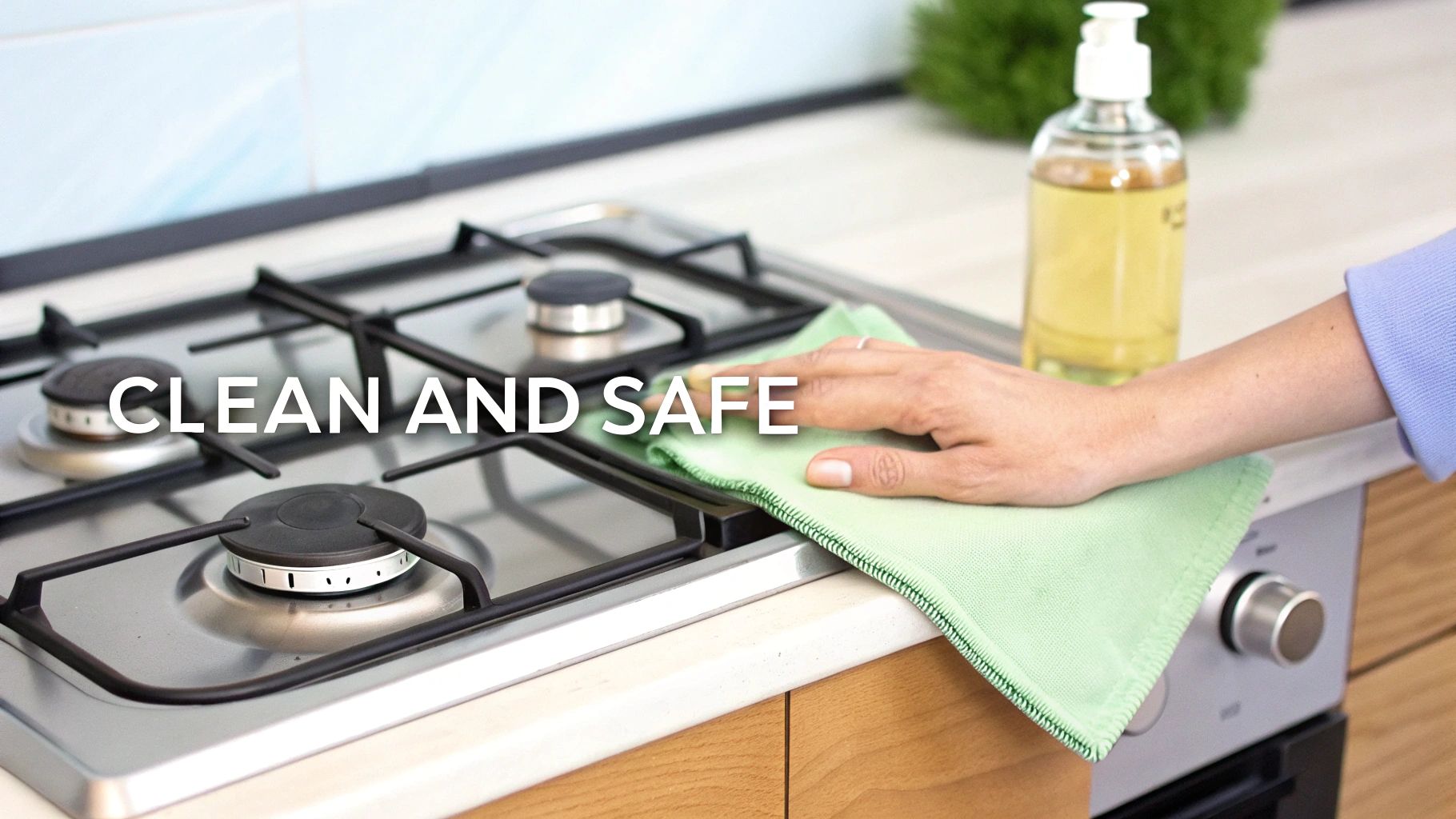
A well-looked-after gas stove top isn't just about appearances. It performs better, runs more safely, and delivers that perfect, steady blue flame every time you fire it up. Keeping on top of the cleaning prevents small spills from turning into a baked-on nightmare and ensures your burners work as they should.
The best habit you can get into is also the simplest: wipe up spills as soon as they happen. Once food has a chance to cool and harden onto the surface, you're in for some serious elbow grease later on. A quick wipe with a damp cloth right after cooking can save you a world of scrubbing.
A Deeper Clean for Your Cooktop
For a more thorough clean, it's best to take the grates and burner components off and tackle them separately. The whole process is pretty straightforward and gets every part of your stove top sparkling again.
- Remove Grates and Caps: Wait until the cooktop is completely cool, then lift off the heavy cast-iron grates and the smaller burner caps.
- Soak and Scrub: Pop these parts into a sink of warm, soapy water. Giving them a good 20-minute soak will help loosen any stubborn, cooked-on food. Use a non-abrasive brush to give them a good scrub before rinsing and drying them completely.
- Clean the Cooktop Surface: With everything out of the way, you can easily wipe down the main surface. A gentle cleaner and a soft cloth are all you need—harsh chemicals can damage the finish.
- Check the Burner Ports: If you've noticed an uneven or weak flame, the tiny ports on the burner head are likely clogged. You can use a straightened paperclip or a stiff-bristled brush to gently clear any debris from these little holes.
A clean stove also plays a big role in your home's air quality. Gas stoves are one of the most common combustion appliances in the country, with around 360,000 units in Kiwi homes. Keeping them running efficiently helps minimise pollutants like nitrogen dioxide (NO₂) from being released into your kitchen.
Think of a clean burner port like a clear pathway. When it’s free of blockages, gas flows smoothly and mixes perfectly with air. The result is an efficient, hot, and even blue flame—exactly what you want for cooking.
When to Call a Professional
While you can easily handle the day-to-day cleaning, some problems are best left to an expert. If you spot any of these warning signs, it’s time to call in a licensed gasfitter.
- A consistent yellow or orange flame, which signals incomplete combustion.
- The smell of gas when the stove is off.
- An electronic igniter that just keeps clicking without lighting the burner.
- Control knobs that are stiff, difficult to turn, or feel loose.
For a complete strategy on keeping your whole kitchen spotless, have a look at our comprehensive kitchen deep cleaning checklist. A bit of regular maintenance will keep your gas stove top safe, efficient, and ready for whatever you cook up next.
What About the Cost and Environmental Impact?
Choosing a new cooktop isn't just about how well it sears a steak; it's a decision that hits your wallet and has a real impact on the environment. Let's break it down.
Financially, a gas stove top often looks cheaper on the shelf than a high-end induction model. But the sticker price is only part of the story. If your kitchen isn't already set up for gas, the installation can add a significant cost to get a gas line connected.
Running Costs: The Shifting Landscape
When we talk about day-to-day running costs, the lines are getting a bit blurry. For years, natural gas was the go-to for affordable energy in many parts of New Zealand. Now, with rising prices and incredibly efficient electric appliances, that's not always the case.
The key is to look at efficiency. An induction hob is seriously impressive, converting around 85-90% of its energy directly into heating your pot. A gas stove top, on the other hand, loses a lot of heat to the surrounding air, operating at only 40-50% efficiency. Over the life of the appliance, that wasted energy can really add up on your bill.
Thinking about the long game is crucial. If you're looking at a gas cooktop as part of a bigger project, a solid guide on planning a kitchen remodel can help you see the full financial picture.
The Bigger Environmental Picture
The conversation around using gas in our homes is getting louder, and for good reason. Cooking with gas releases greenhouse gases and can affect the air quality inside your house. This has sparked a nationwide discussion about moving New Zealand homes towards all-electric solutions.
A landmark report from the New Zealand Green Building Council really put this into perspective. It showed that if we switched from residential gas for heating and cooking, Kiwi households could save a whopping $1.5 billion in energy costs. You can read the full report right here: New Zealand Green Building Council report.
At the end of the day, picking an energy-efficient appliance—no matter the type—is one of the smartest moves you can make. It lowers your running costs and shrinks your carbon footprint. If you want to get savvy with appliance labels, our guide to understanding the Energy STAR rating in NZ is the perfect place to start.
Got Questions About Gas Stove Tops? We've Got Answers
Choosing a major kitchen appliance always brings up a few last-minute questions. To help you feel confident in your decision, we’ve put together some straightforward answers to the queries we hear most often from Kiwi homeowners.
Are Gas Hobs Actually Cheaper to Run?
This is a classic question, and the answer has changed quite a bit over the years. While gas used to be the clear winner for cost-effectiveness in New Zealand, that's not always the case anymore.
The game-changer has been the incredible efficiency of modern induction hobs. An induction cooktop is around 90% efficient, meaning almost all the energy it uses goes directly into heating your pan. Gas, on the other hand, hovers around 40-50% efficiency, with a lot of heat escaping into the air around your pot. With gas prices on the rise, it's worth checking the latest rates from your local energy provider to see how they stack up.
Do I Need Special Pots and Pans for a Gas Stove?
Nope, and that’s one of the biggest draws of cooking with gas! Gas hobs are the ultimate team player in the kitchen, working brilliantly with just about any cookware you already own.
- Cast iron
- Stainless steel
- Aluminium
- Copper
You have total freedom here, unlike induction models that need magnetic cookware to work. The only real tip for getting the best results is to use flat-bottomed pans that sit squarely on the grates, which gives you the most stable and even heat.
What Should I Do If I Smell Gas?
If you smell gas, the most important thing is to act calmly and quickly. Your safety is paramount.
First, do not touch anything that could create a spark. That means no light switches, no phones, and no electrical appliances. This is the most critical step to prevent a potential ignition.
Your next move is to get fresh air circulating by opening all your windows and doors. If it's safe to do so, shut off the gas supply, either at the main valve for natural gas or at the top of your LPG bottle. Get everyone out of the house immediately. Once you're a safe distance away, call your gas supplier's emergency number or a certified gasfitter. Never try to locate the leak yourself.
Here at Folders, we’re all about helping you build a kitchen that’s safe, efficient, and a pleasure to cook in. Ready to find the heart of your home?
Explore our full range of modern and reliable cooking appliances today at https://folders.co.nz.