

A Guide to Washer Dryer Stackable Units
A stackable washer dryer is a clever laundry setup where a separate front-load washing machine and a compatible dryer are installed one on top of the other. This vertical arrangement gives you the full power and capacity of two individual appliances while only taking up the floor space of one, making it a go-to choice for apartments, laundry cupboards, and narrow utility rooms. It's a smart way to get serious cleaning and drying performance without sacrificing precious square footage.
Why Vertical Laundry Is Taking Over New Zealand Homes

If you've ever felt like your laundry space is closing in on you, you're not imagining things. In today's New Zealand homes, every square metre is valuable, and a traditional side-by-side washer and dryer can feel like a real space hog. This is exactly where the stackable washer dryer unit shines, offering a brilliant vertical solution to a horizontal problem.
Think of it as bunk beds for your laundry appliances. You get two hardworking, dedicated machines—a washer on the bottom and a dryer on top—but together they only occupy the footprint of a single appliance. This simple trick can instantly free up room for a storage cabinet, a folding bench, or just a bit more elbow room.
Performance Without Compromise
It's easy to confuse stackable units with all-in-one washer dryer combos, but they are worlds apart. A combo machine does both jobs in one drum, which often means longer cycles and less-than-perfect drying. A stacked pair, on the other hand, gives you the best of both worlds. You can have a load washing while another is in the dryer, which can seriously speed up your laundry routine.
This two-machine approach has some clear advantages:
- Full-Sized Capacity: You don’t have to compromise on load size. Stackable units boast the same generous drum capacity you’d expect from their standalone cousins.
- Superior Drying Power: A dedicated dryer is purpose-built for one job: drying clothes effectively. It handles everything from delicate woollens to bulky towels with consistent, reliable results.
- Unmatched Efficiency: For busy families, being able to run both machines at once is a total game-changer, often cutting the time spent on laundry in half.
A Smart Fit for Modern Living
The rise of vertical laundry pairs in New Zealand isn't just a fleeting trend; it’s a practical response to our modern lifestyles. With around 86% of New Zealanders living in urban areas and a clear shift towards apartment living, space-savvy appliances have become essential. As our homes get smarter and more compact, the stackable washer dryer is the perfect fit for getting the most out of a smaller space. For more insights on appliance trends, check out the data on Statista.
By going vertical, you reclaim valuable floor space that can be repurposed for better organisation. For more ideas, explore our guide on 8 small laundry room ideas to maximise space in 2025. This simple change can transform a cramped utility corner into a highly functional and organised workspace.
The Real Pros and Cons of Stacking Your Laundry
Sure, the most obvious win with a washer dryer stackable unit is how much floor space it saves. But that’s just the beginning of the story. To figure out if it's the right move for you, we need to look at the full picture – how this vertical setup actually fits into your daily routine, your budget, and the reality of your laundry room.
Let's kick off with the good stuff. Beyond reclaiming precious floor space, the biggest advantage is pure efficiency. Because you have two separate machines working independently, you can have a load washing while another one is drying. This simple overlap can literally cut your total laundry time in half, which is a massive relief for busy families facing a mountain of clothes.
The Upsides of Going Vertical
Another benefit that people often don't think about until they experience it is ergonomics. Let's be honest, bending and crouching to load and unload a standard dryer isn't great for your back. When you stack your units, the dryer is suddenly at a much more comfortable waist or chest height. This makes moving wet, heavy clothes from the washer below a far easier and less strenuous task.
And then there's the performance. A stacked pair isn't a compromise; it's two specialist machines doing what they do best. Unlike an all-in-one combo unit that has to pull double duty in a single drum, a stacked pair gives you:
- Full-Sized Capacity: Both the washer and dryer are designed to handle proper, large loads. Think bulky duvets, a week's worth of towels, or the entire family's washing – no problem.
- Powerful, Dedicated Drying: A standalone dryer is built for one job: drying your clothes quickly and thoroughly. This translates to faster cycles and better results, whether you're drying delicate shirts or heavy denim.
- Long-Term Durability: With two individual appliances, you're spreading the workload. If one machine ever needs a repair or replacement down the line, you don't have to get rid of the whole setup.
The Practical Downsides to Consider
Of course, a washer dryer stackable system isn’t a perfect solution for everyone. The initial investment is usually higher than buying an all-in-one combo machine. At the end of the day, you're purchasing two separate, high-quality appliances, and the price tag will reflect that.
A crucial, non-negotiable requirement for a safe setup is a manufacturer-approved stacking kit. This is not an optional accessory; it's an essential component that securely locks the dryer to the washer, preventing dangerous vibrations and movement during spin cycles. This kit is an additional expense and must be compatible with your specific models.
Finally, accessibility can be a genuine issue. The controls for the dryer, sitting on top, are going to be quite high. For shorter people or anyone with mobility challenges, reaching the buttons and reading the display can be a real struggle. It’s a smart idea to physically check out the height of the control panel in a showroom to make sure everyone who does the laundry at home can use it comfortably.
If you're exploring ventless options, it's also worth getting your head around how they work; you can find out more about if heat pump dryers are worth it in NZ in our detailed guide.
How to Plan and Measure Your Laundry Space
Choosing a washer dryer stackable unit is a fantastic way to reclaim precious floor space, but the real key to success lies in what you do before you even browse for a model. A little bit of prep work with a tape measure now will save you from a world of frustration later.
Think of it this way: you wouldn't buy a new couch without knowing if it can fit through your front door. The same logic applies here. Your first step is to get a handle on the physical space where your new laundry pair will live, including the entire path it needs to take to get there.
Mastering the Three Critical Dimensions
For a perfect fit, you need to measure three key dimensions and factor in a bit of essential "breathing room" around the unit. If you want a deep dive into this, our complete guide on how to measure your space for appliances & furniture is a great place to start.
-
Height: Start by measuring from the floor right up to the ceiling. Make sure to account for any low-hanging light fixtures or shelving that might get in the way. You'll need enough clearance for the stacked unit, plus a few extra centimetres on top for ventilation and to make installation easier.
-
Width: Next, measure the space from side to side. It's a good rule of thumb to leave about 2-3 centimetres of wiggle room on each side. This small gap is more important than you might think—it helps prevent the machines from vibrating against walls and allows heat to dissipate properly.
-
Depth: Finally, measure from the back wall to the front of your available space. This is where people often get caught out. Remember to factor in the space needed for plumbing and venting—the water hoses, drain pipe, and dryer vent can easily add another 10-15 centimetres behind the machine. Also, double-check that you'll have enough room to swing the doors wide open.
This infographic lays out some of the key things to weigh up when you're looking at a stacked laundry setup.
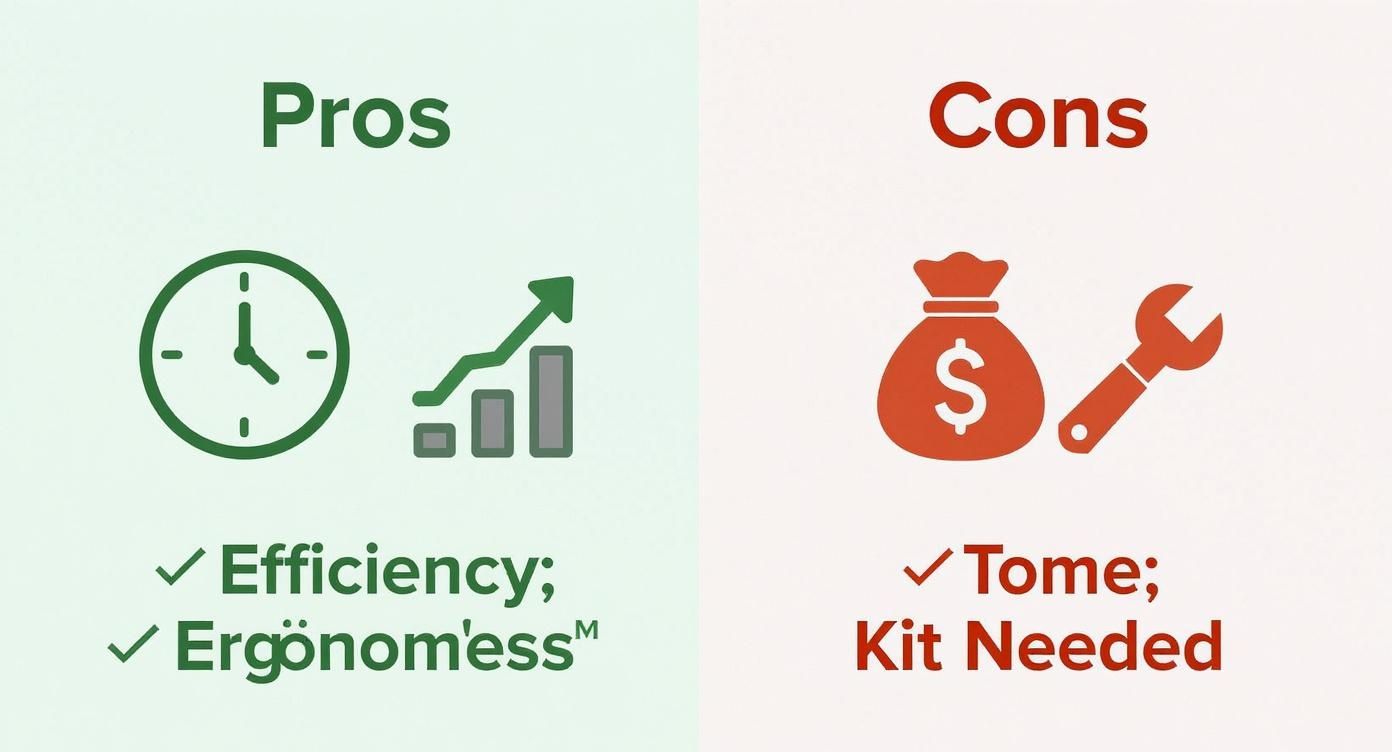
As you can see, it's a balance between saving space and ergonomic perks versus the initial cost and the need for a specific kit to join the machines.
The Stacking Kit Is Not Optional
One of the biggest—and most dangerous—mistakes we see is people thinking they can just plonk a dryer on top of a washer and call it a day. You absolutely cannot do this. You have to use a manufacturer-certified stacking kit that's been made specifically for your models.
A stacking kit isn’t just an accessory; it’s a crucial safety device. It physically locks the two appliances together, creating a single, stable unit. Without it, the powerful vibrations from a spin cycle could easily cause the dryer to "walk" right off the washer, which is a massive safety hazard.
While the kit is usually an extra purchase, it is completely non-negotiable. It’s what turns two separate machines into a true washer dryer stackable system. As you’re planning, it's also a good time to think about optimising and organising your laundry room to get the most out of your new vertical setup.
Choosing the Right Stackable Washer Dryer
Once you’ve sorted out where your new laundry setup will live, the fun part begins: picking the perfect washer dryer stackable combo for your home. It’s easy to get a bit lost with all the options out there, but don't worry. The trick is to zero in on what really matters for your day-to-day life: capacity, running costs, and features you’ll actually use.
The first thing to get right is the drum capacity, which is measured in kilograms (kg). This number isn't just a spec on a label; it tells you how much laundry you can wash effectively in one go. Get this wrong, and you'll either be running inefficient half-loads or overstuffing the machine, which means your clothes won't get properly clean.
Matching Capacity to Your Lifestyle
Take a moment to think about how much laundry your household generates. Are you washing for just yourself or a partner, or are you dealing with the seemingly endless laundry created by a busy family?
- For Singles or Couples (1-2 people): A 6-7kg capacity washer is usually the sweet spot. It’s ideal for handling regular loads without wasting water or power.
- For Small Families (3-4 people): An 8-9kg capacity is a better fit. This gives you enough room for bigger loads, like kids' clothes and a few towels all at once.
- For Larger Families (5+ people): Look for a 10kg or larger machine. These workhorses can tackle bulky bedding like duvets and a full week's worth of family laundry without breaking a sweat.
Choosing the right size doesn't just save you time; it makes sure your clothes have enough space to tumble and get a thorough clean.
Decoding Efficiency and Modern Features
Next up, let's talk about running costs. A more energy-efficient appliance might have a slightly higher price tag, but it will save you money in the long run on your power and water bills. Here in New Zealand, keep an eye out for the Energy Rating Label—more stars mean more savings.
Modern features can also make a huge difference. Sensor drying, for instance, is a game-changer. The machine detects when your clothes are dry and stops automatically. This not only protects your favourite outfits from heat damage but also cuts down on electricity use.
Many Kiwis are now looking beyond the initial price tag and choosing appliances that deliver long-term value. As trends in the domestic appliance market shift, investing in a durable and efficient model just makes good sense.
Other handy innovations to look for include special cycles for delicates or sports gear, and even smart features that let you control your laundry from your phone.
Making a smart choice is more important than ever. The New Zealand domestic appliance market is evolving, with more and more shoppers looking for reliable, efficient, and space-saving solutions like a washer dryer stackable set. You can dive deeper into what makes a great machine in our complete washing machine buying guide for NZ. By finding the right balance of capacity, efficiency, and practical features, you'll find a laundry duo that’s a perfect match for your home.
Getting Your Stack Set Up Right (And Keeping It That Way)
Getting a washer dryer stackable unit is a fantastic space-saving move, but its long-term performance hinges on two things: a rock-solid installation and a bit of regular TLC. While we always suggest getting a professional to handle the setup for safety reasons, it pays to know what a proper installation looks like.
Believe it or not, the most critical part of a quiet, smooth-running stack is making sure the washer is perfectly level. Even a tiny imbalance can cause that loud, shuddering vibration during a spin cycle, which isn't just annoying—it puts serious strain on the whole setup.
The Installation Checklist
There's a bit more to it than just hoisting one machine onto the other. A professional installer knows the drill and will tick off these essential steps for a safe and secure fit.
- Level the Washer: First things first, the washing machine at the bottom needs to be absolutely flat and stable on the floor. No wobbles allowed.
- Secure the Stacking Kit: This isn't an optional accessory; it's the crucial safety bracket that connects the two appliances. It’s what locks the dryer securely to the washer, preventing any dangerous movement.
- Position the Dryer: The dryer is then carefully lifted and placed on top, where it's aligned and fastened to the stacking kit.
- Connect the Utilities: Finally, it's time to hook up the water hoses, the drain, and the power cords. The dryer vent also needs to be properly attached to ensure hot, moist air can escape safely.
If you want a more in-depth look at the process, our guide on stacking your washing machine and dryer has all the details you need.
Simple Maintenance for a Long Life
Once your stack is up and running, a little care goes a long, long way. Think of it like a quick check-up for your car—a few minutes here and there can prevent major headaches later and keep your machines humming along efficiently for years.
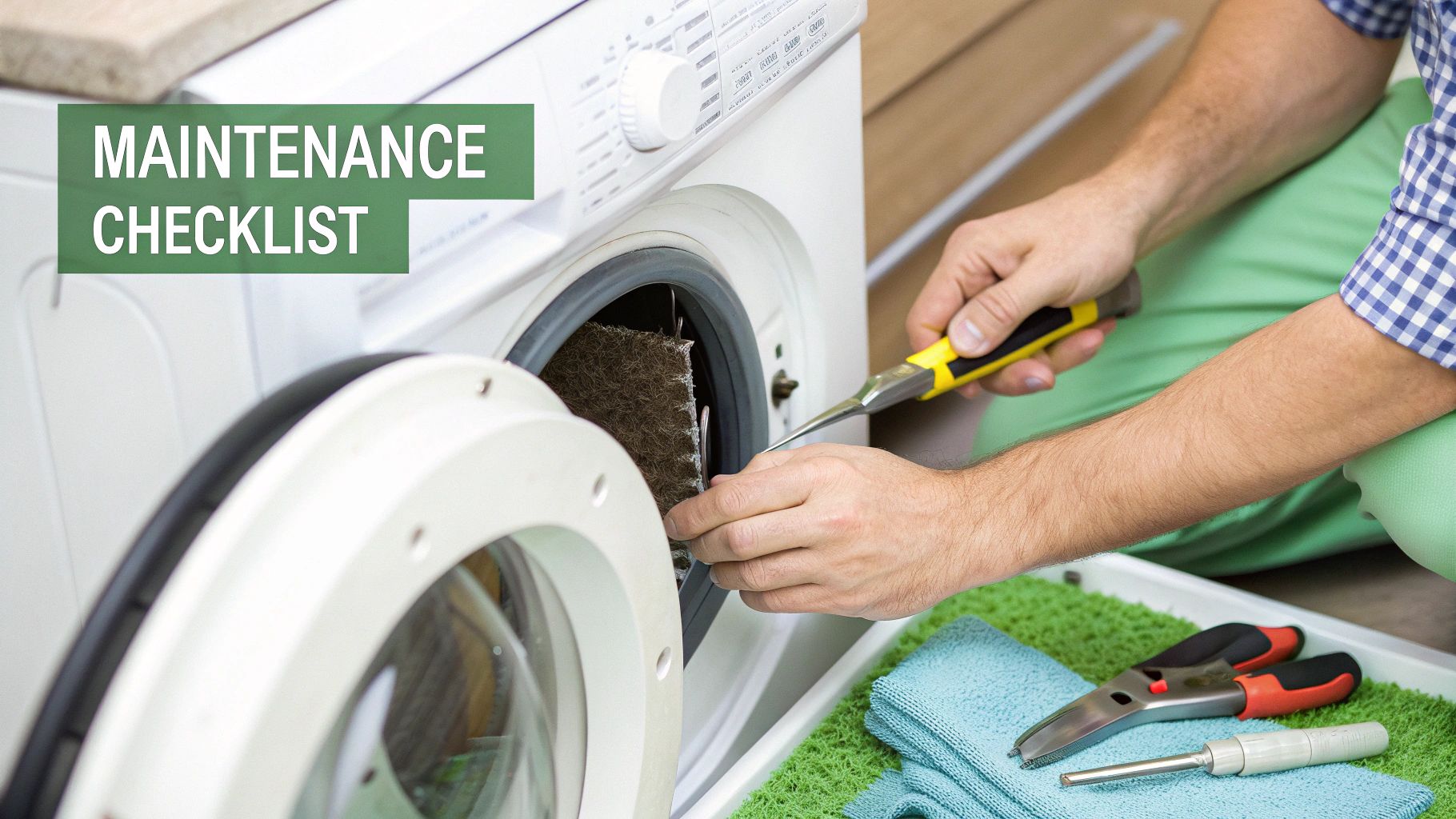
Maintaining your laundry appliances is less about complex repairs and more about forming simple habits. Consistent cleaning prevents build-up, improves efficiency, and extends the life of your machines.
Here’s a simple checklist to keep everything in top shape:
- Clean the Dryer Lint Trap (After Every Use): This is non-negotiable. A clogged lint filter is not only a major fire risk, but it also forces your dryer to work much harder, wasting energy and time.
- Wipe the Washer Gasket (Weekly): That rubber seal on your front-loader's door is a prime spot for moisture to get trapped, which can lead to musty smells and mould. A quick wipe after the last wash of the week is all it takes to keep it fresh.
- Clean the Washer Filter (Monthly): Your washer has a small filter (check the manual for its location) that catches things like coins, lint, and other bits and pieces. Cleaning it out once a month ensures your machine drains properly and avoids blockages.
Got Questions? We've Got Answers
It's completely normal to have a few questions buzzing around before you decide on the right washer and dryer stack. Let's tackle some of the most common ones we hear, giving you the straightforward answers you need to choose with total confidence.
Can I Just Stack Any Washer and Dryer on Top of Each Other?
That’s a definite no. You can't just pick any washer and dryer and hope for the best. For safety, you absolutely must use a compatible front-load washer and its matching dryer, made by the same brand.
Even more critical is the stacking kit. This is a specific piece of hardware designed by the manufacturer to lock those two exact models together. It prevents the dryer from shifting or, worse, falling off during a heavy spin cycle. Think of it as the seatbelt for your laundry setup.
Do These Stacked Units Need Special Vents or Plumbing?
Good question! The washer is pretty standard—it just needs the usual hot and cold water hookups and a drainpipe. The dryer, however, is a different story.
- Vented Dryers: These are the traditional type. They need a ducting hose to blow all that hot, damp air outside your house. This can limit where you put them, as you'll need access to an external wall.
- Ventless Dryers: A brilliant solution for apartments, cupboards, or anywhere without easy outdoor access. They use condenser or heat pump technology to dry your clothes without needing an external vent, giving you heaps more flexibility.
Are Stackable Washer Dryers Really Noisy?
Most people are pleasantly surprised by how quiet modern stackable units are. Brands have poured a lot of engineering into vibration-reduction technology, so they're usually no louder than their side-by-side counterparts.
Nine times out of ten, when a stacked unit is making a racket, it's because of the installation.
The secret to a quiet laundry life is a perfectly level washer. If the machine isn't sitting completely flat on a solid floor, it's going to wobble and vibrate like crazy during the spin cycle. Making sure the stacking kit is properly secured is just as important for keeping things stable and quiet.
At Folders, we're here to help you find the perfect laundry solution for your space and lifestyle. Explore our range of washer dryer stackable units and get expert advice today.