

Finding the Best Electric Ovens NZ Has to Offer
Choosing the right electric oven is a big deal for any Kiwi home. It’s not just about cooking; it's about finding the perfect blend of style, function, and value that fits your kitchen and your life. Think of it as a long-term investment in your daily meals and kitchen routine, so making a smart choice from the get-go is key.
This guide will walk you through everything you need to know about finding the best electric ovens NZ has to offer.
Your Guide to Buying an Electric Oven in NZ
So, you're on the hunt for a new electric oven. It's an exciting upgrade! But it's about more than just picking a shiny new appliance. You're choosing the future centrepiece of your kitchen—something that needs to match your home's look, handle your family's cooking demands, and sit comfortably within your budget.
Whether you're in a compact city apartment or a sprawling family home, the right oven can completely change your cooking game. We'll start with the basics and then dive into the cool features that make a modern Kiwi kitchen tick. It's all about finding that sweet spot between great cooking performance and energy efficiency, which is something more and more of us are thinking about these days.
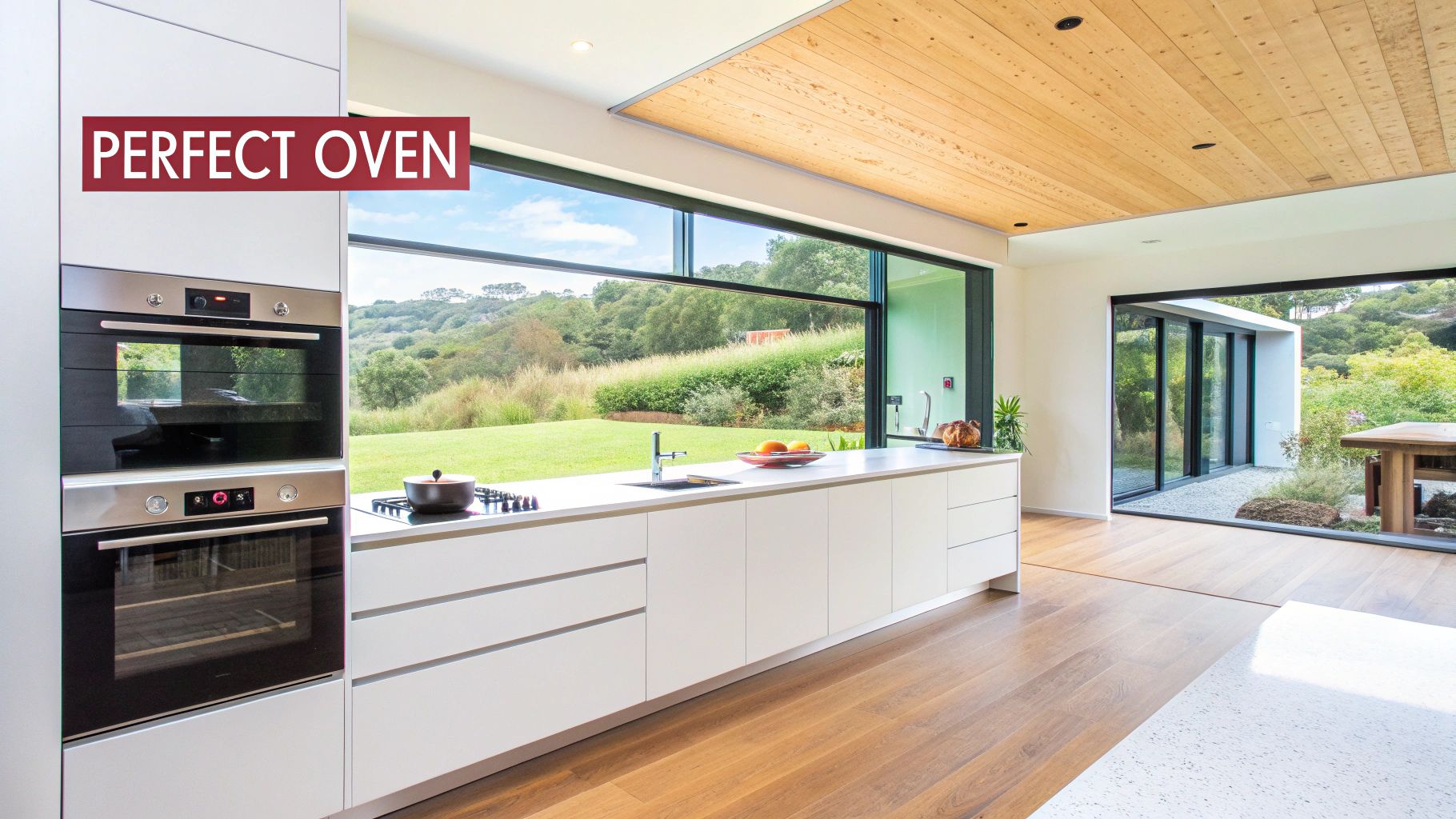
It’s no surprise that Kiwis are looking for better kitchen appliances. We're getting more adventurous with home cooking, and we're also keen on energy-efficient models that are kinder to the planet and our wallets. This lines up with a broader trend towards making more sustainable choices, especially since over a third of the main cooking appliances in our homes are more than ten years old. A lot has changed in a decade!
Choosing a new oven is one of the most significant appliance decisions you'll make for your kitchen. It's not just about how it cooks, but how it integrates into your daily life, from its size and functions to its energy consumption and ease of cleaning.
Key Decision Points at a Glance
Getting started can feel a bit overwhelming, so let's break it down. We'll cover the most important factors to help you make a confident decision. For more general advice, check out our post on tips you need to know when buying appliances.
First, here's a quick rundown of the essential things we’ll be looking at:
- Size and Fit: Making sure your new oven slides perfectly into your kitchen cabinetry.
- Cooking Functions: From standard fan-forced to fancy extras like steam and air fry.
- Energy Efficiency: How to read the star ratings and save money on your power bills.
- Top NZ Brands: A look at trusted names like Fisher & Paykel, Bosch, and others.
To give you a clearer picture, here’s a table summarising the key things you'll want to think about during your search.
Key Considerations for Buying an Electric Oven in NZ
| Factor | What to Look For | Why It Matters |
|---|---|---|
| Size & Capacity | Standard 60cm or wider 90cm models; single vs. double ovens. | Must fit your existing kitchen space. Capacity (in litres) should match your family size and cooking habits. |
| Cooking Functions | Fan-forced, conventional, grill, defrost, pyrolytic cleaning, steam, air fry. | More functions offer greater cooking versatility, from baking bread to roasting vegetables or making healthy snacks. |
| Energy Rating | The NZ Energy Rating Label (more stars = more efficient). | A higher-rated oven uses less electricity, which saves you money on power bills over the appliance's lifetime. |
| Installation | Freestanding vs. built-in (wall oven). Check if it needs a standard plug or hardwiring by an electrician. | Determines how the oven integrates into your cabinetry and whether you'll have additional installation costs. |
| Brand & Budget | Look at reliable brands like Fisher & Paykel, Bosch, Westinghouse, and Smeg. Prices range from budget to premium. | Trusted brands often mean better build quality, reliability, and after-sales support. Set a realistic budget from the start. |
Keeping these points in mind will help you narrow down the options and focus on finding an oven that truly meets your needs. Now, let's dive into the details of each one.
Getting the Right Fit for Your Kitchen Space
Before you get lost dreaming about Sunday roasts and perfectly baked cakes, there's a crucial first step: making sure your new oven actually fits. It’s a surprisingly common and frustrating mistake to pick a beautiful oven, only to find it won’t slot into your cabinetry.
The good news is that most electric ovens in NZ come in standard sizes, which takes a lot of the guesswork out of the process.
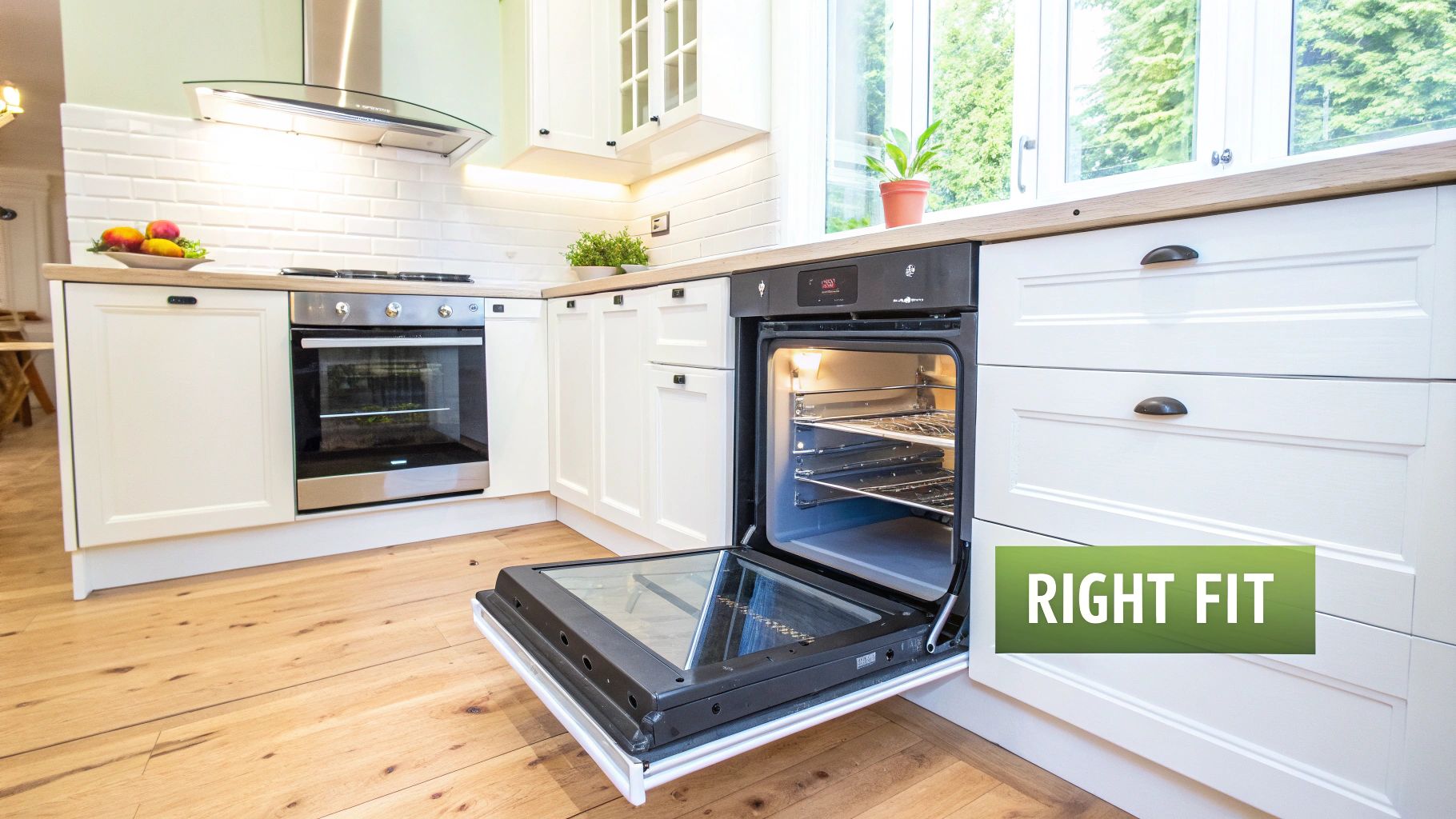
Common NZ Oven Dimensions
Thinking about size is your starting point. In New Zealand, you’ll typically find three main oven widths, each designed for different kitchens and cooking ambitions.
Here’s a quick rundown of what you’ll see in stores:
- 45cm Compact Ovens: These are brilliant for apartments, tiny homes, or even as a second oven in a bigger kitchen. They often pack in clever features like steam or microwave functions without taking up precious real estate.
- 60cm Single Ovens: This is the undisputed champion in Kiwi kitchens. It’s the perfect all-rounder for most families, fitting neatly into standard cabinetry and handling everything from daily dinners to weekend baking with ease.
- 90cm Large Ovens: If you love to entertain or have a big family to feed, these are for you. They’re spacious enough to cook multiple large dishes at once and make a real statement in an open-plan kitchen.
When it comes to installing a new appliance, precision is everything. Measure the height, width, and depth of your oven cavity twice. A few millimetres can be the difference between a seamless fit and a major headache.
For a detailed walkthrough on getting it right, our guide on how to measure your space for appliances & furniture has you covered.
Installation and Power Needs
Beyond the physical dimensions, you also need to think about the installation itself. A wall oven is built right into your cabinetry for that sleek, integrated look. On the other hand, a freestanding cooker is an all-in-one unit with its own cooktop, designed to stand on its own.
Just as important is your kitchen’s electrical setup. While some smaller plug-in models exist, most 60cm and 90cm ovens need to be hardwired directly into your home’s electrical system by a licensed electrician. Don’t get caught out—always check the product specs and budget for a professional installer to ensure everything is safe and up to code.
How to Choose an Oven with the Right Cooking Functions
Modern electric ovens are a far cry from the simple "bake and grill" boxes of the past. They're now packed with clever features designed to make life in the kitchen easier and your food taste better. But with so many options, how do you know which ones you’ll actually use?
The key is to think about how you cook. Let's break down the most common functions, from the everyday workhorses to the game-changing extras, so you can find an oven that perfectly suits your Kiwi kitchen.
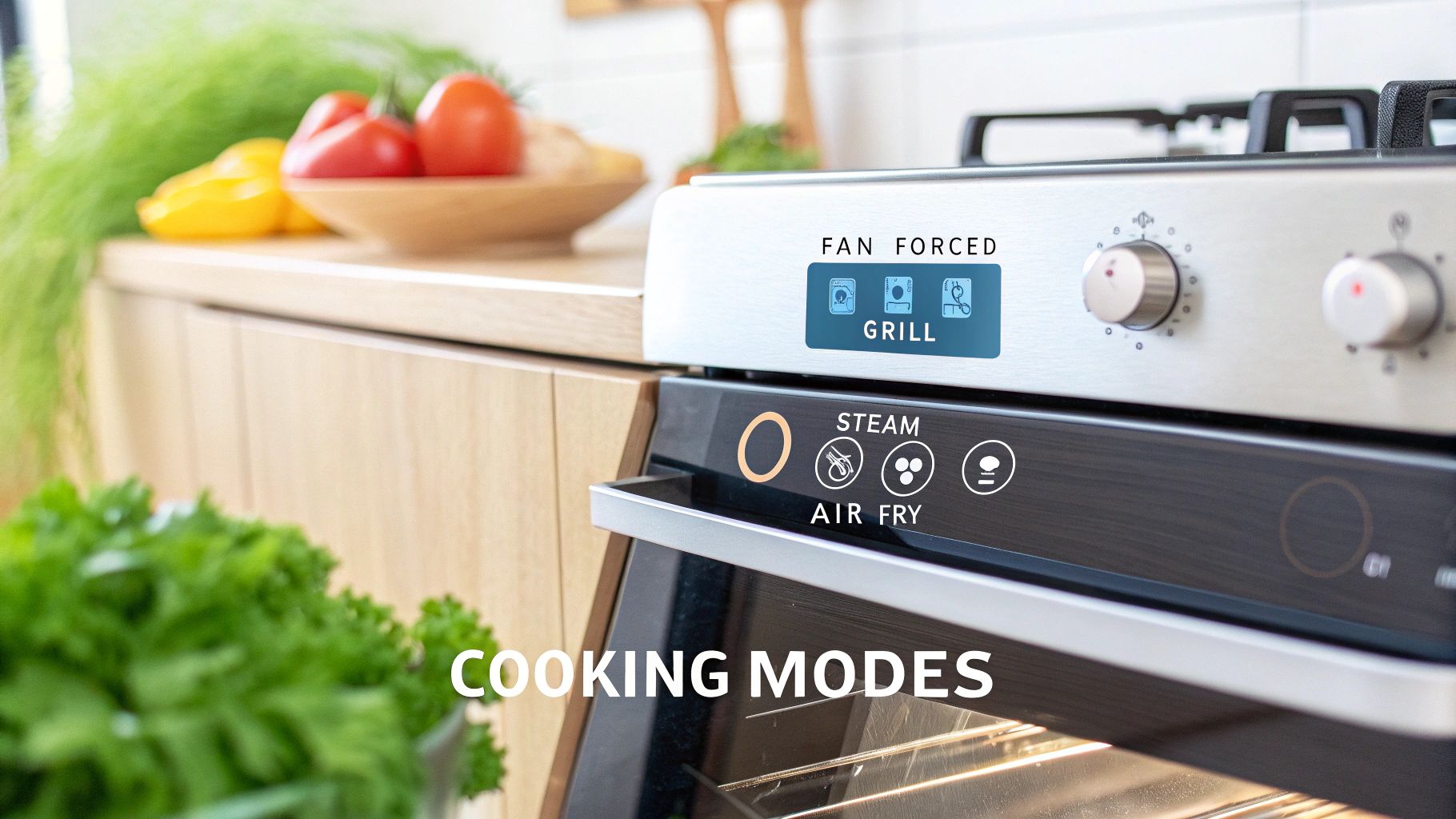
The Everyday Essentials
Just about every new oven will come with these three core settings. Getting to know what they do best is the first step to mastering your new appliance.
- Conventional Bake: This is your classic oven setting. Heat radiates from elements at the top and bottom of the oven. It's perfect for single-tray jobs like baking a cake or a classic Kiwi meatloaf where you want a nicely browned top and a thoroughly cooked base.
- Fan-Forced (Convection): A real multi-tasker. A fan at the back of the oven circulates hot air, creating a consistent temperature from top to bottom. This is your go-to for roasting vegetables, batch-baking biscuits on multiple shelves at once, or getting that perfect, crispy skin on a roast chicken. It often cooks a bit faster, too.
- Grill: The top element blasts intense, direct heat downwards. It's brilliant for getting a golden, bubbly top on a lasagne, melting cheese on toast, or quickly cooking thin cuts of meat.
Advanced Features That Are Genuinely Useful
This is where things get interesting. Beyond the basics, many ovens now include specialised functions that can seriously upgrade your cooking and make cleanup a breeze.
One of the most popular features—and for good reason—is pyrolytic self-cleaning. Forget harsh chemicals and endless scrubbing. This function locks the door and heats the oven to a blistering 500°C, turning baked-on grease and food splatters into a fine ash that you simply wipe away with a damp cloth. It's a total game-changer.
If you hate cleaning the oven (and who doesn't?), a pyrolytic function is one of the most practical upgrades you can choose. It completely transforms one of the most dreaded kitchen chores.
Another feature popping up everywhere is a dedicated air fry mode. This uses super-hot, rapidly circulated air to give you that crunchy, "fried" texture with very little oil. It's fantastic for making healthier chips, crispy chicken wings, and roasted veggies. While it’s based on the same principles as fan-forced cooking, it’s specifically optimised for that crispy finish. If you want to dive deeper, our guide on convection oven vs air fryer breaks it all down.
You'll also find steam functions becoming more common. Adding steam during cooking helps keep food moist and tender. It’s ideal for baking artisan-style bread with a perfect crust, gently cooking delicate fish, or even reheating leftovers without turning them into rubber.
Smart Ovens for Connected Homes
The newest wave of electric ovens in NZ comes with Wi-Fi connectivity. These smart ovens let you control everything from your phone. You can preheat the oven on your way home from work, check how much cooking time is left from the couch, or download recipes that automatically set the right temperature and function.
This is all part of a bigger trend towards smarter, more convenient appliances in New Zealand homes. For anyone replacing an old, worn-out oven, these connected features offer a whole new level of control and can make a real difference in a busy household.
Making Sense of Energy Efficiency Labels
Picking an energy-efficient oven isn't just about saving a few bucks on your power bill—it's also a great way to shrink your home's environmental footprint. Here in New Zealand, every new oven comes with a compulsory Energy Rating Label, and understanding it is the key to making a smart choice.
Think of this label as a quick, honest summary of how much power the oven chews through. It gives you a straightforward way to compare different electric ovens in NZ on a level playing field.
Decoding the Star Rating
The first thing you’ll notice is the big star rating, which runs from one to six stars. The logic here couldn't be simpler: the more stars, the more energy-efficient the appliance is.
A four-star oven, for example, will use noticeably less electricity over its lifespan than a similar one-star model. It might cost a little more upfront, but an oven with a high star rating is an investment that can genuinely save you hundreds in running costs over the years.
Understanding the kWh Figure
Just below the stars, you'll see a number followed by kWh/year (kilowatt-hours per year). This is the oven's estimated annual power consumption, based on standardised tests. It's probably the most practical piece of information on the whole label.
This kWh figure is your secret weapon for calculating actual running costs. Just grab your latest power bill to find your electricity rate, multiply it by this number, and you’ll get a pretty solid estimate of what it will cost to run that oven for a year.
It puts the choice into real-world terms. An oven that uses 450 kWh/year is clearly going to be cheaper to run than one that uses 600 kWh/year, and the label lays that all out for you. If you want to dive deeper, you can learn more about the NZ Energy Star Rating system in our comprehensive guide.
Features That Boost Efficiency
So, what actually makes one oven sip power while another one guzzles it? It all comes down to smart engineering and better-quality materials.
- Superior Insulation: Good insulation is crucial. It traps heat inside the oven, so the heating elements don't have to work constantly to keep the temperature steady.
- Multi-Layered Glass Doors: You can lose a surprising amount of heat through the door. Ovens with double or even triple-glazed glass doors create a thermal barrier, keeping the heat where it belongs—inside.
- Specialised Eco-Modes: Look out for dedicated "eco" or "fan-eco" settings. These clever functions are designed to use optimised heating cycles that cook your food perfectly while using the least amount of energy possible.
Comparing the Top Oven Brands in New Zealand
Trying to choose between all the great electric ovens nz offers can feel like a tough gig. With so many well-known brands vying for a spot in your kitchen, how do you pick the right one? The key is to look past the shiny exteriors and understand what each brand is really about—be it Kiwi ingenuity, precision European engineering, or head-turning Italian style.
Let's cut through the noise and break down some of the most popular and dependable brands you’ll find in New Zealand. This will help you focus on what truly matters: performance, features, and the right fit for your home and budget.
Fisher & Paykel: A Kiwi Icon
Fisher & Paykel is a name that just feels like home here in New Zealand. As a homegrown success story, they’ve built their reputation on a philosophy of designing for people. Their ovens aren't just beautiful; they’re intuitive and a genuine pleasure to use. They are masters at packing clever tech, like their versatile 17-function ovens and the ever-popular pyrolytic self-cleaning feature, into sleek, modern designs that look right at home in any Kiwi kitchen.
It’s no surprise they’re a market leader. With a projected revenue of $269.3 million in 2025, Fisher & Paykel’s success speaks volumes about their connection with local customers and their drive to keep innovating. You can see how the NZ appliance market shapes up on Ibisworld for a broader view.
Beko: European Design at Great Value
Beko brings a touch of European flair to the Kiwi kitchen. Known for blending style with practicality, they’ve built their reputation on creating appliances that make everyday cooking easier and more enjoyable. Their ovens are sleek, modern, and packed with clever features designed to help you get great results, whatever’s on the menu.
Inside, you’ll find smart innovations like AirFry and SteamAdd™ modes — delivering that perfect balance of crisp-on-the-outside, tender-on-the-inside results, with steam-assisted baking that makes every loaf and pastry a winner. Their pyrolytic self-cleaning and catalytic liner options make clean-up effortless, so you can spend more time doing what you love.
It’s easy to see why Beko has become a trusted name in Kiwi homes. With spacious 80-litre capacities, intuitive controls, and thoughtful design details like soft-close doors, their ovens are built for real life — stylish, functional, and full of value. A global brand with a local following, Beko continues to make premium cooking features more accessible, helping New Zealanders cook with confidence every day.
Electrolux, Westinghouse, and Parmco
Of course, the list doesn't end there. Electrolux is another major player, often bringing professional-level features into the home kitchen. For decades, Westinghouse has been a go-to for Kiwi families looking for dependable, no-fuss appliances that don't break the bank.
Then there's Parmco, a brand that consistently offers fantastic value and a solid range of features. If you're curious to learn more, we've taken a closer look in our Parmco oven reviews.
Comparison of Popular Oven Brands in NZ
To help you get a clearer picture, here’s a quick rundown of what makes each brand stand out in the New Zealand market.
| Brand | Known For | Typical Price Range | Best For |
|---|---|---|---|
| Fisher & Paykel | Kiwi innovation, intuitive features, and sleek, contemporary design. | Mid to High | Homeowners who want cutting-edge tech seamlessly integrated into a modern kitchen. |
| Beko | Unmatched reliability, consistent performance, at great value | Mid-range | Those who prioritise long-term dependability and precision cooking. |
| Westinghouse | Affordable, reliable, and user-friendly appliances built for family life. | Entry to Mid | Families and budget-conscious buyers seeking a trustworthy and straightforward oven. |
| Electrolux | Professional-grade features and advanced cooking technology. | Mid to High | Serious home cooks who want restaurant-quality performance and features. |
| Parmco | Affordable, 7yr Warranty | Entry to Mid | Fantastic value, NZ Company |
Ultimately, choosing a brand is a personal decision. Think about what matters most to you—is it supporting local design, trusting in German engineering, or making a style statement? Your answer will point you straight to the perfect oven for your home.
Common Questions About Buying Electric Ovens
When you’re about to invest in a new oven, a few last-minute questions always pop up. It’s completely normal. To help you feel confident you're making the right call, we’ve put together the most common queries we hear from Kiwis shopping for electric ovens in NZ. Here are the straightforward answers you’re looking for.
What Is the Difference Between Fan-Forced and Conventional Ovens?
This question comes up all the time, and it’s a great one because the answer really affects your cooking.
Think of a conventional oven like sitting around a campfire. The heat radiates from fixed spots—in this case, heating elements at the top and bottom of the oven. This creates hotter and cooler zones, which is actually perfect for traditional, single-tray baking where you want a crispy bottom on a pie or a nicely browned top on a casserole.
A fan-forced oven, sometimes called a convection oven, introduces a fan into the back of the oven. This fan circulates hot air everywhere, creating a really consistent temperature from top to bottom and corner to corner. It’s a game-changer for roasting a whole chicken evenly, cooking on multiple shelves at once without having to swap them around, and getting that perfect, all-over golden-brown finish.
The good news? Most modern electric ovens sold in New Zealand these days come with both functions, so you get the best of both worlds.
Is a Pyrolytic Self-Cleaning Oven Worth the Extra Cost?
For most people, the answer is a resounding yes. A pyrolytic self-cleaning oven takes on the most hated kitchen job for you. It does this by locking the door and heating itself up to a scorching 500°C. At that temperature, all the baked-on grease, spilt food, and grime are simply incinerated into a fine, sterile ash.
Once the cleaning cycle is done and the oven has cooled down, you just wipe the ash away with a damp cloth. No harsh chemicals, no hours of scrubbing on your hands and knees.
While pyrolytic models do cost a bit more upfront, the time and effort you'll save over the life of the oven is a massive win. If you love your Sunday roasts or bake messy dishes often, this feature is genuinely a lifesaver for keeping your kitchen clean and hygienic.
Do I Need a Special Power Outlet for a New Oven?
This is a really important safety question. The answer depends on the oven's power draw. A few smaller, more compact models might be designed to plug straight into a standard 10-amp wall socket, just like your toaster. But that’s definitely the exception, not the rule.
The vast majority of standard 60cm and larger 90cm electric ovens in NZ need more power than a regular plug can safely handle. These ovens must be hardwired directly into your home’s electrical circuit by a registered, qualified electrician. This makes sure the connection is safe, meets New Zealand's strict electrical codes, and won't create a fire risk.
- Always check the manufacturer’s specifications before you buy to see what’s required.
- Factor in the cost of an electrician for installation if the oven needs hardwiring.
- Never, ever try to install a hardwired oven yourself unless you are a licensed sparky.
This is one area where there are absolutely no shortcuts. It’s all about keeping your home and family safe.
How Important Is the Warranty for an Oven in NZ?
An oven is a big purchase, so think of the warranty as your backup plan. While every new appliance sold in New Zealand is protected by the Consumer Guarantees Act (CGA)—which ensures things are of acceptable quality—the manufacturer's warranty gives you an extra layer of confidence. It provides a much clearer and more direct path to getting things sorted if something goes wrong.
Most reputable brands will offer a standard 2-year warranty covering both parts and labour. This means if there’s a fault, a technician will come to your home to fix it. Some of the more premium brands like Beko show their confidence by extending this to 5 years. Parmco, being less well known, offer 7 years to give you peace of mind. Before you make your final decision, always double-check the warranty period and have a quick read of the terms. It’s peace of mind that’s well worth having.
At Folders, we’re here to help you find the perfect appliance to complete your kitchen. With decades of experience and a genuine passion for Kiwi homes, our team can answer any other questions you might have. Feel free to explore our huge range of electric ovens from the world's leading brands and find the one that fits your space, your cooking style, and your budget.
Ready to start cooking? Browse our collection of electric ovens online at Folders today!